
Zone heat for every cabin and home in Shenandoah Farms.
No chimney, no gas line, no wood storage—just a unit, a circuit, and heat where you need it. Find the right electric fireplace for your Warren County home and connect with a trusted local dealer.
Every Project Starts From One of These Five Situations
The easiest way to add heat without a chimney.
Shenandoah Farms sits in the western foothills of the Blue Ridge along the Shenandoah River in Warren County, at just over 1,000 feet elevation. Winters here are real but not extreme—average lows around 24°F and a winter heating load that's a fraction of what places like Burlington, VT see each winter. Many properties in this unincorporated community started as weekend cabins decades ago and have since become full-time residences, often with a wood stove or propane furnace doing the heavy lifting and a colder back room, sunporch, or finished basement that never quite catches up.
That's the gap electric fills well here. Rappahannock Electric Cooperative serves the area at a residential rate around 14.9 cents per kWh, and a properly sized electric insert or wall unit can take the edge off a single room for pennies an hour without touching your existing chimney, running a gas line, or hauling in another cord of oak or hickory. It won't replace whole-home heat in a place with real winter, but for zone heating, ambiance, or a cabin that only needs warming up on weekends, it's often the simplest project on the property.
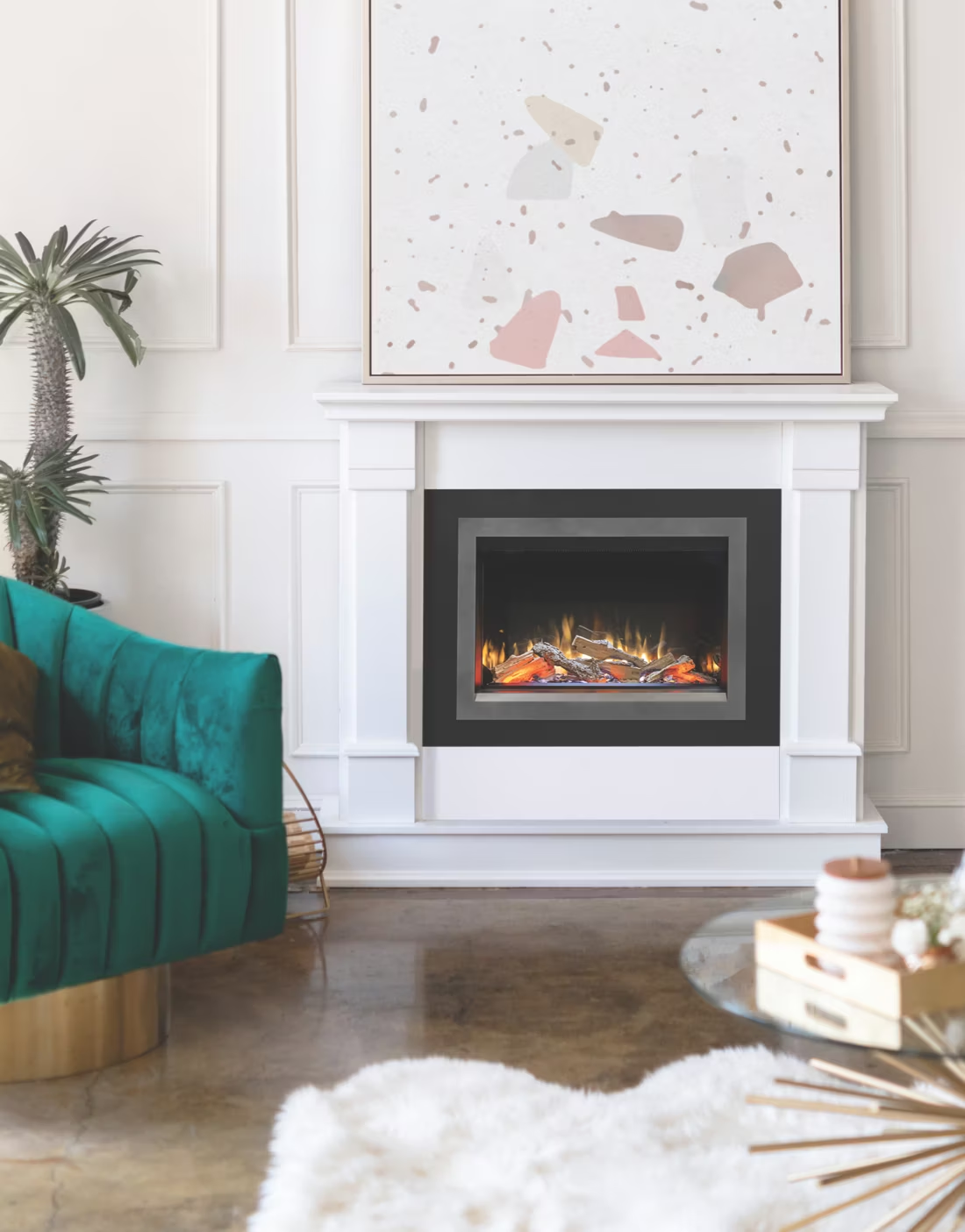
Three steps. No salesperson until you're ready.
Tell us about your project
Your zip code, your situation, and the fuel you're leaning toward—or let the answers point you to one.
See what's actually available
The brands dealers within 100 miles genuinely carry—real options, never a catalog mirage.
Get your dealer & Project Guide
A trusted local dealer, plus the free Project Guide & Parts List that names every component of the job.
Frequently Asked Questions
How much does an electric fireplace installation cost in Shenandoah Farms?
It depends heavily on the unit type. A plug-in electric insert or freestanding stove that runs off a standard household outlet typically costs $300 to $900 for the unit itself, with no electrician required beyond making sure the outlet is on its own circuit. A built-in wall unit or a larger insert that needs a dedicated 20-amp circuit run by a licensed electrician usually lands between $800 and $2,500 total, depending on how far the wiring has to travel—which matters in some of the older cabin-style homes here where the panel isn't always close to the room you're heating. A local dealer will look at your specific wall and panel setup before quoting a firm number.
Will an electric fireplace actually heat a room, or is it just for looks?
A properly sized unit will genuinely heat a room—most models put out 4,000 to 5,000 BTUs, enough for 300 to 400 square feet of space, which covers a bedroom, den, or finished basement room comfortably given Shenandoah Farms's relatively moderate winter lows around 24°F. What it won't do is replace a whole-home heating system in a climate with a moderate winter heating load like this one, especially in an older cabin with less insulation than a newer build. Think of it as zone heat for the room you're actually in, paired with whatever primary system already handles the rest of the house.
Do I need a permit to install an electric fireplace in Warren County?
A plug-in unit that uses an existing outlet generally doesn't require any permit—it's no different than plugging in a space heater. If your installer needs to run a new dedicated circuit to handle a larger built-in unit, that electrical work does require a permit through Warren County and should be pulled by a licensed electrician. This is one of the appeals of electric here: there's no chimney inspection, no gas line permit, and no venting code to satisfy the way there is with wood or gas.
What type of electric fireplace makes sense for a cabin versus a full-time home?
For the older cabin-style properties scattered through Shenandoah Farms, a freestanding electric stove that mimics a wood-burning look tends to fit the aesthetic and can simply be plugged in and moved if needed—useful for a place that only sees weekend use. For a full-time residence, a built-in wall unit or insert set into an existing fireplace opening gives a more finished, permanent look and usually throws more consistent heat for daily use. Either way, a local dealer can walk your space and tell you which mounting option actually works with your walls and framing.
How much does it cost to run an electric fireplace here?
At Rappahannock Electric Cooperative's residential rate of about 14.9 cents per kWh, a typical 1,500-watt electric fireplace running on high costs roughly 22 cents per hour. Running one for four or five hours a night through a cold stretch adds up to somewhere around $25 to $35 a month—far less than heating an entire house with electric resistance heat, and a reasonable trade-off for taking the chill off one room without firing up a furnace or hauling wood.
Electric vs. wood—which makes more sense for my property?
Wood remains common here, with oak, hickory, and maple readily available from the surrounding Blue Ridge woodlands, and it keeps working during a power outage—a real consideration on Rappahannock Electric Cooperative's rural overhead lines, which can go down during ice storms or high wind through wooded terrain. Electric offers none of that outage resilience, but it's dramatically simpler: no chimney, no ash, no permits, and no risk of creosote buildup. Many homeowners in Shenandoah Farms end up with both—wood or propane as the primary or backup heat source, electric for supplemental warmth in a room that's inconvenient to vent.
Electric vs. gas—is gas even an option out here?
There's no widespread natural gas utility serving Shenandoah Farms, so a gas fireplace here typically means propane, with a tank installation and regular delivery. Electric skips that entirely—no fuel storage, no delivery schedule, no propane contract to manage. For homeowners who don't already have a propane tank on the property, electric is usually the lower-friction path to adding heat to a single room.
What does the installation process actually look like?
For a plug-in unit, installation is close to immediate—set it in place, plug it in, done. For a built-in wall unit or insert requiring a dedicated circuit, a local electrician runs the wiring, mounts the unit per manufacturer clearance specs, and the whole job is usually completed in a day. A trusted local dealer will handle sizing the unit to your room and coordinating the electrical work rather than leaving you to guess at wattage and wire gauge yourself.
How do I find a reliable electric fireplace dealer near Shenandoah Farms?
Look for a dealer who will actually walk your space rather than sell you a box off a shelf—sizing an electric unit to the room, checking your electrical panel capacity, and confirming clearances matters more than brand names. We match Shenandoah Farms homeowners with a trusted local dealer who knows what's realistic to install in this area's older cabin stock and newer builds alike, and we don't take manufacturer money to steer the recommendation.
Do electric fireplaces actually produce heat?
Yes—most put out around 4,800–5,000 BTUs from a standard outlet, which comfortably warms a bedroom, office, or den as a comfort-zone heater. What they won't do is carry a whole house the way wood, gas, or pellet can. Think of electric as ambiance-first with honest supplemental heat: flames on with no heat in July, flames plus warmth in January.
Can I put a TV above my fireplace?
Yes—with an asterisk. Fireplaces are hot and TVs don't like heat. Either put a mantel between them to deflect rising warmth, or choose a fireplace with heat-management technology that creates a cool zone on the wall above—the wall stays around 125 degrees, barely warm, while the room still gets full heat. If you like clean lines and don't want a mantel, heat management is the answer.
How much should I budget for a fireplace?
For an average home—covering the fireplace, the vent pipe, and basic installation—a budget between $3,900 and $5,500 gives you a lot of options across wood, gas, and pellet. By the time you add finish work, gas line, and electrical, the average complete installation lands between $5,000 and $12,000 all-in. In a remodel or new build, a good rule is to put about 2.5% of the total project cost toward the fireplace.
Can a fireplace actually lower my heating bill?
Yes—by creating a comfort zone. A furnace heats every square foot of the house just to warm the one room you're in; a gas fireplace on low burns roughly a sixth of the gas a typical furnace does. Set the furnace around 55–60 degrees as a baseline, then heat the rooms your family actually uses. Families who heat this way commonly save $20–$60 a month.
Nearby Dealers
Hearth shops serving Shenandoah Farms and the surrounding area. Every listing shows whether it is a WhyFire partner, a dealer we have verified as authorized for the brands we recommend, or a local business carrying hearth products. No manufacturer pays for placement. How we verify dealers →
Miller Ace Hardware
Area – Huntly, Va
Blossman Gas And Appliance
Dmv Chimneys & Masonry Repair
Prouty's Chimney Sweep
Holtzman Propane
Amazing Flame
Nova Fire Design
Costello's Hearth & Spa - Warrenton
Holtzman Propane
Electric Service in Shenandoah Farms
An electric fireplace's heater draws about 1,500 watts—pennies per hour at local rates.
Rappahannock Electric Coop
Find your electric fireplace in Shenandoah Farms.
Tell us about your room and your home, and we'll send you a free Project Guide & Parts List—a plan for your electric fireplace project with the exact parts and a recommended local dealer in Warren County.
Find Your Fireplace →