
Pellet Heat Is Rare in Seven Corners—But It Can Still Work.
Most homes in the 22044 and 22041 corridor run on gas or electric heat, and pellet stoves are the exception here—not the rule. If you've got a detached home with room for a hopper and a vent run, we'll help you find out if it's a real option.
Every Project Starts From One of These Five Situations
Not the default fuel in this part of Fairfax County—and that's worth saying plainly.
Seven Corners is a dense, unincorporated crossroads community inside the Capital Beltway, packed into the 22044 and 22041 zip codes with garden apartments, condos, townhomes, and strip retail alongside older single-family blocks. At 325 feet elevation and climate zone 4A, winters here are real but mild by national standards—average lows around 26°F and roughly 4,506 heating degree days a season, a fraction of what a place like Duluth, MN or Burlington, VT sees in a typical winter. That combination of dense housing stock and moderate heating need is exactly why pellet stoves show up so rarely on our end: most homes here already have natural gas or electric heat built in, and a lot of the housing stock (condos, garden apartments, attached townhomes) simply isn't set up for a freestanding appliance that needs an exterior vent, a hopper, and a place to store 40-pound bags of fuel.
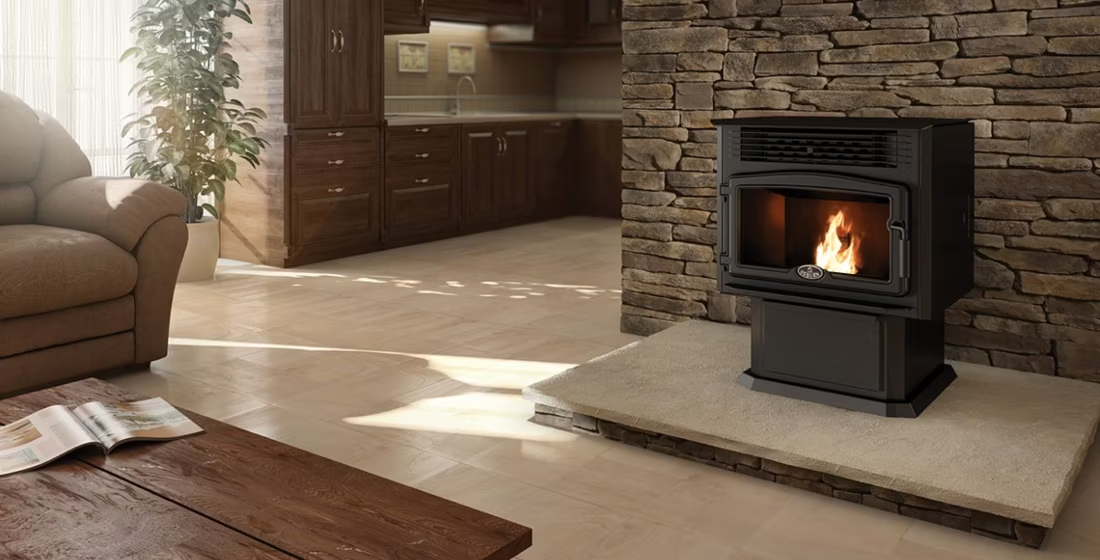
That doesn't mean pellet heat is off the table—it means it's a niche choice here rather than a mainstream one. Homeowners in the area's detached single-family homes sometimes add a pellet stove or insert for supplemental heat in a basement or family room, or simply because they like the low-mess, thermostat-controlled burn compared to cordwood. Regional pellet brands like Energex, Hamer Pellet Fuel, and Greene Team Pellet Fuel are available through mid-Atlantic dealers and distributors, so fuel supply isn't the obstacle—housing type and venting access usually are. If that's you, we'll match you with a local dealer who can tell you honestly whether your home is a good candidate before you spend a dime.
Three steps. No salesperson until you're ready.
Tell us about your project
Your zip code, your situation, and the fuel you're leaning toward—or let the answers point you to one.
See what's actually available
The brands dealers within 100 miles genuinely carry—real options, never a catalog mirage.
Get your dealer & Project Guide
A trusted local dealer, plus the free Project Guide & Parts List that names every component of the job.
Frequently Asked Questions
Are pellet stoves actually common in Seven Corners?
No, and we'd rather tell you that up front than pretend otherwise. Between the density of the 22044/22041 area—garden apartments, condos, and townhomes—and the fact that most homes already run on natural gas or electric heat, pellet stoves are a niche installation here, not a common one. Where they do show up, it's almost always in a detached single-family home with a basement or garage wall available for venting, installed for supplemental heat or as a lower-mess alternative to a wood-burning setup.
Can I install a pellet stove in a condo or townhome in Seven Corners?
It depends heavily on the building. Pellet stoves need a wall or roof penetration for the exhaust vent, a dedicated 120V electrical outlet for the auger and blower, and floor space plus nearby storage for pellet bags—all of which are harder to come by in the condo and garden-apartment stock common in the 22044 and 22041 zips. Many HOAs and condo associations also restrict exterior wall penetrations. Detached single-family homes in the area have a much easier path. A local dealer can look at your specific unit or HOA rules before you commit to anything.
Why is gas the standard heating fuel here instead of pellet?
With winter lows averaging around 26°F and about 4,506 heating degree days a year, Seven Corners doesn't have the sustained, deep-cold heating load that makes cordwood or pellet self-sufficiency attractive the way it does in colder inland climates. Natural gas service is widely available throughout this part of Fairfax County, and gas fireplaces and inserts deliver instant, thermostat-level heat without fuel storage—which fits the area's housing density and moderate climate better than a hopper-fed appliance does.
Where can I buy pellet fuel near Seven Corners?
Regional mid-Atlantic mills like Energex, Hamer Pellet Fuel, and Greene Team Pellet Fuel supply dealers throughout Northern Virginia, so fuel availability isn't the limiting factor for anyone who does install a stove here. The bigger question is usually storage—a ton of pellets is roughly fifty 40-pound bags, and that takes real square footage most attached and multi-family homes in the 22044/22041 area don't have to spare.
Will a pellet stove keep my home warm during a power outage?
No—this is one of the most important things to know before buying one. Unlike a wood stove, a pellet stove's auger and combustion blower both run on standard household electricity, so the unit shuts down when the power does. Virginia Electric & Power Co (Dominion) service in this part of Fairfax County is generally reliable, but if backup heat during outages is your main goal, a wood-burning appliance or a battery-backed gas fireplace is a better fit than pellet.
How much does a pellet stove installation cost in Seven Corners?
Because pellet installs are uncommon here, there isn't a well-established local price benchmark the way there is for gas inserts. In general, a pellet stove or insert installation—unit, venting, and labor—tends to fall in a similar range to a mid-tier gas insert once you account for the exterior vent run and any hearth pad work, but the honest answer is that it varies by home. A trusted local dealer can give you a firm number after seeing your specific layout, which is part of what the free Project Guide connects you to.
Do I need a permit to install a pellet stove in Seven Corners?
Yes. Fairfax County requires a building permit for new solid-fuel appliance installations, handled through Fairfax County Land Development Services. Most local installers pull the permit as part of the job, and inspection typically covers clearances, venting termination, and the hearth pad. If you're in a condo or townhome association, check HOA rules as well—some prohibit exterior vent penetrations regardless of county permitting.
Pellet vs. wood—does either make sense for a Seven Corners home?
Both are uncommon here for the same underlying reason: dense housing stock and a mild-to-moderate climate (zone 4A, roughly 4,506 heating degree days) that doesn't demand the kind of self-sufficient heat culture you'd find in a colder, more rural area. Where wood does show up, it's usually oak, hickory, or maple burned in an existing masonry fireplace rather than a dedicated heating stove. If you have a detached home with storage and venting access, pellet is generally the lower-maintenance, less messy option; wood is the choice if you want a fuel source that doesn't depend on electricity. For most Seven Corners households, gas or electric remains the more practical primary heat source.
What size pellet stove would fit a typical Seven Corners home?
It comes down to your actual square footage and how the home is laid out—a detached single-family home in the area is a very different sizing conversation than a townhome with a finished basement. Small pellet stoves (rated for roughly 500–1,000 sq ft) suit a single room or basement retrofit; mid-size units can supplement heat across a main living level. Given how few pellet installs happen in this specific market, sizing is exactly the kind of detail worth getting right with a local dealer rather than guessing from a general chart.
Why is a fireplace insert so efficient?
An insert does two things: it seals the chimney completely, so you stop losing air you already paid to heat, and it radiates warmth into the room through the firebox and glass. Most add a heat-exchange fan that pulls cool room air underneath, wraps it around the hot firebox, and pushes it back out warm. Your home is more efficient before you've even lit the first fire.
What do I measure to size a fireplace insert?
Four numbers tell you what fits: the front width, the front height, the back width, and the overall depth of your existing fireplace opening. Grab a tape measure, jot those down, and snap a photo of the wall—those two things do more to move your project forward than anything else you can do today.
Can a fireplace actually lower my heating bill?
Yes—by creating a comfort zone. A furnace heats every square foot of the house just to warm the one room you're in; a gas fireplace on low burns roughly a sixth of the gas a typical furnace does. Set the furnace around 55–60 degrees as a baseline, then heat the rooms your family actually uses. Families who heat this way commonly save $20–$60 a month.
Should the dealer who sells my fireplace also install it?
Ideally, yes. A fireplace project involves vent pipe, gas line, electrical, and often tile or stone. Hire three or four separate trades and you own the liability and the game of telephone between them. One company selling and installing means one accountable party, start to finish—ask about factory training, on-time completion records, and what happens if an inspection fails.
Nearby Dealers
Hearth shops serving Seven Corners and the surrounding area. Every listing shows whether it is a WhyFire partner, a dealer we have verified as authorized for the brands we recommend, or a local business carrying hearth products. No manufacturer pays for placement. How we verify dealers →
Cyprus Air, Indoor Comfort
Aspen Green Gasworks
Cyprus Air
Costello's Hearth & Spa - Rockville
Genesis Chimney Services
Nova Fireplace And Stove
Capitol Chimney Service
Homeliving Fireplaces
Lawn & Leisure
Chimney.com
Tri-County Hearth & Patio
The Fireplace Shop
Fireside Hearth & Home - Manassas
Deckscapes Of Virginia
Belair Engineering & Service Co, Inc
Masters Pellet Stoves
Superior Fireplaces - La Plata
Pellet Brands Stocked Around Seven Corners
Manufacturers will point you to the nearest stocking dealer.
Find your pellet fireplace option in Seven Corners.
Tell us about your home and we'll let you know honestly whether a pellet stove fits your space—then match you with a trusted local dealer and send over a free Project Guide & Parts List with the exact venting and parts your project needs.
Find Your Fireplace →