
Zero-clearance heat for Scott County homes without a gas line.
With no natural gas mains reaching most of rural Scott County, electric fireplaces and inserts give Clinch Mountain-area homes real supplemental warmth with no flue, no gas line, and no masonry work. I'll match you with a trusted local dealer who knows what actually fits your home and your electrical panel.
Every Project Starts From One of These Five Situations
No chimney, no gas line, no problem.
Scott County sits in the far southwestern corner of Virginia, tucked between Clinch Mountain and Moccasin Ridge, with a population under 5,000 spread across Gate City, Weber City, Nickelsville, and long rural stretches in between. At climate zone 4A with a moderate winter heating season and winter lows averaging 27°F, the cold here is real but not extreme—more valley fog and occasional ice than deep-freeze territory. What shapes heating choices in Scott County isn't the thermometer, it's the infrastructure: outside the small incorporated towns, there's no natural gas main to tap into, and a lot of housing stock is manufactured or modular. That combination makes electric heat pumps the default primary system for most households, with propane as the backup fuel of choice where it's used at all.
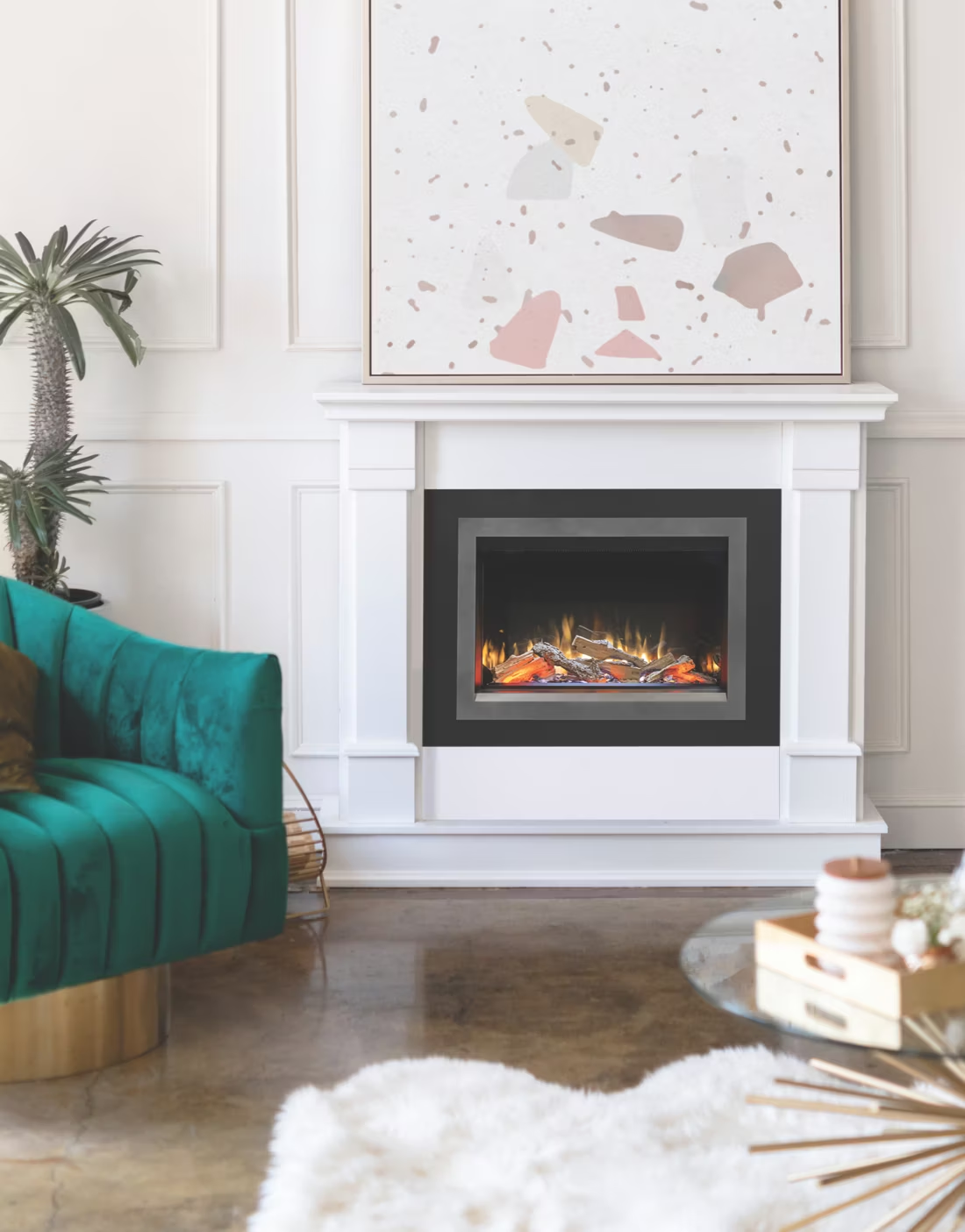
Against that backdrop, an electric fireplace insert or stove is one of the easiest upgrades a Scott County homeowner can make. There's no chimney to build, no gas line to run, and no venting to size—plug it in or hardwire it to a dedicated circuit and it's operating the same day, powered through the same Old Dominion Power or Powell Valley Electric Cooperative service already running the rest of the house. That's especially useful in the manufactured and modular homes common throughout the county, where adding a wood or gas appliance means dealing with clearance and venting rules that an electric unit simply sidesteps. It works as zone heat layered on top of a heat pump, or as a low-cost way to add fireplace ambiance to a room that never had one.
Three steps. No salesperson until you're ready.
Tell us about your project
Your zip code, your situation, and the fuel you're leaning toward—or let the answers point you to one.
See what's actually available
The brands dealers within 100 miles genuinely carry—real options, never a catalog mirage.
Get your dealer & Project Guide
A trusted local dealer, plus the free Project Guide & Parts List that names every component of the job.
Frequently Asked Questions
How much does an electric fireplace cost to install in Scott County?
Most electric fireplace projects in Scott County fall in the $400 to $2,500 range, and where you land depends almost entirely on the unit type. A plug-in freestanding stove or a wall-mount model on an existing outlet sits at the low end and can go in within a couple of hours. A built-in insert or a linear wall unit that requires a dedicated 20-amp circuit run from the panel costs more in electrician labor, especially in older farmhouses around Nickelsville or Duffield where panel capacity sometimes needs an upgrade first. Either way, there's no chimney, masonry, or venting cost to add on top, which keeps electric well below what a wood or gas install runs in the same county.
Will an electric fireplace actually heat a room in a Scott County winter?
Within its limits, yes. Most electric inserts and stoves put out 5,000 to 10,000 BTUs, which comfortably heats a single room or open living area—plenty for the county's winter lows averaging 27°F and a winter heating season that's real but not brutal. What it won't do is replace a whole-home heating system on its own. The typical setup here is an electric fireplace supplementing a heat pump: the heat pump carries the house, and the fireplace zone-heats the room people actually spend time in on a cold evening, which also lets you turn the thermostat down elsewhere and save on the electric bill.
Can I put an electric fireplace in a manufactured or modular home?
Yes, and it's one of the more common installs in Scott County given how much of the county's housing stock is manufactured or modular. Electric units generate no combustion byproducts and most models qualify as zero-clearance, so they avoid the stricter framing and clearance rules that apply to wood or gas appliances in manufactured housing. The main thing to check is your electrical panel's available capacity—a local electrician or dealer can confirm whether a dedicated circuit is needed before the unit goes in, which is a quick check compared to what a wood or gas retrofit would require in the same home.
Do I need a permit for an electric fireplace in Scott County?
A simple plug-in unit on an existing outlet typically doesn't trigger a permit. A built-in insert or any installation that requires new wiring or a dedicated circuit does need an electrical permit through the Scott County Building Department, since that work has to be done to code and inspected. Most licensed electricians handle the permit as part of the job. It's a much lighter process than the building and venting permits required for a wood stove or gas fireplace, which is part of why electric is often the fastest option to get installed before cold weather sets in.
What happens to my electric fireplace during a power outage?
It stops working, full stop—electric fireplaces have no battery backup or standing pilot to fall back on. That matters in Scott County, where ice storms on Clinch Mountain and Moccasin Ridge can knock out rural electric co-op lines for a day or more some winters. Because of that, a fair number of households here keep a wood stove or insert as backup heat alongside their electric fireplace. Oak, hickory, and maple are the common local species, and the Nantahala-Pisgah National Forests issue personal-use cutting permits for $20 per cord, season running May through October—a low-cost way to have real, off-grid heat in reserve for the days the power doesn't come back quickly.
Electric vs. wood stove—which makes more sense for my home?
Electric wins on convenience: no venting, no ash, no wood to split or stack, and instant on-off operation from a remote or wall switch. Wood wins on resilience and fuel cost: a stove burning oak, hickory, or maple cut under a $20-per-cord Nantahala-Pisgah permit keeps a home warm through an extended outage with zero reliance on the grid. Many Scott County households end up with both—electric for daily zone heat in the main living space, wood as the fallback system for when Powell Valley Electric Cooperative lines go down in a winter storm. If your home doesn't already have a chimney or flue, electric is the far simpler and cheaper of the two to add.
Electric vs. propane—which is the better fit here?
With no natural gas mains reaching most of the county, propane is the realistic gas alternative to electric in Scott County, and it comes with real tradeoffs. A propane fireplace needs a tank, a delivery contract, and venting, all of which add upfront cost and an ongoing fuel bill that fluctuates with delivery prices. An electric fireplace needs none of that—it runs on the same power already serving the house, with no tank to monitor or refill. For supplemental zone heat and ambiance, electric is usually the lower-cost, lower-hassle choice; propane makes more sense if you're looking to offset a larger share of whole-home heating rather than warm a single room.
How much maintenance does an electric fireplace need?
Very little, which is part of the appeal in a rural county where a chimney sweep or gas technician isn't always around the corner. There's no flue to inspect, no creosote, and no combustion byproducts to worry about. Maintenance is mostly dusting the unit, occasionally cleaning the glass front, and replacing the LED light source over its rated lifespan—often 10 years or more before it needs attention. Compare that to the annual chimney sweep a wood stove needs, and electric is the lowest-upkeep option available to Scott County homeowners.
Where do I actually buy and install an electric fireplace in Scott County?
Given the county's population is under 5,000, there's no big hearth showroom inside Scott County itself—most homeowners end up sourcing through dealers based in Kingsport or Bristol who service the surrounding rural counties, or through electricians in Gate City who handle straightforward installs directly. That's exactly the gap I fill: rather than guessing which retailer actually delivers and installs in your part of the county, I match you with a trusted local dealer who covers Scott County and knows the electrical realities of the housing stock here, from older farmhouses to manufactured homes.
Can I put a TV above my fireplace?
Yes—with an asterisk. Fireplaces are hot and TVs don't like heat. Either put a mantel between them to deflect rising warmth, or choose a fireplace with heat-management technology that creates a cool zone on the wall above—the wall stays around 125 degrees, barely warm, while the room still gets full heat. If you like clean lines and don't want a mantel, heat management is the answer.
What fireplace styles should I know before shopping?
Four cover most of the market: screen-front traditional (mesh front, open feel, fits craftsman homes), traditional door set (the classic look you grew up with), modern linear (wide, low, the statement piece for entertaining), and clean face contemporary (no trim—your tile or stone runs right to the fire's edge). Walk in knowing those four terms and you're ahead of most buyers.
Can I install a fireplace myself?
If you're putting a fire in your house on purpose, it's best to work with an expert. Unless you're genuinely experienced in framing, gas line, vent pipe, and the national code on clearances to combustibles, have a professional do it—and ideally the same company that sells you the fireplace, so warranty, service, and liability all live under one roof.
What is an in-home preview and do I need one?
It's a visit where a hearth professional measures your space, confirms the model you picked actually works in your home, and walks the specs—framing, gas line, venting, finish work—before anything is ordered. Some details you just can't know until you see the house. Never make a down payment without one; it's the single most-skipped step that burns buyers.
Stove and Fireplace Dealers in Scott County
Listings include WhyFire partner dealers, dealers we have verified as authorized for the brands we recommend, and established local businesses that carry hearth products. Every listing shows which one it is. The ones marked Preferred run on WhyFire's software, so they can show you real pricing and book your appointment right here. No manufacturer pays for placement. How we verify dealers →
Hammonds HVAC & Gas Services
Hammond's Heating And Air
Marsh Lp Gas
Admiral Propane LLC
Builders First Source- Gray
Hce Systems Inc.
Holston Hardware Company
Suburban Propane
Southwest Heating & Air
Southern Quality Propane
Get your free Project Guide & Parts List for an electric fireplace in Scott County.
Tell me a bit about your home, its wiring, and how you plan to use the fireplace, and I'll match you with a trusted local dealer serving Scott County and send over a free Project Guide & Parts List—the exact unit, electrical requirements, and recommended installer for your project, no big-box guesswork.
Find Your Fireplace →