
Fireplace and stove options built for the Clinch River Valley.
Wood, gas, pellet, and electric fireplace resources for every town in Scott County—from Gate City to Nickelsville, Duffield, and Fort Blackmore. Get matched with a trusted local dealer who knows the ridge-and-valley terrain here.
Every Project Starts From One of These Five Situations
Steady, moderate winters in the Clinch River Valley.
Scott County sits in the far southwest corner of Virginia, where the Clinch River cuts through ridge-and-valley Appalachian terrain between Gate City and the Tennessee and Kentucky state lines. Winters here are moderate by Appalachian standards—average lows around 27°F and a heating season milder than you'd find in places like Burlington, Vermont or Duluth, Minnesota. Oak, hickory, and maple dominate the hardwood forests covering the ridgelines, and wood heat has been part of daily life here for generations. Many households still supplement furnace or propane heat with a wood stove or insert burning timber cut from their own land or a neighbor's wood lot. For public land firewood permits, most residents work through the Nantahala-Pisgah National Forests office, the nearest USFS permitting desk serving this stretch of southwest Virginia.
This hub covers wood, gas, pellet, and electric fireplace resources for every community in Scott County—Gate City, Nickelsville, Duffield, Weber City, Clinchport, Dungannon, and Fort Blackmore. Pick a fuel below to see local dealers, service technicians, typical installation costs, and the units that actually fit a Scott County home, whether that's a farmhouse along the Clinch River or a cabin tucked into the ridges toward the Kentucky line.
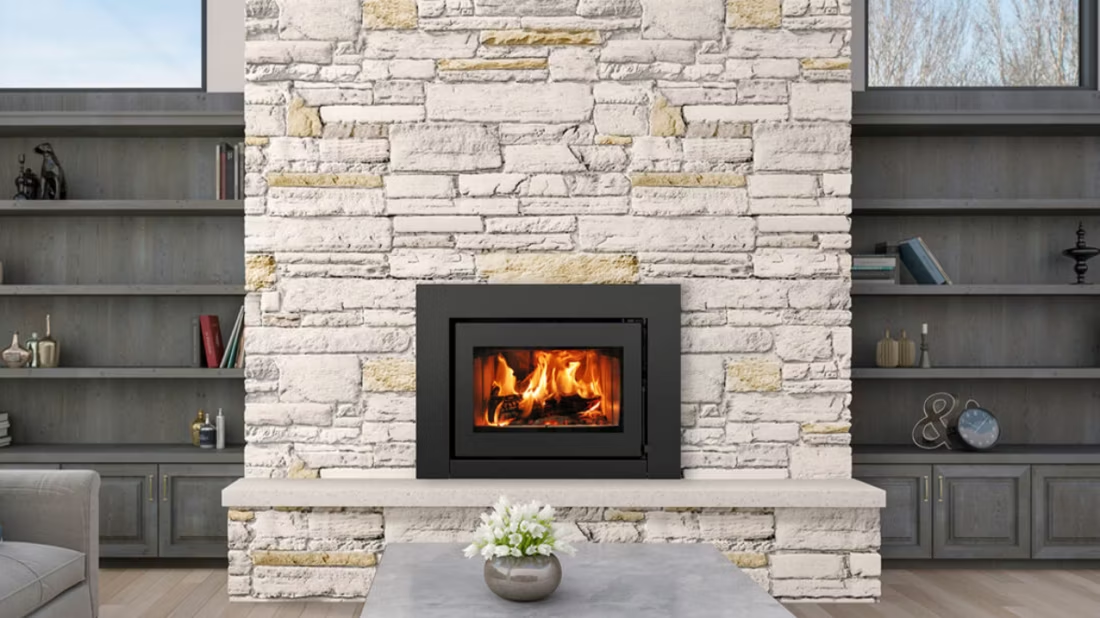
Four fuels. One honest answer for Scott County.
Three steps. No salesperson until you're ready.
Tell us about your project
Your zip code, your situation, and the fuel you're leaning toward—or let the answers point you to one.
See what's actually available
The brands dealers within 100 miles genuinely carry—real options, never a catalog mirage.
Get your dealer & Project Guide
A trusted local dealer, plus the free Project Guide & Parts List that names every component of the job.
Frequently Asked Questions
Which fuel works best in Scott County?
It depends on the home and how you use it. Wood is a natural fit given the oak, hickory, and maple that cover the ridgelines here—a lot of Scott County households cut or buy their own firewood and use a stove or insert as a serious supplemental heat source, including backup during winter power outages. Gas is the convenience option, but because piped natural gas is limited in this rural stretch of southwest Virginia, most gas fireplace and insert installs run on a propane tank rather than a gas main—still instant heat with no wood-splitting labor. Pellet stoves are a middle ground for homeowners who want wood-style ambiance without the daily wood handling, and regional brands like Energex, Hamer Pellet Fuel, and Greene Team Pellet Fuel keep local supply steady. Electric fireplaces work well as supplemental heat in a bedroom or added-on room, but with average winter lows around 27°F, they're not a substitute for a primary heat source here. Most homes end up pairing wood or propane as the main heater with electric or a smaller pellet unit in a secondary space.
Do I need a permit to install a fireplace in Scott County?
In most cases, yes. New wood stoves, wood inserts, gas fireplaces, gas inserts, and pellet stoves generally require a building permit through the Scott County building department. If your gas install runs on a propane tank rather than a gas main, you'll also need the tank set and connected by a licensed gas-fitter, which typically involves its own inspection. Electric fireplaces usually don't require a permit unless you're doing a built-in installation with new wiring or a dedicated circuit. Most local hearth retailers and installers handle the permitting paperwork as part of the job, so you generally aren't filing it yourself.
Are there wood-burning restrictions in Scott County?
No—Scott County isn't in an air quality nonattainment area and doesn't have the winter inversion problems that trigger mandatory or voluntary burn curtailment in some western basin communities. There are no seasonal burn bans here. That said, oak and hickory both need a full year or more of seasoning before they burn clean, and an EPA-certified stove will produce far less smoke and creosote buildup than an older uncertified unit—worth factoring in if you're replacing an aging stove or insert.
Can one local retailer handle all four fuel types?
With a population under 5,000, Scott County itself doesn't support a large number of dedicated hearth shops, so many residents end up working with a regional dealer based in a nearby larger town—Kingsport or Bristol, Tennessee, or Big Stone Gap, Virginia are common service points for this part of the Clinch River Valley. Coverage of all four fuels (wood, gas, pellet, electric) varies by dealer, so it's worth confirming which fuels a given retailer actually stocks and installs before you commit, especially if you're cross-shopping between a wood insert and a propane-fed gas unit.
How does service work in the more rural parts of the county?
Most chimney sweeps and gas or pellet technicians serving Scott County are based outside it—commonly Kingsport, Bristol, or Big Stone Gap—and travel in for scheduled service. Expect a modest travel fee for calls out toward Dungannon, Clinchport, or Fort Blackmore, and plan on booking pre-season appointments (late summer through early fall) rather than waiting for a mid-winter emergency call, since technicians covering this wide a rural territory book up fast once cold weather hits.
What's the typical cost range for fireplace installation across all fuel types in Scott County?
Costs vary by fuel and by how much venting or gas-line work is involved. Wood stove or insert installation: roughly $3,500–$8,000 for a typical job, more if new masonry or a full chimney liner is needed. Gas fireplace, insert, or stove: roughly $4,000–$9,000, with propane tank setup and gas-fitter connection adding to the lower end of that range for homes without existing service. Pellet stove or insert: roughly $3,500–$6,500 for a standard install. Electric fireplace: $200–$2,500 for the unit itself, plus $300–$1,000 in labor for anything beyond a simple plug-in placement, such as a wall-mount or built-in with new wiring. A trusted local dealer can give you a firmer number once they've seen your chimney, gas access, or wall setup.
What is an in-home preview and do I need one?
It's a visit where a hearth professional measures your space, confirms the model you picked actually works in your home, and walks the specs—framing, gas line, venting, finish work—before anything is ordered. Some details you just can't know until you see the house. Never make a down payment without one; it's the single most-skipped step that burns buyers.
Can a fireplace actually lower my heating bill?
Yes—by creating a comfort zone. A furnace heats every square foot of the house just to warm the one room you're in; a gas fireplace on low burns roughly a sixth of the gas a typical furnace does. Set the furnace around 55–60 degrees as a baseline, then heat the rooms your family actually uses. Families who heat this way commonly save $20–$60 a month.
Can I install a fireplace myself?
If you're putting a fire in your house on purpose, it's best to work with an expert. Unless you're genuinely experienced in framing, gas line, vent pipe, and the national code on clearances to combustibles, have a professional do it—and ideally the same company that sells you the fireplace, so warranty, service, and liability all live under one roof.
Wood, gas, pellet, or electric—how do I choose?
Match the fuel to your life, not the other way around. Wood: lowest fuel cost and total power-outage independence, but you're hauling and stacking. Gas: press a button, set a thermostat, no maintenance to speak of. Pellet: wood economics with automatic feeding, in exchange for weekly cleaning and a need for electricity. Electric: plugs in anywhere with honest supplemental heat. Nobody regrets the fuel that fits how they actually live.
Stove and Fireplace Dealers in Scott County
Listings include WhyFire partner dealers, dealers we have verified as authorized for the brands we recommend, and established local businesses that carry hearth products. Every listing shows which one it is. The ones marked Preferred run on WhyFire's software, so they can show you real pricing and book your appointment right here. No manufacturer pays for placement. How we verify dealers →
Hammonds HVAC & Gas Services
Hammond's Heating And Air
Marsh Lp Gas
Admiral Propane LLC
Builders First Source- Gray
Hce Systems Inc.
Holston Hardware Company
Suburban Propane
Southwest Heating & Air
Southern Quality Propane
Find your fireplace in Scott County.
Tell us about your home and we'll match you with a trusted local dealer and send over a free Project Guide & Parts List—the right unit, the vent kit, and a real installation plan for your Scott County project.
Find Your Fireplace →