
Reliable warmth for Roanoke Valley winters.
With 3,868 heating degree days and winter lows averaging 29°F, Salem County sits at the foot of the Blue Ridge in a solid four-season heating climate. I'll match you with a trusted local dealer who knows whether natural gas from Roanoke Gas Company or a propane tank makes more sense for your address, and what it actually takes to vent it safely.
Every Project Starts From One of These Five Situations
Consistent heat without splitting a single log.
Salem sits in the Roanoke Valley at roughly 1,000 feet elevation, ringed by the Blue Ridge and Alleghany ranges. The county's 3,868 heating degree days and 29°F average winter low put it in moderate cold-climate territory—not the brutal, months-long deep freeze of the upper Midwest, but enough sustained cold from November through March that a heating appliance needs to run every day, not just for ambiance. Oak, hickory, and maple are the traditional firewood species cut locally, and plenty of Salem County households still burn wood, but a growing number of homeowners want heat they can dial up from a thermostat without stacking cordwood or tending coals before bed.
Roanoke Gas Company (RGC Resources) serves natural gas throughout most of Salem and the surrounding valley, making a direct-vent gas fireplace or insert a straightforward add to an existing gas service. Head out toward the more rural edges of the county, and propane from a local bulk delivery company becomes the standard fuel instead—either off an existing tank or a new one your propane supplier sets and fills. Salem County has no air quality non-attainment designation and no burn curtailment periods, so the case for gas here isn't about beating a smoke advisory—it's about convenience, consistent output on the coldest January mornings, and not having to keep the woodpile dry and split.
Three steps. No salesperson until you're ready.
Tell us about your project
Your zip code, your situation, and the fuel you're leaning toward—or let the answers point you to one.
See what's actually available
The brands dealers within 100 miles genuinely carry—real options, never a catalog mirage.
Get your dealer & Project Guide
A trusted local dealer, plus the free Project Guide & Parts List that names every component of the job.
Frequently Asked Questions
How much does a gas fireplace installation cost in Salem County?
Most gas fireplace installations in Salem County run $3,800 to $9,500. A direct-vent insert going into an existing masonry firebox with gas service already running to that wall lands toward the lower end. A new direct-vent fireplace for a remodel or an addition—with framing, a fresh gas line, and roof or wall venting—sits toward the top. Homes outside the Roanoke Gas Company footprint that need a new propane tank set and line run should budget toward the higher end of that range as well. A local dealer can give you a firm number after a walkthrough.
Can I convert my existing wood fireplace to gas?
Yes, and it's a common upgrade in Salem County's older homes, particularly the brick colonials and ranches near downtown Salem and along the Roanoke River corridor that still have a working masonry chimney. A gas insert drops into the existing firebox and vents through a stainless liner run up your current flue, so you keep the mantel and hearth you already have while gaining flip-a-switch heat. Expect $4,000 to $8,500 depending on whether you're on Roanoke Gas Company service or propane, and whether the chimney needs a full liner replacement.
Is natural gas or propane the better fit for my house?
It comes down to where in the county you are. Roanoke Gas Company serves natural gas through most of Salem proper and the tighter-built parts of the valley, so if your water heater or furnace already runs on gas, adding a fireplace to that line is usually simple. Farther out—toward the more rural stretches near the county line and up into the hollows below the Blue Ridge—there's no gas main, and propane from a regional supplier is the standard alternative. Either fuel works fine in a modern direct-vent fireplace; it's mostly a matter of which is already running to your house.
Will my gas fireplace still work if the power goes out?
Most models built in the last decade will. Units with intermittent pilot ignition (IPI) carry a battery backup that kicks in automatically when utility power drops, so the fireplace still lights and runs on demand. Some manufacturers, including Valor, go further with pilot assemblies that generate their own electricity through the thermocouple, needing no battery at all. That matters in Salem County, where ice storms off the Blue Ridge occasionally knock out power for a day or more—ask your local dealer about the ignition system on any unit you're considering.
What's the difference between a gas fireplace, insert, and stove?
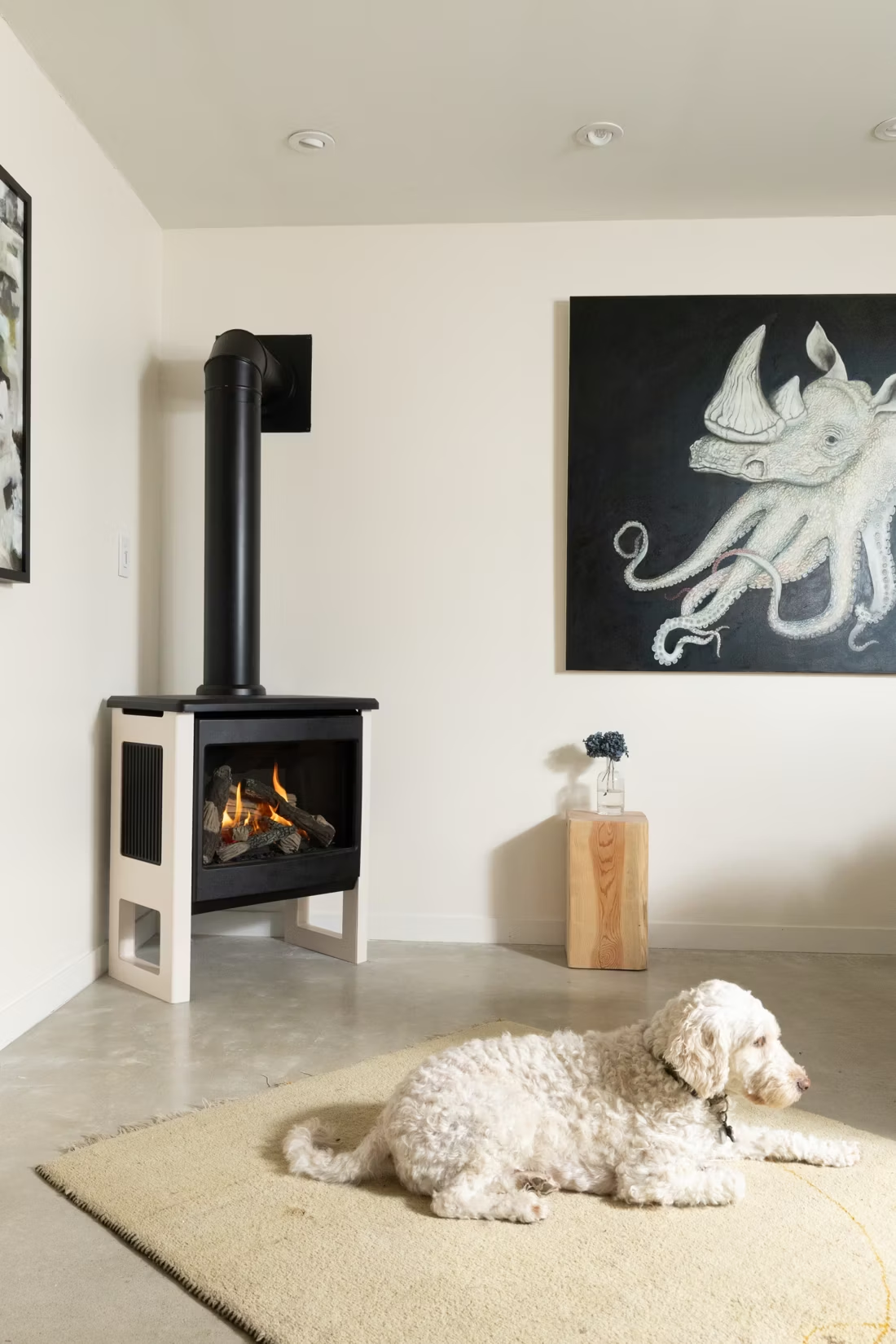
A gas fireplace is a fully built-in unit framed into a wall—the right call for new construction or a full remodel. A gas insert fits into an existing masonry firebox and uses your current chimney as the vent chase—the common choice for Salem County's older homes with a wood-burning fireplace already in place. A gas stove is a freestanding cabinet unit, useful in a room with no chimney at all, like a finished basement or an addition. A local dealer can walk your space and tell you which configuration actually fits the opening you have.
Do I need a permit to install a gas fireplace in Salem County?
Yes. The local building department requires a permit for new gas fireplace installations, and the gas line connection itself has to be run or tied in by a licensed gas fitter. That's the main reason to go through a full-service hearth dealer rather than a handyman install—a certified installer handles the appliance, the gas work, the venting, and the inspection sign-off as one coordinated job instead of leaving you to schedule separate trades.
Should I get a vented or vent-free gas fireplace?
Vented (direct-vent) units pull combustion air from outside and exhaust it back outside through a sealed pipe, keeping byproducts entirely out of the living space. Vent-free units burn directly into the room and are legal in Virginia within strict room-sizing limits and an oxygen depletion sensor. Salem County has no air quality non-attainment concerns, so there's no regulatory push either way, but most local dealers still steer homeowners toward direct-vent for the cleaner indoor air and the flexibility to place the fireplace anywhere on an exterior wall rather than only in a large enough room.
How often does a gas fireplace need to be serviced?
Plan on an annual inspection, ideally in early fall before the heating season picks up. A technician checks the burner, pilot assembly, gas connections, and venting, and cleans the glass and interior—a much shorter visit than a wood chimney sweep, but still worth doing given how many months out of a 3,868-HDD winter the unit is likely to run. A standard annual service call from a local gas appliance technician typically runs $150 to $250.
Gas vs. wood—which makes more sense for a Salem County home?
Wood—cut as oak, hickory, or maple under a George Washington & Jefferson National Forest personal-use permit for about $20 per cord between May and October—still appeals to households that want lower fuel cost and heat that doesn't depend on the grid. Gas offers instant, thermostat-controlled heat with no ash to haul and no wood to season and stack. With no air quality restrictions in Salem County pushing homeowners toward one fuel or the other, the choice usually comes down to whether you want the daily convenience of a gas insert in the main living space or you're set up to keep a wood-burning fireplace running as backup heat.
Why is my open fireplace making my house colder?
Open fireplaces suck—literally. As the fire burns, it consumes air your furnace already paid to heat and pulls it out through the chimney, so the house is actually colder after the fire goes out than before you lit it. An insert fixes this: it seals the chimney, puts fixed glass across the front, and turns that hole in your house into a real heat source.
Why is a fireplace insert so efficient?
An insert does two things: it seals the chimney completely, so you stop losing air you already paid to heat, and it radiates warmth into the room through the firebox and glass. Most add a heat-exchange fan that pulls cool room air underneath, wraps it around the hot firebox, and pushes it back out warm. Your home is more efficient before you've even lit the first fire.
Can I install a fireplace myself?
If you're putting a fire in your house on purpose, it's best to work with an expert. Unless you're genuinely experienced in framing, gas line, vent pipe, and the national code on clearances to combustibles, have a professional do it—and ideally the same company that sells you the fireplace, so warranty, service, and liability all live under one roof.
What is an in-home preview and do I need one?
It's a visit where a hearth professional measures your space, confirms the model you picked actually works in your home, and walks the specs—framing, gas line, venting, finish work—before anything is ordered. Some details you just can't know until you see the house. Never make a down payment without one; it's the single most-skipped step that burns buyers.
Stove and Fireplace Dealers in Salem County
Listings include WhyFire partner dealers, dealers we have verified as authorized for the brands we recommend, and established local businesses that carry hearth products. Every listing shows which one it is. The ones marked Preferred run on WhyFire's software, so they can show you real pricing and book your appointment right here. No manufacturer pays for placement. How we verify dealers →
Skyline Hearth & Fire
Davenport Energy Roanoke
New River Building Supply
Area – Burnt Chimney, Va
Davenport Energy Rocky Mount
Air Tech Home & Business
McGrady Perdue Heating & Cooling
Redwood Fuel
Blue Ridge Heating And Air
Black Goose Chimney
Get your free Project Guide & Parts List for a gas fireplace in Salem County.
Tell me about your home and I'll match you with a trusted local Salem County dealer and send over a free Project Guide & Parts List—the exact equipment, vent kit, and recommended installer for your gas fireplace project, no big-box guesswork.
Find Your Fireplace →