
Bring instant, no-vent warmth to your Salem County home.
With winter lows averaging around 29°F and roughly 3,868 heating degree days a year, Salem County rarely needs a full wood or gas heating system just to take the chill off. An electric fireplace or insert gets you real, on-demand warmth without a chimney, a gas line, or a woodpile—and we'll connect you with a local dealer who can size and install it right.
Every Project Starts From One of These Five Situations
Warmth without the chimney, the wood pile, or the gas line.
Salem County sits in the Roanoke Valley, tucked against the Blue Ridge, with a climate that's genuinely mild by national standards—winter lows average around 29°F and the county logs roughly 3,868 heating degree days a year, a fraction of what a place like Duluth, MN or Burlington, VT sees. That matters for the fuel decision: a lot of Salem County homes don't need—or want—the commitment of a full wood-burning setup or a new gas line just to warm a den, a finished basement, or a bedroom on a cold night. An electric fireplace fills that gap cleanly, plugging into an existing outlet or a dedicated circuit and producing real heat output without combustion, venting, or ash.
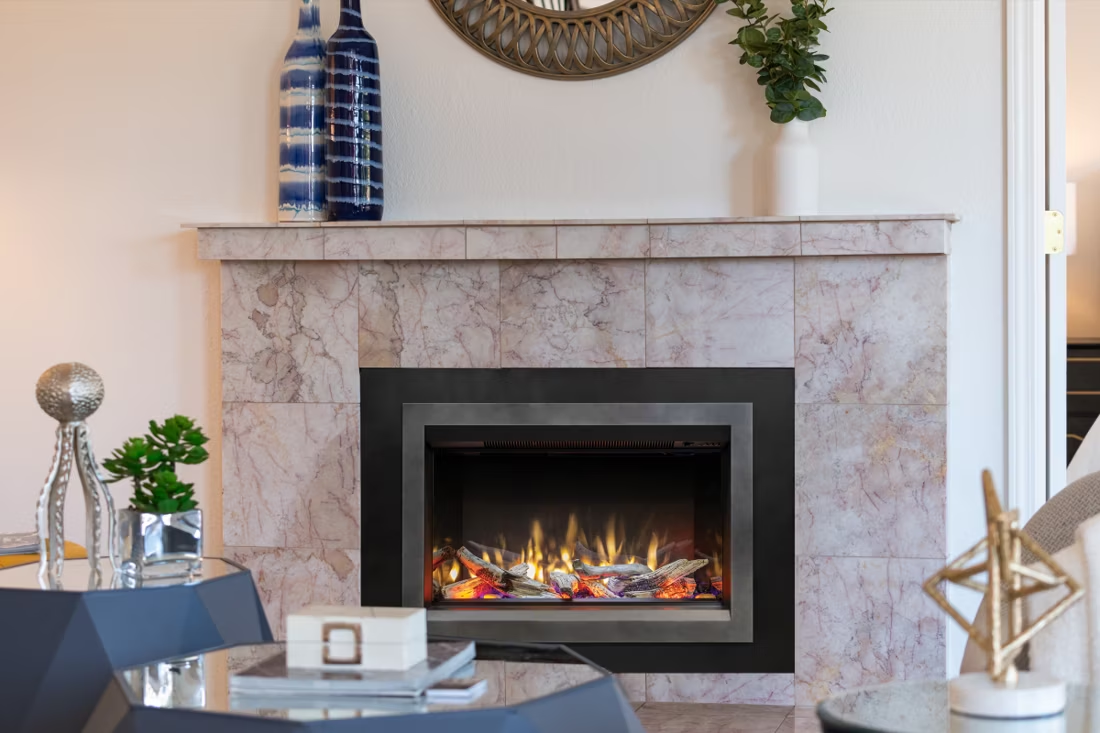
Electric also solves a real housing-stock problem here. Plenty of homes around downtown Salem and the older neighborhoods off Main Street have masonry fireplaces that were never great performers—drafty, inefficient, and rarely used. An electric insert drops into that existing opening and turns a dead fireplace into a heat source with zero maintenance and no chimney sweep required, ever. New construction and remodels lean toward built-in wall units instead, framed in like a TV niche. Either way, Appalachian Power serves electric accounts throughout the county, and because there's no combustion involved, none of the air-quality concerns that shape wood-burning decisions elsewhere even apply here.
Three steps. No salesperson until you're ready.
Tell us about your project
Your zip code, your situation, and the fuel you're leaning toward—or let the answers point you to one.
See what's actually available
The brands dealers within 100 miles genuinely carry—real options, never a catalog mirage.
Get your dealer & Project Guide
A trusted local dealer, plus the free Project Guide & Parts List that names every component of the job.
Frequently Asked Questions
How much does an electric fireplace installation cost in Salem County?
Plug-in freestanding units and simple inserts that use an existing outlet run on the low end, often $300 to $800 installed. Built-in wall units or larger inserts that need a dedicated 120V or 240V circuit run higher, typically $800 to $2,000, depending on wall framing and whether an electrician needs to run new wire from the panel. Because Salem County's mild winters (about 3,868 heating degree days a year) mean most homeowners are supplementing existing HVAC rather than replacing it, most projects here land toward the lower half of that range compared to colder-climate counties.
Do I need a permit or an electrician for an electric fireplace?
A basic plug-in unit that draws from a standard 120V outlet generally doesn't require a permit. But if you're installing a built-in wall unit or an insert that needs a dedicated circuit, the wiring work falls under the City of Salem Building Department's electrical permitting, and it should be pulled by a licensed electrician. Most local hearth or electrical retailers who sell built-in electric fireplaces will handle that permit and the circuit installation as part of the job, so it's rarely something you have to coordinate yourself.
Will an electric fireplace actually heat a room, or is it just for looks?
Modern electric fireplaces do produce real heat—most units offer a 4,600–5,200 BTU heater rated for 400 to 1,000 square feet, enough to comfortably supplement a bedroom, den, or finished basement. Given Salem County's relatively mild winter lows (averaging 29°F), a well-sized electric unit can genuinely offset the need to run central heat in a single room during most of the season. Where they fall short is whole-home heating during the occasional hard freeze—for that, a local dealer can walk you through whether a larger unit or a supplemental system makes more sense for your specific space.
Can I convert my existing wood fireplace to an electric insert?
Yes, and it's a common project in Salem County's older housing stock, particularly around the historic neighborhoods near downtown. An electric insert slides into the existing masonry opening, typically needs only a nearby outlet or a short electrical run, and eliminates the chimney maintenance, ash cleanup, and creosote concerns that come with burning oak, hickory, or maple in an old, often underperforming fireplace. Costs usually run $400 to $1,200 depending on insert size and whether new wiring is needed, well below what a gas conversion or new wood-burning appliance would cost in the same opening.
How much does it cost to run an electric fireplace compared to gas or wood?
Running costs depend on your Appalachian Power rate and how many hours you run the heater, but a typical electric fireplace on its heat setting costs somewhere in the range of 10 to 20 cents an hour to operate—cheap for occasional supplemental use, though it adds up if run as a primary heat source for long stretches. Wood remains the lowest-cost fuel for households willing to cut their own—Forest Service permits through the George Washington & Jefferson National Forest run about $20 per cord during the May-through-October season—but that comes with labor, storage, and chimney upkeep electric doesn't require. For most Salem County homes using a fireplace for supplemental warmth rather than whole-home heat, electric's convenience usually outweighs the modest per-hour cost difference.
What's the difference between an electric insert and a built-in wall unit?
An electric insert is sized to slide into an existing fireplace opening, using the masonry surround you already have—the more common choice for Salem County's older homes with existing hearths. A built-in wall unit is framed into new construction like a linear TV niche, with no fireplace opening required, which is why it's the go-to for remodels and newer builds around the county. Both plug into or hardwire to standard household electrical service; neither needs venting, a chimney, or a flue of any kind.
Are electric fireplaces safe to install in older Salem County homes?
Yes, and in some ways they're a safer retrofit than reactivating an old wood-burning chimney that hasn't been inspected in years. Because there's no combustion, there's no risk of chimney fire, no carbon monoxide concern, and no creosote buildup to manage—which matters in the older homes around Salem's historic districts where original masonry chimneys may not meet current lining standards. The main safety consideration is electrical: make sure the circuit is properly sized and, for built-in units, that a licensed electrician handles the wiring rather than a DIY plug adapter into an overloaded outlet.
Electric vs. wood—which makes more sense for my Salem County home?
Wood offers a genuine self-sufficiency advantage, works during power outages, and pairs with locally available oak, hickory, and maple cut under a George Washington & Jefferson National Forest permit at around $20 per cord. But it requires a chimney, annual sweeps, and ongoing wood handling. Electric requires none of that, plugs into or hardwires to existing service through Appalachian Power, and given Salem County's relatively mild winters—about 3,868 heating degree days, well under half of what a colder-climate city like Fargo, ND logs—it's often plenty for supplemental warmth without the maintenance commitment of a wood system. Homes without an existing chimney, or where the priority is a clean retrofit rather than a heating overhaul, tend to land on electric.
Do electric fireplaces need any ongoing maintenance?
Very little. There's no chimney to sweep, no ash to remove, and no annual inspection required the way there is for wood or gas appliances. Occasional dusting of the heater vents and, on some models, replacing an LED light strip years down the line is about the extent of it. That low-maintenance profile is one of the bigger reasons electric units have become a popular choice in Salem County rental properties and older homes where a full-time wood-burning setup isn't practical.
Can I put a TV above my fireplace?
Yes—with an asterisk. Fireplaces are hot and TVs don't like heat. Either put a mantel between them to deflect rising warmth, or choose a fireplace with heat-management technology that creates a cool zone on the wall above—the wall stays around 125 degrees, barely warm, while the room still gets full heat. If you like clean lines and don't want a mantel, heat management is the answer.
Does an electric fireplace need a vent or chimney?
No—that's its superpower. An electric fireplace needs a wall and an outlet, period. No vent pipe, no gas line, no clearances to design around, which is why it works in bedrooms, offices, apartments, and walls where venting a gas or wood unit would be impractical or impossible. Installation is typically the simplest and least expensive of any fireplace type.
Can I install a fireplace myself?
If you're putting a fire in your house on purpose, it's best to work with an expert. Unless you're genuinely experienced in framing, gas line, vent pipe, and the national code on clearances to combustibles, have a professional do it—and ideally the same company that sells you the fireplace, so warranty, service, and liability all live under one roof.
Can a fireplace actually lower my heating bill?
Yes—by creating a comfort zone. A furnace heats every square foot of the house just to warm the one room you're in; a gas fireplace on low burns roughly a sixth of the gas a typical furnace does. Set the furnace around 55–60 degrees as a baseline, then heat the rooms your family actually uses. Families who heat this way commonly save $20–$60 a month.
Stove and Fireplace Dealers in Salem County
Listings include WhyFire partner dealers, dealers we have verified as authorized for the brands we recommend, and established local businesses that carry hearth products. Every listing shows which one it is. The ones marked Preferred run on WhyFire's software, so they can show you real pricing and book your appointment right here. No manufacturer pays for placement. How we verify dealers →
Skyline Hearth & Fire
Davenport Energy Roanoke
New River Building Supply
Area – Burnt Chimney, Va
Davenport Energy Rocky Mount
Air Tech Home & Business
McGrady Perdue Heating & Cooling
Redwood Fuel
Blue Ridge Heating And Air
Black Goose Chimney
Find your electric fireplace in Salem County.
Tell us a bit about your home and we'll match you with the right electric fireplace, insert, or built-in unit—plus a free Project Guide & Parts List and a trusted local dealer to install it.
Find Your Fireplace →