
Add heat and ambiance without a chimney in Rockingham County.
From Bridgewater to Timberville, electric fireplaces give Shenandoah Valley homes zone heat and real flame-look ambiance without venting, gas lines, or chimney work. Find the right unit and connect with a trusted local dealer.
Every Project Starts From One of These Five Situations
Zone heat for valley homes old and new.
Rockingham County sits in the heart of the Shenandoah Valley, a mix of historic farmhouses in Dayton and Mount Crawford, newer subdivisions around Bridgewater and Broadway, and rural homes stretching out toward Elkton and Timberville. Climate zone 4A here means winters averaging 23°F with 5,061 heating degree days—cold enough for real heating need most of the winter, with occasional Arctic outbreaks that push overnight lows into the single digits, but not so extreme that a household needs its whole-home heat source in every room.
That's exactly the gap electric fireplaces fill. A lot of the county's older farmhouses were built without a second chimney, and plenty of newer homes were framed without one at all—which makes a plug-in or hardwired electric unit the easiest way to add supplemental heat and a real flame look to a bonus room, converted attic, or a living space at the far end of the ductwork. No venting, no gas line, no masonry work, and in most cases no building permit beyond the electrical work itself. It's a straightforward upgrade whether you're renting near the county line, updating a farmhouse in Dayton, or finishing a room that the furnace never quite reaches.
Three steps. No salesperson until you're ready.
Tell us about your project
Your zip code, your situation, and the fuel you're leaning toward—or let the answers point you to one.
See what's actually available
The brands dealers within 100 miles genuinely carry—real options, never a catalog mirage.
Get your dealer & Project Guide
A trusted local dealer, plus the free Project Guide & Parts List that names every component of the job.
Frequently Asked Questions
How much does it cost to install an electric fireplace in Rockingham County?
Costs vary widely by unit type. A basic plug-in freestanding or wall-mount electric fireplace can be set up for a few hundred dollars with no electrician needed—it just plugs into a standard outlet. A built-in electric insert or a full mantel package that requires a dedicated 120V or 240V circuit typically adds $150 to $400 for licensed electrical work on top of the unit and any surround or trim carpentry. Local dealers serving Rockingham County will walk you through the difference during an in-home or video consultation before you commit to a model.
Can an electric fireplace actually heat a room, or is it just for looks?
Most electric fireplaces include a built-in heater rated around 4,600 to 5,000 BTU, enough to noticeably warm a 400 to 1,000 square foot room depending on ceiling height and insulation. That makes them a genuinely useful supplemental heat source for a bonus room, home office, or finished basement—common needs in Rockingham County's older farmhouses and split-level homes where the ductwork doesn't reach every space evenly. Given the county's 5,061 heating degree days, though, an electric fireplace is best treated as zone heat for one room, not a replacement for your furnace or heat pump on the coldest January nights.
What's the best option for a historic farmhouse without a chimney?
Rockingham County has plenty of older farmhouses around Dayton, Mount Crawford, and Bridgewater built well before central heat was standard, and many were never fitted with a second chimney for a living-room fireplace. For these homes, a zero-clearance electric insert set into a custom-built mantel surround gives you the look of a built-in fireplace without any venting or masonry work. If you already have an old, unused wood-burning firebox, an electric insert can often be set right into that opening, preserving the original mantel while adding real supplemental heat. A local dealer can tell you which approach fits your existing structure.
Do I need a permit to install an electric fireplace in Rockingham County?
In most cases, no—a plug-in freestanding or wall-mount unit uses a standard outlet and doesn't trigger a permit. If your installation calls for a new dedicated circuit, in-wall wiring, or a built-in insert with hardwired connections, that electrical work falls under Rockingham County's building and electrical permitting process, and a licensed electrician will typically pull that permit as part of the job. There's no venting or gas line inspection involved, which is one reason electric installs move faster than wood or gas projects in the county.
Will my electric fireplace still work if the power goes out?
No—and this is worth being clear-eyed about. Electric fireplaces run entirely on household power, so during an ice storm or extended outage in the Shenandoah Valley, an electric unit goes dark along with everything else in the house. If backup heat during outages matters to you, especially in the more rural stretches toward Elkton and Timberville where restoration times can run longer, pair your electric fireplace with a true backup source—a wood stove using locally cut oak or hickory, a pellet stove, or a battery/generator setup. Electric is excellent for everyday convenience and ambiance; it isn't an emergency heat plan on its own.
How much does it cost to run an electric fireplace?
Most electric fireplace heaters draw around 1,500 watts on the heat setting. At typical Virginia residential electric rates from providers serving Rockingham County, that works out to roughly $0.20 to $0.25 an hour of heat-mode use—cheap compared to running a whole-home system, though it adds up if you run it as a primary heat source for hours daily. If you have access to your own woodlot or a Monongahela National Forest personal-use cutting permit (about $20 per cord during the May-through-October season), wood heat from local oak, hickory, or maple will usually cost less per BTU—but it takes labor and equipment that an electric unit doesn't require.
Are electric fireplaces a good fit for renters and apartments in Rockingham County?
Yes—this is one of the strongest use cases for electric. A freestanding or wall-mount unit needs nothing more than an outlet, so it works in rental houses, apartments, and student housing near the JMU-adjacent parts of the county without any landlord approval for venting or gas work. It's fully portable if you move, and there's no chimney, flue, or gas line to maintain. For anyone renting in or around Bridgewater or Dayton who wants real flame-look heat without altering the property, electric is usually the simplest answer.
Electric vs. gas fireplace—which should I choose for my Rockingham County home?
Gas fireplaces put out more heat and a more realistic flame, but they require venting or a properly sized gas line, and homes without existing natural gas service in the county typically need a propane tank—added cost and a supplier relationship. Electric fireplaces skip all of that: no venting, no gas line, no tank, just power to an outlet or circuit. For a Rockingham County farmhouse without existing gas infrastructure, or for a renter, electric is almost always the faster, cheaper path. For a primary living space where you want gas-level heat output and don't mind the added installation complexity, gas is worth a look—a local dealer can lay out both costs side by side for your specific home.
Electric vs. wood—which is right for my home?
Wood heat has deep roots in Rockingham County, with oak, hickory, and maple all common locally and Monongahela National Forest personal-use permits running about $20 a cord during the May-to-October cutting season. Wood wins for genuine off-grid backup heat during winter outages and for households who value the lower ongoing fuel cost of self-cut wood. Electric wins for convenience, zero maintenance, no chimney or venting requirements, and the ability to add heat and ambiance to a room a wood stove could never reach—a converted attic, a rental unit, or a farmhouse room with no flue access. Many households in the county end up with both: wood for the workshop or main living room, electric for the spaces wood can't practically serve.
Can I put a TV above my fireplace?
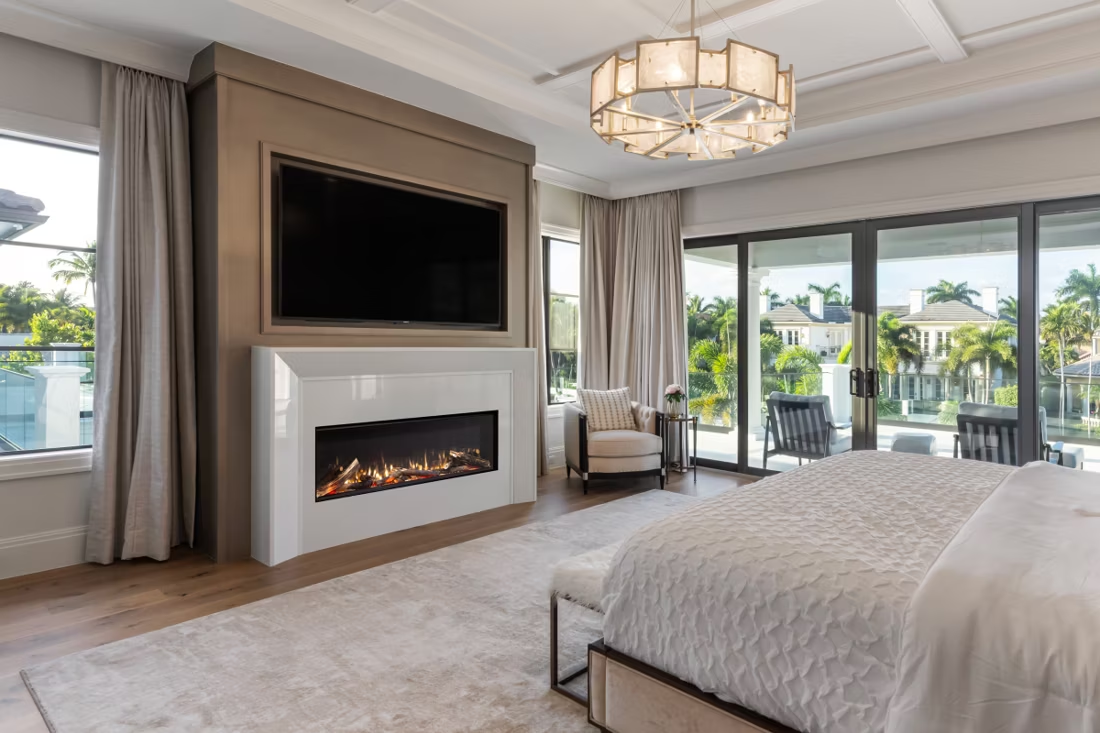
Yes—with an asterisk. Fireplaces are hot and TVs don't like heat. Either put a mantel between them to deflect rising warmth, or choose a fireplace with heat-management technology that creates a cool zone on the wall above—the wall stays around 125 degrees, barely warm, while the room still gets full heat. If you like clean lines and don't want a mantel, heat management is the answer.
Do electric fireplaces actually produce heat?
Yes—most put out around 4,800–5,000 BTUs from a standard outlet, which comfortably warms a bedroom, office, or den as a comfort-zone heater. What they won't do is carry a whole house the way wood, gas, or pellet can. Think of electric as ambiance-first with honest supplemental heat: flames on with no heat in July, flames plus warmth in January.
How much should I budget for a fireplace?
For an average home—covering the fireplace, the vent pipe, and basic installation—a budget between $3,900 and $5,500 gives you a lot of options across wood, gas, and pellet. By the time you add finish work, gas line, and electrical, the average complete installation lands between $5,000 and $12,000 all-in. In a remodel or new build, a good rule is to put about 2.5% of the total project cost toward the fireplace.
Does a fireplace add value to my home?
On average, a fireplace adds back to the home about the same amount you spent installing it. Add the monthly savings from heating the rooms you actually use instead of the whole house—often hundreds of dollars a year—and the value case is strong before you even count what a fire does for how your family uses the room.
Stove and Fireplace Dealers in Rockingham County
Listings include WhyFire partner dealers, dealers we have verified as authorized for the brands we recommend, and established local businesses that carry hearth products. Every listing shows which one it is. The ones marked Preferred run on WhyFire's software, so they can show you real pricing and book your appointment right here. No manufacturer pays for placement. How we verify dealers →
Acme Stove Co.
Blue Ridge Chimney
Blossman Gas And Appliance
Holtzman Propane
Find your electric fireplace in Rockingham County.
Tell us a bit about your home and we'll match you with the right electric fireplace or insert, plus a free Project Guide & Parts List with the exact parts for your space and a recommended local dealer serving Rockingham County.」,
Find Your Fireplace →