
Heat Your Shenandoah Valley Home, Any Fuel You Choose.
Wood, gas, pellet, and electric fireplace resources for every town and farm community in Rockingham County—from Bridgewater to Elkton, Broadway to Grottoes. Find the right unit and get matched with a trusted local hearth retailer.
Every Project Starts From One of These Five Situations
Valley heating traditions across Rockingham County, Virginia.
Rockingham County sits in the heart of the Shenandoah Valley, a farming and dairy county ringed by the Blue Ridge to the east and the Alleghenies to the west, with Massanutten Mountain splitting the valley floor. Winters here are moderate by national standards—average lows around 23°F and a winter heating load less than half what a place like Duluth, Minnesota logs in a typical year. That said, the heating season still runs a solid five to six months, and the oak, hickory, and maple woodlots that cover so many local farms have kept wood stoves a practical, low-cost heat source for generations of Rockingham County households. Residents with access to nearby national forest tracts, including areas managed as part of the Monongahela National Forest system, can pull cutting permits for their own firewood supply.
What you'll find on this hub: hearth retailers, service technicians, and fuel suppliers serving every community in the county—from Bridgewater and Dayton in the valley's Mennonite farm country, north to Broadway and Timberville, and east through Elkton and Grottoes toward the Blue Ridge. Pick your fuel below to drill into specifics—local dealers, installation costs, recommended units, and the resources that match your project. Whether you're heating a working farmhouse or a newer build near Bridgewater College, this is the starting point.
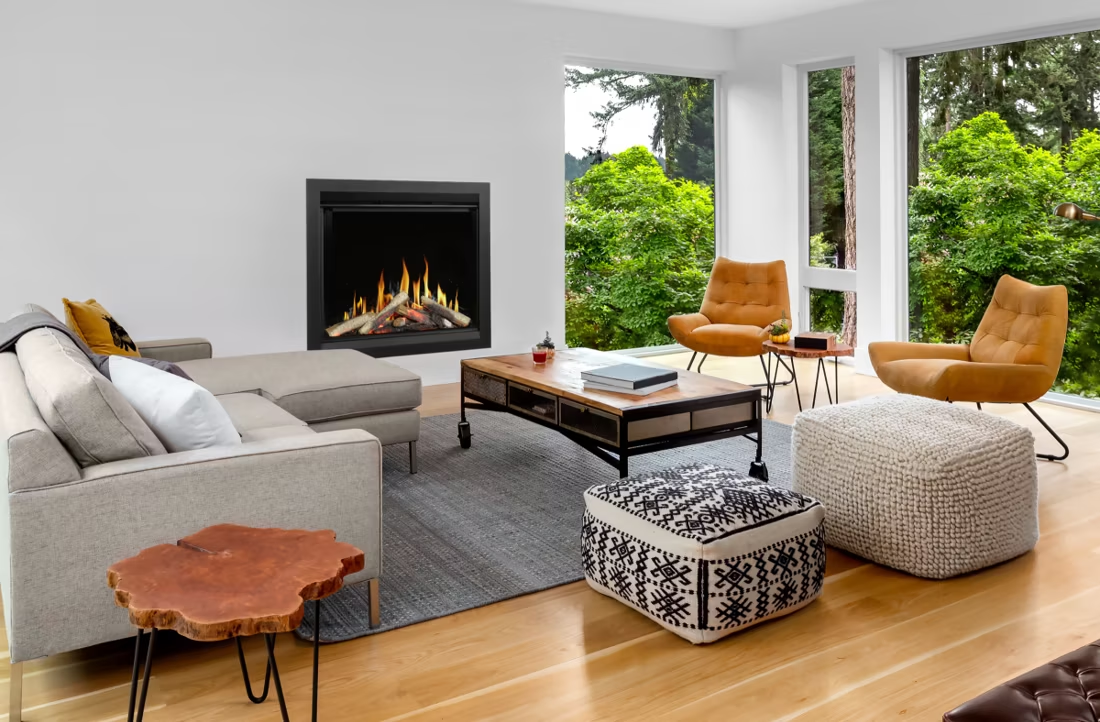
Four fuels. One honest answer for Rockingham County.
Three steps. No salesperson until you're ready.
Tell us about your project
Your zip code, your situation, and the fuel you're leaning toward—or let the answers point you to one.
See what's actually available
The brands dealers within 100 miles genuinely carry—real options, never a catalog mirage.
Get your dealer & Project Guide
A trusted local dealer, plus the free Project Guide & Parts List that names every component of the job.
Frequently Asked Questions
Which fuel works best in Rockingham County?
It depends on the house and how you plan to use it. Wood remains a strong choice on Rockingham County's many farms—oak and hickory are the dominant local hardwoods, they season well, and a lot of rural properties already have a woodlot or a source nearby. Gas is the convenience pick for in-town homes in Bridgewater, Dayton, and Broadway where line access makes for clean, thermostat-controlled heat with none of the wood-handling labor. Pellet stoves are a strong middle ground here—regional supply from brands like Energex, Hamer Pellet Fuel, and Greene Team Pellet Fuel keeps fuel available and reasonably priced without the splitting and stacking that wood requires. Electric is mostly supplemental in this climate—with a winter low average of only 23°F and a moderate winter heating load overall, Rockingham County's winters are real but not extreme, so electric units work fine for ambiance or shoulder-season use in a bedroom or den, just not as a sole heat source through January. Plenty of valley homes run wood or pellet as primary heat with gas or electric backing it up in secondary rooms.
Do I need a permit to install a fireplace in Rockingham County?
In most cases, yes. New wood stoves, wood inserts, gas fireplaces, gas inserts, gas stoves, and pellet stoves typically require a building permit through Rockingham County Building Inspections, and gas installations also need a separate gas line permit completed by a licensed gas fitter. Wood-burning appliances installed today should meet current EPA New Source Performance Standards for emissions—this matters for insurance and resale even where local air quality isn't a concern. Electric fireplaces usually skip the permit process unless you're doing a built-in installation that involves new wiring or a dedicated circuit. Most local hearth retailers pull the permit as part of the installation quote, so homeowners rarely have to deal with the county office directly.
Are there any wood-burning restrictions in Rockingham County?
No—Rockingham County isn't in an EPA non-attainment area and doesn't have the winter inversion problems that trigger burn bans in some western valleys. There's no curtailment schedule or advisory system to check before lighting a fire here. That said, an EPA-certified stove is still worth the investment: it'll use roughly a third of the wood for the same heat output compared to an old uncertified unit, and it produces far less visible smoke and creosote buildup, which matters for chimney fire risk on older farmhouse flues. If you're replacing an old smoke dragon, a new certified stove is a real upgrade even without a regulatory push to do it.
What's the typical cost range for fireplace installation across all fuel types in Rockingham County?
Ranges vary by fuel and how much venting or gas line work is needed. Wood stove or insert installation: roughly $4,000–$8,500 for a typical retrofit into an existing masonry chimney, more if new class-A chimney pipe has to be run through a farmhouse with no existing flue. Gas fireplace, insert, or stove: about $4,000–$10,000, with propane tank setup or gas line extension pushing costs toward the higher end for homes outside town gas service areas. Pellet stove or insert: generally $4,000–$7,000 installed. Electric fireplace: $200–$3,000 for the unit itself, plus $300–$1,000 in labor for anything beyond a plug-and-play wall unit. See the county + fuel pages above for cost detail tied to specific local retailer pricing.
Can one local hearth retailer handle all four fuel types?
Some can, some specialize. A handful of Rockingham County hearth retailers carry wood, gas, pellet, and electric under one roof, which is useful if you're still comparing fuels or aren't sure what fits your home. Others lean more heavily into one or two fuels—for instance, a dealer focused on wood and pellet stoves for the county's farm and rural customer base, or a gas-focused shop serving newer construction closer to town. If you're cross-shopping, a multi-fuel dealer can show you working displays side by side and talk through venting and cost trade-offs specific to your house.
How does service work for homes out toward Elkton or Grottoes?
Most chimney sweeps and gas techs serving Rockingham County are based near Bridgewater or Harrisonburg and travel out to the outlying towns—Elkton and Grottoes toward the Blue Ridge, Broadway and Timberville up Route 42, and the farm roads in between. Expect a modest travel fee for the more distant service calls, and know that pre-season scheduling (September–October) is far easier to lock in than a mid-winter emergency visit when every wood-burning household in the valley is calling at once. If you're on propane rather than a piped gas line, it's also worth confirming your tank fill schedule before the first hard freeze—running out mid-January in a rural stretch of the county can mean a multi-day wait for both fuel and a tech.
What is an in-home preview and do I need one?
It's a visit where a hearth professional measures your space, confirms the model you picked actually works in your home, and walks the specs—framing, gas line, venting, finish work—before anything is ordered. Some details you just can't know until you see the house. Never make a down payment without one; it's the single most-skipped step that burns buyers.
Can I install a fireplace myself?
If you're putting a fire in your house on purpose, it's best to work with an expert. Unless you're genuinely experienced in framing, gas line, vent pipe, and the national code on clearances to combustibles, have a professional do it—and ideally the same company that sells you the fireplace, so warranty, service, and liability all live under one roof.
Can a fireplace actually lower my heating bill?
Yes—by creating a comfort zone. A furnace heats every square foot of the house just to warm the one room you're in; a gas fireplace on low burns roughly a sixth of the gas a typical furnace does. Set the furnace around 55–60 degrees as a baseline, then heat the rooms your family actually uses. Families who heat this way commonly save $20–$60 a month.
How much should I budget for a fireplace?
For an average home—covering the fireplace, the vent pipe, and basic installation—a budget between $3,900 and $5,500 gives you a lot of options across wood, gas, and pellet. By the time you add finish work, gas line, and electrical, the average complete installation lands between $5,000 and $12,000 all-in. In a remodel or new build, a good rule is to put about 2.5% of the total project cost toward the fireplace.
Stove and Fireplace Dealers in Rockingham County
Listings include WhyFire partner dealers, dealers we have verified as authorized for the brands we recommend, and established local businesses that carry hearth products. Every listing shows which one it is. The ones marked Preferred run on WhyFire's software, so they can show you real pricing and book your appointment right here. No manufacturer pays for placement. How we verify dealers →
Acme Stove Co.
Blue Ridge Chimney
Blossman Gas And Appliance
Holtzman Propane
Find your fireplace in Rockingham County.
Pick your fuel below and we'll match you with a trusted local dealer and a free Project Guide & Parts List—the exact parts, including the vent kit, for your project and home.
Find Your Fireplace →