
Instant warmth for Blue Ridge winters, without the wood pile.
Push-button heat for the valley between the Blue Ridge and Alleghany ranges—from Lexington and Buena Vista out to Goshen, Glasgow, and Fairfield. Find the right gas fireplace and get matched with a trusted local dealer.
Every Project Starts From One of These Five Situations
Clean heat that doesn't require a cord of oak.
Rockbridge County sits in a broad stretch of the Shenandoah Valley bounded by House Mountain, the Blue Ridge, and the Alleghany foothills, with Natural Bridge and Goshen Pass marking the terrain. It's a rural county—a shade over 4,000 residents outside the incorporated cities of Lexington and Buena Vista—and winters here are real but not brutal: average lows around 23°F, with a winter heating load comparable to other towns in climate zone 4A. That's cold enough for consistent heating season use, but mild enough that a lot of homeowners want heat they can turn on without hauling oak or hickory from the woodshed first.
There's no municipal natural gas main running through most of unincorporated Rockbridge County, so propane—delivered and stored in a home tank—is the standard fuel for gas fireplaces here, with regional bulk suppliers handling delivery and tank service. A handful of properties closer to Lexington may have limited natural gas access, but propane is the safe assumption for planning purposes anywhere in the county outside town limits. Either way, a properly installed gas fireplace or insert gives you heat at the flip of a switch, works during a winter power outage with the right ignition system, and takes the daily maintenance out of the equation—a real complement to a county where wood heat, split from local oak, hickory, and maple, still runs deep in the culture.
Three steps. No salesperson until you're ready.
Tell us about your project
Your zip code, your situation, and the fuel you're leaning toward—or let the answers point you to one.
See what's actually available
The brands dealers within 100 miles genuinely carry—real options, never a catalog mirage.
Get your dealer & Project Guide
A trusted local dealer, plus the free Project Guide & Parts List that names every component of the job.
Frequently Asked Questions
How much does a gas fireplace installation cost in Rockbridge County?
Installations in Rockbridge County typically run in the $4,000 to $9,500 range, with the spread driven mostly by venting path and whether new gas line or tank work is required. A direct-vent propane insert going into an existing masonry fireplace, with a tank already on the property, lands on the lower end. A new built-in unit for a remodel or addition—with framing, venting, and a fresh propane line run from a new tank—sits higher. Because most of the county relies on propane rather than piped gas, expect the tank setup (lease, purchase, or fill service) to be a separate conversation with your propane supplier alongside the fireplace installer's quote.
Can I convert my existing wood fireplace to gas?
Yes, and it's a common project for older farmhouses and in-town homes throughout Rockbridge County. A gas insert fits into your existing masonry firebox, running a stainless liner up the current chimney for venting, so you keep the mantel and surround you already have. Since most of the county runs on propane rather than natural gas, the conversion usually includes coordinating a tank installation or confirming an existing tank has enough capacity for the new appliance. Expect the insert and labor to run $4,000 to $8,500 depending on the model and whether new gas line work between the tank and the fireplace is needed.
Do I need natural gas, or should I plan on propane?
Plan on propane. Outside the immediate Lexington area, Rockbridge County doesn't have municipal natural gas lines reaching most homes, so propane—supplied by regional bulk delivery companies and stored in a home tank—is the standard setup for gas fireplaces in Glasgow, Fairfield, Goshen, Buena Vista's outskirts, and the rest of the county. Most gas fireplace models sold locally can be configured for propane with the correct orifice and regulator, so fuel choice doesn't limit which unit you can install. If you're unsure whether natural gas reaches your specific address, a local installer can confirm before you buy.
Will my gas fireplace still work if the power goes out?
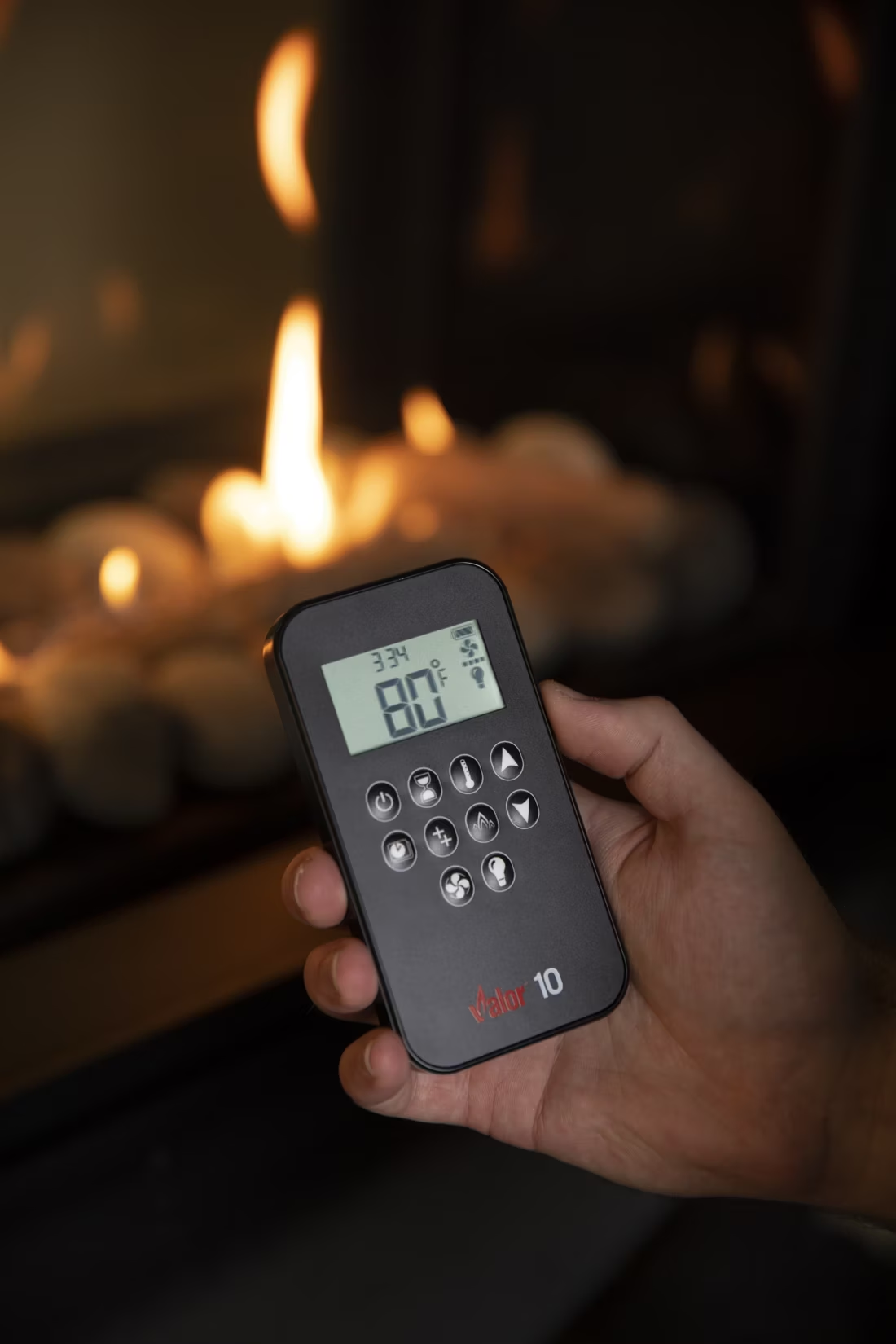
Most modern gas fireplaces will, provided they use an IPI (intermittent pilot ignition) system with battery backup—typically standard AA batteries built into the unit that take over the moment power drops, so the fireplace still lights on demand. That matters in Rockbridge County, where mountain-corridor storms and ice can knock out power in the more rural stretches for a stretch of time. Valor fireplaces handle this differently: their pilot assembly generates its own electricity through the thermocouple, so there's no battery to remember to replace. Ask your local dealer about the ignition system on any model you're considering if outage backup is a priority.
What's the difference between a gas fireplace, gas insert, and gas stove?
A gas fireplace is a fully built-in unit framed into a wall—the right call for new construction or a remodel without an existing hearth. A gas insert slides into an existing masonry fireplace and uses the current chimney (lined) as its vent path, which is the common upgrade for older Rockbridge County homes with a fireplace that's more decorative than functional. A gas stove is a freestanding cabinet unit that sits on a hearth pad, similar in footprint to a wood stove but running on propane. For most homes here with an existing chimney, the insert is the simplest and most cost-effective path.
Do I need a permit to install a gas fireplace in Rockbridge County?
Generally yes—a building permit is required for a new gas-burning appliance installation, along with sign-off on the gas or propane line work, which has to be done by a licensed gas-fitter or propane technician. Most hearth retailers serving the county handle the permit paperwork as part of the installation, so you're not coordinating separate inspections yourself. Because propane tank placement also has its own clearance rules from structures and property lines, it's worth confirming tank siting with your propane supplier before your installer schedules the work.
What's the difference between vented and vent-free gas fireplaces?
Vented units—direct-vent or B-vent—pull combustion air from outside and exhaust the byproducts back outside through sealed venting, and they're code-compliant everywhere including Virginia. Vent-free (ventless) units burn fuel directly into the room without external venting; they're legal in Virginia but come with strict room-size minimums and require an oxygen depletion sensor. In a county like Rockbridge, where many homes are older with existing masonry chimneys ready to be lined and vented, direct-vent inserts are the far more common choice and the one most local installers will steer you toward first—real heat output with no indoor air quality tradeoffs.
How often does a gas fireplace need to be serviced?
Plan on an annual inspection, ideally before the start of heating season. A technician checks the burner, pilot assembly, gas connections, and venting, and cleans the glass and interior—a shorter visit than a wood chimney sweep, but just as important given how many Rockbridge County installations run on propane with a dedicated tank and line that also need periodic checking. Expect to pay roughly $150 to $250 for a standard annual service call from a local gas appliance technician.
Gas vs. wood—which makes more sense for a Rockbridge County home?
Wood remains a strong option here—the county sits inside the George Washington & Jefferson National Forest, where cutting permits run about $20 per cord during the May-to-October season, and local oak and hickory burn hot and long. Wood also keeps working with no power at all, which matters for homes tucked into the hollows and ridgelines outside Lexington and Buena Vista. Gas, on the other hand, means no splitting, stacking, or ash cleanup, and instant heat at the flip of a switch or a wall switch, with a battery-backed model still working through a short outage. A lot of Rockbridge County homeowners end up with both—gas for the everyday living space, wood or a wood stove elsewhere for backup and the tradition of it.
What's the difference between an insert and a zero-clearance fireplace?
An insert is a fireplace that slides into a pre-existing wood-burning fireplace—if you don't have one, there's nothing to insert it into. A zero-clearance fireplace is built into a framed wall, which makes it the answer for remodels and new construction. Simple test: existing masonry fireplace means insert; blank or framed wall means zero-clearance.
Is my gas fireplace wasting gas?
If it was installed more than 15 years ago, probably. Older gas fireplaces keep a standing pilot light burning all the time, and that little flame can cost a couple hundred dollars a year. Newer models use pilot-on-demand ignition—the pilot lights only when you use the fireplace and goes out when you turn it off.
What is an in-home preview and do I need one?
It's a visit where a hearth professional measures your space, confirms the model you picked actually works in your home, and walks the specs—framing, gas line, venting, finish work—before anything is ordered. Some details you just can't know until you see the house. Never make a down payment without one; it's the single most-skipped step that burns buyers.
Can a fireplace actually lower my heating bill?
Yes—by creating a comfort zone. A furnace heats every square foot of the house just to warm the one room you're in; a gas fireplace on low burns roughly a sixth of the gas a typical furnace does. Set the furnace around 55–60 degrees as a baseline, then heat the rooms your family actually uses. Families who heat this way commonly save $20–$60 a month.
Stove and Fireplace Dealers in Rockbridge County
Listings include WhyFire partner dealers, dealers we have verified as authorized for the brands we recommend, and established local businesses that carry hearth products. Every listing shows which one it is. The ones marked Preferred run on WhyFire's software, so they can show you real pricing and book your appointment right here. No manufacturer pays for placement. How we verify dealers →
AquaPros Pools & Spas, Inc.
Foster Fuels - Forest
Taylor Brothers
Black Goose Chimney
The Fireplace Shop
Blossman Gas And Appliance
Foster Fuels - Rustburg
Clines Heating And Cooling
Valley Filter & Maintenance
Glenwood Oil & Gas
Davenport Energy Roanoke
Find your gas fireplace in Rockbridge County.
Tell us about your home and we'll put together a free Project Guide & Parts List—the right gas fireplace or insert, the vent kit it needs, and a trusted local Rockbridge County dealer to install it.
Find Your Fireplace →