
Warm Up the Right Way in Rockbridge County.
Wood, gas, pellet, and electric fireplace resources for Lexington, Buena Vista, Glasgow, Raphine, Goshen, Natural Bridge, and every community tucked into the Blue Ridge and Shenandoah Valley within Rockbridge County. Find the right unit and connect with a trusted local hearth retailer.
Every Project Starts From One of These Five Situations
Mild Blue Ridge winters, hardwood heat, and a county built for wood and pellet stoves.
Rockbridge County sits in the Shenandoah Valley between the Blue Ridge and the Alleghenies, with elevations ranging from around 800 feet along the Maury River up past 2,000 feet in the surrounding ridgelines. Climate zone 4A, an average winter low near 23°F, and a solid seven-month heating season make for a real but moderate heating season—nowhere near the sub-zero stretches of a place like Bismarck, North Dakota, but cold enough that most homes here run a wood, pellet, or gas appliance from October through April. The hardwood forests that cover much of the county—oak, hickory, and maple—have long made wood heat practical and affordable, and firewood-cutting permits through the George Washington & Jefferson National Forest keep that tradition alive for rural households.
What you'll find on this hub: hearth retailers, service technicians, and fuel suppliers serving every corner of the county—from the farms around Fairfield and Collierstown to the river towns of Glasgow and Natural Bridge Station, out to Goshen near the county's western edge, and into the valley communities surrounding the independent cities of Lexington and Buena Vista. Pick your fuel below to drill into specifics—local dealers, installation costs, recommended units, and the resources that match your project. Whether you're heating a farmhouse outside Raphine or a cabin near the national forest, this is the starting point.
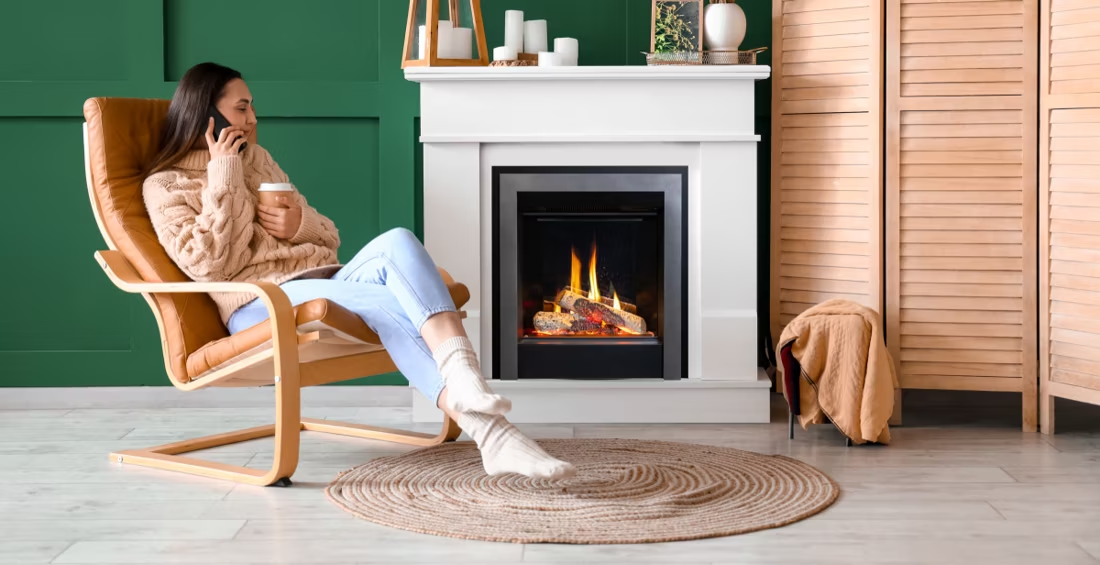
Four fuels. One honest answer for Rockbridge County.
Three steps. No salesperson until you're ready.
Tell us about your project
Your zip code, your situation, and the fuel you're leaning toward—or let the answers point you to one.
See what's actually available
The brands dealers within 100 miles genuinely carry—real options, never a catalog mirage.
Get your dealer & Project Guide
A trusted local dealer, plus the free Project Guide & Parts List that names every component of the job.
Frequently Asked Questions
Which fuel works best in Rockbridge County?
It depends on the home and the household. Wood remains a natural fit here—oak, hickory, and maple are abundant across the county, firewood permits are available through the George Washington & Jefferson National Forest, and a well-seasoned load of hardwood burns long and hot through Rockbridge's solid seven-month heating season each year. Gas is the low-maintenance choice, though most rural properties outside Lexington and Buena Vista rely on propane rather than piped natural gas, so tank placement and delivery matter as much as the unit itself. Pellet stoves are a solid middle ground—Energex, Hamer Pellet Fuel, and Greene Team Pellet Fuel are all regionally available, giving pellet owners here more supply options than in many rural counties. Electric fireplaces work fine as supplemental heat given the county's relatively mild average winter low of 23°F, but they're not typically a primary heat source. Many Rockbridge homes end up running wood or pellet as the main heater with gas or electric backup in bedrooms and additions.
Do I need a permit to install a fireplace in Rockbridge County?
In most cases, yes. New wood stoves, wood inserts, gas fireplaces, gas inserts, gas stoves, and pellet stoves typically require a building permit through Rockbridge County's building department, and any wood-burning appliance sold new must meet current EPA emissions standards. Gas installations—whether tied to a propane tank or, in the rare pockets with natural gas service, a utility line—also need a separate gas permit and licensed gas-fitter for the connection work. Electric fireplaces generally don't require a permit unless the installation involves a hardwired built-in unit and new circuit work. Most local hearth retailers pull the permits as part of the installation, so homeowners rarely have to navigate this process on their own.
Are there air quality restrictions on wood burning in Rockbridge County?
No—Rockbridge County isn't a designated non-attainment area, and there are no wood-burning curtailment periods or advisory days like some western counties impose during winter inversions. That said, choosing an EPA-certified stove still matters: certified units burn more efficiently, produce noticeably less visible smoke, and get more heat out of the same cord of oak or hickory. There's no regulatory pressure pushing you toward a cleaner-burning unit here, but the fuel savings and lower chimney maintenance make it worth doing anyway.
Can one local retailer handle all four fuel types?
Not always, and that's normal for a county with a population under 5,000 outside its independent cities. Some dealers based near Lexington carry wood, gas, and pellet units and can special-order electric fireplaces, while smaller shops may focus on one or two fuel types and rely on suppliers for the rest. If you're set on comparing all four fuels side by side, it's worth checking whether a retailer serving the Lexington–Staunton corridor stocks working displays, since the closest full multi-fuel showrooms sometimes sit just outside Rockbridge County proper.
How does service work in rural areas of Rockbridge County?
Most chimney sweeps and gas or pellet technicians serving Rockbridge County are based near Lexington or Buena Vista and travel out to Glasgow, Raphine, Goshen, Fairfield, and Collierstown for annual service and repairs. Given the low population density, expect to book pre-season appointments (late summer into early fall) rather than waiting for a mid-winter slot, and budget for a modest travel fee on service calls out toward the county's western edge near the national forest boundary. Planning ahead matters more here than in denser counties—a delayed fall inspection can mean a colder wait if something needs a part ordered in.
What's the typical cost range for fireplace installation across all fuel types in Rockbridge County?
Costs vary by fuel and by how much venting or gas-line work is involved. Wood stove or insert installation: roughly $4,000–$8,500 for a typical install, more if a full masonry chimney liner is needed. Gas fireplace, insert, or stove: roughly $4,000–$10,000, with propane tank setup or line work pushing toward the higher end for homes without existing service. Pellet stove or insert: roughly $4,000–$7,000 for a typical install. Electric fireplace: $200–$3,000 for the unit itself, plus $300–$1,000 in labor for anything beyond a plug-and-play placement. See the county + fuel pages above for cost detail tied to specific local retailers.
Can I install a fireplace myself?
If you're putting a fire in your house on purpose, it's best to work with an expert. Unless you're genuinely experienced in framing, gas line, vent pipe, and the national code on clearances to combustibles, have a professional do it—and ideally the same company that sells you the fireplace, so warranty, service, and liability all live under one roof.
Can a fireplace actually lower my heating bill?
Yes—by creating a comfort zone. A furnace heats every square foot of the house just to warm the one room you're in; a gas fireplace on low burns roughly a sixth of the gas a typical furnace does. Set the furnace around 55–60 degrees as a baseline, then heat the rooms your family actually uses. Families who heat this way commonly save $20–$60 a month.
Should the dealer who sells my fireplace also install it?
Ideally, yes. A fireplace project involves vent pipe, gas line, electrical, and often tile or stone. Hire three or four separate trades and you own the liability and the game of telephone between them. One company selling and installing means one accountable party, start to finish—ask about factory training, on-time completion records, and what happens if an inspection fails.
Wood, gas, pellet, or electric—how do I choose?
Match the fuel to your life, not the other way around. Wood: lowest fuel cost and total power-outage independence, but you're hauling and stacking. Gas: press a button, set a thermostat, no maintenance to speak of. Pellet: wood economics with automatic feeding, in exchange for weekly cleaning and a need for electricity. Electric: plugs in anywhere with honest supplemental heat. Nobody regrets the fuel that fits how they actually live.
Stove and Fireplace Dealers in Rockbridge County
Listings include WhyFire partner dealers, dealers we have verified as authorized for the brands we recommend, and established local businesses that carry hearth products. Every listing shows which one it is. The ones marked Preferred run on WhyFire's software, so they can show you real pricing and book your appointment right here. No manufacturer pays for placement. How we verify dealers →
AquaPros Pools & Spas, Inc.
Foster Fuels - Forest
Taylor Brothers
Black Goose Chimney
The Fireplace Shop
Blossman Gas And Appliance
Foster Fuels - Rustburg
Clines Heating And Cooling
Valley Filter & Maintenance
Glenwood Oil & Gas
Davenport Energy Roanoke
Find Your Fireplace in Rockbridge County.
Pick your fuel below, and I'll match you with a trusted local dealer serving your part of the county and send over a free Project Guide & Parts List—the exact parts, vent kit included, and the recommended local dealer for your project.
Find Your Fireplace →