
Warm up the Roanoke Valley with heat that just plugs in.
Mild Blue Ridge winters, older homes with masonry fireplaces already in place, and no venting required—electric is one of the simplest hearth upgrades in Roanoke County. Find the right unit and connect with a trusted local dealer.
Every Project Starts From One of These Five Situations
An easy fit for a mild, mountain-shielded valley.
Roanoke County sits in climate zone 4A with a moderate winter heating season and average winter lows around 29 degrees—a real winter, but one softened by the Blue Ridge Mountains that ring the valley on both sides. That's a far cry from the deep-cold demands of a place like Burlington, VT, where wood or gas as primary heat is almost mandatory. Here in the Roanoke Valley, homes need supplemental warmth and ambiance more often than they need a furnace substitute, and that's exactly the job an electric fireplace or insert is built for.
A large share of Roanoke County's housing stock—from Old Southwest Roanoke's historic bungalows to ranch homes in Cave Spring and Hollins—was built with a wood-burning masonry fireplace that's rarely used anymore. Converting one of those openings to an electric insert requires no chimney liner, no gas line, and in most cases no building permit at all if it's a plug-in unit on a standard outlet. Appalachian Power serves electricity to the valley, and with no combustion, no venting, and no annual chimney sweep, electric has become the default answer for homeowners who want the glow and the occasional 1,500-watt boost of heat without touching a flue that hasn't been inspected in twenty years.
Three steps. No salesperson until you're ready.
Tell us about your project
Your zip code, your situation, and the fuel you're leaning toward—or let the answers point you to one.
See what's actually available
The brands dealers within 100 miles genuinely carry—real options, never a catalog mirage.
Get your dealer & Project Guide
A trusted local dealer, plus the free Project Guide & Parts List that names every component of the job.
Frequently Asked Questions
How much does an electric fireplace installation cost in Roanoke County?
A plug-in electric fireplace insert or freestanding unit typically runs $300 to $1,200 installed, since most models simply slide into an existing fireplace opening or mount on a wall and connect to a standard 120V outlet. Built-in units that require a dedicated 120V or 240V circuit run higher—often $1,200 to $2,500 once an electrician is brought in to run new wiring, which adds roughly $150 to $400 depending on how far the circuit has to travel from the panel. Homes in Old Southwest Roanoke or other older neighborhoods with knob-and-tube or aluminum wiring sometimes need panel work first, which local dealers will flag during an in-home consultation.
Do I need a permit to install an electric fireplace in Roanoke County?
In most cases, no. A plug-in electric insert or mantel unit that uses an existing outlet doesn't require a permit through Roanoke County or the City of Roanoke building departments, since there's no venting, gas line, or structural change involved. If your installation requires a new dedicated circuit—common for larger built-in units—the electrical work itself needs to be pulled by a licensed electrician under an electrical permit, which they typically handle as part of the job. There's no combustion involved, so none of the wood-stove or gas-line inspection requirements that apply to other fuel types come into play here.
Can I put an electric insert into my existing wood fireplace?
Yes, and it's one of the most common projects in Roanoke County given how many older homes still have their original wood-burning masonry fireplace. Neighborhoods like Old Southwest, Raleigh Court, and Villa Heights are full of fireplaces that once burned local oak and hickory but have sat unused for years. An electric insert slides into that existing opening, uses the same footprint, and eliminates any concern about a deteriorating flue or unlined chimney—no inspection or relining required, since there's no smoke or combustion byproduct to vent.
How much heat does an electric fireplace actually put out?
Most residential electric fireplaces top out around 5,000 BTU (roughly 1,500 watts), which is enough to noticeably warm a single room but won't replace a furnace. Given Roanoke County's relatively moderate heating season and average winter lows near 29 degrees, that's usually plenty for supplemental use in a living room, sunroom, or finished basement. It's not the right primary heat source for the occasional single-digit cold snap that rolls down off the Blue Ridge, but very few homeowners here are asking it to be.
Electric vs. gas vs. wood—which is right for my Roanoke County home?
Wood offers real heat output and works during power outages, and with the George Washington & Jefferson National Forest nearby, self-cut oak and hickory permits are available May through October for around $20 a cord. Gas delivers instant, substantial heat and can also run during outages with the right ignition system, but requires a gas line or propane tank and venting work. Electric requires none of that—no venting, no fuel storage, no annual inspection—but it also won't function without power and won't meaningfully heat a whole room on a cold January morning. For most Roanoke Valley homes wanting ambiance and convenience in a den or bedroom, electric wins; for anyone leaning on backup heat during ice storms, wood or gas still has the edge.
Will my electric fireplace work during a power outage?
No—electric fireplaces require power to run their heating element, fan, and flame-effect display, so they go dark the moment the power does. That matters in Roanoke County, where winter ice storms rolling off the Blue Ridge occasionally knock out Appalachian Power service for a day or more in outlying areas. If backup heat during outages is a priority, pair an electric fireplace for everyday ambiance with a wood stove, insert, or battery-backed gas unit elsewhere in the home rather than relying on electric alone.
What types of electric fireplaces work best for Roanoke County homes?
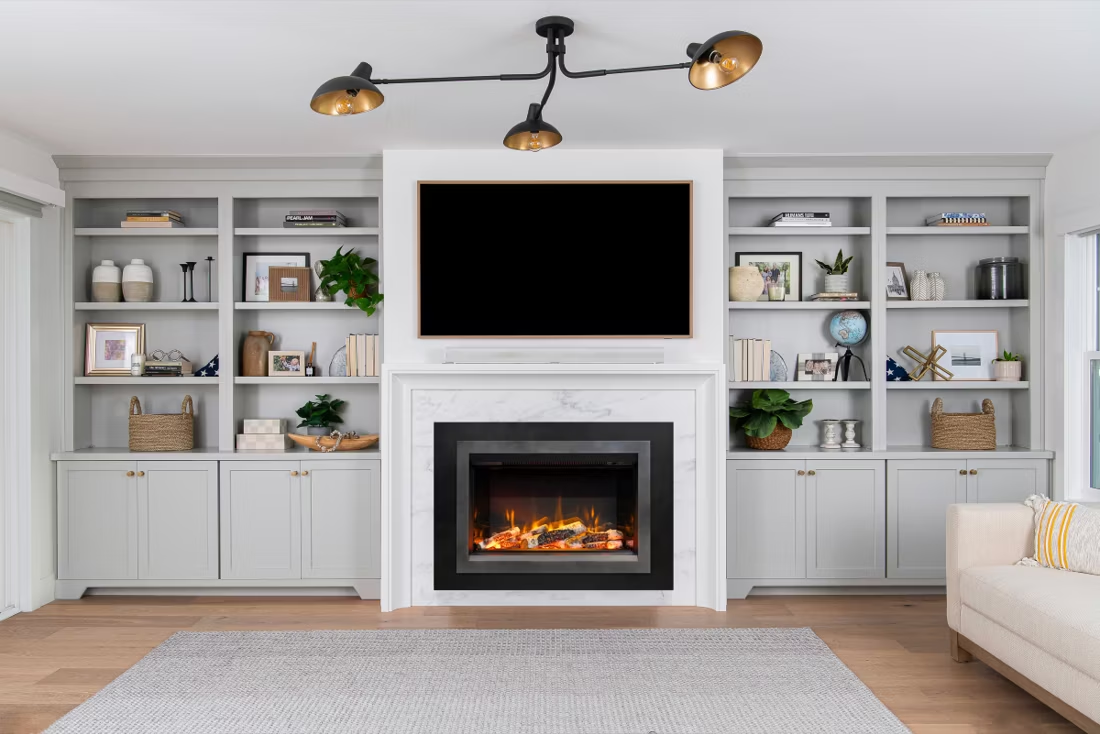
Inserts are the natural fit for the county's many existing masonry fireplaces in older Roanoke and Salem homes—they slide into the opening and instantly modernize a fireplace that's gone unused for years. Wall-mount units work well in newer construction around Cave Spring, Hollins, and Vinton where great rooms are built without a fireplace opening at all, especially in rooms with mountain views where a low-profile linear unit doesn't compete with the scenery. Freestanding mantel packages suit anyone wanting a furniture-style piece that can move with them. A local dealer can walk through your specific room and wiring situation to recommend the right format.
How much does it cost to run an electric fireplace day to day?
A typical unit drawing 1,500 watts on its heat setting costs a few cents to run per hour at Appalachian Power's residential electric rates—running it for several hours an evening adds a modest amount to a monthly bill, nowhere close to what full-home electric resistance heating would cost. Most owners run the flame effect alone (using only a few watts) far more often than the heater, since the ambiance is usually the main draw rather than the heat itself. It's a much cheaper day-to-day cost than running a wood stove or gas fireplace for the same number of hours, though those fuels deliver far more total heat.
Electric vs. pellet stove—which makes more sense for supplemental heat?
Pellet stoves burning regional brands like Energex, Hamer Pellet Fuel, or Greene Team Pellet Fuel put out real heat—enough to serve as a primary or near-primary heat source in a Roanoke County home—but they require a hopper to load, periodic ash removal, and electricity to run the auger and blower. Electric fireplaces need none of that upkeep and can go into rooms where venting a pellet stove isn't practical, but they're strictly supplemental and won't carry a home through a cold week. If you're looking to meaningfully cut a heating bill, pellet is the stronger choice; if you want low-maintenance ambiance with an occasional warmth boost in a den or bedroom, electric is simpler.
Can I put a TV above my fireplace?
Yes—with an asterisk. Fireplaces are hot and TVs don't like heat. Either put a mantel between them to deflect rising warmth, or choose a fireplace with heat-management technology that creates a cool zone on the wall above—the wall stays around 125 degrees, barely warm, while the room still gets full heat. If you like clean lines and don't want a mantel, heat management is the answer.
Do electric fireplaces actually produce heat?
Yes—most put out around 4,800–5,000 BTUs from a standard outlet, which comfortably warms a bedroom, office, or den as a comfort-zone heater. What they won't do is carry a whole house the way wood, gas, or pellet can. Think of electric as ambiance-first with honest supplemental heat: flames on with no heat in July, flames plus warmth in January.
Does a fireplace add value to my home?
On average, a fireplace adds back to the home about the same amount you spent installing it. Add the monthly savings from heating the rooms you actually use instead of the whole house—often hundreds of dollars a year—and the value case is strong before you even count what a fire does for how your family uses the room.
What is an in-home preview and do I need one?
It's a visit where a hearth professional measures your space, confirms the model you picked actually works in your home, and walks the specs—framing, gas line, venting, finish work—before anything is ordered. Some details you just can't know until you see the house. Never make a down payment without one; it's the single most-skipped step that burns buyers.
Stove and Fireplace Dealers in Roanoke County
Listings include WhyFire partner dealers, dealers we have verified as authorized for the brands we recommend, and established local businesses that carry hearth products. Every listing shows which one it is. The ones marked Preferred run on WhyFire's software, so they can show you real pricing and book your appointment right here. No manufacturer pays for placement. How we verify dealers →
Skyline Hearth & Fire
Davenport Energy Roanoke
Area – Burnt Chimney, Va
Black Goose Chimney
Redwood Fuel
Davenport Energy Rocky Mount
Blossman Gas And Appliance
Find your electric fireplace in Roanoke County.
Tell us a bit about your home and we'll put together a free Project Guide & Parts List for your electric fireplace project—the right unit, the exact parts, and a trusted local Roanoke County dealer to install it.
Find Your Fireplace →