
Warm, safe ambiance for Cave Spring homes, no venting required.
Cave Spring's mixed-humid winters rarely demand a full wood-burning setup. An electric fireplace delivers real radiant warmth and a convincing flame with zero chimney work—I'll match you with a local dealer who can size it right.
Every Project Starts From One of These Five Situations
Mild winters, modern convenience—Roanoke County's easiest heat source.
Cave Spring sits in the Blue Ridge foothills of Roanoke County at about 1,143 feet, in climate zone 4A with a moderate winter heating season and average winter lows near 29°F. That's a real but moderate winter—nothing close to the much longer, far colder winters of a place like Madison, WI or Duluth, MN. Homes here need consistent supplemental warmth in living rooms, finished basements, and primary suites more often than they need a whole-house wood-burning backup plan.
That's part of why wood stoves are uncommon around Cave Spring even though oak, hickory, and maple grow throughout the surrounding George Washington & Jefferson National Forest—most residents here are on suburban lots served by Appalachian Power Co or, in the more rural stretches toward Craig and Botetourt counties, Craig-Botetourt Electric Cooperative. An electric fireplace or insert gives you instant, safe zone heat with no chimney, no gas line, and no venting inspection—just a plug or a dedicated circuit, and a mantel or wall that looks finished the same afternoon it's installed.
Three steps. No salesperson until you're ready.
Tell us about your project
Your zip code, your situation, and the fuel you're leaning toward—or let the answers point you to one.
See what's actually available
The brands dealers within 100 miles genuinely carry—real options, never a catalog mirage.
Get your dealer & Project Guide
A trusted local dealer, plus the free Project Guide & Parts List that names every component of the job.
Frequently Asked Questions
How much does it cost to install an electric fireplace in Cave Spring?
A plug-in freestanding or wall-mounted electric fireplace typically runs $300 to $1,500 installed, since most only need an existing outlet or a simple cord run—no permit involved. A built-in electric insert or a custom mantel surround with a dedicated 120V or 240V circuit runs higher, often $1,500 to $4,000, depending on cabinetry work and whether an electrician needs to run new wiring from the panel. Compare that to the gas insert and gas-line work common elsewhere in Cave Spring, and electric is usually the fastest and least disruptive option for a living room or basement remodel.
What will an electric fireplace cost to run on my electric bill?
Most electric fireplaces draw about 1,500 watts on the high heat setting. At Appalachian Power's residential rate of roughly 17.02 cents per kWh, that works out to about 26 cents an hour of continuous heat use—closer to a few cents an hour if you're only running the flame effect without heat. For Craig-Botetourt Electric Cooperative members in the more rural parts of the Cave Spring area, rates can vary slightly, so it's worth checking your latest bill, but the math stays in the same ballpark: an electric fireplace is inexpensive to operate as a supplemental zone heater, even during a cold snap.
What size electric fireplace do I need for my room?
Electric fireplaces are rated in watts rather than BTUs, though a 1,500-watt unit puts out roughly 5,100 BTUs—enough to comfortably heat a well-insulated 400 to 600 square foot room on its own. For an open-concept living and dining area common in newer Cave Spring construction, you'll want to treat the fireplace as supplemental heat alongside your existing HVAC rather than the sole heat source. A local dealer can walk your space and tell you whether a single wall unit will do the job or whether you'd be better served by a larger built-in insert.
Should I get an electric fireplace or a gas fireplace?
Gas is the more common choice in Cave Spring for whole-room primary heat, since a direct-vent gas insert or fireplace puts out real BTUs even during a winter power outage on a battery-backup model. Electric wins on installation simplicity and cost—no gas line, no venting, no combustion byproducts—and it's the better fit for condos, rentals, finished basements without a chimney, or anywhere you want a fireplace look without construction. Given Cave Spring's relatively mild winters (average lows around 29°F), plenty of homeowners here choose electric for a den or bedroom and rely on their existing furnace or heat pump for the rest of the house.
Do I need a permit to install an electric fireplace in Cave Spring?
A plug-in electric fireplace that uses an existing outlet typically doesn't require a permit. If you're adding a built-in insert that needs a new dedicated circuit, Roanoke County's building and electrical permitting process applies to that wiring work, and it should be pulled by a licensed electrician—most local hearth dealers coordinate this as part of the installation. Unlike gas or wood, there's no chimney or venting inspection to schedule, which is one of the reasons electric installs move faster.
What's the best type of electric fireplace for a Roanoke County home?
For most Cave Spring living rooms, a built-in insert or a linear wall-mount unit from brands like Dimplex or Napoleon gives the most realistic flame and the most even heat distribution for the space. For a finished basement or a rental property, a freestanding electric stove or mantel package is easier to move if you relocate. Given the area's moderate winter heating needs, you generally don't need the highest-wattage unit on the market—a mid-range 1,500-watt model with a built-in thermostat will comfortably handle supplemental heating duty in most rooms.
Can an electric fireplace heat my whole house?
No—electric fireplaces are zone heaters, not central heating replacements. Even a 1,500-watt unit is designed to warm the room it's in, not distribute heat through ductwork. In Cave Spring's climate, with winter lows averaging around 29°F, most homeowners keep their existing furnace or heat pump as the primary system and use the electric fireplace to take the chill off a specific room, cut down on thermostat use in that space, or add ambiance without touching the HVAC system at all.
Is an electric fireplace a good option for a condo or rental in Cave Spring?
Yes—this is one of the strongest cases for electric. A plug-in or freestanding unit requires no permit, no wiring changes, and no landlord approval for venting, since there's no chimney or gas line involved. With several townhome and condo developments around the Cave Spring and Roanoke County area, electric fireplaces are a common way to add real heat and ambiance to a rental unit without any permanent modification, and you can take it with you when you move.
Why don't more homes in Cave Spring use wood stoves, given all the local hardwood?
There's plenty of oak, hickory, and maple in the surrounding George Washington & Jefferson National Forest, and cutting permits are available there for about $20 per cord during the May–October season. But Cave Spring is a suburban Roanoke County community, and most homes here don't have the woodlot access, chimney infrastructure, or storage space that makes wood heat practical as a daily habit. Gas and electric have become the standard choices for that reason—electric in particular for anyone who wants fireplace ambiance without committing to firewood, ash cleanup, or chimney maintenance.
Can I put a TV above my fireplace?
Yes—with an asterisk. Fireplaces are hot and TVs don't like heat. Either put a mantel between them to deflect rising warmth, or choose a fireplace with heat-management technology that creates a cool zone on the wall above—the wall stays around 125 degrees, barely warm, while the room still gets full heat. If you like clean lines and don't want a mantel, heat management is the answer.
Does an electric fireplace need a vent or chimney?
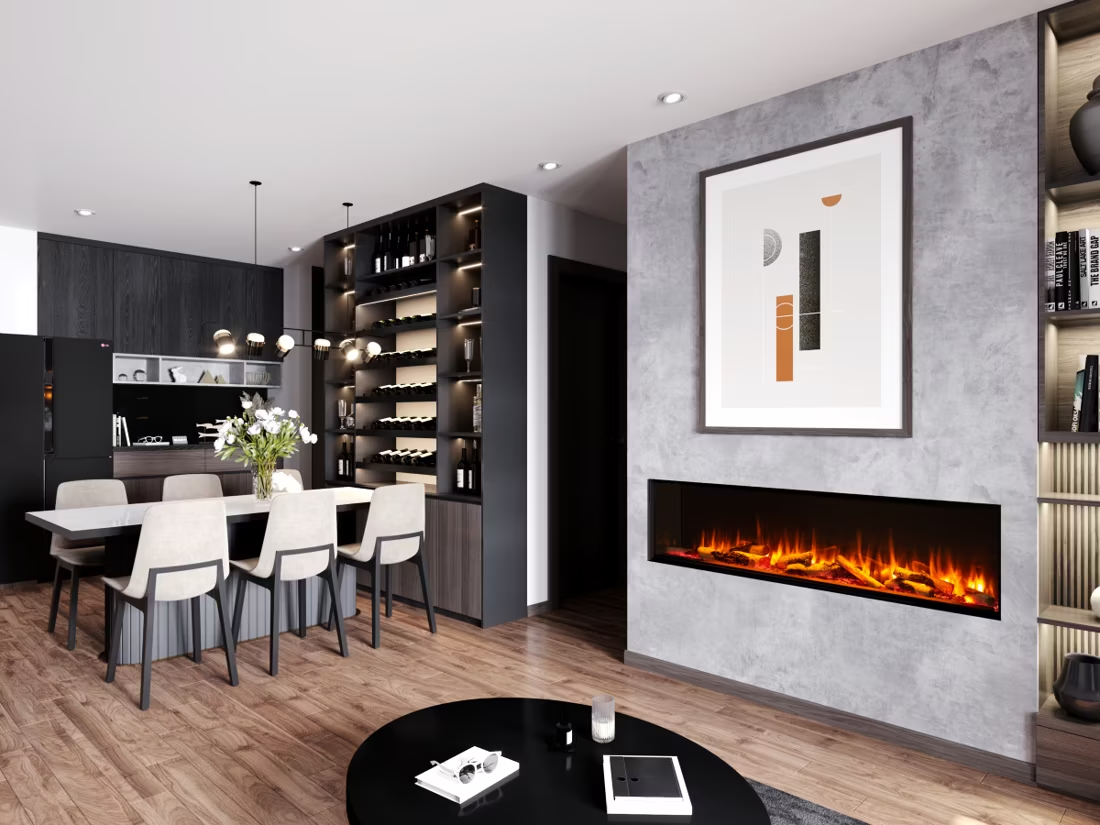
No—that's its superpower. An electric fireplace needs a wall and an outlet, period. No vent pipe, no gas line, no clearances to design around, which is why it works in bedrooms, offices, apartments, and walls where venting a gas or wood unit would be impractical or impossible. Installation is typically the simplest and least expensive of any fireplace type.
How much should I budget for a fireplace?
For an average home—covering the fireplace, the vent pipe, and basic installation—a budget between $3,900 and $5,500 gives you a lot of options across wood, gas, and pellet. By the time you add finish work, gas line, and electrical, the average complete installation lands between $5,000 and $12,000 all-in. In a remodel or new build, a good rule is to put about 2.5% of the total project cost toward the fireplace.
Does a fireplace add value to my home?
On average, a fireplace adds back to the home about the same amount you spent installing it. Add the monthly savings from heating the rooms you actually use instead of the whole house—often hundreds of dollars a year—and the value case is strong before you even count what a fire does for how your family uses the room.
Nearby Dealers
Hearth shops serving Cave Spring and the surrounding area.
Electric Service in Cave Spring
An electric fireplace's heater draws about 1,500 watts—pennies per hour at local rates.
Appalachian Power Co
Craig-Botetourt Electric Coop
Find your electric fireplace in Cave Spring.
Tell us about your room and your goals, and we'll match you with a trusted local Cave Spring dealer along with a free Project Guide & Parts List—sized right for your space, no guesswork.
Find Your Fireplace →