
Consistent pellet heat for Radford's New River Valley winters.
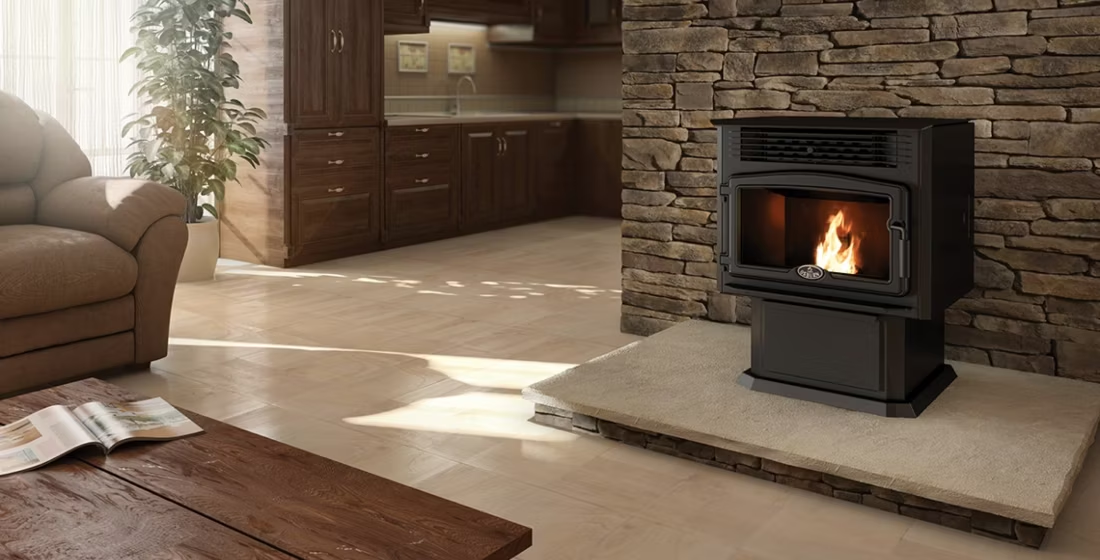
Steady, low-maintenance heat for Radford homes—without the daily wood-splitting. Find the right pellet stove or insert and connect with a trusted local dealer.
Every Project Starts From One of These Five Situations
Reliable warmth without the wood-splitting.
Radford sits at 1,841 feet in Virginia's New River Valley, tucked between the Blue Ridge and Alleghany ranges, home to Radford University and about 16,000 residents. Winters here are moderate by Appalachian standards—average lows around 22°F and a heating season that runs a bit less than half the winter heating load of a place like Duluth, MN. That's not nothing, though: cold snaps into the teens are common from December through February, and pellet stoves have become a popular supplemental or primary heat choice for homeowners who want steady warmth without the daily wood-splitting and stacking that a cordwood stove demands.
Radford's pellets aren't a mystery import—Energex, Hamer Pellet Fuel, and Greene Team Pellet Fuel all mill regionally, so bags are reliably stocked at farm and hardware stores around the New River Valley rather than trucked in from out of state. Electric service comes from Appalachian Power Co. or the City of Radford's own municipal utility depending on your address, at a residential rate around 17 cents per kWh—pellet stoves draw modest current for the auger and combustion blower, so running one costs only a few dollars a month even during the coldest stretches. That's a real advantage over cordwood, which demands no electricity but far more physical handling; pellet stoves split the difference between low-maintenance convenience and genuine backup heat.
Three steps. No salesperson until you're ready.
Tell us about your project
Your zip code, your situation, and the fuel you're leaning toward—or let the answers point you to one.
See what's actually available
The brands dealers within 100 miles genuinely carry—real options, never a catalog mirage.
Get your dealer & Project Guide
A trusted local dealer, plus the free Project Guide & Parts List that names every component of the job.
Frequently Asked Questions
How much does a pellet stove installation cost in Radford?
Most pellet stove and insert installations in Radford run about $3,500 to $7,000, depending on whether you're installing a freestanding stove with simple through-wall PVC/PL venting or a full insert into an existing masonry fireplace. Freestanding units with straightforward venting sit at the lower end; inserts that need a liner and surround kit for an existing hearth run higher. A local dealer can give you a firm number after seeing your hearth or the wall you're venting through.
Where can I buy wood pellets in Radford?
Regional producers Energex, Hamer Pellet Fuel, and Greene Team Pellet Fuel supply most of the bagged pellets sold at farm supply and hardware stores throughout the New River Valley, typically running $250 to $300 per ton (roughly $5 to $6 a 40-lb bag). Because these brands mill within the state, availability tends to hold up better during winter cold snaps than pellets shipped in from farther away—worth asking your dealer which brand they stock consistently before settling on a stove that requires a specific pellet quality.
Will my pellet stove work if the power goes out?
Not without a backup power source. Pellet stoves rely on an electric auger to feed fuel and a blower for combustion air, so a power outage shuts them down. Ice storms occasionally knock out service from Appalachian Power or the City of Radford's utility in the New River Valley, so if backup heat during outages matters to you, plan on a small battery backup pack (many pellet stoves accept a UPS-style unit) or a generator. If uninterrupted heat during outages is the top priority, a wood stove burning local oak or hickory is worth considering alongside pellet.
What size pellet stove do I need for my home?
Sizing depends on square footage and how well-insulated your home is. Small pellet stoves (rated for up to about 1,000 sq ft) work well for a single room or a smaller Radford bungalow; medium units (1,000-1,800 sq ft) cover most main living areas; larger units can handle 2,000+ sq ft as a primary heat source in a well-sealed home. A local dealer will walk your space and account for ceiling height and window exposure—sizing right the first time avoids a stove that short-cycles or can't keep up on the coldest nights.
Do I need a permit to install a pellet stove in Radford?
Yes—a building permit is typically required for a new pellet stove installation, whether through the City of Radford's building department for addresses inside city limits or the neighboring county office for nearby unincorporated areas. Most hearth dealers handle the permit application and inspection scheduling as part of the install, so you generally don't have to navigate it yourself. Because pellet stoves burn cleanly and don't factor into any air-quality curtailment program in this part of Virginia, permitting here is mostly about venting clearances and hearth pad requirements rather than emissions rules.
How often does a pellet stove need cleaning and maintenance?
Plan on emptying the ash pan every few days during regular use and a deeper clean of the burn pot, heat exchanger tubes, and venting once a season—typically before burning season starts in the fall. Pellet stoves produce far less ash and creosote than cordwood stoves, so maintenance is lighter, but the auger motor, igniter, and gaskets should get a professional once-over annually. Skipping the annual service is the most common reason pellet stoves start jamming or losing heat output mid-winter.
Pellet stove vs. wood stove—which is right for my home?
Wood stoves burning local oak, hickory, or maple offer higher radiant heat output, work with zero electricity (useful during a New River Valley ice storm), and pair well with a Forest Service cutting permit through George Washington & Jefferson National Forest ($20 per cord, May through October season) if you're willing to cut and split your own fuel. Pellet stoves trade that for convenience: load the hopper, set the thermostat, and let the auger do the work, with far less ash and no chimney creosote buildup—but they need electricity and a steady pellet supply. For Radford homeowners who want low-maintenance daily heat and don't mind a small backup battery for outages, pellet is usually the better fit. For those who want an off-grid backup and don't mind the labor, wood wins.
Pellet stove vs. gas fireplace—which should I choose?
Gas fireplaces offer instant on-off operation with no fuel to load, and many models keep working during outages with battery-backup ignition. Pellet stoves burn a renewable, often locally milled fuel—Energex and Hamer both produce within the state—and typically cost less per BTU to run than propane, which is the common alternative fuel in parts of Radford without natural gas service. If your home already has a gas line, a gas fireplace is usually the simpler install; if you like the idea of a real flame with lower fuel costs and don't mind refilling a hopper every day or two, pellet is worth a look.
What's the best pellet stove for Radford's climate?
For a moderate Appalachian winter climate like Radford's—average lows around 22°F with occasional dips into the teens—a mid-size, thermostatically controlled pellet stove or insert in the 40,000 to 50,000 BTU range typically covers a main living area comfortably. Look for models with a large hopper (40+ lb capacity) so you're not refilling constantly during cold snaps, and ask your local dealer which pellet brand—Energex, Hamer, or Greene Team—the unit is calibrated to burn cleanest with, since ash content varies by pellet source.
Why is my open fireplace making my house colder?
Open fireplaces suck—literally. As the fire burns, it consumes air your furnace already paid to heat and pulls it out through the chimney, so the house is actually colder after the fire goes out than before you lit it. An insert fixes this: it seals the chimney, puts fixed glass across the front, and turns that hole in your house into a real heat source.
How often does a pellet stove need cleaning?
A clean pellet stove is a happy pellet stove. Plan on cleaning the burn pot about once a week when you're burning regularly—ash and clinkers gum up the air holes just like a pellet barbecue. Most pellet stove problems trace back to skipped cleaning that nobody explained up front. Some designs make it easy with a trapdoor burn pot: pull a lever and the gunk drops into the ash pan.
Can I install a fireplace myself?
If you're putting a fire in your house on purpose, it's best to work with an expert. Unless you're genuinely experienced in framing, gas line, vent pipe, and the national code on clearances to combustibles, have a professional do it—and ideally the same company that sells you the fireplace, so warranty, service, and liability all live under one roof.
Can a fireplace actually lower my heating bill?
Yes—by creating a comfort zone. A furnace heats every square foot of the house just to warm the one room you're in; a gas fireplace on low burns roughly a sixth of the gas a typical furnace does. Set the furnace around 55–60 degrees as a baseline, then heat the rooms your family actually uses. Families who heat this way commonly save $20–$60 a month.
Nearby Dealers
Hearth shops serving Radford and the surrounding area. Every listing shows whether it is a WhyFire partner, a dealer we have verified as authorized for the brands we recommend, or a local business carrying hearth products. No manufacturer pays for placement. How we verify dealers →
Radford Chimney Works
Blue Ridge Heating And Air
McGrady Perdue Heating & Cooling
Air Tech Home & Business
New River Building Supply
Clark Gas & Oil Company
Pellet Brands Stocked Around Radford
Manufacturers will point you to the nearest stocking dealer.
Find your pellet stove in Radford.
Tell us about your home and heating goals, and we'll match you with a trusted local dealer plus a free Project Guide & Parts List—the exact parts, vent kit, and install plan for your pellet stove project in Radford.
Find Your Fireplace →