
Pellet Heat in Petersburg: A Niche Fit for Mild Winters.
Petersburg's short, mild heating season means pellet stoves are the exception, not the rule—but for the right home, a pellet insert offers clean, low-maintenance supplemental heat. We'll connect you with a local dealer who can tell you honestly whether it makes sense for your house.
Every Project Starts From One of These Five Situations
A mild climate leaves little room for pellet heat.
Petersburg sits on Virginia's coastal plain at just 143 feet of elevation, where winter lows average a mild 28°F and the heating season logs only about 3,759 heating degree days a year—less than half of what a wood-and-pellet stronghold like Duluth, Minnesota racks up each winter. That's a short, mild heating season by any measure, and it's a big part of why pellet stoves never became a default heating choice here the way they have in colder parts of the country.
Natural gas and electric heat dominate in Petersburg instead, backed by Virginia Electric & Power Co. at a residential rate of roughly $0.14 per kWh—cheap enough that a heat pump or gas furnace covers most homes without much argument for a standalone pellet appliance. Pellet fuel itself isn't hard to find; regional producers like Energex, Hamer Pellet Fuel, and Greene Team Pellet Fuel supply the mid-Atlantic market. But installers, service techs, and homeowners with real pellet-stove experience are thin on the ground here, so anyone considering one should expect a smaller, more specialized pool of local dealers than you'd find in, say, western Virginia or New England.
Three steps. No salesperson until you're ready.
Tell us about your project
Your zip code, your situation, and the fuel you're leaning toward—or let the answers point you to one.
See what's actually available
The brands dealers within 100 miles genuinely carry—real options, never a catalog mirage.
Get your dealer & Project Guide
A trusted local dealer, plus the free Project Guide & Parts List that names every component of the job.
Frequently Asked Questions
Are pellet stoves actually common in Petersburg, VA?
Not really—pellet is one of the least common heating choices in the city. With average winter lows around 28°F and only about 3,759 heating degree days a year, Petersburg's heating season is short enough that most homeowners rely on natural gas or an electric heat pump through Virginia Electric & Power Co. rather than installing a standalone pellet appliance. A modest number of homeowners still add a pellet stove or insert—usually in an older home near Old Towne Petersburg with an existing chimney, or as supplemental heat for a den, sunroom, or finished basement—but it's a deliberate, secondary choice rather than the default.
How much does a pellet stove installation cost in Petersburg?
Because pellet installs are uncommon locally, there isn't a deep bench of Petersburg-specific pricing to point to. Nationally, a freestanding pellet stove with venting typically runs $3,000 to $5,500 installed, and a pellet insert into an existing masonry fireplace usually lands in a similar range once a liner and hearth work are included. In Petersburg, expect to work with a dealer based out of Richmond, Colonial Heights, or the broader Tri-Cities area, since dedicated pellet retailers directly in the city are limited—factor in a possible trip or delivery charge on top of the install itself.
Where can I buy pellet fuel near Petersburg?
Regional pellet mills serve the mid-Atlantic well even though pellet appliances themselves are rare in Petersburg. Energex, Hamer Pellet Fuel, and Greene Team Pellet Fuel are the brands most commonly stocked at farm-supply retailers like Southern States Co-op and Tractor Supply locations in the Tri-Cities area, along with seasonal availability at home improvement stores. Because demand is lower here than in colder regions, it's worth calling ahead in early fall to confirm stock before the season's first cold snap sells through the shelf.
Will a pellet stove keep working during a power outage?
No—this is the biggest trade-off to understand before buying one. Pellet stoves rely on an electric auger to feed fuel and a blower to circulate heat, so they shut down the moment the power does, unlike a wood stove that keeps burning regardless. Virginia Electric & Power Co.'s grid in Petersburg is generally reliable, but ice storms and the remnants of Atlantic hurricanes can knock out power for hours or days. If backup heat during an outage is a priority, a battery backup unit or small generator is worth budgeting for alongside the stove itself.
Why isn't wood heat common in Petersburg either?
Wood faces the same basic math as pellet: a mild coastal-plain climate with roughly 3,759 heating degree days a year doesn't create much demand for a dedicated wood-burning heating system when natural gas and electric heat pumps are cheap and widely available. Oak, hickory, and maple are the common local species, but around Petersburg they show up more often in decorative, open masonry fireplaces in older homes than in efficient wood-burning stoves or inserts used for actual heat. Both wood and pellet land in the same niche here—nice-to-have, not need-to-have.
Does pellet heat make sense for Petersburg's climate at all?
It can, but mostly as supplemental heat rather than a whole-home solution. With winter lows averaging 28°F and a heating season roughly half as long as a place like Burlington, Vermont, a Petersburg home doesn't need the 20-plus-hour overnight burn times that pellet stoves are built for in harsher climates. A pellet insert or stove works well for zone-heating a den, sunroom, or basement, or for homeowners who like the low-maintenance, thermostat-like control pellet stoves offer over tending a wood fire. As a primary heat source replacing a gas furnace or heat pump, it's a harder case to make here.
Do I need a permit to install a pellet stove in Petersburg?
Yes—any new solid-fuel or pellet-burning appliance with a chimney or vent penetration typically requires a building permit through the City of Petersburg Building Department, along with an inspection to confirm proper clearances and venting. Most hearth dealers who serve the Petersburg area, even those based in Richmond or Colonial Heights, will pull the permit as part of the installation, so this isn't usually something homeowners have to handle on their own.
Are there air-quality restrictions on burning pellets in Petersburg?
No—Petersburg has no listed air quality non-attainment status or winter inversion concerns, unlike some western cities where wood and pellet burning gets curtailed on bad-air days. That means a pellet stove here can run whenever you want without worrying about mandatory burn bans or curtailment periods. It's one of the few practical advantages pellet heat has locally, even if the mild climate limits how much use it actually gets.
Pellet vs. gas vs. electric—what should I actually install in Petersburg?
For most Petersburg homes, natural gas or an electric heat pump through Virginia Electric & Power Co. remains the practical choice for primary heat—gas service is widely available and electric rates run around $0.14 per kWh, keeping heat-pump operation affordable. A pellet stove is worth considering as a secondary, zone-heating option: it's cleaner and easier to load than a wood stove, doesn't need a chimney sweep the way a wood-burning unit does, and suits a den or basement where you want visible flame and extra warmth without running ductwork. Just remember it still needs electricity to run, so it won't serve as outage backup the way a wood stove would.
What's the difference between an insert and a zero-clearance fireplace?
An insert is a fireplace that slides into a pre-existing wood-burning fireplace—if you don't have one, there's nothing to insert it into. A zero-clearance fireplace is built into a framed wall, which makes it the answer for remodels and new construction. Simple test: existing masonry fireplace means insert; blank or framed wall means zero-clearance.
How often does a pellet stove need cleaning?
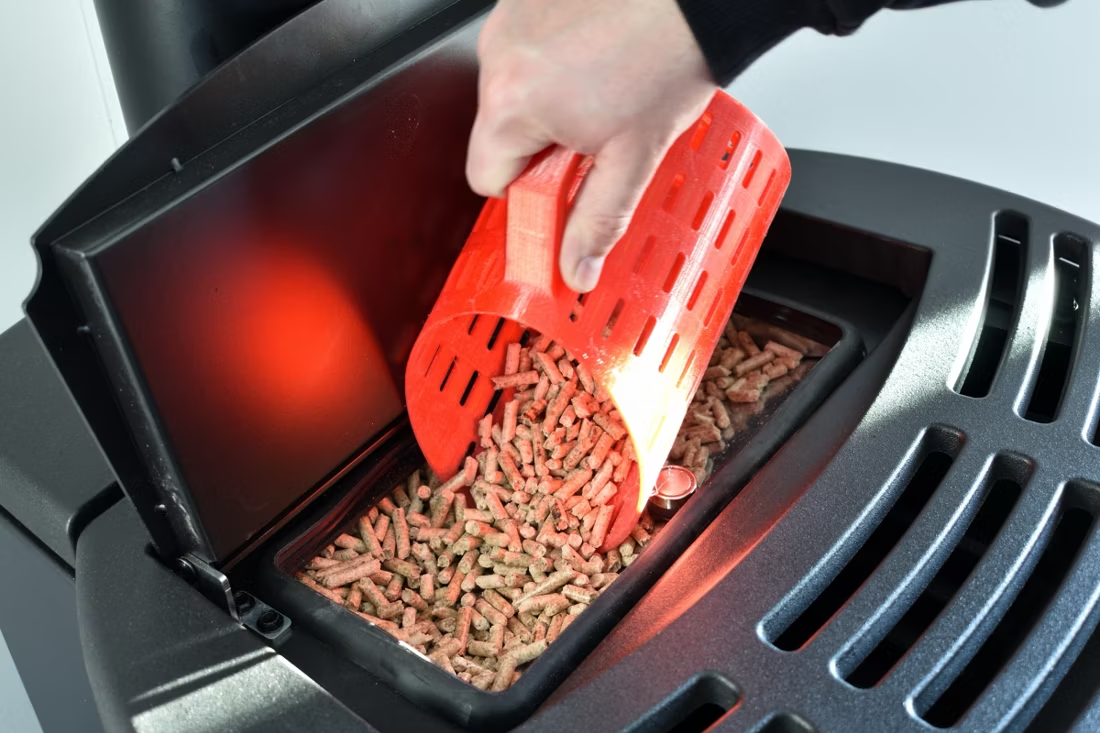
A clean pellet stove is a happy pellet stove. Plan on cleaning the burn pot about once a week when you're burning regularly—ash and clinkers gum up the air holes just like a pellet barbecue. Most pellet stove problems trace back to skipped cleaning that nobody explained up front. Some designs make it easy with a trapdoor burn pot: pull a lever and the gunk drops into the ash pan.
Does a fireplace add value to my home?
On average, a fireplace adds back to the home about the same amount you spent installing it. Add the monthly savings from heating the rooms you actually use instead of the whole house—often hundreds of dollars a year—and the value case is strong before you even count what a fire does for how your family uses the room.
How much should I budget for a fireplace?
For an average home—covering the fireplace, the vent pipe, and basic installation—a budget between $3,900 and $5,500 gives you a lot of options across wood, gas, and pellet. By the time you add finish work, gas line, and electrical, the average complete installation lands between $5,000 and $12,000 all-in. In a remodel or new build, a good rule is to put about 2.5% of the total project cost toward the fireplace.
Pellet Brands Stocked Around Petersburg
Manufacturers will point you to the nearest stocking dealer.
Find your pellet stove in Petersburg.
Tell us about your home and heating goals, and we'll match you with a local dealer who serves Petersburg honestly—including whether a pellet stove is the right fit—plus a free Project Guide & Parts List with the exact parts and vent kit for your project.
Find Your Fireplace →