
Gas Warmth That Fits Norfolk's Coastal Climate.
Instant, clean heat for Hampton Roads' damp winters and storm-season outages. Find the right gas fireplace or insert and connect with a trusted local dealer.
Every Project Starts From One of These Five Situations
Mild winters, real comfort.
Norfolk sits at just 11 feet above sea level on the Chesapeake Bay, in the heart of Hampton Roads. Winters here are mild by national standards—the average low hovers around 32°F and the region has a short, light heating season, a fraction of what colder inland states see. Wood heat never really took hold here the way it does further west or up north; most homes don't need a primary wood-burning appliance to get through January. Gas, on the other hand, fits Norfolk's climate almost perfectly: instant, controllable warmth for the raw, wind-off-the-bay days without the commitment of running central heat all winter.
Many Norfolk neighborhoods, from Ghent to Larchmont to Colonial Place, have older homes with existing masonry fireplaces that were built for looks and occasional use, not serious heat output—these are prime candidates for a gas insert conversion. Newer construction further out toward Norfolk International Airport and the western part of the city is more likely to have natural gas service already run to the house through Virginia Natural Gas, simplifying a new fireplace install. And because Hampton Roads sits squarely in hurricane and nor'easter territory, a gas fireplace with battery-backup ignition gives homeowners real heat and light during the power outages that follow a bad storm off the Atlantic.
Three steps. No salesperson until you're ready.
Tell us about your project
Your zip code, your situation, and the fuel you're leaning toward—or let the answers point you to one.
See what's actually available
The brands dealers within 100 miles genuinely carry—real options, never a catalog mirage.
Get your dealer & Project Guide
A trusted local dealer, plus the free Project Guide & Parts List that names every component of the job.
Frequently Asked Questions
How much does a gas fireplace installation cost in Norfolk?
Most gas fireplace and insert installations in the Norfolk area run somewhere between $3,500 and $9,000, with the final number driven by the unit itself, the venting path, and whether new gas line work is required. A direct-vent insert going into an existing masonry fireplace in a Ghent or Larchmont bungalow—especially one already plumbed for gas—lands on the lower end. A new built-in unit for a room addition or newer home further from the urban core, where a fresh gas line has to be run from the meter, sits higher. A local dealer will walk your home before quoting a firm number.
Can I convert my existing wood fireplace to gas?
Yes, and it's one of the most common projects in Norfolk's older neighborhoods. Homes in Ghent, Colonial Place, and around Larchmont often have a masonry fireplace that was never a serious heat source to begin with—a gas insert uses that existing chimney with a stainless liner and turns it into a real, efficient heater with the flip of a switch. Expect the conversion to run roughly $4,000 to $8,500 depending on the insert and whether a new gas line needs to be run to the firebox. Homes already on natural gas service through Virginia Natural Gas tend to land toward the lower end of that range.
Do I need natural gas, or can I use propane?
Either works, and the right answer depends on where you live. Most of Norfolk's urban core is served by natural gas through Virginia Natural Gas, so if your home already has gas appliances—a water heater or range—adding a fireplace usually just means extending an existing line. In pockets further from the main service area, propane is the standard fallback, using either an existing tank or a new one set by a local propane supplier. Nearly every gas fireplace on the market can be configured for either fuel; your installer sets the correct orifice and regulator for whichever you have.
Will my gas fireplace work during a power outage?
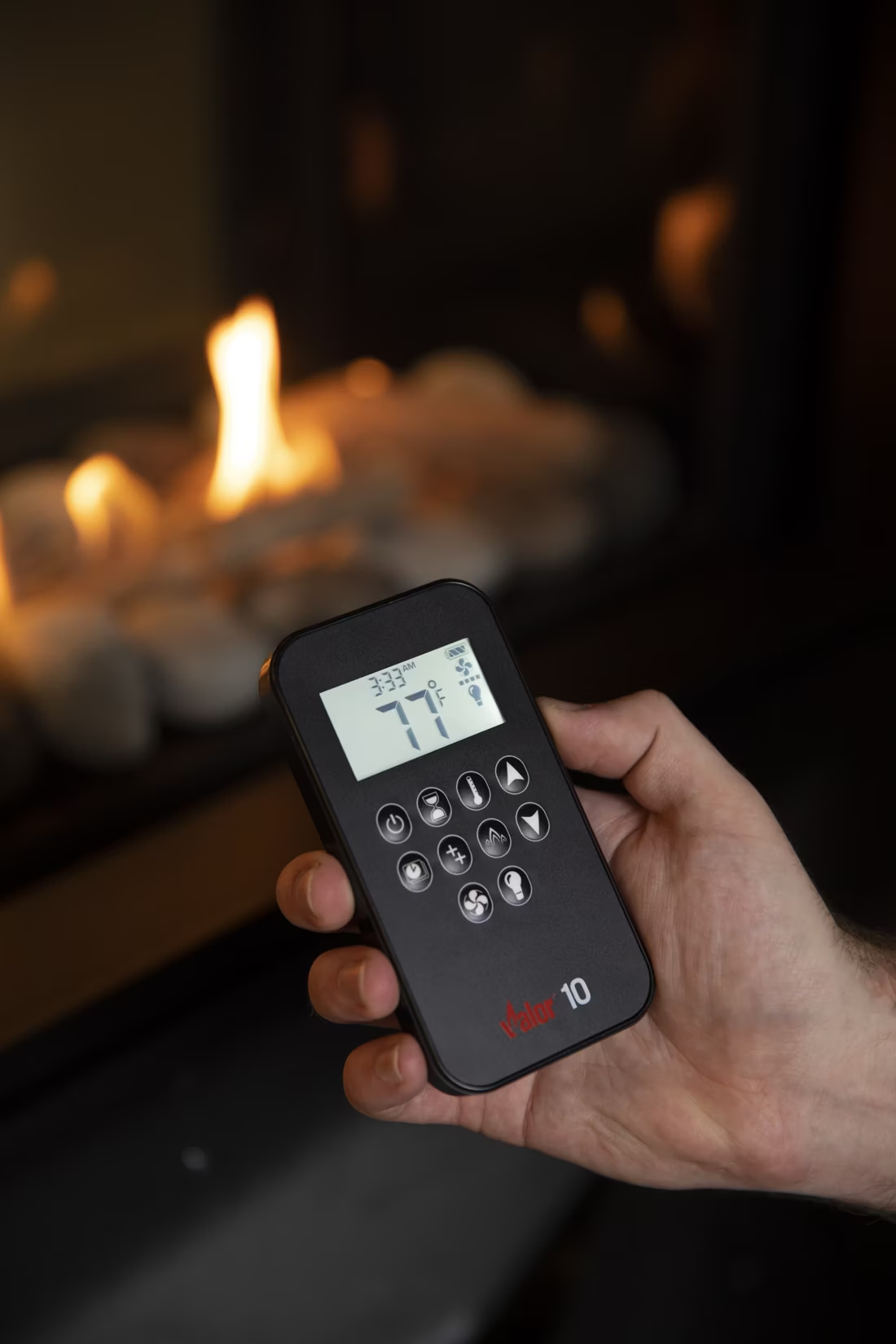
For the most part, yes—and in a city that sees its share of nor'easters and tropical storm remnants off the Atlantic, that matters. Units with standing pilot or IPI (intermittent pilot ignition) systems typically run on a small battery backup that kicks in the moment Dominion Energy service drops, so the fireplace still lights on demand. Valor fireplaces take a different approach: they generate their own electricity off the pilot's thermocouple, so there's no battery to remember to replace. If storm-season outages are a real concern for your household, ask your local dealer which ignition system a given model uses before you buy.
What's the difference between a gas fireplace, gas insert, and gas stove?
A gas fireplace is a fully built-in unit framed into a wall—the right call for new construction or a remodel without an existing chimney. A gas insert is built to slide into an existing masonry firebox, which is exactly the situation in a lot of Norfolk's older housing stock, from Ghent to Ocean View. A gas stove is a freestanding cast-iron or steel unit that sits on the floor and vents like a wood stove but burns gas—a good fit for a sunroom or converted garage that never had a fireplace to begin with. Most Norfolk homeowners upgrading an existing fireplace end up choosing an insert.
Do I need a permit to install a gas fireplace in Norfolk?
Generally yes. New gas fireplace and insert installations typically require a building permit through the City of Norfolk's Development Services Center, and any new gas line work has to be done by a licensed gas fitter and inspected before it's covered up. A reputable local hearth dealer handles this coordination as part of the installation, so you're not left managing separate trades and inspections yourself.
What's the difference between vented and vent-free gas fireplaces?
Vented (direct-vent) units draw combustion air from outside and exhaust it back outside through a sealed pipe—they're the cleanest, safest option and the one most local dealers recommend by default. Vent-free units burn directly into the room without external venting, which sounds convenient but releases water vapor and trace combustion byproducts into your living space. That's a real consideration in a humid, coastal city like Norfolk, where indoor moisture and mildew are already a year-round concern for a lot of homeowners near the water. Vent-free units are legal in Virginia within strict room-sizing and ventilation rules, but for most Norfolk homes, a direct-vent fireplace is the simpler and more comfortable long-term choice.
How often should my gas fireplace be serviced?
Plan on an annual inspection, ideally in early fall before the first cool snap off the bay. A certified technician checks the burner, pilot assembly, venting, and gas connections, and cleans the glass and interior—a much lighter job than chimney sweeping for a wood-burning unit, but just as important for safety. Local gas appliance service providers typically charge in the $150 to $250 range for a standard annual visit.
Gas vs. electric—which makes more sense in Norfolk?
Given how mild Norfolk winters run—average lows around 32°F and a short, light heating season overall—either fuel can realistically handle the job, and the choice often comes down to install complexity and how much real heat you want. Gas delivers stronger, more consistent BTU output and works during a Dominion Energy outage if you choose a battery-backup model, which matters during hurricane season. Electric fireplaces skip the venting and gas line entirely, install in a fraction of the time for $400 to $1,500 in most cases, and run on Dominion's residential rate of about 14 cents per kWh—plenty for supplemental, ambiance-driven use in a climate this mild. Homes wanting a strong secondary heat source or storm-outage backup tend to lean gas; homes wanting simple ambiance in a den or bedroom often do just as well with electric.
Is my gas fireplace wasting gas?
If it was installed more than 15 years ago, probably. Older gas fireplaces keep a standing pilot light burning all the time, and that little flame can cost a couple hundred dollars a year. Newer models use pilot-on-demand ignition—the pilot lights only when you use the fireplace and goes out when you turn it off.
Why is my open fireplace making my house colder?
Open fireplaces suck—literally. As the fire burns, it consumes air your furnace already paid to heat and pulls it out through the chimney, so the house is actually colder after the fire goes out than before you lit it. An insert fixes this: it seals the chimney, puts fixed glass across the front, and turns that hole in your house into a real heat source.
How much should I budget for a fireplace?
For an average home—covering the fireplace, the vent pipe, and basic installation—a budget between $3,900 and $5,500 gives you a lot of options across wood, gas, and pellet. By the time you add finish work, gas line, and electrical, the average complete installation lands between $5,000 and $12,000 all-in. In a remodel or new build, a good rule is to put about 2.5% of the total project cost toward the fireplace.
Can a fireplace actually lower my heating bill?
Yes—by creating a comfort zone. A furnace heats every square foot of the house just to warm the one room you're in; a gas fireplace on low burns roughly a sixth of the gas a typical furnace does. Set the furnace around 55–60 degrees as a baseline, then heat the rooms your family actually uses. Families who heat this way commonly save $20–$60 a month.
Nearby Dealers
Hearth shops serving Norfolk and the surrounding area. Every listing shows whether it is a WhyFire partner, a dealer we have verified as authorized for the brands we recommend, or a local business carrying hearth products. No manufacturer pays for placement. How we verify dealers →
Taylor's Do It Center
Ray Johnson's Fireplace Shop
Coastal Chimney & Contracting, Corp.
Taylor's Fire Works
Solid Structures
Fireside Hearth & Home - Newport News
Find your gas fireplace in Norfolk.
Tell us a bit about your home and we'll match you with a trusted local Norfolk dealer, plus a free Project Guide & Parts List covering the exact unit, venting, and parts your project needs.
Find Your Fireplace →