
Warmth and Ambiance, Without the Chimney.
Norfolk's mild Hampton Roads winters rarely call for a woodpile, but an electric fireplace still delivers real flame-effect ambiance and supplemental warmth—no venting, no gas line, no chimney required. Find the right unit and get matched with a trusted local dealer.
Every Project Starts From One of These Five Situations
A coastal climate built for supplemental heat.
At just 11 feet above sea level and with an average winter low near 32°F, Norfolk sits in a heating climate world apart from places like Burlington, Vermont, where heating degree days run more than double Norfolk's 3,378. Winters here are short and mild by comparison—homeowners rarely need a wood stove or pellet appliance running around the clock. That's part of why wood fuel is essentially absent from the local hearth market, and it's a big reason electric fireplaces have found such a natural fit: they add real flame-effect ambiance and useful supplemental warmth on the handful of genuinely cold nights, without asking anyone to manage a chimney, a gas line, or a woodpile.
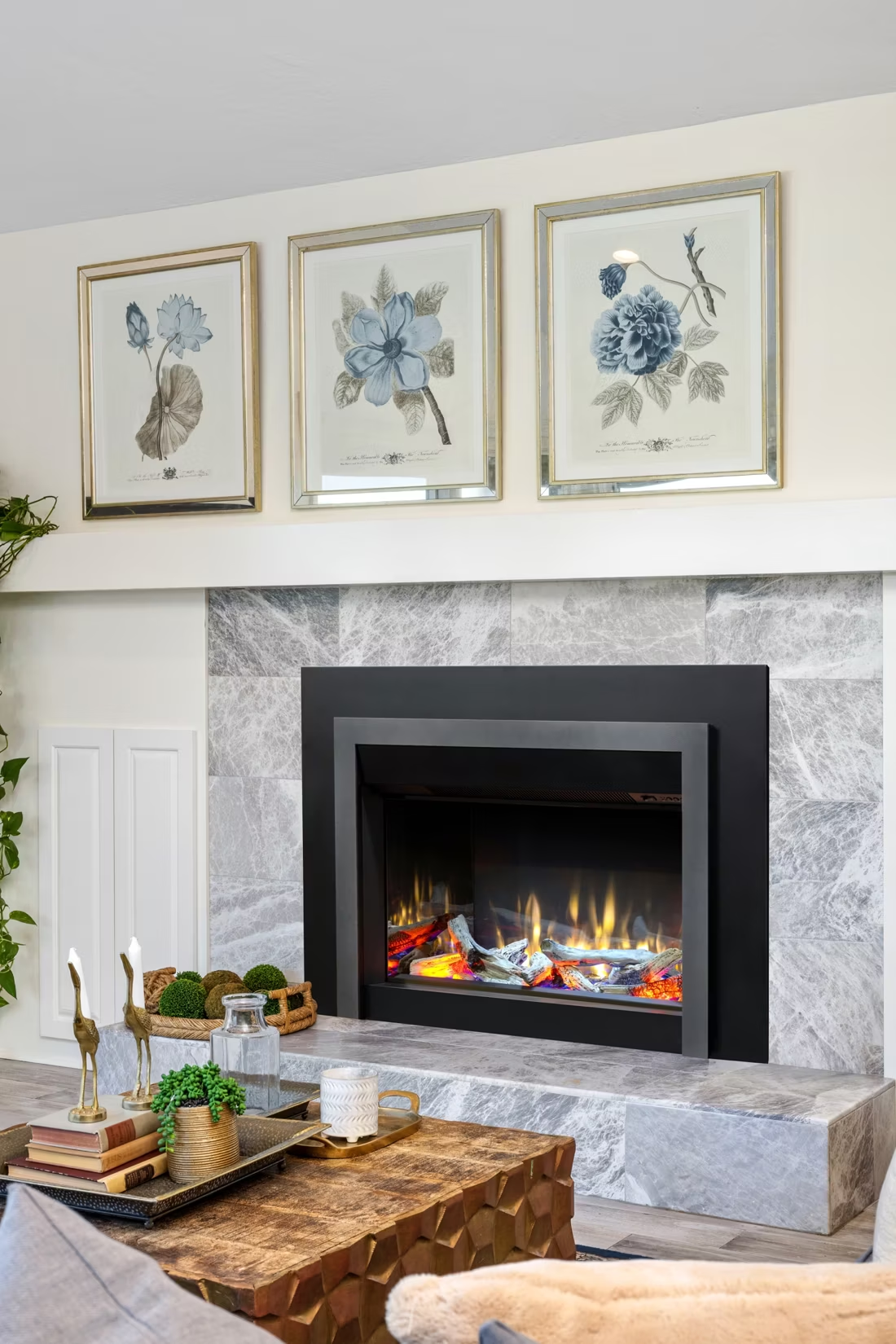
Electric also solves a specific Norfolk problem: a lot of housing stock in neighborhoods like Ghent, Colonial Place, and Larchmont is older, with existing masonry fireboxes that are no longer safe or code-compliant to burn wood in, plus a large rental and military-housing market around Naval Station Norfolk where tenants can't modify chimneys or run gas lines. An electric insert slides into an existing firebox opening and runs on a standard household circuit, or a wall-mounted unit installs with a dedicated line from an electrician. Either way, the power comes from Virginia Electric & Power Co. (Dominion Energy), and at the current residential rate of about 14.09 cents per kWh, running a typical 1,500-watt unit on the heat setting costs roughly 21 cents an hour.
Three steps. No salesperson until you're ready.
Tell us about your project
Your zip code, your situation, and the fuel you're leaning toward—or let the answers point you to one.
See what's actually available
The brands dealers within 100 miles genuinely carry—real options, never a catalog mirage.
Get your dealer & Project Guide
A trusted local dealer, plus the free Project Guide & Parts List that names every component of the job.
Frequently Asked Questions
How much does it cost to install an electric fireplace in Norfolk?
Costs in Norfolk split into two tiers. A plug-in freestanding or wall-mounted electric fireplace typically runs $150 to $1,000 for the unit itself, with installation as simple as plugging it into an existing outlet—no permit, no electrician required. A built-in electric fireplace or insert set into an existing masonry firebox, with a dedicated 20-amp circuit run by a licensed electrician and any surround or mantel carpentry, generally lands between $1,500 and $4,500. Because there's no venting, gas line, or chimney work involved, electric installs in Norfolk are consistently the fastest and least expensive hearth project a local dealer handles.
Do I need a permit for an electric fireplace in Norfolk?
Plug-in units need no permit at all—they use an existing outlet like any other appliance. If you're adding a built-in unit that requires a new dedicated circuit, the electrical work itself typically needs a permit through the City of Norfolk's building permit office, and it should be pulled by the licensed electrician doing the work rather than a homeowner. There's no combustion involved, so none of the venting, clearance-to-combustible, or chimney inspection requirements that apply to wood or gas appliances come into play.
Can I put an electric insert into the old fireplace in my Ghent or Colonial Place house?
In most cases, yes, and it's one of the more common requests local dealers get in Norfolk's older neighborhoods. Many pre-war homes in Ghent, Colonial Place, and Larchmont have masonry fireboxes with chimneys that are no longer lined or safe to burn wood in, but the opening itself is still there. An electric insert is sized to slide into that existing opening, plugs into a nearby outlet or a new dedicated circuit, and preserves the original mantel and surround while adding a flame-effect and supplemental heat. It's a way to keep the historic character of the fireplace without touching the chimney at all.
How much does it cost to run an electric fireplace with Dominion Energy?
Virginia Electric & Power Co. (Dominion Energy) bills residential customers around 14.09 cents per kWh in the Norfolk area. Most electric fireplaces draw about 1,500 watts on their heat setting, which works out to roughly 21 cents per hour of heated use—closer to a few cents an hour if you're just running the flame effect without heat. For a household using one for a few hours most winter evenings, that's typically $10 to $25 a month, well below what most gas or propane appliances cost to run.
Electric vs. gas fireplace—which makes more sense in Norfolk?
Gas is a strong option in Norfolk, where Virginia Natural Gas serves most of the city and gas fireplaces are common in newer construction. Gas delivers more real heat output and a more authentic flame, but it requires venting, a gas line, and annual servicing. Electric skips all of that: no venting, no combustion byproducts, and a fraction of the installation cost and complexity. For homes already on natural gas service and looking for a primary heat source in a main living area, gas often wins. For older homes with a fireplace opening that isn't safely usable for combustion, rental units, condos, or anyone who wants ambiance and light supplemental warmth without construction, electric is usually the simpler and more practical choice.
Is an electric fireplace enough heat for a Norfolk winter?
For most of the season, yes. Norfolk averages just 3,378 heating degree days a year and a winter low around 32°F—mild compared to a place like Duluth, Minnesota, where heating degree days run closer to 10,000. Electric fireplaces are built for supplemental, zone heating rather than whole-home output, and that matches Norfolk's climate well: most homes rely on a central heat pump or furnace for baseline heat and use the fireplace to take the edge off a single room during the coldest snaps in January and February, which is exactly what these units are designed to do.
Can renters or condo owners install an electric fireplace in Norfolk?
Yes, and this is one of the more common uses in the city given Norfolk's large rental market around Naval Station Norfolk and the downtown and Ghent condo buildings. A freestanding or wall-mounted plug-in electric fireplace requires no permanent alteration to the unit, no venting, and no landlord sign-off in most lease situations—it's treated like any other appliance. Some tenants opt for a media-console style unit that doubles as a TV stand, which needs nothing beyond a standard outlet and can move with you when the lease is up.
Are electric fireplaces a good fit for Norfolk's flood-prone, low-elevation neighborhoods?
They're one of the more practical hearth options for it. At roughly 11 feet above sea level with several neighborhoods in FEMA flood zones, Norfolk homeowners are often cautious about permanent below-grade installations. Electric units have no gas line, no ash, and no combustion byproducts to worry about, and many homeowners in flood-aware neighborhoods choose wall-mounted units installed higher on an interior wall rather than floor-level built-ins, which sidesteps flood-zone concerns entirely while still delivering the fireplace look.
Why don't more Norfolk homes use wood-burning fireplaces or stoves?
Norfolk's climate simply doesn't demand it the way colder regions do—with only 3,378 heating degree days and mild winters, a wood stove burning oak, hickory, or maple (the species most common in the region) would sit unused most of the year. Air quality isn't a local concern here the way it is in wood-heavy, inversion-prone areas out West, so it's not a regulatory issue—it's just that wood-burning primary heat doesn't match Norfolk's climate or its housing stock, much of which is older masonry fireplaces or multifamily buildings where a chimney retrofit isn't practical. Electric fills that gap: the ambiance of a fire without asking a mild, humid coastal city to maintain firewood and a working chimney.
Do electric fireplaces actually produce heat?
Yes—most put out around 4,800–5,000 BTUs from a standard outlet, which comfortably warms a bedroom, office, or den as a comfort-zone heater. What they won't do is carry a whole house the way wood, gas, or pellet can. Think of electric as ambiance-first with honest supplemental heat: flames on with no heat in July, flames plus warmth in January.
Can I put a TV above my fireplace?
Yes—with an asterisk. Fireplaces are hot and TVs don't like heat. Either put a mantel between them to deflect rising warmth, or choose a fireplace with heat-management technology that creates a cool zone on the wall above—the wall stays around 125 degrees, barely warm, while the room still gets full heat. If you like clean lines and don't want a mantel, heat management is the answer.
How much should I budget for a fireplace?
For an average home—covering the fireplace, the vent pipe, and basic installation—a budget between $3,900 and $5,500 gives you a lot of options across wood, gas, and pellet. By the time you add finish work, gas line, and electrical, the average complete installation lands between $5,000 and $12,000 all-in. In a remodel or new build, a good rule is to put about 2.5% of the total project cost toward the fireplace.
Does a fireplace add value to my home?
On average, a fireplace adds back to the home about the same amount you spent installing it. Add the monthly savings from heating the rooms you actually use instead of the whole house—often hundreds of dollars a year—and the value case is strong before you even count what a fire does for how your family uses the room.
Nearby Dealers
Hearth shops serving Norfolk and the surrounding area. Every listing shows whether it is a WhyFire partner, a dealer we have verified as authorized for the brands we recommend, or a local business carrying hearth products. No manufacturer pays for placement. How we verify dealers →
Taylor's Do It Center
Ray Johnson's Fireplace Shop
Coastal Chimney & Contracting, Corp.
Taylor's Fire Works
Solid Structures
Fireside Hearth & Home - Newport News
Electric Service in Norfolk
An electric fireplace's heater draws about 1,500 watts—pennies per hour at local rates.
Virginia Electric & Power Co
Find your electric fireplace in Norfolk.
Tell us about your home and we'll match you with a trusted local Norfolk dealer and send over a free Project Guide & Parts List—the exact unit, mounting or insert kit, and installation plan for your space.
Find Your Fireplace →