
Reliable Gas Heat for Shenandoah Valley Winters.
Consistent, on-demand warmth for Rockingham County homes—no propane tank guesswork, no big-box install shortcuts. Find the right unit and connect with a trusted local dealer.
Every Project Starts From One of These Five Situations
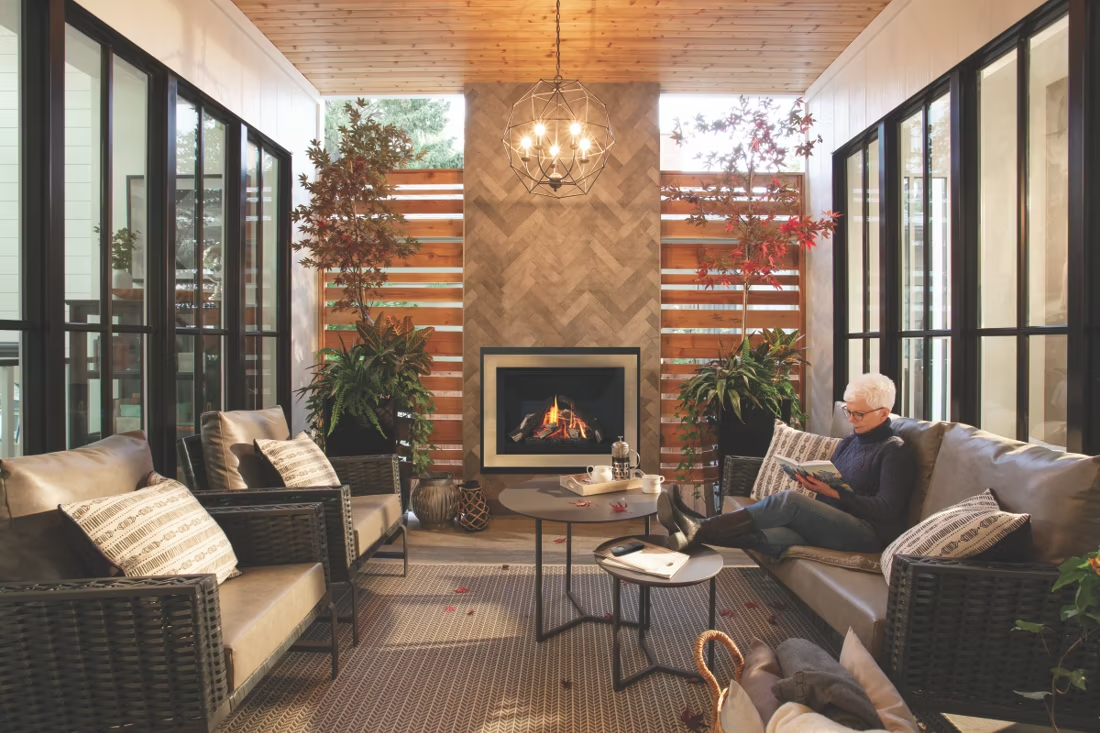
Steady warmth without splitting a single log.
Massanetta Springs sits in the Shenandoah Valley at about 1,340 feet, in a climate zone 4A pocket with a winter heating load comparable to places like Columbus, OH and winter lows that average around 23°F. That's a real heating season—colder than most of the Southeast, though nowhere near what a place like Burlington, VT sees—and it's enough that a lot of local homeowners want heat they can flip on the moment a cold front comes through rather than build up over twenty minutes.
There's no municipal natural gas utility serving Massanetta Springs itself, so most gas fireplace installs here run on propane, delivered and stored in an above-ground or buried tank. That's standard practice throughout rural Rockingham County. A lot of older Shenandoah Valley farmhouses still have the original oak or hickory masonry fireplace built into the chimney—increasingly, owners are converting those into sealed propane inserts rather than dealing with wood handling, all while keeping the mantel and hearth they already have. Electric service in the area comes from a mix of Virginia Electric & Power Co (Dominion), Shenandoah Valley Electric Cooperative, and the City of Harrisonburg's municipal utility, which matters mostly for ignition and blower components on a modern gas unit.
Three steps. No salesperson until you're ready.
Tell us about your project
Your zip code, your situation, and the fuel you're leaning toward—or let the answers point you to one.
See what's actually available
The brands dealers within 100 miles genuinely carry—real options, never a catalog mirage.
Get your dealer & Project Guide
A trusted local dealer, plus the free Project Guide & Parts List that names every component of the job.
Frequently Asked Questions
How much does a gas fireplace installation cost in Massanetta Springs?
Because most homes here run on propane rather than piped natural gas, cost depends heavily on whether a tank is already in place. A propane insert going into an existing masonry fireplace with tank and line already installed typically runs $4,500 to $8,000. A new direct-vent gas fireplace for a remodel or addition—including framing, venting, and a fresh line run from the tank—usually lands between $7,000 and $11,000 once you factor in a new or upsized propane tank. Your local dealer will size the tank and give you a firm number after walking the site.
Do I need natural gas, or will propane work for my fireplace?
Propane is the standard fuel for gas fireplaces in Massanetta Springs—there's no natural gas main serving the community, so nearly every installation here runs off a propane tank rather than a utility line. If you're closer to Harrisonburg city limits it's worth checking with the city's utility department, but for most Rockingham County addresses, plan on propane from the start. Most gas fireplace models sold locally can be configured for either fuel, so the appliance choice itself isn't limited—it's just a matter of tank placement and delivery service, which regional propane suppliers in the Valley handle routinely.
Can I convert my existing wood-burning fireplace to gas?
Yes, and it's a common project in this part of the Shenandoah Valley, where older homes often have an original oak or hickory-burning masonry fireplace that's rarely used anymore. A propane insert with a stainless liner run up the existing flue converts that fireplace into a sealed, high-efficiency heat source without touching the exterior chimney. Expect $4,500 to $8,500 depending on the insert and whether a propane tank and line need to be added or extended from an existing tank on the property.
Will my gas fireplace still work if the power goes out?
Most direct-vent gas fireplaces with intermittent pilot ignition (IPI) include a battery backup—typically a few AA batteries inside the unit—that takes over automatically when the power drops, so the fireplace still lights on demand. Rural stretches of Rockingham County served by Shenandoah Valley Electric Cooperative can see longer outage recovery times after ice or wind events, so this matters. Valor's gas fireplaces take a different approach: the pilot's thermocouple generates its own electricity, so there's no battery to remember at all. Ask your local dealer which ignition system a given model uses before you buy.
What's the difference between a gas fireplace, gas insert, and gas stove?
A gas fireplace is a fully built-in unit framed into a wall—the right call for new construction or a remodel without an existing hearth. A gas insert is sized to slide into an existing masonry firebox, which fits a lot of the older farmhouses and ranch homes around Massanetta Springs that already have an oak or hickory-era fireplace. A gas stove is a freestanding cabinet unit that sits on the floor and vents like a wood stove but burns propane. For most local homeowners with an existing hearth, an insert is the simplest upgrade; new rooms or additions usually call for a built-in fireplace instead.
Do I need a permit to install a gas fireplace in Massanetta Springs?
Yes—Rockingham County requires a building permit for new gas fireplace and insert installations, and any propane line work needs to be done by a licensed gas fitter. A new or upsized propane tank may also require coordination with your propane supplier for placement and setback distances from the house. Most local hearth dealers manage the permitting and gas-fitter coordination as part of the installation, so you're not left juggling separate trades and county paperwork on your own.
Are vent-free gas fireplaces allowed in Virginia?
Virginia permits vent-free (unvented) gas fireplaces under the state's mechanical code, provided the unit includes an oxygen depletion sensor and the room meets minimum size requirements—but they still release some combustion byproducts into the living space. Vented direct-vent units draw outside air for combustion and exhaust fully outdoors through a sealed pipe, which is why most local dealers steer homeowners toward direct-vent models by default, especially for a primary living space. Vent-free units can make sense for occasional-use spaces like a sunroom or finished basement without existing venting access—worth discussing directly with a local installer.
How often does a gas fireplace need to be serviced?
Plan on an annual inspection, ideally before the first cold snap in October or November. A technician checks the burner, pilot assembly, propane line connections, and venting, and cleans the glass and interior components. This is a lighter service than a wood chimney sweep, but skipping it is the most common cause of ignition problems and sooted glass. Expect to pay roughly $150 to $225 for a standard annual visit from a local hearth service provider.
Gas vs. electric fireplace—which makes more sense for my home?
A propane gas fireplace puts out real, sustained heat—enough to serve as supplemental or even primary heat for a room during a Valley cold snap—and most models keep working during a power outage with battery or self-generating ignition. An electric fireplace plugs into a standard outlet, needs no venting or propane tank at all, and installs in an afternoon for $400 to $1,200, but it's realistically ambiance and light supplemental warmth rather than a serious heat source, and it goes dark the moment the power does. For a primary living space in Massanetta Springs where winter lows regularly sit in the 20s, gas is the better heat producer. For a bedroom, sunroom, or a rental where installation simplicity matters more than BTUs, electric is often the practical choice.
Is my gas fireplace wasting gas?
If it was installed more than 15 years ago, probably. Older gas fireplaces keep a standing pilot light burning all the time, and that little flame can cost a couple hundred dollars a year. Newer models use pilot-on-demand ignition—the pilot lights only when you use the fireplace and goes out when you turn it off.
Why is my open fireplace making my house colder?
Open fireplaces suck—literally. As the fire burns, it consumes air your furnace already paid to heat and pulls it out through the chimney, so the house is actually colder after the fire goes out than before you lit it. An insert fixes this: it seals the chimney, puts fixed glass across the front, and turns that hole in your house into a real heat source.
Can I install a fireplace myself?
If you're putting a fire in your house on purpose, it's best to work with an expert. Unless you're genuinely experienced in framing, gas line, vent pipe, and the national code on clearances to combustibles, have a professional do it—and ideally the same company that sells you the fireplace, so warranty, service, and liability all live under one roof.
How much should I budget for a fireplace?
For an average home—covering the fireplace, the vent pipe, and basic installation—a budget between $3,900 and $5,500 gives you a lot of options across wood, gas, and pellet. By the time you add finish work, gas line, and electrical, the average complete installation lands between $5,000 and $12,000 all-in. In a remodel or new build, a good rule is to put about 2.5% of the total project cost toward the fireplace.
Nearby Dealers
Hearth shops serving Massanetta Springs and the surrounding area. Every listing shows whether it is a WhyFire partner, a dealer we have verified as authorized for the brands we recommend, or a local business carrying hearth products. No manufacturer pays for placement. How we verify dealers →
Acme Stove Co.
Blue Ridge Chimney
Blossman Gas And Appliance
Holtzman Propane
Clines Heating And Cooling
Valley Filter & Maintenance
Find your gas fireplace in Massanetta Springs.
Tell us about your home and your existing propane setup, and we'll match you with a trusted local dealer and send over a free Project Guide & Parts List—the exact parts, venting, and tank requirements for your project, plus who to call in Rockingham County to install it.
Find Your Fireplace →