
Add Real Warmth to Manchester Homes Without a Chimney.
From brick rowhouses off Hull Street to newer Chesterfield condos near the James, electric fireplaces give Manchester homeowners heat and ambiance without venting work. Find the right unit and a trusted local installer.
Every Project Starts From One of These Five Situations
Mild winters, mixed housing stock—electric fits the gap.
Manchester sits at just 280 feet along the James River, with winters that average a low around 29°F and roughly 3,736 heating degree days a year—a fraction of what a place like Burlington, VT or Minneapolis, MN sees each winter. Nobody here is trying to keep a house warm through a subzero week. The heating need is real but modest, and that changes what fuel makes sense.
The housing stock in the 23225, 23235, and 23236 zips is a mix of older brick rowhomes without working chimneys, mid-century ranches, and newer construction and condo conversions near Chesterfield's Midlothian corridor—many without any masonry flue at all. Electric fireplaces solve a real problem in that mix: zero venting, no gas line, and installation that Dominion Energy customers can run for pennies an hour at the local residential rate of about 14 cents per kWh. It's ambiance-first heat for a climate that doesn't demand a wood-burning workhorse.
Three steps. No salesperson until you're ready.
Tell us about your project
Your zip code, your situation, and the fuel you're leaning toward—or let the answers point you to one.
See what's actually available
The brands dealers within 100 miles genuinely carry—real options, never a catalog mirage.
Get your dealer & Project Guide
A trusted local dealer, plus the free Project Guide & Parts List that names every component of the job.
Frequently Asked Questions
How much does it cost to install an electric fireplace in Manchester?
Plug-in electric inserts and freestanding units that use an existing 120V outlet typically run $300 to $1,000 installed, since there's no venting or gas line involved—most of that cost is the unit itself plus a simple mount or trim kit. Built-in electric fireplaces set into a wall or existing masonry opening cost more, usually $1,200 to $3,000, because they often require a dedicated 20-amp circuit and an electrician to run it, especially in older Manchester rowhomes with older panels. A local dealer can tell you within minutes whether your home's electrical service can handle a built-in without a panel upgrade.
Do I need a permit to install an electric fireplace in Manchester?
A plug-in unit that uses an existing outlet generally doesn't require a permit. A built-in electric fireplace that needs new wiring or a dedicated circuit does require an electrical permit—and depending on the exact address, that's either Chesterfield County Building Inspection or the City of Richmond's Permits & Inspections office, since Manchester's zip codes straddle both jurisdictions. Most licensed electricians working with a hearth dealer will pull the permit as part of the job, so this usually isn't something you have to manage yourself.
How much does it cost to run an electric fireplace in Manchester?
At Dominion Energy's residential rate of about 14.09 cents per kWh, a typical 1,500-watt electric fireplace running on high costs roughly 21 cents an hour to operate. Run it three or four hours an evening through a mild Manchester winter and you're looking at somewhere around $10 to $15 a month—a fraction of the cost of running central heat, which is part of why so many local homeowners use one for zone heating in a den or bedroom rather than heating the whole house.
Can an electric fireplace actually heat a room, or is it just for looks?
Most electric fireplaces sold today include a real heating element—typically a 1,500-watt unit rated to comfortably heat 400 to 600 square feet, which covers most bedrooms, dens, or a converted sunroom common in Manchester's older homes. Given the area's mild winter lows around 29°F, an electric unit is often genuinely sufficient as the primary heat source for one room, even if it's not meant to replace central heat for the whole house. Every unit also has a flame-only mode, so you can run the ambiance without the heat once spring hits.
What's the difference between an electric insert, built-in, and mantel package?
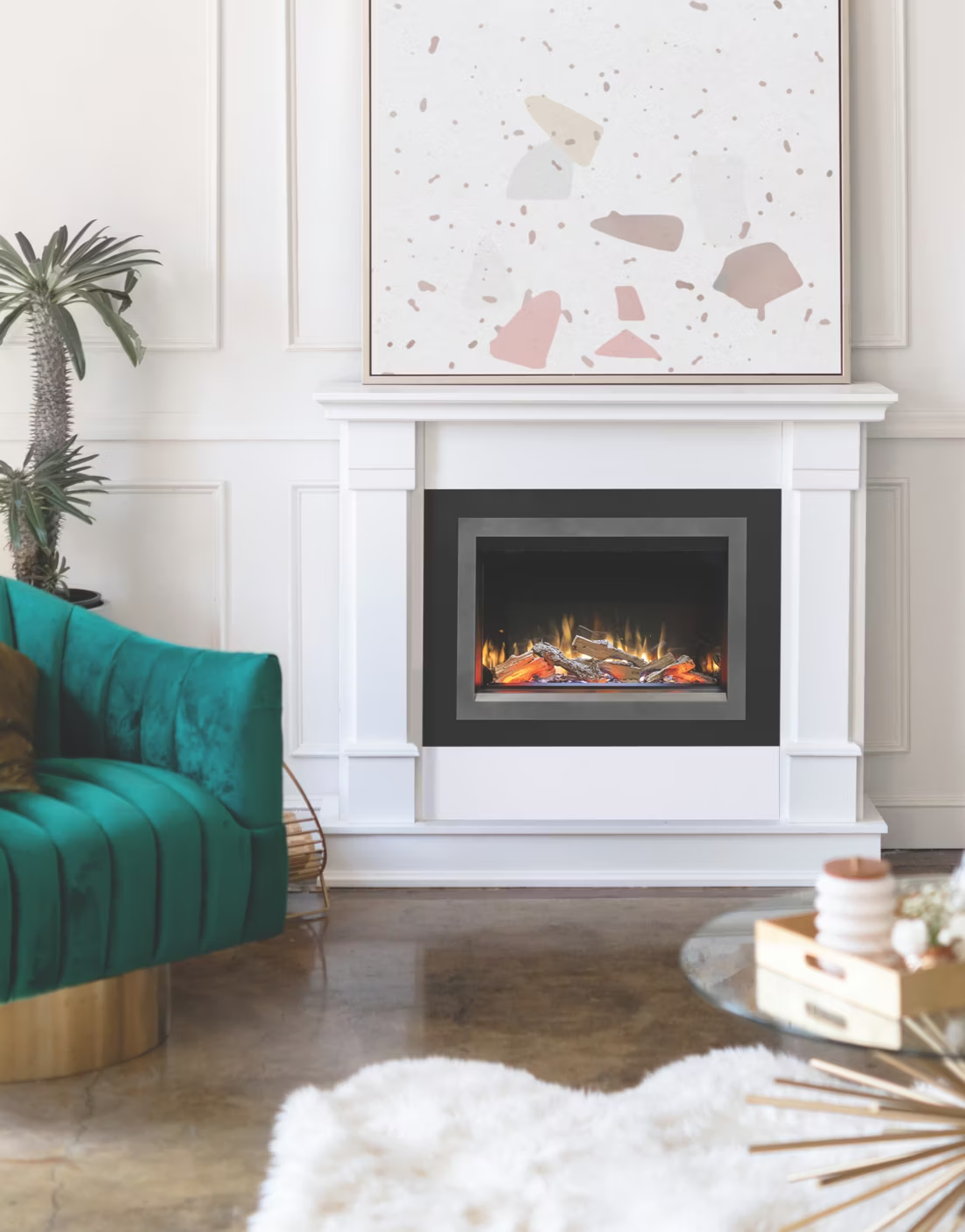
An electric insert is designed to slide into an existing fireplace opening—a common fit for Manchester's older masonry fireplaces that no longer see wood use. A built-in electric fireplace is framed into a wall like a piece of the house, which is popular in new construction and remodels around Chesterfield's newer developments. A mantel package pairs an electric unit with a surround and mantel shelf as a self-contained piece of furniture, which needs no construction at all—just an outlet—and works well in rentals or condos where you can't modify the wall.
Electric vs. gas—which makes more sense for my Manchester home?
Gas delivers more real heat output and a more convincing flame, but it requires either a natural gas line or a propane tank plus venting work, which adds cost and construction. Electric requires none of that—just a circuit—which matters in Manchester homes without gas service or in condos where running a flue isn't an option. Given the area's mild HDD count, most homeowners here aren't relying on the fireplace as their main heat source anyway, so the simplicity and low install cost of electric often wins out unless you're doing a larger renovation where a gas line is already part of the plan.
Electric vs. wood—which is right for my home?
Wood offers a genuine fire and works during a power outage, and Chesterfield County has plenty of oak, hickory, and maple available locally for anyone set up to burn it. But wood requires an actual chimney or Class A venting, regular cleaning, and fuel handling—a bigger commitment than most Manchester homeowners want for a climate this mild. Electric skips all of that: no chimney, no ash, no sweep visits, and it plugs in the same day it's delivered. For homes without an existing flue, electric is almost always the faster and cheaper path to a working fireplace.
Will my electric fireplace work during a power outage?
No—electric fireplaces are entirely dependent on grid power and will not operate during an outage, whether it's a summer thunderstorm knocking out Dominion Energy lines or a rare ice event. If backup heat during outages is a priority for your household, a wood-burning unit is the more resilient choice. Most Manchester homeowners choosing electric are prioritizing convenience and ambiance over emergency backup, which is a reasonable trade-off given how mild and short winter outages typically are in this part of Virginia.
How long do electric fireplaces last, and what maintenance do they need?
A quality electric fireplace typically lasts 10 to 15 years, with the LED flame elements and heating coil being the parts most likely to eventually need replacement or service. Maintenance is minimal compared to wood or gas—mostly dusting the unit and occasionally cleaning the fan filter if it has one. There's no annual inspection requirement like there is for a gas appliance or a wood chimney, which is part of the appeal for homeowners who want fireplace ambiance without an ongoing service commitment.
Can I put a TV above my fireplace?
Yes—with an asterisk. Fireplaces are hot and TVs don't like heat. Either put a mantel between them to deflect rising warmth, or choose a fireplace with heat-management technology that creates a cool zone on the wall above—the wall stays around 125 degrees, barely warm, while the room still gets full heat. If you like clean lines and don't want a mantel, heat management is the answer.
Do electric fireplaces actually produce heat?
Yes—most put out around 4,800–5,000 BTUs from a standard outlet, which comfortably warms a bedroom, office, or den as a comfort-zone heater. What they won't do is carry a whole house the way wood, gas, or pellet can. Think of electric as ambiance-first with honest supplemental heat: flames on with no heat in July, flames plus warmth in January.
Does a fireplace add value to my home?
On average, a fireplace adds back to the home about the same amount you spent installing it. Add the monthly savings from heating the rooms you actually use instead of the whole house—often hundreds of dollars a year—and the value case is strong before you even count what a fire does for how your family uses the room.
Can a fireplace actually lower my heating bill?
Yes—by creating a comfort zone. A furnace heats every square foot of the house just to warm the one room you're in; a gas fireplace on low burns roughly a sixth of the gas a typical furnace does. Set the furnace around 55–60 degrees as a baseline, then heat the rooms your family actually uses. Families who heat this way commonly save $20–$60 a month.
Nearby Dealers
Hearth shops serving Manchester and the surrounding area. Every listing shows whether it is a WhyFire partner, a dealer we have verified as authorized for the brands we recommend, or a local business carrying hearth products. No manufacturer pays for placement. How we verify dealers →
Hearth And Patio Shoppe
Fireplace Innovations - Chester Location
Acme Stove Company
Interior 2000
Blossman Gas And Appliance
Studley Stove And Hearth
Adams Propane Company
Electric Service in Manchester
An electric fireplace's heater draws about 1,500 watts—pennies per hour at local rates.
Virginia Electric & Power Co
Find your electric fireplace in Manchester.
Tell us a bit about your home and we'll match you with the right electric fireplace or insert—and hand you a free Project Guide & Parts List with your recommended local dealer.
Find Your Fireplace →