
Real fireplace ambiance, no flue required.
With winters that average 28°F and rarely demand a primary heat source, Chesterfield County homeowners are turning to electric fireplaces for instant ambiance and targeted warmth—from Midlothian to Chester to Bon Air. Get matched with a trusted local dealer who can size and install the right unit.
Every Project Starts From One of These Five Situations
Mild winters, modern homes, heat where you actually sit.
Chesterfield County sits in climate zone 4A with a mild winter heating season and winter lows that average around 28°F—a fraction of what a cold-climate town like Burlington, VT or Minneapolis, MN racks up each winter. That milder profile changes the calculus on hearth appliances: most Chesterfield homes, from the townhomes of Brandermill to the newer subdivisions around Chesterfield Court House, don't need a fireplace to carry the heating load. They need one that adds ambiance and takes the edge off a chilly family room, finished basement, or primary suite without a chimney, gas line, or venting to plan around.
That's exactly what electric fireplaces are built for. Dominion Energy serves electric accounts throughout the county, and most plug-in or insert units run on a standard 120V outlet, while larger built-ins typically call for a dedicated 20-amp circuit run by a licensed electrician. Worth noting: even though Chesterfield's wooded lots carry plenty of oak, hickory, and maple, wood-burning stoves and fireplaces are the exception here, not the rule—suburban lot sizes, HOA covenants, and the absence of a rural wood-cutting culture mean most homeowners looking for a real-fire look choose electric or gas instead. An electric unit gets you the look and the supplemental warmth without any of that infrastructure.
Three steps. No salesperson until you're ready.
Tell us about your project
Your zip code, your situation, and the fuel you're leaning toward—or let the answers point you to one.
See what's actually available
The brands dealers within 100 miles genuinely carry—real options, never a catalog mirage.
Get your dealer & Project Guide
A trusted local dealer, plus the free Project Guide & Parts List that names every component of the job.
Frequently Asked Questions
How much does an electric fireplace installation cost in Chesterfield County?
Costs vary widely by unit type. A freestanding or drop-in electric insert with no electrical rough-in typically runs $150 to $600 installed, since it plugs into an existing outlet. A wall-mounted unit adds mounting hardware and sometimes a new outlet placement, pushing costs to $500 to $1,500. A fully built-in electric fireplace with a custom mantel or surround—common in Midlothian and Chester remodels—runs $2,500 to $6,000 once framing, a dedicated circuit, and finish carpentry are factored in. Because there's no gas line or chimney involved, electric installs are consistently the fastest and least invasive hearth project in the county.
Do I need a permit to install an electric fireplace in Chesterfield County?
A plug-in insert or freestanding unit that uses an existing outlet generally doesn't require a permit. If your project involves a dedicated circuit, a new outlet, or wiring into the home's electrical panel—typical for built-in units—that electrical work needs to be pulled and inspected by a licensed electrician through Chesterfield County's building inspection process. Most local dealers coordinate with an electrician as part of the installation, so you're not left tracking down the paperwork yourself.
What's the difference between an electric insert, a wall-mount unit, and a built-in?
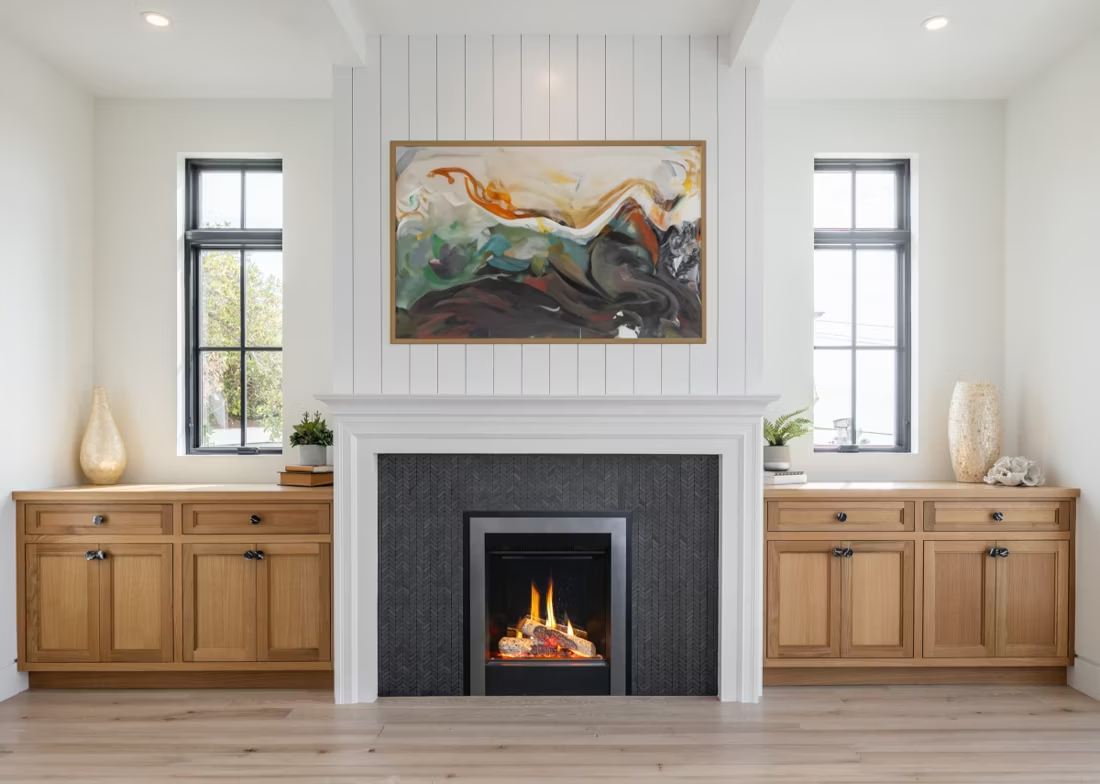
An electric insert is designed to drop into an existing masonry fireplace opening or a factory-built firebox, instantly modernizing an old wood-burning fireplace without touching the chimney. A wall-mount unit hangs directly on the wall like a large flat-screen and needs only a nearby outlet or a short electrical run. A built-in electric fireplace is framed into new construction or a remodel with a custom surround and mantel, giving it the look of a traditional masonry fireplace. For Chesterfield homeowners converting an old wood fireplace in an older Chester or Bon Air home, an insert is usually the simplest upgrade; for new rooms or additions, wall-mount or built-in units are more common.
Can an electric fireplace actually heat a room, or is it just for looks?
Most electric fireplaces include a 1,500-watt heater capable of warming 400 to 1,000 square feet, which is enough to noticeably raise the temperature in a single room—a finished basement, sunroom, or bedroom addition, all common in Chesterfield's suburban housing stock. Given the county's relatively mild winter heating season, that's often enough to let homeowners turn down the central thermostat and heat only the room they're using, rather than running full-house HVAC. It won't replace a furnace on a cold January morning, but as zone heating for everyday use, it earns its keep.
Will my electric fireplace work during a power outage?
No—electric fireplaces require power to run both the flame effect and the heater, so they shut off entirely during an outage. Chesterfield's outages are typically short and storm-related rather than the multi-day events seen in harsher climates, but if backup heat during power loss is a priority, a gas fireplace with a battery-backup or self-powered ignition system is the better choice for that specific need. Many Chesterfield homeowners run electric for daily ambiance and convenience in one room, and gas elsewhere for a heat source that survives an outage.
Electric vs. gas fireplace—which is right for my Chesterfield home?
Gas fireplaces are common and well-supported across Chesterfield County, offering higher heat output, a more realistic flame, and the ability to run during a power outage with the right ignition system—but they require venting or a vent-free configuration, plus a gas line if one isn't already in place. Electric fireplaces install almost anywhere with just an outlet or a simple circuit, cost less upfront, and produce zero emissions, but they max out around 1,500 watts of heat and go dark in an outage. For a primary living space where you want real heat output, gas often wins. For a bedroom, basement, or secondary room where ambiance and simplicity matter more, electric is usually the more practical and less expensive route.
What about wood-burning fireplaces or stoves in Chesterfield County?
Wood-burning appliances are uncommon in Chesterfield's developed neighborhoods. Even though the county's wooded lots are full of oak, hickory, and maple, most homes here are on suburban-sized lots without the wood storage, chimney infrastructure, or cutting culture that supports wood heat in more rural Virginia counties. A handful of older rural properties still run a wood stove or insert, but the vast majority of homeowners looking for the look of a wood fire choose an electric or gas log set instead—no cutting, stacking, or chimney maintenance required.
How much maintenance does an electric fireplace need?
Very little. There's no chimney to sweep, no ash to clean, and no annual gas-line inspection. Basic upkeep is limited to dusting the unit, occasionally cleaning the glass front, and replacing the heating element or LED light strip after several years of regular use—most manufacturers rate these components for 10,000+ hours of operation. This low-maintenance profile is one of the main reasons electric units are popular in Chesterfield's newer subdivisions, where homeowners want the fireplace look without an ongoing service routine.
What size electric fireplace do I need for my room?
As a starting point, a 30 to 40 inch insert or wall-mount unit suits a standard bedroom or den, while a 50 to 60 inch unit is better sized for an open-concept family room or great room—common in the newer construction around Woodlake and Chester. Ceiling height, window placement, and how much the unit will supplement your central heat all factor into the right choice. A local dealer can walk through your specific room during an in-home or virtual consultation and recommend a model sized for both the visual proportions of the wall and the heating output you actually need.
Do electric fireplaces actually produce heat?
Yes—most put out around 4,800–5,000 BTUs from a standard outlet, which comfortably warms a bedroom, office, or den as a comfort-zone heater. What they won't do is carry a whole house the way wood, gas, or pellet can. Think of electric as ambiance-first with honest supplemental heat: flames on with no heat in July, flames plus warmth in January.
Does an electric fireplace need a vent or chimney?
No—that's its superpower. An electric fireplace needs a wall and an outlet, period. No vent pipe, no gas line, no clearances to design around, which is why it works in bedrooms, offices, apartments, and walls where venting a gas or wood unit would be impractical or impossible. Installation is typically the simplest and least expensive of any fireplace type.
How much should I budget for a fireplace?
For an average home—covering the fireplace, the vent pipe, and basic installation—a budget between $3,900 and $5,500 gives you a lot of options across wood, gas, and pellet. By the time you add finish work, gas line, and electrical, the average complete installation lands between $5,000 and $12,000 all-in. In a remodel or new build, a good rule is to put about 2.5% of the total project cost toward the fireplace.
Can I install a fireplace myself?
If you're putting a fire in your house on purpose, it's best to work with an expert. Unless you're genuinely experienced in framing, gas line, vent pipe, and the national code on clearances to combustibles, have a professional do it—and ideally the same company that sells you the fireplace, so warranty, service, and liability all live under one roof.
Stove and Fireplace Dealers in Chesterfield County
Listings include WhyFire partner dealers, dealers we have verified as authorized for the brands we recommend, and established local businesses that carry hearth products. Every listing shows which one it is. The ones marked Preferred run on WhyFire's software, so they can show you real pricing and book your appointment right here. No manufacturer pays for placement. How we verify dealers →
Fireplace Innovations - Chester Location
Hearth And Patio Shoppe
Interior 2000
Blossman Gas And Appliance
Acme Stove Company
Studley Stove And Hearth
Adams Propane Company
Find your electric fireplace in Chesterfield County.
Tell us about your room and your home, and we'll match you with a trusted local Chesterfield County dealer and send over a free Project Guide & Parts List—the exact unit, mounting or framing needs, and electrical requirements for your project.
Find Your Fireplace →