
Keep Your Family Warm and Safe—No Matter What
Lowes Island was built as a gas-and-electric community, not a cordwood one. If you still want a wood stove or insert, here's what's actually realistic—and how to find a dealer who can install it right.
Every Project Starts From One of These Five Situations
A planned Loudoun County community built around gas, not cordwood.
Lowes Island sits along the Potomac River in eastern Loudoun County, part of the Cascades-area development built up around the Lowes Island Club golf course through the 1990s and 2000s. Most homes here were built with efficient gas furnaces and, where a fireplace was included, a direct-vent gas unit already plumbed in—not a wood-burning masonry chimney. At 316 feet elevation with a winter low average of 25°F and about 4,714 heating degree days, the climate here is genuinely mild compared to places like Burlington, VT or Duluth, MN, where wood heat is a practical necessity rather than a lifestyle choice.
There's also no public forest land inside Loudoun County to speak of, so the self-cut firewood culture common in more rural parts of Virginia doesn't really exist here—residents who burn wood buy seasoned oak, hickory, or maple by the cord from local suppliers rather than pulling a Forest Service permit. Add HOA architectural review requirements common throughout the Cascades community, and wood stoves end up being a deliberate, occasional choice—for ambiance, for a den or lower level, or as backup heat during a Dominion Energy outage—rather than the default heating strategy.
Three steps. No salesperson until you're ready.
Tell us about your project
Your zip code, your situation, and the fuel you're leaning toward—or let the answers point you to one.
See what's actually available
The brands dealers within 100 miles genuinely carry—real options, never a catalog mirage.
Get your dealer & Project Guide
A trusted local dealer, plus the free Project Guide & Parts List that names every component of the job.
Frequently Asked Questions
How much does a wood stove or insert cost to install in Lowes Island?
There isn't a standardized wood-install market in Lowes Island the way there is in more rural parts of Virginia, so pricing tends to be assessed case by case rather than quoted off a local price sheet. Nationally, a freestanding wood stove with new Class A chimney runs roughly $4,000 to $9,000 depending on the unit and venting path, while a wood insert into an existing masonry fireplace tends to run less if the chimney and hearth are already in place. Because this isn't a common project locally, it's worth getting an in-home assessment from a certified installer before assuming any number—venting through a two-story great room ceiling, common in Cascades-area homes, adds cost quickly.
Does my HOA allow a wood stove or wood-burning fireplace in Lowes Island?
Most Lowes Island properties fall under the Cascades Community Association or a related sub-association, and exterior changes—including new chimney penetrations, flue caps, and any visible firewood storage—typically require architectural review approval before work starts. This is one of the first calls to make, before you fall in love with a specific stove. A local installer who's worked in Loudoun County HOA communities before can often tell you quickly whether your specific lot and covenant package will be an issue.
Is wood heat even available as an option in Lowes Island?
Yes, but it's genuinely uncommon. Wood fuel relevance for this area is low—the housing stock was built around gas and electric heat, natural gas is widely available in the neighborhood, and there's no local cutting-permit infrastructure the way there is in western Virginia. That said, a small number of Lowes Island homeowners do install wood stoves or inserts, usually in a finished basement or den, for the ambiance of a real fire, occasional backup heat, or because they grew up with wood heat elsewhere. It's a deliberate choice here, not the path of least resistance.
Where do I get firewood in Lowes Island if I install a wood stove?
Since there's no public forest land in Loudoun County to cut from, virtually all wood-burning households in Lowes Island buy seasoned firewood from local suppliers rather than cutting their own. Oak, hickory, and maple are the common regional hardwoods sold locally, typically delivered by the cord. Expect to pay a premium for well-seasoned, kiln-dried, or already-split wood compared to green cordwood, since most Loudoun County suppliers cater to a market that wants convenience over bulk.
Do I need a permit to install a wood stove in Lowes Island?
Yes—any new wood-burning appliance installation requires a building permit through the Loudoun County Building and Development department, covering the stove clearance, hearth pad, and chimney or Class A pipe venting. On top of the county permit, expect an HOA architectural review if you're in a Cascades-area community, since the exterior flue and any visible venting changes typically need sign-off. A certified local installer will usually manage the county permit as part of the job, but the HOA approval is generally on the homeowner to secure first.
What kind of wood stove makes sense for a mild climate like Lowes Island's?
With a winter low average around 25°F and roughly 4,714 heating degree days, Lowes Island doesn't demand the 20-plus-hour catalytic burn times that homes in genuinely cold climates need. A mid-size non-catalytic stove or a wood insert sized for supplemental heat—rather than whole-home primary heat—fits most Lowes Island homes better. The more common motivation locally is backup heat during a Dominion Energy outage or ambiance in a den or lower level, so sizing conversations with a local dealer usually focus on the specific room rather than the whole house.
How often should a wood stove or chimney be inspected in Lowes Island?
The CSIA recommends an annual inspection for any wood-burning appliance regardless of how often it's used, and that guidance holds here too—if anything, occasional-use stoves in homes like the ones common in Lowes Island can build up creosote more unpredictably than a heavily used, consistently hot-burning stove. Plan on a late-summer sweep and inspection before the first cool nights, especially if the stove sat unused most of the year.
Should I get a wood stove or just stick with gas in Lowes Island?
For most Lowes Island homes, gas is the practical answer—natural gas service is widely available in the neighborhood, most homes already have gas-ready fireplace openings or existing gas fireplaces, and installation is generally simpler and less expensive than adding wood-burning venting to a home that wasn't built for it. Wood makes more sense if you specifically want the experience of a real fire, want heat that works without electricity during a Dominion Energy outage, or have a finished space (like a walkout basement den) where venting is straightforward. Most homeowners here who ask about wood are looking for that specific experience rather than a primary heat source.
Will a wood stove affect resale value or insurance in a community like Lowes Island?
It can go either way. Some buyers in HOA-governed communities like Lowes Island see a wood stove as a bonus for ambiance and outage resilience; others see it as an unfamiliar maintenance item in a neighborhood where most homes have gas. On the insurance side, most carriers will ask about a wood-burning appliance and may require proof of a code-compliant installation and a recent inspection before binding or renewing a policy—this is worth confirming with your carrier before installation, not after. A properly permitted, professionally installed unit tends to be a non-issue either way.
Why is my open fireplace making my house colder?
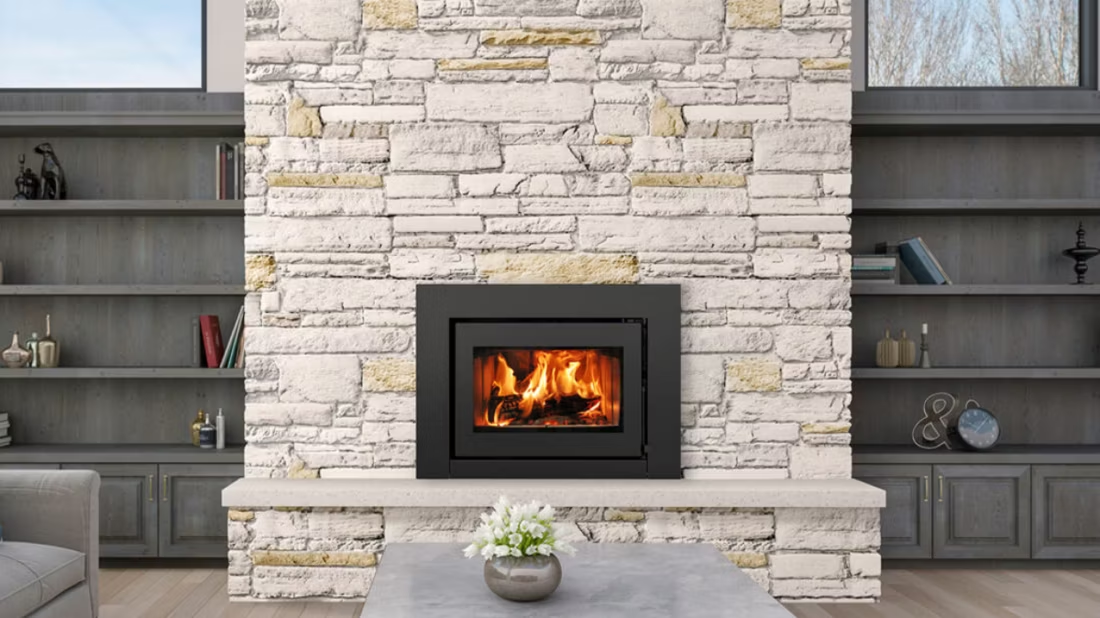
Open fireplaces suck—literally. As the fire burns, it consumes air your furnace already paid to heat and pulls it out through the chimney, so the house is actually colder after the fire goes out than before you lit it. An insert fixes this: it seals the chimney, puts fixed glass across the front, and turns that hole in your house into a real heat source.
Why won't my new wood stove get going like my old one?
New wood stoves are 70%+ efficient, so far less heat goes up the flue—which also means less draft to get a fire established. The rule: build a genuinely hot fire for about 45 minutes before you choke it down. Skip that and you get smoke in the room, creosote in the chimney, and a fire that never takes off. Most performance complaints trace straight back to this.
Can a fireplace actually lower my heating bill?
Yes—by creating a comfort zone. A furnace heats every square foot of the house just to warm the one room you're in; a gas fireplace on low burns roughly a sixth of the gas a typical furnace does. Set the furnace around 55–60 degrees as a baseline, then heat the rooms your family actually uses. Families who heat this way commonly save $20–$60 a month.
What is an in-home preview and do I need one?
It's a visit where a hearth professional measures your space, confirms the model you picked actually works in your home, and walks the specs—framing, gas line, venting, finish work—before anything is ordered. Some details you just can't know until you see the house. Never make a down payment without one; it's the single most-skipped step that burns buyers.
Nearby Dealers
Hearth shops serving Lowes Island and the surrounding area. Every listing shows whether it is a WhyFire partner, a dealer we have verified as authorized for the brands we recommend, or a local business carrying hearth products. No manufacturer pays for placement. How we verify dealers →
Lawn & Leisure
Genesis Chimney Services
Aspen Green Gasworks
Costello's Hearth & Spa - Rockville
Homeliving Fireplaces
Cyprus Air
The Fireplace Shop
Deckscapes Of Virginia
Chelsea's Chimney
Chimney.com
Holtzman Propane
Bodmer's Stoves And Pottery
Capitol Chimney Service
Best Htg And Air
Fireside Hearth & Home - Manassas
Cyprus Air, Indoor Comfort
Find your wood fireplace in Lowes Island.
Tell us about your home, your HOA, and what you're trying to solve for, and we'll match you with a trusted local dealer and a free Project Guide & Parts List—the exact parts, including the vent kit, for a wood project that actually clears Loudoun County permitting.
Find Your Fireplace →