
Keep Your Family Warm and Safe—No Matter What
Most homes in this corner of Fairfax County run on gas or electric heat, but a wood stove or insert is still an option for backup warmth or a real fire in an existing fireplace. Here's what's realistic and who can install it.
Every Project Starts From One of These Five Situations
In Long Branch, gas and electric dominate—wood is the exception.
Long Branch sits inside the Capital Beltway in Fairfax County, a dense suburban community of townhouses and close-set single-family lots near Annandale and the I-495/I-395 interchange. At 385 feet elevation with a climate zone of 4A, winters here are mild by national standards—average lows around 23°F and roughly 4,930 heating degree days, a fraction of what a place like Burlington, VT or Duluth, MN sees in a season. Central gas and electric heat handle the vast majority of homes here without issue, which is a big part of why wood heating never became the norm the way it did in more rural or colder parts of the country.
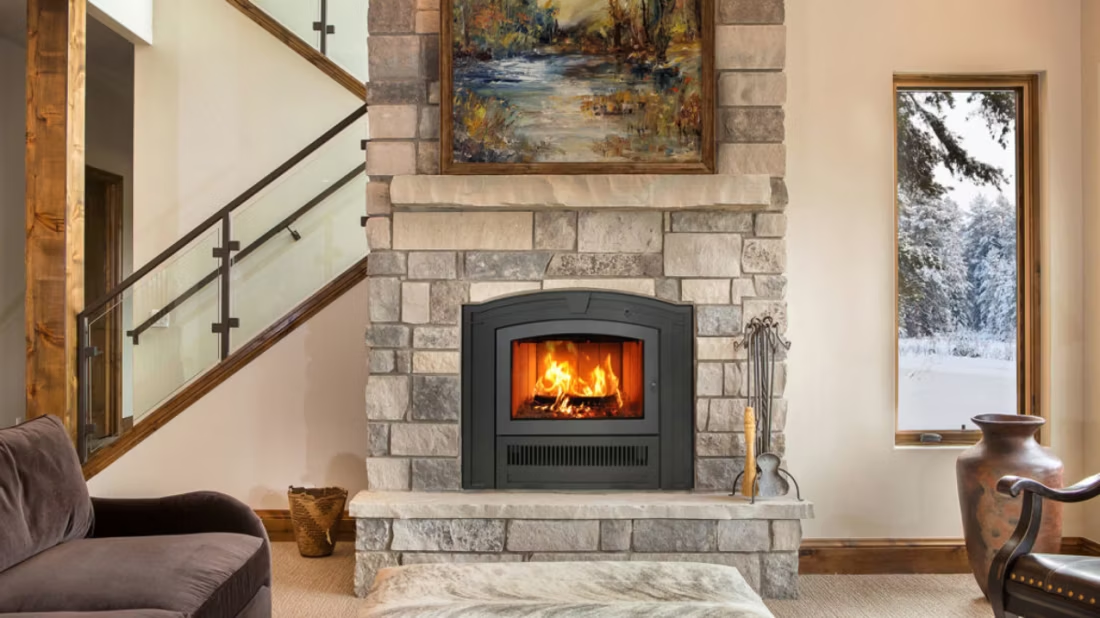
That said, wood isn't off the table. Older homes in and around Long Branch that predate the neighborhood's more recent HOA-governed subdivisions often have an existing masonry fireplace, and some owners choose to fit it with a wood-burning insert for real backup heat during a winter power outage or simply for the ambiance a gas log can't quite replicate. New freestanding wood stove installs are less common here—smaller lots, attached garages, and covenant restrictions in many Fairfax County communities make wood storage and chimney placement more complicated than in a rural setting. If wood is what you want, it's absolutely achievable, but plan for a more custom, less templated project than in a wood-heavy market.
Three steps. No salesperson until you're ready.
Tell us about your project
Your zip code, your situation, and the fuel you're leaning toward—or let the answers point you to one.
See what's actually available
The brands dealers within 100 miles genuinely carry—real options, never a catalog mirage.
Get your dealer & Project Guide
A trusted local dealer, plus the free Project Guide & Parts List that names every component of the job.
Frequently Asked Questions
How much does a wood stove or insert installation cost in Long Branch?
Because wood heating is uncommon in this part of Fairfax County, pricing tends to run higher and more variable than in wood-heavy regions—expect roughly $5,500 to $11,000 depending on the project. Fitting a wood-burning insert into an existing masonry fireplace with a stainless liner sits toward the lower end. A full freestanding stove install in a home without an existing chimney—requiring new Class A pipe, roof penetration, and hearth pad construction—runs toward the higher end and sometimes above it. Get quotes from a couple of certified installers, since fewer local companies specialize in this work compared to gas fireplace conversions.
Why is wood heat so uncommon in Long Branch compared to other areas?
A few things stack up against it. Long Branch's winters are mild relative to much of the country—average lows around 23°F and under 5,000 heating degree days—so a whole-home wood-heating strategy isn't necessary the way it might be in a colder climate. Natural gas and electric service are both extensive and reliable throughout Fairfax County, which covers most heating needs without the hassle of firewood. And many of the newer subdivisions in and around Long Branch operate under homeowners association covenants that restrict exterior wood storage, visible stovepipes, or chimney additions. The result is a market where gas and electric fireplaces are the default and wood is a deliberate, occasional choice rather than the norm.
Will my HOA let me install a wood stove?
It depends entirely on your specific community's covenants, and this is the first thing to check before budgeting for a wood stove in Long Branch. Many Fairfax County HOAs regulate exterior chimney chases, roof penetrations, and visible woodpiles, and some prohibit wood-burning appliances outright over smoke and fire concerns in close-set neighborhoods. If you're in an older, non-HOA section of Long Branch with an existing masonry fireplace, you generally have more flexibility. Pull your HOA's architectural guidelines or call your management company before you commit to a design—a good local installer can also tell you what they've run into with permits in your specific subdivision.
What permits do I need to install a wood stove in Long Branch?
Any new wood-burning appliance or chimney modification requires a building permit through Fairfax County's Land Development Services, and the installed unit needs to meet current EPA 2020 NSPS emissions standards. Depending on your subdivision, the Fairfax County Fire and Rescue Department may also weigh in on clearance-to-combustible requirements during inspection. Most reputable installers pull these permits as part of the job, which is one more reason to hire a certified professional rather than a handyman for this kind of work—improper permitting can complicate a future home sale or insurance claim.
I have an old masonry fireplace—should I add a wood insert or start fresh with a stove?
If your Long Branch home already has a working masonry fireplace and chimney, a wood-burning insert is almost always the more practical and less expensive route—it reuses your existing chimney with a new stainless steel liner and turns a drafty, inefficient fireplace into a real heat source. A freestanding stove makes more sense in a home with no existing chimney, but building one from scratch in a townhouse or tightly built subdivision often runs into roofline, setback, or HOA design issues that an insert avoids entirely. Have an installer inspect your existing flue first—its condition determines a lot of the project cost.
Where do I get firewood in Long Branch since there's no national forest nearby?
Unlike wood-heating regions out west with Forest Service cutting permits, Long Branch has no public land cutting program nearby—firewood here comes from commercial suppliers and local tree services. Oak, hickory, and maple are the most common species sold and burned in this part of Northern Virginia, all of which season well and put out solid BTU output when properly dried. Expect to pay for delivered, seasoned cordwood by the load rather than cutting your own; ask any supplier for moisture content, since unseasoned wood is the top cause of poor draft and creosote buildup in a stove that only gets occasional use.
How often does a wood stove need chimney inspection if I only use it occasionally?
Even light or occasional use calls for an annual inspection—the CSIA standard doesn't change based on how often you burn. If your Long Branch wood insert is used mainly for backup heat during outages or the occasional cold evening rather than daily winter heating, you're less likely to need a mid-season sweep, but skipping the yearly check is still the top preventable cause of chimney fires. Schedule it in late summer or early fall, before the handful of cold nights each winter when you'd actually want to use it.
Does adding a wood stove affect my homeowners insurance in Fairfax County?
It can, and it's worth a call to your insurer before installation. Many carriers require proof of a permitted installation, an inspection report, and sometimes a WETT or NFI certification from your installer before they'll extend full coverage on a home with a new wood-burning appliance. In a dense community like Long Branch where a wood stove is less common than a gas fireplace, underwriters may ask more questions than they would for a standard gas install. Keep your permit paperwork and installer's certification on file—it makes the conversation with your insurance company much faster.
Given how mild the winters are here, is wood heat even worth it over gas or electric?
For most Long Branch homes, no—with average lows around 23°F and reliable gas and electric service throughout Fairfax County, a gas fireplace or insert delivers comparable comfort with far less maintenance and none of the storage or HOA headaches. Where wood still makes sense is backup heat: a wood stove or insert keeps working during a power outage when a gas fireplace with electronic ignition or an electric unit won't, and some homeowners simply want the experience of a real fire in an existing masonry fireplace. If backup heat during outages or ambiance is your goal, wood is a reasonable niche choice. If you just want reliable, low-maintenance warmth, gas or electric is the more practical fit for this climate.
Can a wood stove burn all night?
The right one can. If waking up to a warm house and live coals matters to you, say exactly that when you're shopping—firebox size and burn-rate control determine overnight performance far more than any number on a spec sheet. It's a much more useful question than asking about BTUs.
Why won't my new wood stove get going like my old one?
New wood stoves are 70%+ efficient, so far less heat goes up the flue—which also means less draft to get a fire established. The rule: build a genuinely hot fire for about 45 minutes before you choke it down. Skip that and you get smoke in the room, creosote in the chimney, and a fire that never takes off. Most performance complaints trace straight back to this.
Can I install a fireplace myself?
If you're putting a fire in your house on purpose, it's best to work with an expert. Unless you're genuinely experienced in framing, gas line, vent pipe, and the national code on clearances to combustibles, have a professional do it—and ideally the same company that sells you the fireplace, so warranty, service, and liability all live under one roof.
Does a fireplace add value to my home?
On average, a fireplace adds back to the home about the same amount you spent installing it. Add the monthly savings from heating the rooms you actually use instead of the whole house—often hundreds of dollars a year—and the value case is strong before you even count what a fire does for how your family uses the room.
Nearby Dealers
Hearth shops serving Long Branch and the surrounding area. Every listing shows whether it is a WhyFire partner, a dealer we have verified as authorized for the brands we recommend, or a local business carrying hearth products. No manufacturer pays for placement. How we verify dealers →
Homeliving Fireplaces
Aspen Green Gasworks
Cyprus Air, Indoor Comfort
Genesis Chimney Services
Nova Fireplace And Stove
Lawn & Leisure
Fireside Hearth & Home - Manassas
Deckscapes Of Virginia
Cyprus Air
Costello's Hearth & Spa - Rockville
Capitol Chimney Service
Chimney.com
Tri-County Hearth & Patio
The Fireplace Shop
Superior Fireplaces - La Plata
Nova Fire Design
Find your wood fireplace project in Long Branch.
Tell us about your home and whether you're converting an existing fireplace or starting fresh, and we'll match you with a trusted local installer and send over a free Project Guide & Parts List—the exact parts, including the vent kit, for your Long Branch wood project.
Find Your Fireplace →