
Reliable Gas Heat for Linton Hall Homes.
Instant, clean warmth for Prince William County winters—without hauling wood or waiting on a furnace cycle. Find the right gas fireplace and connect with a trusted local dealer.
Every Project Starts From One of These Five Situations
Consistent warmth without the wood pile.
Linton Hall sits in unincorporated Prince William County between Gainesville and Bristow, at a modest 271 feet of elevation with winter lows averaging around 24°F. With a winter heating load only about half that of places like Duluth, MN or Burlington, VT, the climate here is far milder—this is a shoulder-season heating market, not a wood-stove-every-house market. Most of Linton Hall's neighborhoods were built in the 1990s and 2000s on smaller lots without the forested acreage or HOA allowances that make wood-burning practical, which is a big reason gas has become the default upgrade for homeowners wanting real supplemental heat and ambiance.
Natural gas mains don't reach every part of Linton Hall the way they do closer into Manassas, so a meaningful share of homes here run on propane rather than piped gas—worth confirming before you fall in love with a specific unit. Either fuel works in a modern direct-vent fireplace or insert. For homes leaning electric instead, Dominion Energy Virginia (listed on utility bills as Virginia Electric & Power Co) and Northern Virginia Electric Cooperative both serve the area, with residential rates running roughly 11.6 to 14.1 cents per kWh depending on which utility serves your street.
Three steps. No salesperson until you're ready.
Tell us about your project
Your zip code, your situation, and the fuel you're leaning toward—or let the answers point you to one.
See what's actually available
The brands dealers within 100 miles genuinely carry—real options, never a catalog mirage.
Get your dealer & Project Guide
A trusted local dealer, plus the free Project Guide & Parts List that names every component of the job.
Frequently Asked Questions
How much does a gas fireplace installation cost in Linton Hall?
Most gas fireplace and insert installations in Linton Hall run $4,500 to $11,000, with the spread driven mainly by venting and fuel setup. A direct-vent insert going into an existing masonry fireplace with gas already run to the house sits toward the lower end. New construction, remodels needing framing and a fresh gas line, or homes that need a propane tank installed because natural gas isn't available on that street push toward the higher end. A local dealer will give you a firm number after seeing your home and confirming which fuel source you're actually on.
Is Linton Hall on natural gas or propane?
It depends on the subdivision. Some pockets of Linton Hall and the surrounding 20136, 20155, and 20181 zip codes have natural gas mains, particularly closer to Gainesville's commercial corridor, but many of the newer residential developments built further out were never connected to gas lines and rely on propane instead—either a leased tank from a regional supplier or a homeowner-owned tank. Before you shop for a specific fireplace model, it's worth checking your existing gas bill or asking a neighbor, since propane and natural gas units use different orifices and regulators.
Do I need a permit to install a gas fireplace in Linton Hall?
Yes. Prince William County's Development Services Building Development Division requires a building permit for the fireplace installation itself, plus a separate gas permit if new gas line work is involved—that gas line work has to be done by a licensed gas fitter. Most established hearth dealers in the area handle both permits as part of the install, which is one of the real advantages of using a certified local company instead of a general handyman: they coordinate the inspections so you're not chasing multiple trades yourself.
Will a gas fireplace still work if the power goes out?
Most direct-vent gas fireplaces with intermittent pilot ignition (IPI) run on a battery backup—typically a set of AA batteries inside the unit—that automatically kicks in when utility power drops, whether that's from Dominion Energy or NOVEC. The fireplace lights and operates normally off the batteries. Valor units go a step further: their pilot assembly generates its own electricity through a thermopile, so there are no batteries to remember at all. For Prince William County's occasional ice-storm outages, either option keeps a heat source running when the furnace won't.
What's the difference between a gas fireplace, insert, and stove?
A gas fireplace is a built-in unit framed into a wall, typically chosen for new construction or a full remodel. A gas insert drops into an existing masonry fireplace opening and uses the chimney cavity to vent, which is the common route for Linton Hall homes with an underused wood-burning fireplace from the original build. A gas stove is a freestanding cabinet-style unit that sits on the floor, useful in rooms with no existing fireplace opening at all. For most homeowners here converting an old builder-grade fireplace, an insert is the straightforward answer.
Why isn't wood heat common in Linton Hall?
Wood-burning appliances are uncommon in Linton Hall, and it's largely a function of the neighborhoods rather than the climate—winter lows around 24°F don't demand the round-the-clock heat output wood provides, and most lots here are small, HOA-governed, and not adjacent to the kind of oak, hickory, and maple woodlots you'd find further out in rural Prince William County. A handful of older homes on larger acreage do still run a wood stove or insert, but for the typical Linton Hall subdivision, gas or electric is the far more practical and far more common choice.
Should I get a gas fireplace or an electric one?
Gas gives you real heat output—enough to noticeably warm a room—plus the look and sound of an actual flame, and it can run during a power outage with battery-backup ignition. Electric fireplaces plug into a standard outlet, install in under an hour with no venting or gas line at all, and cost far less upfront, but they're supplemental ambiance more than serious heat, and they go dark the moment Dominion or NOVEC power drops. For a primary living space in Linton Hall where you want to actually offset the HVAC bill on a cold night, gas is usually the better investment; for a basement, bedroom, or rental property, electric is often plenty.
How often should a gas fireplace be serviced?
Plan on an annual inspection, ideally in early fall before the unit gets regular winter use. A qualified technician checks the burner, pilot assembly, venting, and gas connections, and cleans the glass and interior—a much quicker visit than a wood chimney sweep, but still important, especially for propane-fed units where line connections and regulator function should be verified yearly. Expect to pay somewhere in the $150 to $250 range for a standard annual service call in the Prince William County area.
Vented vs. vent-free gas fireplaces—which should I choose?
Vented (direct-vent) units draw combustion air from outside and exhaust it back outside through a sealed pipe—they're the standard choice and deliver real heat without affecting indoor air quality. Vent-free units burn directly into the room and require Virginia's strict room-sizing and oxygen-depletion-sensor rules to be met. Virginia does permit vent-free units, but for most Linton Hall homes, especially in tighter, newer-construction bedrooms and finished basements, a direct-vent unit is the more universally recommended option—it heats better and doesn't ask you to make any indoor air quality tradeoffs. A local dealer can walk you through both if you want to compare.
Can I put a TV above my fireplace?
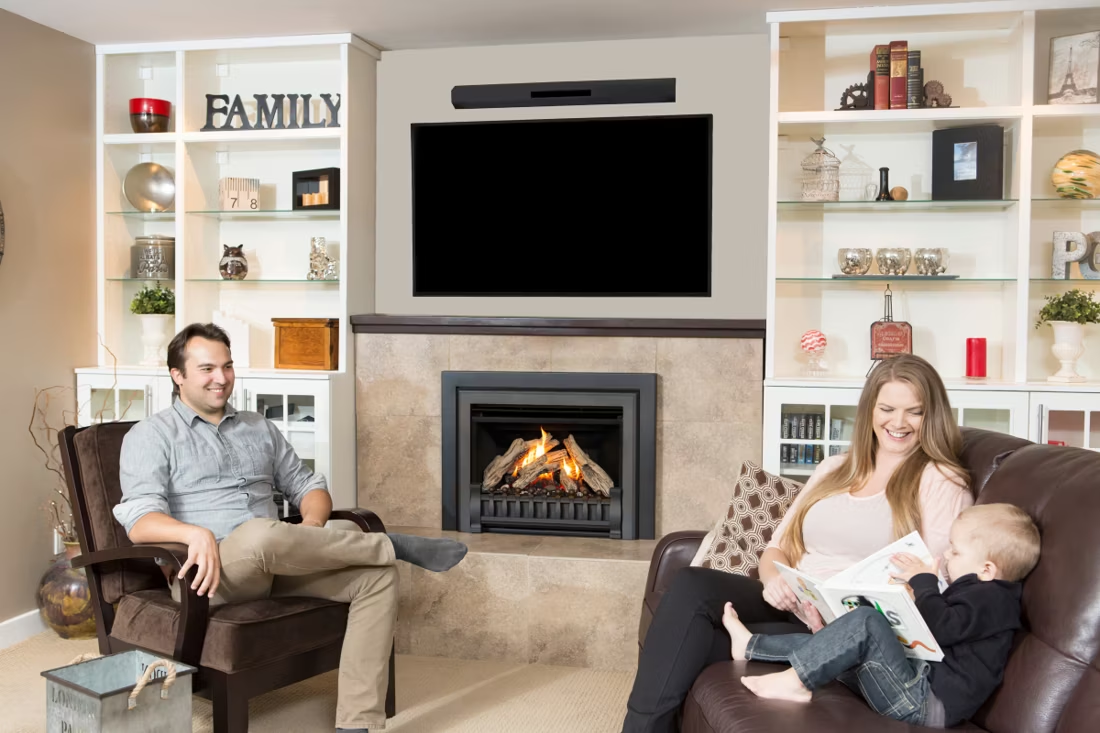
Yes—with an asterisk. Fireplaces are hot and TVs don't like heat. Either put a mantel between them to deflect rising warmth, or choose a fireplace with heat-management technology that creates a cool zone on the wall above—the wall stays around 125 degrees, barely warm, while the room still gets full heat. If you like clean lines and don't want a mantel, heat management is the answer.
Is my gas fireplace wasting gas?
If it was installed more than 15 years ago, probably. Older gas fireplaces keep a standing pilot light burning all the time, and that little flame can cost a couple hundred dollars a year. Newer models use pilot-on-demand ignition—the pilot lights only when you use the fireplace and goes out when you turn it off.
Can I install a fireplace myself?
If you're putting a fire in your house on purpose, it's best to work with an expert. Unless you're genuinely experienced in framing, gas line, vent pipe, and the national code on clearances to combustibles, have a professional do it—and ideally the same company that sells you the fireplace, so warranty, service, and liability all live under one roof.
Does a fireplace add value to my home?
On average, a fireplace adds back to the home about the same amount you spent installing it. Add the monthly savings from heating the rooms you actually use instead of the whole house—often hundreds of dollars a year—and the value case is strong before you even count what a fire does for how your family uses the room.
Nearby Dealers
Hearth shops serving Linton Hall and the surrounding area.
Find your gas fireplace in Linton Hall.
Tell us about your home and fuel setup, and we'll put together a free Project Guide & Parts List—the right gas fireplace or insert, the vent kit it needs, and a trusted local Prince William County dealer to install it.
Find Your Fireplace →