
Real warmth, zero venting, for Linton Hall homes.
No chimney, no gas line, no HOA headaches. Find the right electric fireplace or insert for your Prince William County home and connect with a trusted local dealer.
Every Project Starts From One of These Five Situations
The suburban answer to ambiance and supplemental heat.
Linton Hall sits in the Gainesville-Haymarket corridor of Prince William County, a landscape of newer subdivisions, townhome communities, and HOA-governed neighborhoods across zip codes 20136, 20155, and 20181. Winters here are mild by national standards—average lows around 24°F and roughly 4,700 heating degree days a year, nowhere near the demands placed on a home in Duluth, MN or Burlington, VT. That climate profile is exactly why electric fireplaces fit so well: homeowners want the glow and the occasional supplemental warmth of a fireplace without engineering a home around a wood-burning or gas-venting system.
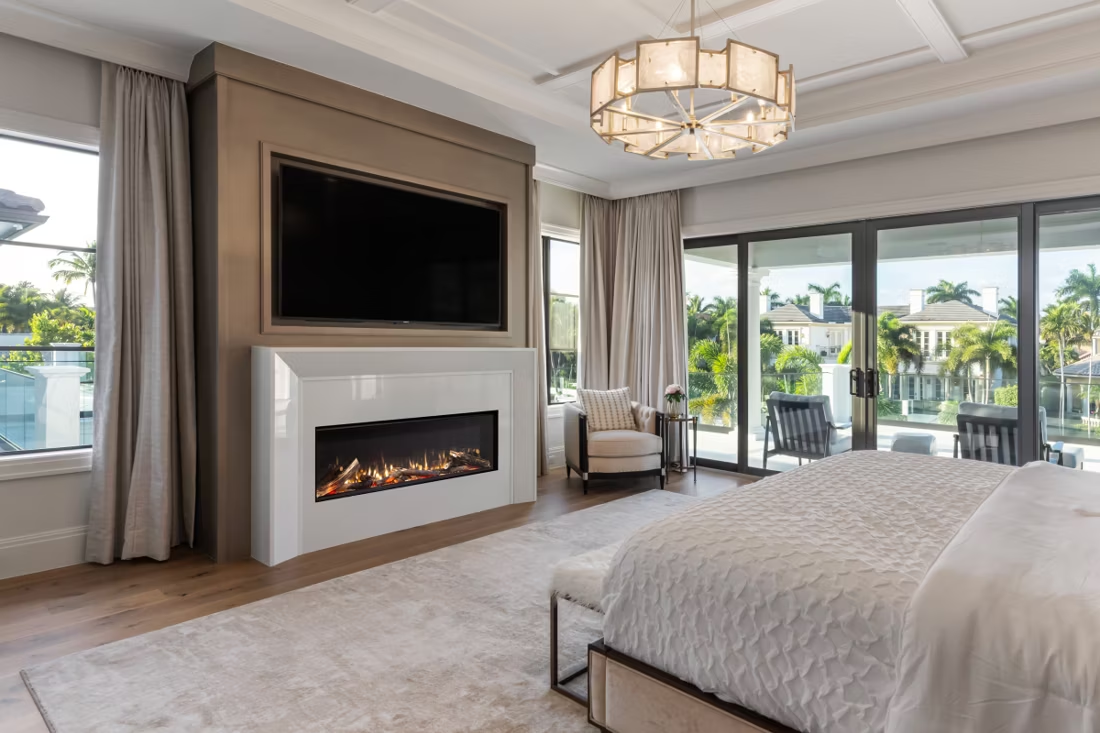
Many Linton Hall communities restrict exterior venting, masonry chimneys, or wood-burning appliances through HOA covenants, which rules out two fuel types before a homeowner even starts shopping. Electric sidesteps that entirely—no chimney, no flue, no combustion byproducts to vent outside. Depending on your street, your home is served by either Virginia Electric & Power Co. (Dominion Energy) or Northern Virginia Electric Cooperative (NOVEC), with residential rates running roughly 14.1¢ and 11.6¢ per kWh respectively. Either utility can run a modern electric fireplace insert or built-in unit for pennies an hour, which makes electric a practical choice for finished basements, media walls, and primary bedrooms where a real fire was never in the plan anyway.
Three steps. No salesperson until you're ready.
Tell us about your project
Your zip code, your situation, and the fuel you're leaning toward—or let the answers point you to one.
See what's actually available
The brands dealers within 100 miles genuinely carry—real options, never a catalog mirage.
Get your dealer & Project Guide
A trusted local dealer, plus the free Project Guide & Parts List that names every component of the job.
Frequently Asked Questions
How much does an electric fireplace installation cost in Linton Hall?
Most electric fireplace projects in Linton Hall run $300 to $2,500. A plug-in freestanding unit or a simple wall-mounted model on an existing outlet sits at the low end—essentially the cost of the unit itself plus a mounting bracket. A built-in electric insert set into a mantel surround, media wall, or existing masonry firebox runs higher once you factor in carpentry, a dedicated 120V or 240V circuit, and a licensed electrician's time. Because there's no venting or gas line to run, electric installs are consistently the least expensive fireplace project available to Prince William County homeowners.
Can an electric fireplace actually heat a room in Linton Hall?
Yes, within reason. Most residential electric fireplaces top out around 5,000-9,000 BTU, which is enough to comfortably warm a single room—a basement rec room, home office, or primary bedroom—but not a whole house. Given Linton Hall's relatively mild winters (average lows near 24°F, about 4,700 heating degree days), that's usually all homeowners need: supplemental heat for the room they're actually sitting in, layered on top of central HVAC, rather than a full heating replacement. Homeowners looking for a fireplace to genuinely offset furnace use in a larger space should talk to a local dealer about a gas insert instead.
Will my HOA allow an electric fireplace in Linton Hall?
Almost universally, yes. Many Linton Hall neighborhoods—including the planned communities common along the Gainesville-Haymarket corridor—restrict exterior venting, new chimneys, and visible flue penetrations through architectural review covenants. Electric fireplaces don't trigger those restrictions because there's no combustion and nothing to vent outside. That said, always check your specific HOA's rules before cutting into a wall for a built-in unit; some associations still require a simple notification or architectural review form even for interior work, particularly in townhome sections with shared walls.
Which electric utility serves my home in Linton Hall, and does it matter?
Depending on your exact street, you're served by either Virginia Electric & Power Co. (Dominion Energy) or Northern Virginia Electric Cooperative (NOVEC)—both operate in the 20136, 20155, and 20181 zip codes, and coverage can change block to block in this part of Prince William County. It's worth checking your bill: Dominion's residential rate runs around 14.1¢/kWh while NOVEC runs closer to 11.6¢/kWh, so your operating cost for a fireplace running several hours a day will differ modestly between the two. Either utility handles a typical fireplace's draw without any special service upgrade in most homes.
What's the difference between an electric insert, a built-in, and a wall-mount unit?
An electric insert is sized to slide into an existing masonry firebox or a zero-clearance wood fireplace shell, making it the easiest upgrade for homes with an old, unused fireplace. A built-in electric fireplace is framed into new construction—a media wall, a custom mantel surround—and installed like a piece of millwork. A wall-mount unit hangs directly on drywall like a large flat-screen TV and needs only a nearby outlet or a dedicated circuit run behind the wall. For Linton Hall's newer housing stock, wall-mounts and media-wall builts are the most common requests; inserts come up mostly in the handful of older homes in the area with existing masonry fireplaces.
Do I need a permit or an electrician to install an electric fireplace?
A simple plug-in unit on an existing standard outlet typically requires no permit at all. A hardwired built-in or wall-mount unit on a dedicated circuit does require a licensed electrician, and depending on the scope of the work, Prince William County's Department of Development Services may require an electrical permit for the new circuit. Most hearth and electrical dealers in the area handle this paperwork as part of the installation quote, so it's worth asking upfront whether the price you're given includes permitting.
How much does it cost to run an electric fireplace in Linton Hall?
A typical residential electric fireplace draws around 1,500 watts on its heater setting. Running it for four hours a night costs roughly 85 cents on Dominion Energy's rate (14.1¢/kWh) or about 70 cents on NOVEC's rate (11.6¢/kWh)—a few dollars a week even with regular evening use. Running the unit on flame-only mode without heat draws a fraction of that, since the visual effect uses far less power than the heating element.
Electric vs. gas—which fireplace is right for my Linton Hall home?
Gas is available throughout most of the Gainesville-Haymarket corridor and delivers real heat output—enough to serve as legitimate supplemental or even zone heat in a main living area, with the ambiance of an actual flame. Electric skips the gas line, the venting, and the annual service call entirely, but tops out at modest supplemental warmth for a single room. For a primary living room where the fireplace does real heating work, gas is usually the better long-term fit. For a basement media wall, a bedroom, a condo, or any space where the goal is ambiance and easy installation over raw heat output, electric wins on cost and simplicity every time.
What are good electric fireplace brands for a Linton Hall media wall or basement?
Dimplex and Napoleon both make widely available built-in inserts sized for standard mantel and media-wall openings, with realistic flame technology that holds up well under close inspection. SimpliFire and Touchstone are common choices for slim wall-mount units in bedrooms or smaller rooms where a full built-in isn't practical. A local dealer can walk you through flame-effect quality, heater wattage, and trim-kit sizing in person—worth doing before ordering online, since return shipping on a large insert is expensive if the dimensions don't match your opening.
Can I put a TV above my fireplace?
Yes—with an asterisk. Fireplaces are hot and TVs don't like heat. Either put a mantel between them to deflect rising warmth, or choose a fireplace with heat-management technology that creates a cool zone on the wall above—the wall stays around 125 degrees, barely warm, while the room still gets full heat. If you like clean lines and don't want a mantel, heat management is the answer.
Does an electric fireplace need a vent or chimney?
No—that's its superpower. An electric fireplace needs a wall and an outlet, period. No vent pipe, no gas line, no clearances to design around, which is why it works in bedrooms, offices, apartments, and walls where venting a gas or wood unit would be impractical or impossible. Installation is typically the simplest and least expensive of any fireplace type.
What is an in-home preview and do I need one?
It's a visit where a hearth professional measures your space, confirms the model you picked actually works in your home, and walks the specs—framing, gas line, venting, finish work—before anything is ordered. Some details you just can't know until you see the house. Never make a down payment without one; it's the single most-skipped step that burns buyers.
Can a fireplace actually lower my heating bill?
Yes—by creating a comfort zone. A furnace heats every square foot of the house just to warm the one room you're in; a gas fireplace on low burns roughly a sixth of the gas a typical furnace does. Set the furnace around 55–60 degrees as a baseline, then heat the rooms your family actually uses. Families who heat this way commonly save $20–$60 a month.
Nearby Dealers
Hearth shops serving Linton Hall and the surrounding area.
Electric Service in Linton Hall
An electric fireplace's heater draws about 1,500 watts—pennies per hour at local rates.
Virginia Electric & Power Co
Northern Virginia Elec Coop
Find your electric fireplace in Linton Hall.
Tell us about your space and we'll put together a free Project Guide & Parts List—the right unit, the wiring specs, and a trusted local dealer near Linton Hall to install it.
Find Your Fireplace →