
Keep Your Family Warm and Safe—No Matter What
Reliable radiant heat for the tidewater winters between the Mattaponi and Pamunkey rivers—sized to your home and matched with a trusted local dealer.
Every Project Starts From One of These Five Situations
A working fuel for a rural, tree-lined county.
King William County sits in Virginia's tidewater region between the Mattaponi and Pamunkey rivers, with a moderate winter heating season and winter lows that average around 28°F—a moderate climate 4A zone, nowhere near the brutal cold of a place like Duluth or Fargo, but cold enough for regular fires from November through February. With just under 5,000 residents spread across a largely rural, wooded county, wood heat remains a practical choice for supplemental warmth, backup power-outage heat, and the kind of ambiance that a heat pump alone can't provide.
The county's hardwood forests—thick with oak, hickory, and maple—make firewood easy to source locally, whether from your own property, a neighbor, or a regional supplier. There are no air quality non-attainment concerns or wood-burning curtailment periods here, unlike parts of the West, so burning schedules aren't restricted by local ordinance. For homes along the rural stretches of Route 30 or Route 360, where storms can knock out power for a day or more, a properly installed wood stove or insert is often the most dependable heat source in the house.
Three steps. No salesperson until you're ready.
Tell us about your project
Your zip code, your situation, and the fuel you're leaning toward—or let the answers point you to one.
See what's actually available
The brands dealers within 100 miles genuinely carry—real options, never a catalog mirage.
Get your dealer & Project Guide
A trusted local dealer, plus the free Project Guide & Parts List that names every component of the job.
Frequently Asked Questions
How much does a wood stove installation cost in King William County?
Wood stove and insert installations in King William County typically fall in the $3,500 to $8,500 range, depending on whether you're installing into an existing masonry fireplace, running new Class A chimney pipe through a wall or roof, and what hearth pad work is needed for code clearance. Homes with an existing chimney and hearth generally land on the lower end; new construction or homes without an existing flue run higher once venting and framing are factored in. Rural properties off Route 30 or Route walkways may see a modest travel charge from installers based out of Richmond or the Tri-Cities area.
What size wood stove or insert do I need for my home?
Given King William County's moderate 4A climate and average winter lows near 28°F, most homes here don't need the largest catalytic units built for sub-zero nights—a small to medium stove (rated for 1,000 to 2,000 square feet) is usually sufficient for a primary living area or supplemental heating role. Older farmhouses with less insulation, or larger open floor plans common in the county's rural lots, may need a mid-size unit even at moderate square footage. A local dealer can size your space correctly during an in-home visit—oversizing leads to smoldering, low-temperature burns and creosote buildup, which is a real concern with the oak and hickory that's common firewood here.
Where can I find certified wood stove installers near King William County?
Look for NFI (National Fireplace Institute) or CSIA (Chimney Safety Institute of America) certified installers—both credentials indicate proper training in clearances, venting, and code compliance for wood-burning appliances. Because King William County is largely rural with a small population base, many homeowners work with hearth retailers based in nearby Richmond, Mechanicsville, or West Point, who serve the county as part of their regular installation territory. Confirm any installer you're considering handles the permitting and inspection process with King William County directly rather than leaving that step to you.
What's the difference between a wood stove and a wood insert?
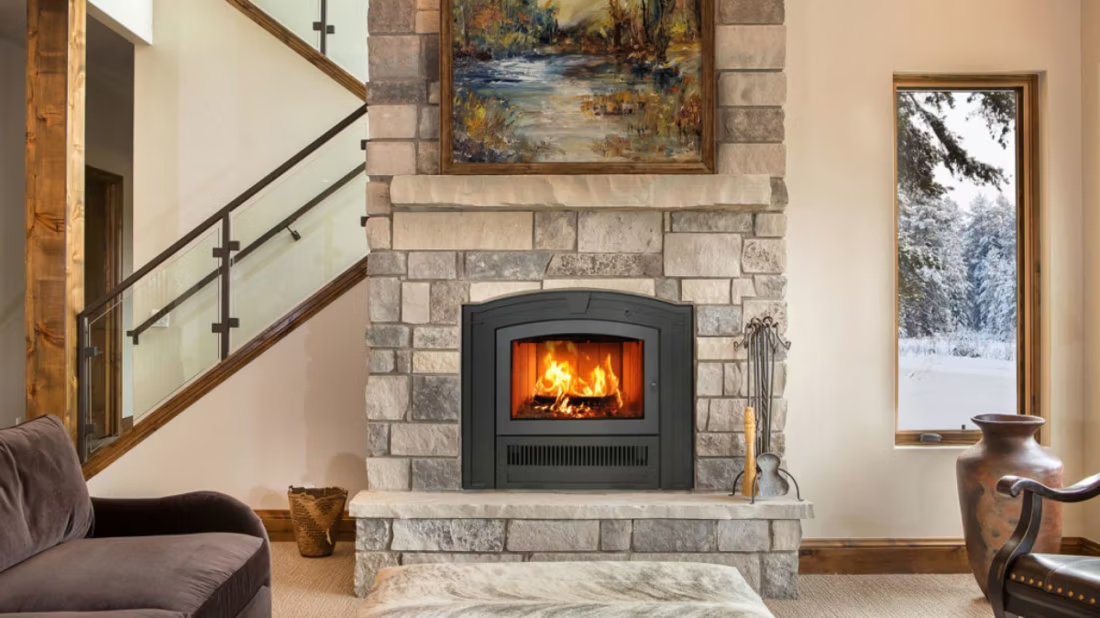
A wood stove is a freestanding unit on its own hearth pad, vented through a chimney, and can go almost anywhere in a home with proper clearances. A wood insert slides into an existing masonry fireplace opening, using the existing chimney (typically with a stainless liner) to convert a drafty open hearth into an efficient heat source. Many older homes in King William County still have original masonry fireplaces from earlier construction eras—for those, an insert is usually the more efficient and less invasive upgrade. Newer homes without an existing fireplace are better candidates for a freestanding stove.
Do I need a permit to install a wood stove in King William County?
Yes—new wood stove and insert installations require a building permit through King William County's building department, and the unit itself needs to meet current EPA emissions standards for new stoves. Most local hearth retailers handle the permit application and schedule the required inspection as part of the installation, so you generally don't have to navigate the paperwork yourself. There are no local air quality curtailment periods or burn bans tied to wood smoke in King William County, so once installed, you're free to burn on your normal schedule.
What's the best wood stove for King William County's climate?
With winter lows averaging around 28°F and a moderate winter heating season, King William County doesn't require the extreme-cold, 20-hour catalytic burn times you'd want in a place like Bozeman or Burlington. Non-catalytic stoves from brands like Pacific Energy, Lopi, or Vermont Castings are a strong fit for most homes here—efficient, easier to operate day to day, and well-suited to burning local oak and hickory. Homes using wood as primary heat, or those wanting the longest possible overnight burns for storm-outage backup, may still prefer a catalytic model. A local dealer can match the stove to your specific heating goals.
How often should my chimney be inspected and cleaned?
The CSIA recommends an annual inspection for any wood-burning chimney, and that holds true in King William County regardless of how moderate the climate is—creosote buildup depends on how you burn, not just how cold it gets outside. Plan on a sweep and inspection each late summer or early fall before the first fires of the season, especially if you're burning dense hardwoods like oak and hickory, which are common locally and burn hot and clean when properly seasoned but can still build glazed creosote if the stove runs too cool. Rural homeowners should factor in a bit of extra lead time booking a sweep, since fewer chimney service companies are based directly in the county.
Where can I get firewood in King William County?
Given the county's dense hardwood forests, a lot of King William County residents source firewood locally—either cutting their own from private land, buying from neighbors, or purchasing from small regional suppliers around the Richmond and Middle Peninsula area. Oak, hickory, and maple are the dominant species locally, and all three season well and produce solid heat output when properly dried for six months to a year before burning. Expect to pay in the range of $200 to $325 per cord for delivered, seasoned hardwood, with prices trending higher for kiln-dried or pre-split product.
Wood stove vs. pellet stove—which is right for me?
Wood stoves burn cordwood, work without electricity (a real advantage during the multi-day power outages that follow strong storms in this part of Virginia), and pair naturally with the abundant oak and hickory available locally. Pellet stoves burn compressed wood pellets—regional brands like Energex, Hamer Pellet Fuel, and Greene Team Pellet Fuel are available through area suppliers—and offer easier day-to-day operation with a thermostat-controlled hopper, but they require electricity to run the auger and blower, so they won't function as backup heat during an outage. For King William County's rural stretches where power can be out for a day or more after a storm, wood stoves generally win on resilience. For in-town convenience with less hands-on tending, pellet is worth a look.
Can a wood stove burn all night?
The right one can. If waking up to a warm house and live coals matters to you, say exactly that when you're shopping—firebox size and burn-rate control determine overnight performance far more than any number on a spec sheet. It's a much more useful question than asking about BTUs.
Why is a fireplace insert so efficient?
An insert does two things: it seals the chimney completely, so you stop losing air you already paid to heat, and it radiates warmth into the room through the firebox and glass. Most add a heat-exchange fan that pulls cool room air underneath, wraps it around the hot firebox, and pushes it back out warm. Your home is more efficient before you've even lit the first fire.
Can a fireplace actually lower my heating bill?
Yes—by creating a comfort zone. A furnace heats every square foot of the house just to warm the one room you're in; a gas fireplace on low burns roughly a sixth of the gas a typical furnace does. Set the furnace around 55–60 degrees as a baseline, then heat the rooms your family actually uses. Families who heat this way commonly save $20–$60 a month.
How much should I budget for a fireplace?
For an average home—covering the fireplace, the vent pipe, and basic installation—a budget between $3,900 and $5,500 gives you a lot of options across wood, gas, and pellet. By the time you add finish work, gas line, and electrical, the average complete installation lands between $5,000 and $12,000 all-in. In a remodel or new build, a good rule is to put about 2.5% of the total project cost toward the fireplace.
Stove and Fireplace Dealers in King William County
Listings include WhyFire partner dealers, dealers we have verified as authorized for the brands we recommend, and established local businesses that carry hearth products. Every listing shows which one it is. The ones marked Preferred run on WhyFire's software, so they can show you real pricing and book your appointment right here. No manufacturer pays for placement. How we verify dealers →
Phillips Energy,Inc - Providence Forge
Holtzman Propane
Old Town Stove & Hearth
Studley Stove And Hearth
Find your wood fireplace in King William County.
Tell us a bit about your home and we'll match you with the right wood stove or insert—plus a free Project Guide & Parts List with the exact parts, vent kit, and a recommended local dealer for your King William County project.
Find Your Fireplace →