
Clean, Instant Heat for Hollymead's Mild Winters.
Northern Albemarle County doesn't need a wood-burning workhorse—it needs reliable, on-demand warmth. Find the right gas fireplace or insert and get matched with a trusted local installer.
Every Project Starts From One of These Five Situations
Convenient heat for a growing Albemarle County community.
Hollymead sits along Route 29 in northern Albemarle County, just outside Charlottesville, at roughly 500 feet of elevation in Virginia's mixed-humid climate zone (4A). Winter lows here average around 30°F, and the area logs about 3,767 heating degree days a year—a fraction of the heating load faced by places like Duluth, MN or Burlington, VT. That mild profile means a gas fireplace in Hollymead usually isn't carrying the whole heating burden; it's instant-on comfort for a cold January evening, or a focal point in the newer homes and townhouses that make up much of Hollymead Town Center and the surrounding subdivisions.
One wrinkle worth knowing before you shop: Hollymead's newer developments largely sit outside dense municipal natural gas infrastructure, so most gas fireplace installations here run on propane rather than piped-in natural gas. That changes the install—a propane tank set (or confirming an existing one) is often part of the job, rather than a straightforward gas line tap. It's a detail a Charlottesville-based dealer working purely off natural gas lines might miss, and it's exactly the kind of thing a local installer who already knows Hollymead's subdivisions will have sorted out before the first estimate. Electric service splits between Dominion (Virginia Electric & Power Co.) and Central Virginia Electric Cooperative depending on which side of Hollymead you're on, which matters if you're weighing a gas insert against an electric option for a bonus room or sunroom.
Three steps. No salesperson until you're ready.
Tell us about your project
Your zip code, your situation, and the fuel you're leaning toward—or let the answers point you to one.
See what's actually available
The brands dealers within 100 miles genuinely carry—real options, never a catalog mirage.
Get your dealer & Project Guide
A trusted local dealer, plus the free Project Guide & Parts List that names every component of the job.
Frequently Asked Questions
How much does a gas fireplace installation cost in Hollymead?
Most gas fireplace and insert installations in Hollymead run between roughly $4,000 and $9,500, with the spread driven mainly by whether propane infrastructure already exists. A direct-vent insert going into an existing fireplace with a propane tank already in place lands toward the lower end. Homes that need a new propane tank set, a longer supply line, or new framing and venting for a built-in unit run toward the higher end. Because Albemarle County doesn't have dense municipal natural gas service reaching most of Hollymead, factor in a conversation with your installer about tank ownership versus lease before you get a final number—it affects both the up-front cost and your ongoing fuel bill.
Can I convert an existing wood fireplace to gas in Hollymead?
If your home has an existing masonry wood fireplace, yes—a gas insert with a stainless liner run up the existing chimney is a straightforward conversion, generally similar in cost to a standalone insert install. That said, wood-burning fireplaces are less common in Hollymead than in older Charlottesville neighborhoods, since much of Hollymead was built out from the 1990s onward with prefabricated or gas-ready fireplace boxes rather than traditional masonry hearths. If your home already has a factory-built (zero-clearance) wood fireplace, conversion options are more limited and depend on the specific manufacturer—a local dealer can tell you within a few minutes whether your existing firebox can accept a gas log set or insert.
Should I plan on propane or natural gas for a Hollymead installation?
Plan on propane unless your specific address already has natural gas service—most of Hollymead and the surrounding stretch of northern Albemarle County isn't reached by municipal natural gas trunk lines, so propane supplied by regional providers is the default fuel for gas fireplaces here. That's not a downside so much as a different setup: your installer will either connect to an existing propane tank or coordinate a new tank set with a propane supplier as part of the project. If you're unsure what your home currently has, check your water heater or range—if either already runs on propane, your fireplace installation is simpler.
Will my gas fireplace still work if the power goes out?
Most modern gas fireplaces will, which matters in Hollymead given that ice storms and summer thunderstorms occasionally knock out power for Dominion and Central Virginia Electric Cooperative customers alike. Units with IPI (intermittent pilot ignition) run on a small battery backup that kicks in automatically when grid power drops, so the fireplace still lights on demand. Valor fireplaces take a slightly different approach—their pilot assembly generates its own electricity through the thermocouple, so there's no battery to remember to replace. Either way, ask your installer which ignition system is on the unit you're considering if outage performance matters to you.
What's the difference between a gas fireplace, insert, and stove for a Hollymead home?
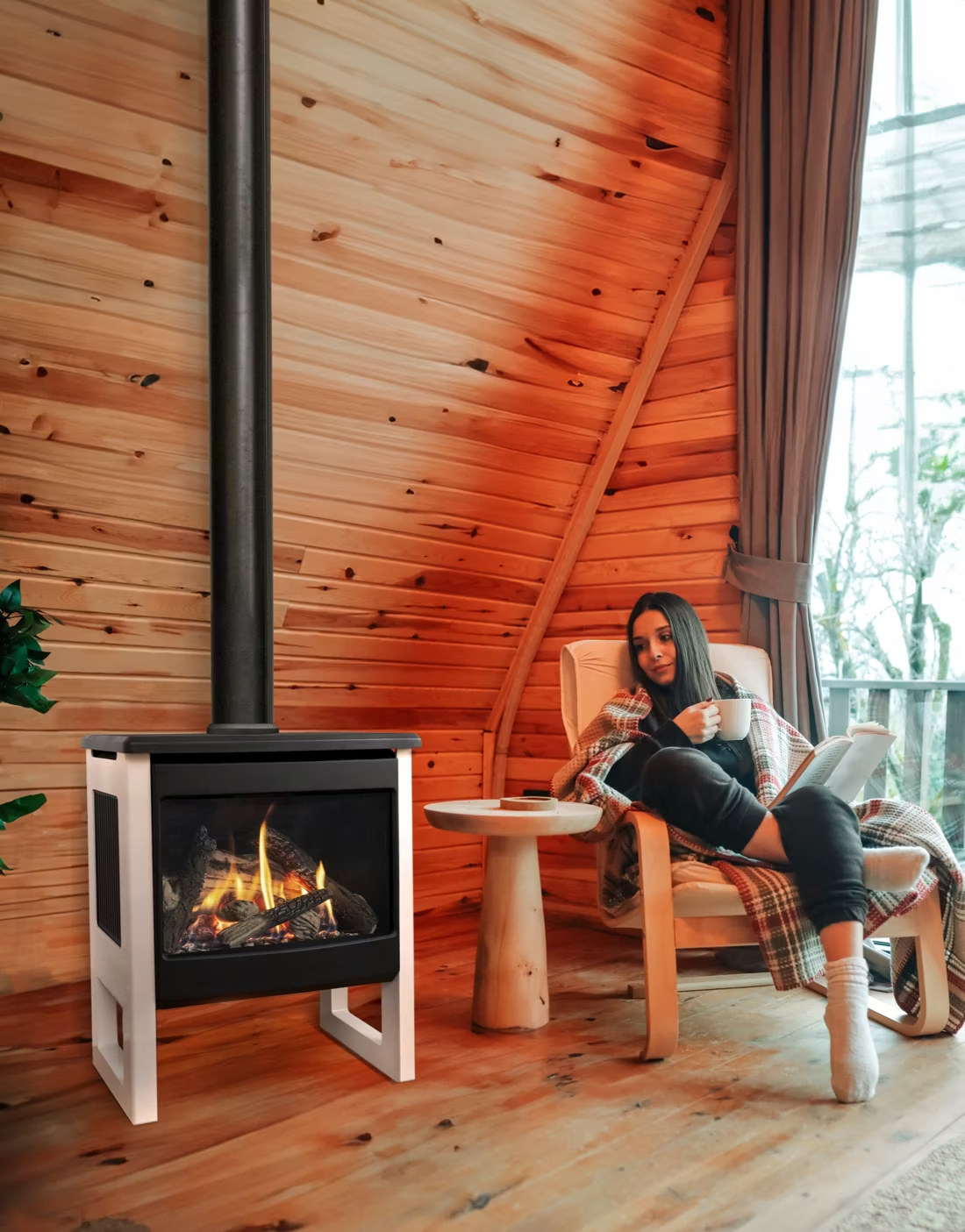
A gas fireplace is a fully built-in unit framed into a wall—the standard choice for new construction and for Hollymead's newer townhomes and single-family builds that don't have an existing masonry hearth. A gas insert is designed to slide into an existing fireplace opening, useful for the smaller number of older homes in the area with a traditional wood-burning firebox. A gas stove is a freestanding cast-iron or steel unit that sits on the floor and can go almost anywhere with the right clearances and venting, which makes it a flexible option for a bonus room or finished basement. Most Hollymead installs are built-in fireplaces or inserts, simply because that matches the housing stock.
Do I need a permit to install a gas fireplace in Hollymead?
Yes—Albemarle County requires a building permit and, when a new propane line or tank is involved, sign-off tied to that gas work, since Hollymead falls under Albemarle County's building inspections jurisdiction rather than a separate city department. A licensed installer will typically pull the permit, coordinate the propane supplier if a new tank is needed, and schedule the inspection as part of the project, so this isn't something you have to manage yourself if you're working with a certified local dealer.
Are vent-free gas fireplaces allowed in Hollymead?
Virginia's building code permits vent-free (unvented) gas fireplaces, subject to room-size minimums, oxygen depletion sensors, and other safety requirements—Virginia doesn't ban them outright the way California or Colorado does in some jurisdictions. That said, for most Hollymead homes, direct-vent (sealed combustion) units are still the more common recommendation: they exhaust combustion byproducts outside rather than into the living space, they don't have the same room-size restrictions, and they tend to produce a more realistic flame. Ask your local dealer to walk through both options for your specific room before deciding.
How often does a gas fireplace need to be serviced in Hollymead?
Plan on an annual inspection, ideally in early fall before the unit sees regular winter use. A technician will check the burner assembly, pilot or ignition system, venting, and gas connections, clean the glass, and confirm the propane regulator is delivering correct pressure—propane systems in particular benefit from a yearly check since tank and line issues are more common than with piped natural gas. Local service providers typically charge in the $150–$250 range for a standard annual visit.
Gas vs. wood—does wood heat make sense in Hollymead at all?
For most Hollymead homeowners, gas is the more practical choice. Wood-burning is genuinely uncommon here—much of the area was built as planned subdivisions without traditional masonry fireplaces, oak, hickory, and maple firewood isn't a local self-sufficiency tradition the way it is in more rural parts of central Virginia, and winter lows around 30°F rarely create the kind of sustained cold that makes cutting, seasoning, and stacking cordwood worth the effort. Gas gives you the same real flame and radiant warmth on demand, without wood storage, ash cleanup, or chimney sweeping. If you already have a masonry hearth and love the ritual of a wood fire, it's still an option—but it's the exception in Hollymead, not the rule.
Is my gas fireplace wasting gas?
If it was installed more than 15 years ago, probably. Older gas fireplaces keep a standing pilot light burning all the time, and that little flame can cost a couple hundred dollars a year. Newer models use pilot-on-demand ignition—the pilot lights only when you use the fireplace and goes out when you turn it off.
What's the difference between an insert and a zero-clearance fireplace?
An insert is a fireplace that slides into a pre-existing wood-burning fireplace—if you don't have one, there's nothing to insert it into. A zero-clearance fireplace is built into a framed wall, which makes it the answer for remodels and new construction. Simple test: existing masonry fireplace means insert; blank or framed wall means zero-clearance.
What is an in-home preview and do I need one?
It's a visit where a hearth professional measures your space, confirms the model you picked actually works in your home, and walks the specs—framing, gas line, venting, finish work—before anything is ordered. Some details you just can't know until you see the house. Never make a down payment without one; it's the single most-skipped step that burns buyers.
How much should I budget for a fireplace?
For an average home—covering the fireplace, the vent pipe, and basic installation—a budget between $3,900 and $5,500 gives you a lot of options across wood, gas, and pellet. By the time you add finish work, gas line, and electrical, the average complete installation lands between $5,000 and $12,000 all-in. In a remodel or new build, a good rule is to put about 2.5% of the total project cost toward the fireplace.
Nearby Dealers
Hearth shops serving Hollymead and the surrounding area. Every listing shows whether it is a WhyFire partner, a dealer we have verified as authorized for the brands we recommend, or a local business carrying hearth products. No manufacturer pays for placement. How we verify dealers →
Acme Stoves Of Charlottesville
Foster Fuels
The Chimney Guys
Blossman Gas And Appliance
Mid-Atlantic Masonry Heat
Find your gas fireplace in Hollymead.
Tell us about your home and your project, and we'll match you with a trusted local dealer and send over a free Project Guide & Parts List—the exact parts, including your vent kit, and a clear plan for getting a gas fireplace installed right in Hollymead.
Find Your Fireplace →