
Gas Heat That Works As Hard As You Do in Harrisonburg.
Reliable, instant warmth for Shenandoah Valley homes and JMU-area rentals alike. Find the right gas fireplace or insert and connect with a trusted local dealer.
Every Project Starts From One of These Five Situations
Consistent warmth, without the woodpile.
Harrisonburg sits at about 1,300 feet in the Shenandoah Valley, with average winter lows around 23°F and roughly 5,061 heating degree days a year—enough cold to matter, but nowhere near the extremes of a place like Burlington, VT or Duluth, MN. That moderate-but-real cold, combined with a housing mix that ranges from downtown Victorian-era homes to JMU-area rentals to newer subdivisions off Port Republic Road, is exactly the profile where gas fireplaces make the most sense: enough heating need to justify the investment, without the wood storage and upkeep that a stove demands.
Natural gas service reaches most of the city through Columbia Gas of Virginia, and residents inside city limits are served by their own municipal electric utility, Harrisonburg Electric Commission, while surrounding Rockingham County runs on Virginia Electric & Power (Dominion). Outside the gas service footprint, propane fills the gap. Either way, a properly sized gas fireplace or insert delivers heat at the flip of a switch, works as zone heating alongside central HVAC, and—with the right ignition system—can keep running when winter weather knocks out power.
Three steps. No salesperson until you're ready.
Tell us about your project
Your zip code, your situation, and the fuel you're leaning toward—or let the answers point you to one.
See what's actually available
The brands dealers within 100 miles genuinely carry—real options, never a catalog mirage.
Get your dealer & Project Guide
A trusted local dealer, plus the free Project Guide & Parts List that names every component of the job.
Frequently Asked Questions
How much does a gas fireplace installation cost in Harrisonburg?
Gas fireplace and insert installations around Harrisonburg typically run $4,000 to $10,000, depending on the unit, the venting path, and whether new gas line work is needed. A direct-vent insert dropped into an existing masonry fireplace in one of the older Northend or downtown homes—where a gas line is already run to the water heater or range—lands on the lower end. New construction near JMU or in a newer Rockingham County subdivision, where a line has to be extended and framing built out for a built-in unit, runs higher. A local dealer will give you a firm number after walking your home.
Can I convert my existing wood-burning fireplace to gas?
Yes, and it's a common project in Harrisonburg's older neighborhoods, where many homes still have the original masonry fireplace built for oak or hickory. A gas insert typically slides into that existing firebox, using a stainless liner run up the current chimney as the vent path. Cost usually falls between $4,500 and $9,000 depending on the insert and whether the home already has a gas line nearby. The result keeps the look of the original hearth but eliminates the ash, creosote buildup, and wood hauling.
Is natural gas available in Harrisonburg, or do I need propane?
Most of the city, including neighborhoods near downtown and JMU, has natural gas service through Columbia Gas of Virginia, so if your home already has a gas water heater or range, adding a fireplace usually just means tapping into a line you already have. Out in the more rural stretches of Rockingham County toward the Blue Ridge or Alleghenies, propane is the standard fuel, delivered and stored in a tank on the property. Nearly every gas fireplace on the market can be configured for either fuel—your installer sets the orifice and regulator to match.
Will my gas fireplace still work if the power goes out?
Most modern gas fireplaces will, which matters here since ice storms are a bigger threat to Shenandoah Valley power lines than deep snow most winters. Units with IPI (intermittent pilot ignition) run on AA batteries that kick in automatically when the power drops, so the fireplace lights on demand just like normal. Valor fireplaces skip batteries entirely—the pilot's thermocouple generates its own current, so the unit works no matter how long the outage lasts. Whether you're on Dominion or served by Harrisonburg Electric Commission inside city limits, ask your local dealer about the ignition system before you buy.
What's the difference between a gas fireplace, insert, and stove?
A gas fireplace is a fully built-in unit framed into a wall, common in newer construction off Port Republic Road or in JMU-adjacent developments. A gas insert is built to drop into an existing masonry firebox—the right call for the century-old farmhouses and downtown Victorians scattered through Harrisonburg that already have a chimney to work with. A gas stove is a freestanding unit that sits on the floor like a wood stove but runs on gas, useful in a room with no existing fireplace at all. Most homeowners here end up choosing between an insert for an existing hearth or a built-in for new space.
Do I need a permit to install a gas fireplace in Harrisonburg?
Yes. The City of Harrisonburg requires a building permit and a mechanical/gas permit for any new gas fireplace or insert installation, and the gas line itself has to be run or tied in by a licensed gas fitter. If your property sits just outside city limits in Rockingham County, permitting runs through the county building inspections office instead. Reputable local dealers handle this paperwork as part of the install so you're not left coordinating separate trades yourself.
Are vent-free gas fireplaces legal in Virginia?
Yes, vent-free (ventless) gas fireplaces are permitted in Virginia, but they come with strict room-size and ventilation requirements, plus a required oxygen depletion sensor. Vented direct-vent units—which draw combustion air from outside and exhaust it back outside through a sealed pipe—remain the most common and most universally recommended choice around Harrisonburg. They deliver real heat, hold up over years of use, and don't require you to think about indoor air quality tradeoffs. Ask a local dealer to walk you through both if you're weighing the option.
How often does a gas fireplace need to be serviced?
An annual inspection is the standard recommendation for any gas appliance, including direct-vent fireplaces and inserts. A technician checks the burner, pilot assembly, venting, and gas connections, and cleans the glass and interior—usually $150 to $250 for the visit. The best time to schedule it locally is late summer, before JMU's fall semester starts and the valley's first cold snaps arrive, so you're not waiting in line once everyone else remembers their fireplace at the first frost.
Why is gas so much more common than wood or pellet heat around Harrisonburg?
Harrisonburg sits in the Shenandoah Valley surrounded by oak, hickory, and maple forest, and a handful of rural Rockingham County homes and cabins toward the George Washington and Monongahela National Forests still burn wood for backup heat or ambiance—cutting permits run about $20 a cord through the Monongahela National Forest office, May through October. But inside the city and across most valley subdivisions, winters are moderate enough—average lows around 23°F, nowhere close to a place like Burlington, VT—that wood's labor and storage demands aren't worth it for most homeowners, and pellet fuel has never built out much of a local dealer network here either. Gas and electric fill that gap instead, which is why gas is the default choice for most fireplace projects in and around Harrisonburg.
Are new gas fireplaces really better than old ones?
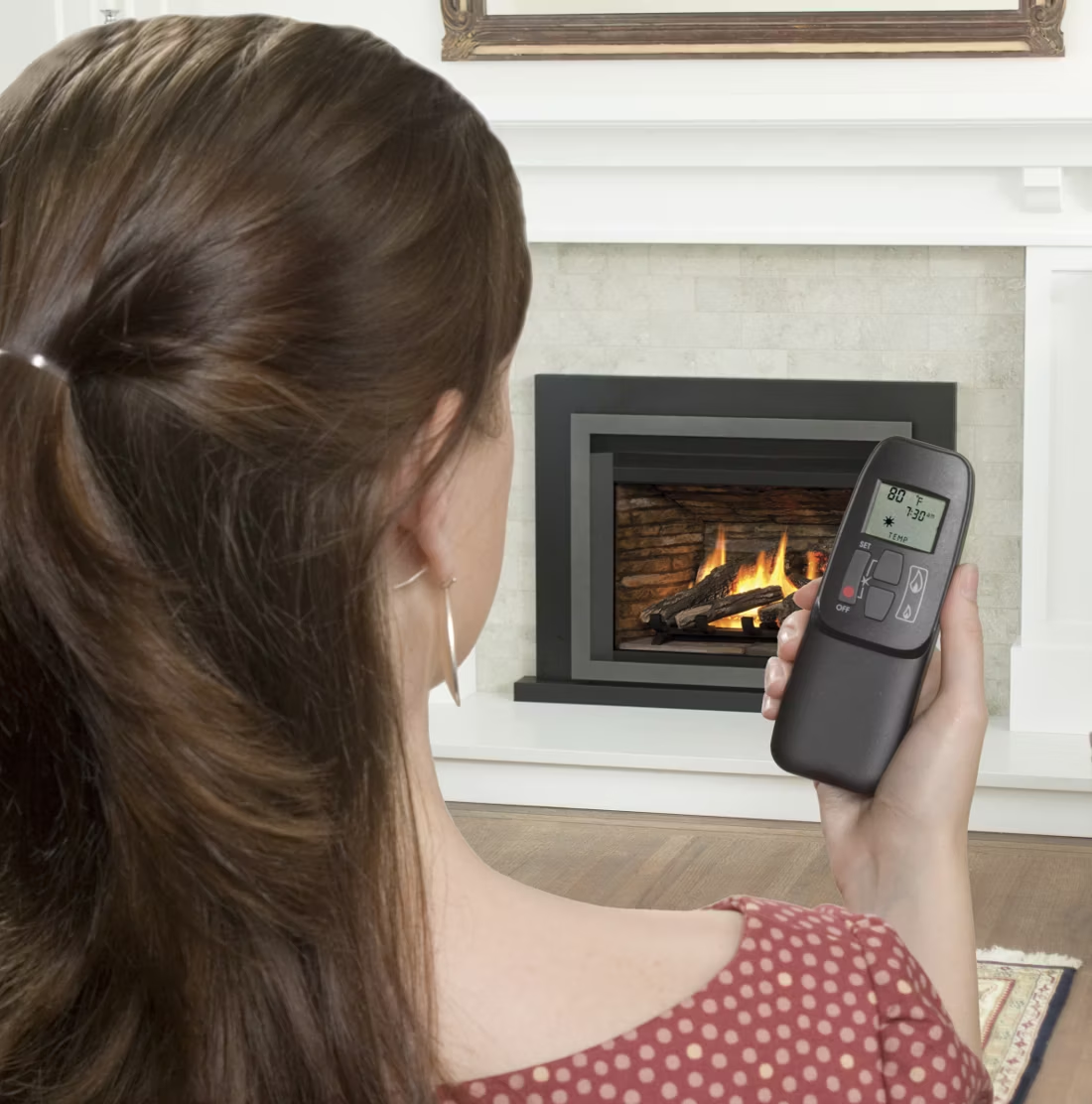
Two ways, and they're both big. Looks: modern gas fireplaces are realistic enough that it's hard to believe they aren't burning wood. Cost: old units burn a standing pilot year-round (roughly $200 a year), while new ones use pilot-on-demand ignition and modern burners. Add remote controls and thermostat operation, and the day-to-day experience isn't close.
What does it take to replace an existing fireplace?
Fireplaces are like icebergs—bigger behind the wall than in front of it. Replacement means removing the surrounding tile or stone (the finish material laps onto the fireplace face), pulling the old unit, setting the new one in the same enclosure, and re-finishing the wall. A hearth professional can determine what's behind your wall without demolition during an in-home preview.
Can a fireplace actually lower my heating bill?
Yes—by creating a comfort zone. A furnace heats every square foot of the house just to warm the one room you're in; a gas fireplace on low burns roughly a sixth of the gas a typical furnace does. Set the furnace around 55–60 degrees as a baseline, then heat the rooms your family actually uses. Families who heat this way commonly save $20–$60 a month.
Can I install a fireplace myself?
If you're putting a fire in your house on purpose, it's best to work with an expert. Unless you're genuinely experienced in framing, gas line, vent pipe, and the national code on clearances to combustibles, have a professional do it—and ideally the same company that sells you the fireplace, so warranty, service, and liability all live under one roof.
Nearby Dealers
Hearth shops serving Harrisonburg and the surrounding area.
Find your gas fireplace in Harrisonburg.
Tell us about your home and heating goals, and we'll match you with a trusted local dealer plus a free Project Guide & Parts List—the exact parts, venting, and gas line plan for your Harrisonburg gas fireplace project.
Find Your Fireplace →