
Find the right fireplace for your Shenandoah Valley home.
Wood, gas, pellet, and electric fireplace resources for Harrisonburg and the surrounding towns of Rockingham County—Bridgewater, Dayton, Broadway, Timberville, Elkton, and Mount Crawford. Find the right unit for your climate and connect with a trusted local hearth retailer.
Every Project Starts From One of These Five Situations
Mild Appalachian winters across the Shenandoah Valley.
Harrisonburg sits in the heart of the Shenandoah Valley, between the Blue Ridge and Allegheny mountains, at around 1,300 feet elevation. Winters here are moderate compared to the northern tier of the country—average winter lows around 23°F and a winter heating load less than half what a place like Duluth, Minnesota sees in a typical winter. Still, the heating season runs a solid five to six months, and the valley's oak, hickory, and maple hardwoods have fueled wood stoves and fireplaces here for generations. Firewood cutting permits for nearby national forest land, including Monongahela National Forest just across the West Virginia line, remain a common source for self-cut wood.
This hub covers the whole Harrisonburg area—hearth retailers, service technicians, and fuel suppliers serving Harrisonburg proper and the smaller towns that ring it, from Bridgewater and Dayton to Broadway, Timberville, Elkton, and Grottoes. Pick your fuel below to see local dealers, typical installation costs, and recommended units for a Shenandoah Valley home. Unlike higher-elevation or high-desert regions, this county doesn't deal with winter air inversions or wood-burning curtailment days—but permits, correct venting sizing, and choosing a fuel that matches your home still matter just as much here.
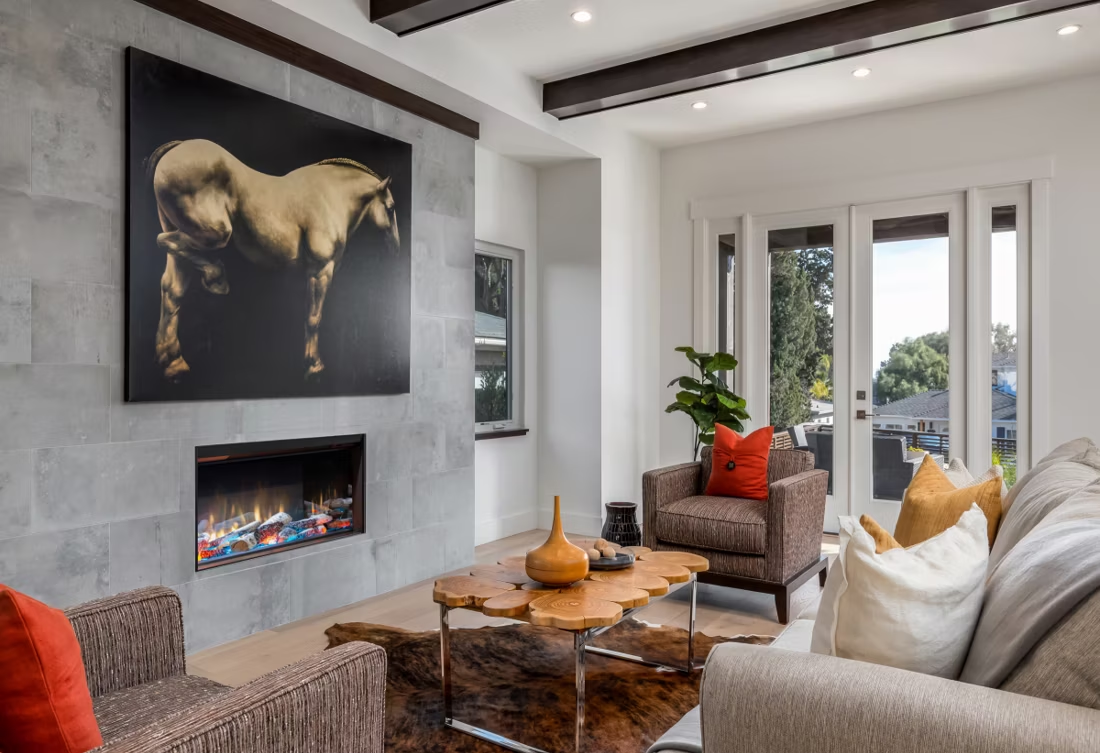
Four fuels. One honest answer for Harrisonburg County.
Wood
81 models available near Harrisonburg County.
Find your wood stove →Gas
358 models available near Harrisonburg County.
Find your gas fireplace →Pellet
See what's available near Harrisonburg County.
Find your pellet stove →Electric
11 models available near Harrisonburg County.
Find your electric fireplace →Three steps. No salesperson until you're ready.
Tell us about your project
Your zip code, your situation, and the fuel you're leaning toward—or let the answers point you to one.
See what's actually available
The brands dealers within 100 miles genuinely carry—real options, never a catalog mirage.
Get your dealer & Project Guide
A trusted local dealer, plus the free Project Guide & Parts List that names every component of the job.
Frequently Asked Questions
Which fuel works best for a home in Harrisonburg County?
It depends on the home and how you want to live with it. Wood remains a strong option here—oak, hickory, and maple are the dominant local hardwoods, they season well and burn hot, and self-cut firewood from nearby national forest land (including Monongahela National Forest across the West Virginia border) keeps fuel costs down for households willing to do the work. Gas is the low-maintenance choice for homes on natural gas service through Columbia Gas of Virginia, or propane for homes outside gas territory—instant heat with none of the wood-handling labor. Pellet splits the difference: you get a wood-style flame without stacking a woodpile, and regional brands like Energex, Hamer Pellet Fuel, and Greene Team Pellet Fuel keep the local pellet supply steady. Electric works well as a supplemental heat source in bedrooms, sunrooms, or finished basements, but with winter lows averaging only around 23°F, it's rarely anyone's sole heat source here. Many valley homes end up pairing wood or pellet as primary heat with gas or electric in secondary rooms.
Do I need a permit to install a fireplace or stove in Harrisonburg County?
In most cases, yes. New wood stoves, wood inserts, gas fireplaces, gas inserts, gas stoves, and pellet stoves generally require a building permit, and gas installations need a licensed gas-fitter and a separate gas line permit for the connection work. Within the City of Harrisonburg, permits go through the city's Community Development Department; for the surrounding towns and unincorporated areas of Rockingham County, permits are handled through the county building office. Electric fireplaces typically skip the permit process unless you're doing a built-in installation that involves new wiring or a dedicated circuit. Most local hearth retailers in the area handle the permit filing as part of the installation quote, so you're rarely dealing with the paperwork yourself.
Are there any wood-burning restrictions in Harrisonburg County?
No—this is one of the easier places in the country to burn wood without worrying about air quality advisories. The Shenandoah Valley doesn't have the winter temperature inversions or non-attainment status that trigger burn curtailment days in some western basins, so there's no yellow- or red-day burning advisory to track here. That said, good practice still matters: burn seasoned oak, hickory, or maple rather than green wood, have your chimney swept annually, and choose a newer EPA-certified stove if you're replacing an older unit—cleaner combustion means less creosote buildup and a safer chimney, advisory or not.
Can one local retailer handle wood, gas, pellet, and electric?
Some can, but it varies. A handful of family-owned hearth shops along Route 11 and in downtown Harrisonburg carry three or four fuel types under one roof, which is worth seeking out if you're still weighing your options—seeing wood, gas, and pellet units side by side makes the trade-offs clearer than reading spec sheets. Other local dealers specialize—some focus on wood and pellet stoves and hardware, others lean toward gas fireplace showrooms. The county + fuel pages on this hub note which dealers carry which fuels, so you can find a multi-fuel shop if you want to compare, or go straight to a specialist if you already know what you want.
How does fireplace service work for homes outside Harrisonburg proper?
Most technicians serving this area are based in or near Harrisonburg and route out to the surrounding towns—Bridgewater, Dayton, Broadway, Timberville, Elkton, and the more rural stretches toward the mountains. Expect a modest travel charge for calls further out, and know that scheduling gets tighter in October and November as everyone tries to get their chimney swept or gas unit inspected before the first cold snap. Booking your annual service in late summer, before the seasonal rush, is the easiest way to avoid a multi-week wait once temperatures drop.
What's the typical installation cost across fuel types in Harrisonburg County?
Costs vary by fuel and by how much existing infrastructure you have to work with. Wood stove or insert installation: roughly $4,000–$8,500 for a typical install, more if new chimney or masonry work is needed. Gas fireplace, insert, or stove: roughly $4,000–$10,000 depending on gas line routing and venting—lower if you already have gas service run to the room. Pellet stove or insert: roughly $4,000–$7,000 for most installs. Electric fireplace: $200–$3,000 for the unit itself, plus $400–$1,200 in labor for anything beyond a simple plug-in placement, such as a built-in wall unit. The county + fuel pages above break these down further with local retailer pricing.
Can a fireplace actually lower my heating bill?
Yes—by creating a comfort zone. A furnace heats every square foot of the house just to warm the one room you're in; a gas fireplace on low burns roughly a sixth of the gas a typical furnace does. Set the furnace around 55–60 degrees as a baseline, then heat the rooms your family actually uses. Families who heat this way commonly save $20–$60 a month.
Can I install a fireplace myself?
If you're putting a fire in your house on purpose, it's best to work with an expert. Unless you're genuinely experienced in framing, gas line, vent pipe, and the national code on clearances to combustibles, have a professional do it—and ideally the same company that sells you the fireplace, so warranty, service, and liability all live under one roof.
What is an in-home preview and do I need one?
It's a visit where a hearth professional measures your space, confirms the model you picked actually works in your home, and walks the specs—framing, gas line, venting, finish work—before anything is ordered. Some details you just can't know until you see the house. Never make a down payment without one; it's the single most-skipped step that burns buyers.
How much should I budget for a fireplace?
For an average home—covering the fireplace, the vent pipe, and basic installation—a budget between $3,900 and $5,500 gives you a lot of options across wood, gas, and pellet. By the time you add finish work, gas line, and electrical, the average complete installation lands between $5,000 and $12,000 all-in. In a remodel or new build, a good rule is to put about 2.5% of the total project cost toward the fireplace.
Stove and Fireplace Dealers in Harrisonburg County
Listings include WhyFire partner dealers, dealers we have verified as authorized for the brands we recommend, and established local businesses that carry hearth products. Every listing shows which one it is. The ones marked Preferred run on WhyFire's software, so they can show you real pricing and book your appointment right here. No manufacturer pays for placement. How we verify dealers →
Blue Ridge Chimney
Acme Stove Co.
Blossman Gas And Appliance
Holtzman Propane
Clines Heating And Cooling
Find your fireplace in Harrisonburg County.
Pick your fuel below and I'll match you with a trusted local hearth retailer, plus a free Project Guide & Parts List—the exact parts, including the vent kit, and the local dealer best suited to install it in your Shenandoah Valley home.
Find Your Fireplace →