
Reliable, flip-a-switch heat for Grayson County's mountain homes.
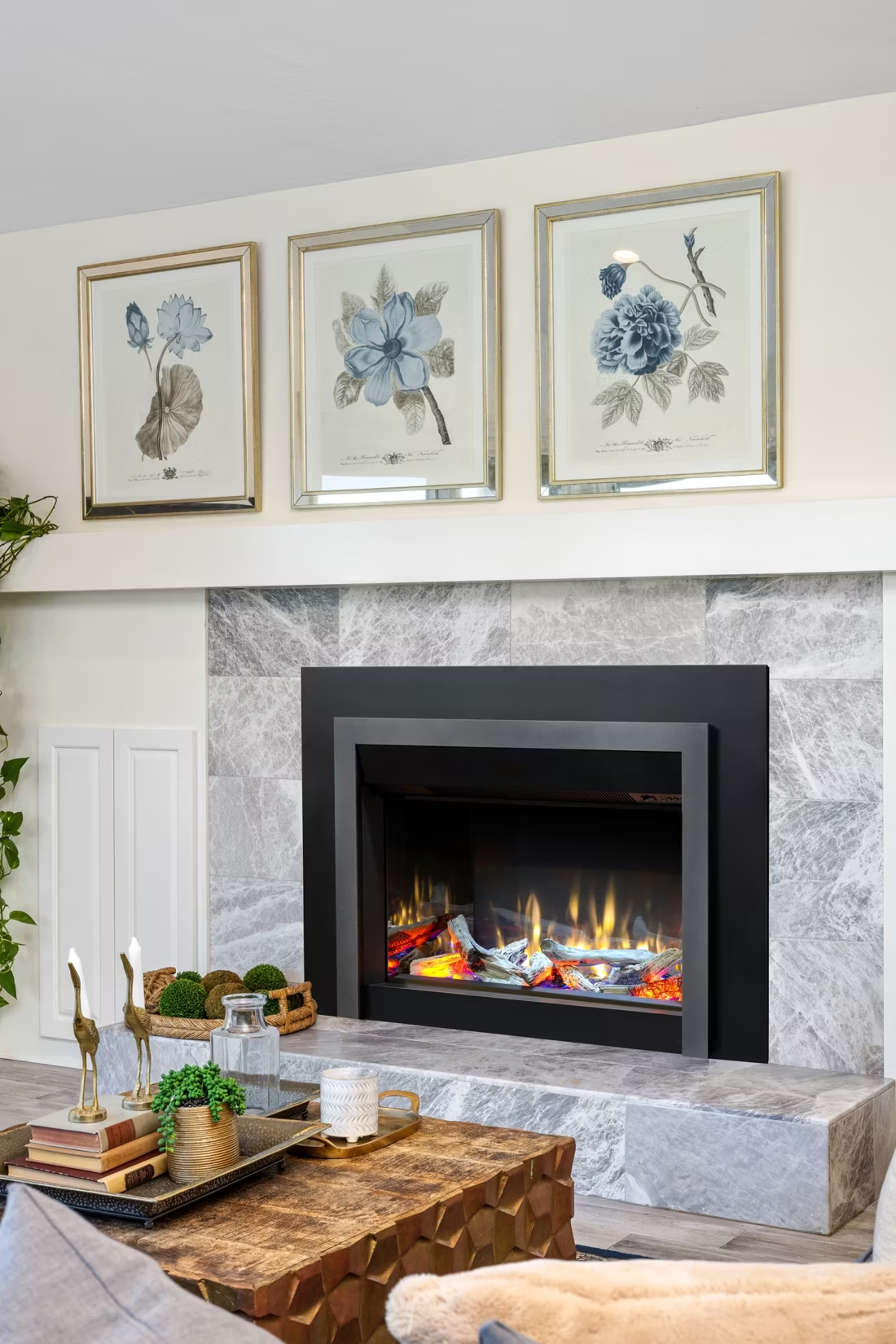
From farmhouses around Independence to cabins tucked near Mount Rogers and Whitetop Mountain, electric fireplaces give Grayson County homes clean, no-mess heat without a chimney. Find the right unit and connect with a trusted local dealer.
Every Project Starts From One of These Five Situations
Simple heat, no chimney required.
Grayson County sits in the Blue Ridge, anchored by Mount Rogers—Virginia's highest point at 5,729 feet—with communities like Independence, Fries, Troutdale, and Mouth of Wilson strung along the New River and the Virginia Creeper Trail corridor. The county falls in climate zone 4A, but elevation matters here: winter lows on the valley floor near the New River run noticeably milder than the ridge country up toward Whitetop, where farmhouses and cabins were often built with a single masonry fireplace opening and no gas line anywhere nearby. That combination—old housing stock, no natural gas infrastructure, and a lot of second homes and cabin rentals—is exactly where electric fireplaces have found a real foothold.
Most of Grayson County is served by Appalachian Power, with some rural feeder lines stretching deep into the hollows toward Whitetop Mountain that are more exposed during ice storms along the US-58 and Blue Ridge Parkway corridor. Because of that, electric fireplaces here tend to serve as zone heat and ambiance for a living room or bedroom rather than a whole-home solution—paired, in a lot of older homes, with the oak, hickory, and maple wood heat that's been the region's backbone for generations. For cabin owners renting out property near the New River Trail State Park or Mount Rogers National Recreation Area, an electric insert also solves a practical problem: guests get real-looking flame and heat with none of the liability of an open wood fire.
Three steps. No salesperson until you're ready.
Tell us about your project
Your zip code, your situation, and the fuel you're leaning toward—or let the answers point you to one.
See what's actually available
The brands dealers within 100 miles genuinely carry—real options, never a catalog mirage.
Get your dealer & Project Guide
A trusted local dealer, plus the free Project Guide & Parts List that names every component of the job.
Frequently Asked Questions
How much does an electric fireplace installation cost in Grayson County?
A plug-in electric insert set into an existing mantel or old masonry fireplace opening—common in the older farmhouses around Independence, Fries, and Troutdale—typically runs $150 to $600 fully installed, and doesn't require any electrical work beyond a standard outlet. A hardwired built-in unit, the kind set into a new wall opening or used to replace a wood-burning firebox outright, runs $1,200 to $3,500 once a licensed electrician runs a dedicated 20-amp circuit, which is the norm for newer construction and cabin builds near the Mount Rogers recreation corridor. Because parts of the county run on older rural feeder lines out toward Whitetop, an electrician will sometimes need to confirm panel capacity before adding a circuit, which can add a modest inspection step to the job.
What's the right electric fireplace for a cabin near Mount Rogers or the New River Trail?
For seasonal cabins and rental properties in the higher country toward Whitetop Mountain and Grayson Highlands, most owners install a wall-mount or built-in electric unit sized for a single main living space rather than trying to heat the whole structure—a standard 1,500-watt unit puts out roughly 4,700 to 5,000 BTU, enough to take the chill off a great room but not to substitute for a furnace on a hard winter night at elevation. The appeal for rental hosts is less about raw heat output and more about giving guests a real-looking flame with none of the liability of an open wood fire or a chimney that needs sweeping between bookings. A local dealer can walk through your specific floor plan and insulation before recommending wattage.
Do I need a permit to install an electric fireplace in Grayson County?
A plug-in electric insert that runs off a standard 120-volt outlet doesn't require a permit—it's treated like any other appliance. A hardwired built-in unit that needs a new dedicated circuit does typically require an electrical permit through the Grayson County Building & Zoning Department in Independence, and most licensed electricians handle that filing as part of the installation. If you're converting an existing masonry wood fireplace to an electric insert, there's generally no separate structural permit needed since you're not altering venting or the chimney—you're simply setting a unit into the existing opening.
Will my electric fireplace work if the power goes out?
No—this is the honest tradeoff with electric heat in Grayson County. Unlike a wood stove, an electric fireplace has no function without grid power, and parts of the county served by older Appalachian Power feeder lines toward Whitetop Mountain and the Blue Ridge Parkway corridor can see multi-day outages during ice storms. For homes that rely on electric fireplaces for real winter warmth rather than pure ambiance, it's worth having a backup plan—a small generator, or, for a lot of longtime Grayson County households, a wood stove using the oak and hickory that's abundant locally. Many homes here run both: electric for everyday convenience, wood as the fallback when the lines go down.
Can I put an electric insert into my existing wood fireplace?
Yes, and it's one of the more common upgrades in Grayson County's older housing stock—a lot of farmhouses around Fries and Independence have a masonry fireplace opening that hasn't seen a real fire in years. An electric insert slides into that existing opening with no chimney liner, no venting, and no gas line needed; it simply needs power, either from a nearby outlet or, for larger units, a dedicated circuit run by an electrician. The conversion preserves the mantel and hearth look while eliminating the chimney sweep, the ash, and the draft that comes with an unused flue.
How do I size an electric fireplace for my home?
Electric fireplaces are rated for zone heating rather than whole-home heat, so sizing comes down to the specific room. A standard 1,500-watt unit will comfortably heat a room up to roughly 400 square feet with typical insulation; larger great rooms or open floor plans common in newer builds near the New River may need a higher-wattage unit or supplemental heat from your existing furnace. Because Grayson County's climate zone 4A designation understates how much colder it runs at elevation toward Whitetop and Grayson Highlands, homes up in that higher country should plan for electric fireplaces as a heat boost rather than a primary source—a local dealer can size the unit to your actual room, not just the county average.
Electric vs. wood—which is right for my Grayson County home?
Wood has deep roots here—oak, hickory, and maple are all readily available locally, and for a lot of Grayson County homes, especially older farmhouses without natural gas access, a wood stove remains the primary heat source and the fallback when the power goes out. Electric fireplaces win on convenience: no chimney sweeps, no ash, no permit hassle for a plug-in unit, and instant on-off operation that works well for supplemental heat, ambiance, or cabin rentals where guest safety matters more than raw BTU output. A lot of households in the county run both—wood for real winter heat and emergency backup, electric in a den or bedroom for everyday convenience.
What are the best electric fireplace options for an older, less-insulated farmhouse?
For the drafty older homes common around Independence and Troutdale, look at units with a realistic flame technology—brands like Dimplex, Napoleon, Touchstone, and SimpliFire all make inserts with layered LED or mirror-flame effects that hold up well even in a room that isn't perfectly dark or sealed. Dual-fuel or higher-wattage models are worth considering if you're leaning on the unit for actual heat rather than pure ambiance, since older farmhouse walls and single-pane windows lose heat faster than newer construction. A local dealer can also advise on whether your existing fireplace opening's dimensions fit a standard insert size or call for a custom trim kit.
Are electric fireplaces a good fit for cabin rentals near Mount Rogers or the New River Trail?
Very much so—it's one of the most common reasons local dealers get calls from cabin owners in the Mount Rogers National Recreation Area and along the New River Trail and Virginia Creeper Trail corridors. Guests get the look and warmth of a real fire without the liability of an open flame, no wood to split and stack between bookings, and no chimney that needs inspecting before each season. It also simplifies insurance conversations for short-term rental hosts, since there's no open combustion or venting to account for. Most hosts pair an electric insert or built-in unit in the main living space with existing central heat or a wood stove for backup during winter power outages.
Can I put a TV above my fireplace?
Yes—with an asterisk. Fireplaces are hot and TVs don't like heat. Either put a mantel between them to deflect rising warmth, or choose a fireplace with heat-management technology that creates a cool zone on the wall above—the wall stays around 125 degrees, barely warm, while the room still gets full heat. If you like clean lines and don't want a mantel, heat management is the answer.
Do electric fireplaces actually produce heat?
Yes—most put out around 4,800–5,000 BTUs from a standard outlet, which comfortably warms a bedroom, office, or den as a comfort-zone heater. What they won't do is carry a whole house the way wood, gas, or pellet can. Think of electric as ambiance-first with honest supplemental heat: flames on with no heat in July, flames plus warmth in January.
Can a fireplace actually lower my heating bill?
Yes—by creating a comfort zone. A furnace heats every square foot of the house just to warm the one room you're in; a gas fireplace on low burns roughly a sixth of the gas a typical furnace does. Set the furnace around 55–60 degrees as a baseline, then heat the rooms your family actually uses. Families who heat this way commonly save $20–$60 a month.
Does a fireplace add value to my home?
On average, a fireplace adds back to the home about the same amount you spent installing it. Add the monthly savings from heating the rooms you actually use instead of the whole house—often hundreds of dollars a year—and the value case is strong before you even count what a fire does for how your family uses the room.
Stove and Fireplace Dealers in Grayson County
Listings include WhyFire partner dealers, dealers we have verified as authorized for the brands we recommend, and established local businesses that carry hearth products. Every listing shows which one it is. The ones marked Preferred run on WhyFire's software, so they can show you real pricing and book your appointment right here. No manufacturer pays for placement. How we verify dealers →
Blue Ridge Energy - Sparta
Ferrellgas
Blue Ridge Energy - West Jefferson
Find your electric fireplace in Grayson County.
Tell us a bit about your home—farmhouse, new build, or cabin near Mount Rogers—and we'll match you with the right electric fireplace or insert, plus a free Project Guide & Parts List with the exact parts and your recommended local Grayson County dealer.
Find Your Fireplace →