
Mountain Heat for Grayson County's Blue Ridge Winters.
Wood, gas, pellet, and electric fireplace resources for every town and hollow in Grayson County—from Independence to Troutdale, Fries to Mouth of Wilson. Find the right unit for your elevation and connect with a trusted local hearth retailer.
Every Project Starts From One of These Five Situations
Appalachian heat at elevation in Grayson County, Virginia.
Grayson County sits in Virginia's Blue Ridge Highlands, wrapped around Mount Rogers—the state's highest peak at 5,729 feet—and Whitetop Mountain. Elevation swings from valley floors near 2,000 feet along the New River to alpine ridgelines above 5,000 feet, and that swing matters for heating: a home in Independence sees a milder mixed-humid winter (climate zone 4A), while a cabin up toward Whitetop or the Mount Rogers National Recreation Area deals with conditions closer to what you'd expect farther north—though still nowhere near as brutal as a Burlington, Vermont winter. Oak, hickory, and maple dominate the surrounding hardwood forests, and wood heat has been the default fuel here for generations—much of it self-cut from private woodlots or purchased from local sawmill operators.
This hub rounds up hearth retailers, service technicians, and fuel suppliers across the whole county—Independence (the county seat), Fries, Troutdale, Elk Creek, and Mouth of Wilson. With a population under 3,000 in the immediate area, Grayson County doesn't support a large retail footprint on its own; some homeowners end up working with dealers based in Galax, Wytheville, or Abingdon who service the county as part of a wider territory. Pick your fuel below for local dealers, installation costs, and unit recommendations specific to your elevation and situation.
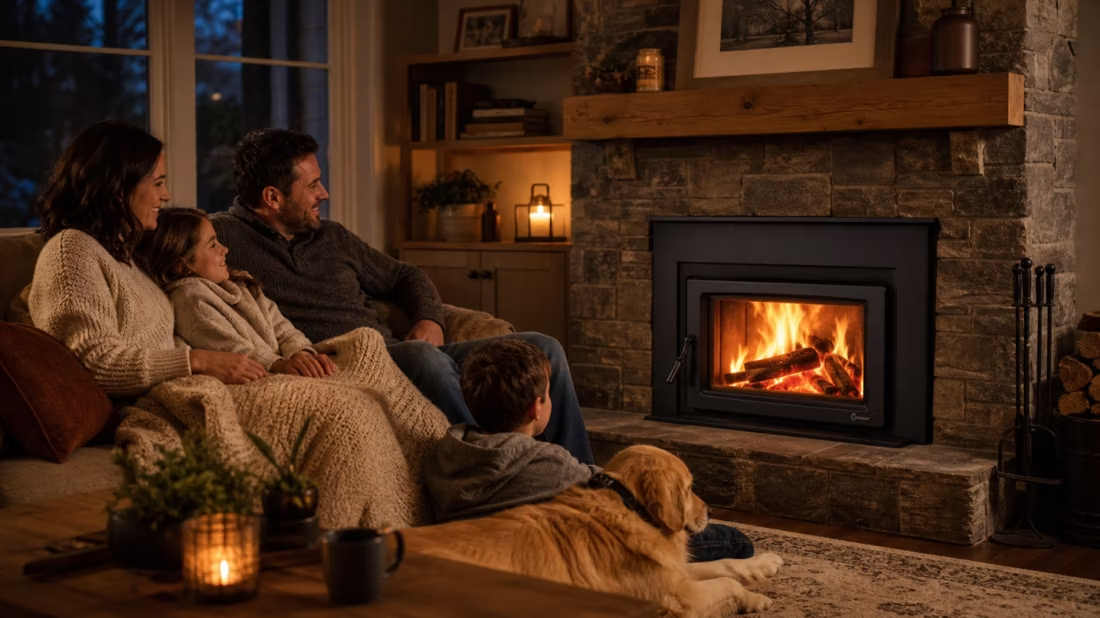
Four fuels. One honest answer for Grayson County.
Three steps. No salesperson until you're ready.
Tell us about your project
Your zip code, your situation, and the fuel you're leaning toward—or let the answers point you to one.
See what's actually available
The brands dealers within 100 miles genuinely carry—real options, never a catalog mirage.
Get your dealer & Project Guide
A trusted local dealer, plus the free Project Guide & Parts List that names every component of the job.
Frequently Asked Questions
Which fuel works best in Grayson County?
It depends on where you sit in the county and what you're used to. Wood is the traditional choice across Grayson County—oak, hickory, and maple are abundant in the surrounding hardwood forests, and many households still heat primarily with a wood stove or insert, often burning wood cut from their own land. Gas here almost always means propane, since municipal natural gas service doesn't reach most of this rural county; propane fireplaces and inserts offer instant-heat convenience without a woodpile. Pellet stoves are a solid middle option—no splitting or stacking, and regional brands like Energex, Hamer Pellet Fuel, and Greene Team Pellet Fuel are readily available through local suppliers. Electric fireplaces work well as supplemental heat in a bedroom, sunroom, or a cabin near Mount Rogers that's only occupied part of the year. Many Grayson County homes run wood or pellet as the primary heat source with propane or electric backing it up.
Do I need a permit to install a fireplace in Grayson County?
Yes, in most cases. New wood stoves, inserts, gas or propane appliances, and pellet stoves typically require a building permit through the Grayson County Building Department, along with an inspection to confirm proper clearances and venting. Propane installations also involve the propane supplier signing off on the tank setup and gas line work. Electric fireplaces are usually exempt unless you're hardwiring a built-in unit into a new circuit. Because a fair number of Grayson County homes are older farmhouses or cabins with existing masonry chimneys, permitting for an insert often includes a chimney inspection to confirm the flue can be safely relined. Most local retailers handle the permit paperwork as part of the installation.
Are there air quality restrictions on wood burning in Grayson County?
No. Grayson County isn't a designated air quality non-attainment area, and there are no winter burn bans or curtailment periods like you'd find in a smoke-prone western valley. The county's mountain terrain and low population density mean wood smoke doesn't accumulate the way it can in an enclosed basin. The one thing to keep in mind is outdoor burning near the Mount Rogers National Recreation Area and Jefferson National Forest boundary—the Virginia Department of Forestry requires burn permits for open debris burning during high fire-danger periods, but that's separate from indoor wood stove or fireplace use, which is unrestricted here.
Can one local hearth retailer handle all four fuel types?
It varies, and in a county this size, availability matters more than brand selection. Some dealers based in Independence or nearby Galax carry wood, gas (propane), and pellet units and can special-order electric models. Others specialize—a firewood and stove shop that doesn't stock electric fireplaces, or a propane supplier that partners with a separate installer for gas-line work. If you want to compare fuels side by side, it's worth checking whether your nearest retailer is based in the county or serves it from Wytheville or Abingdon, since travel distance affects both installation timelines and follow-up service.
How does service work in rural parts of Grayson County?
Most technicians serving Grayson County are based nearby—often in Galax, Independence, or Wytheville—and travel out to more remote spots like Troutdale, Whitetop, and the hollows around Elk Creek. Winter weather at elevation can close mountain roads for a day or two at a time, so scheduling annual chimney sweeps or gas inspections in early fall, before the first hard freeze, is the safest bet rather than waiting for a mid-winter emergency call. A small trip charge for the more remote routes is common. If you're heating a seasonal cabin near Mount Rogers, plan service around access—some roads up there aren't reliably plowed.
What's the typical cost range for fireplace installation across all fuel types in Grayson County?
Costs run in line with rural Virginia norms, though remote sites can add a bit to labor. Wood stove or insert installation: roughly $3,800–$8,500, more if a masonry chimney needs relining or rebuilding. Propane fireplace, insert, or stove: roughly $4,000–$9,500, with cost driven mostly by whether a new propane line or tank setup is needed. Pellet stove or insert: roughly $4,200–$7,000 for a typical install. Electric fireplace: $200–$2,800 for the unit itself, plus $400–$1,000 in labor for anything beyond a simple plug-and-play placement. Homes farther from Independence or Galax may see slightly higher labor costs due to drive time.
Does a fireplace add value to my home?
On average, a fireplace adds back to the home about the same amount you spent installing it. Add the monthly savings from heating the rooms you actually use instead of the whole house—often hundreds of dollars a year—and the value case is strong before you even count what a fire does for how your family uses the room.
How much should I budget for a fireplace?
For an average home—covering the fireplace, the vent pipe, and basic installation—a budget between $3,900 and $5,500 gives you a lot of options across wood, gas, and pellet. By the time you add finish work, gas line, and electrical, the average complete installation lands between $5,000 and $12,000 all-in. In a remodel or new build, a good rule is to put about 2.5% of the total project cost toward the fireplace.
What is an in-home preview and do I need one?
It's a visit where a hearth professional measures your space, confirms the model you picked actually works in your home, and walks the specs—framing, gas line, venting, finish work—before anything is ordered. Some details you just can't know until you see the house. Never make a down payment without one; it's the single most-skipped step that burns buyers.
Should the dealer who sells my fireplace also install it?
Ideally, yes. A fireplace project involves vent pipe, gas line, electrical, and often tile or stone. Hire three or four separate trades and you own the liability and the game of telephone between them. One company selling and installing means one accountable party, start to finish—ask about factory training, on-time completion records, and what happens if an inspection fails.
Stove and Fireplace Dealers in Grayson County
Listings include WhyFire partner dealers, dealers we have verified as authorized for the brands we recommend, and established local businesses that carry hearth products. Every listing shows which one it is. The ones marked Preferred run on WhyFire's software, so they can show you real pricing and book your appointment right here. No manufacturer pays for placement. How we verify dealers →
Blue Ridge Energy - Sparta
Ferrellgas
Blue Ridge Energy - West Jefferson
Get matched with a Grayson County hearth dealer.
Pick your fuel below and we'll match you with a trusted local dealer and send you a free Project Guide & Parts List—the exact parts, vent kit, and recommended installer for your Grayson County project.
Find Your Fireplace →