
Electric heat that fits Front Royal's historic homes and modern builds alike.
No chimney, no gas line, no permit headaches for most units—just plug-in or hardwired warmth for the Shenandoah Valley's chilly nights. Find the right unit and connect with a trusted local dealer.
Every Project Starts From One of These Five Situations
No venting, no permits, no chimney to modify.
Front Royal sits at 568 feet along the South Fork of the Shenandoah River, at the northern gateway to Shenandoah National Park and Skyline Drive. With a winter heating load roughly comparable to a moderate Mid-Atlantic season and winter lows averaging 24°F, the climate here is moderate compared to the harder winters of somewhere like Burlington, Vermont—cold enough to want supplemental heat in the bedrooms and sunroom, but rarely cold enough to demand a whole-home wood-burning setup.
That makes electric a practical fit, especially in Front Royal's downtown historic district, where 19th-century brick homes along Chester and Royal Oak streets often have original fireboxes that homeowners want to reactivate without touching the exterior masonry or triggering historic preservation review. An electric insert slides into an existing firebox with no venting change at all. Power comes from either Rappahannock Electric Cooperative, which serves most of Warren County, or the Town of Front Royal's own municipal electric utility for in-town addresses—residential rates run around 14.89 cents per kWh, which keeps supplemental zone heating affordable.
Three steps. No salesperson until you're ready.
Tell us about your project
Your zip code, your situation, and the fuel you're leaning toward—or let the answers point you to one.
See what's actually available
The brands dealers within 100 miles genuinely carry—real options, never a catalog mirage.
Get your dealer & Project Guide
A trusted local dealer, plus the free Project Guide & Parts List that names every component of the job.
Frequently Asked Questions
How much does an electric fireplace installation cost in Front Royal?
Costs vary widely because electric units span such a wide range of hardware. A plug-in insert or freestanding stove that runs on a standard 120-volt outlet can run as little as $300 to $800 installed, since there's no wiring or venting to add. A built-in linear fireplace or a unit that needs a dedicated 240-volt circuit—common in additions, finished basements, or new construction—typically runs $1,200 to $2,500 once an electrician is involved. Local dealers will tell you which category your project falls into after seeing your space.
Can I put an electric insert into my existing masonry fireplace in a historic Front Royal home?
Yes, and it's one of the more common projects in Front Royal's older neighborhoods. Because an electric insert doesn't vent anywhere, it can go into an original 19th-century firebox on Chester Street or in the Criser Historic District without altering the chimney, the exterior brick, or anything subject to historic preservation review. Many homeowners choose this route specifically because it revives a dead fireplace without the cost or complication of relining a chimney for gas or bringing an old flue up to wood-burning code.
Do I need a permit to install an electric fireplace in Front Royal?
A simple plug-in unit on a standard household outlet generally doesn't require a permit. If your project involves a hardwired unit, a new dedicated circuit, or any electrical panel work, Warren County or the Town of Front Royal (depending on your address) will require an electrical permit pulled by a licensed electrician. Most hearth dealers either handle this directly or coordinate with an electrician as part of the installation, so it's rarely something you have to manage yourself.
How much does it cost to run an electric fireplace on my Front Royal electric bill?
Most electric fireplaces draw around 1,500 watts on the heat setting. At Rappahannock Electric Cooperative's residential rate of roughly 14.89 cents per kWh, running one for 5 hours a day costs about $1.10 daily, or roughly $30–$35 a month if you're using it as supplemental heat during the coldest stretches of January and February. Town of Front Royal municipal electric customers should check their own current rate, since it's billed separately from REC.
What's the difference between an electric insert, a wall-mounted unit, and an electric stove?
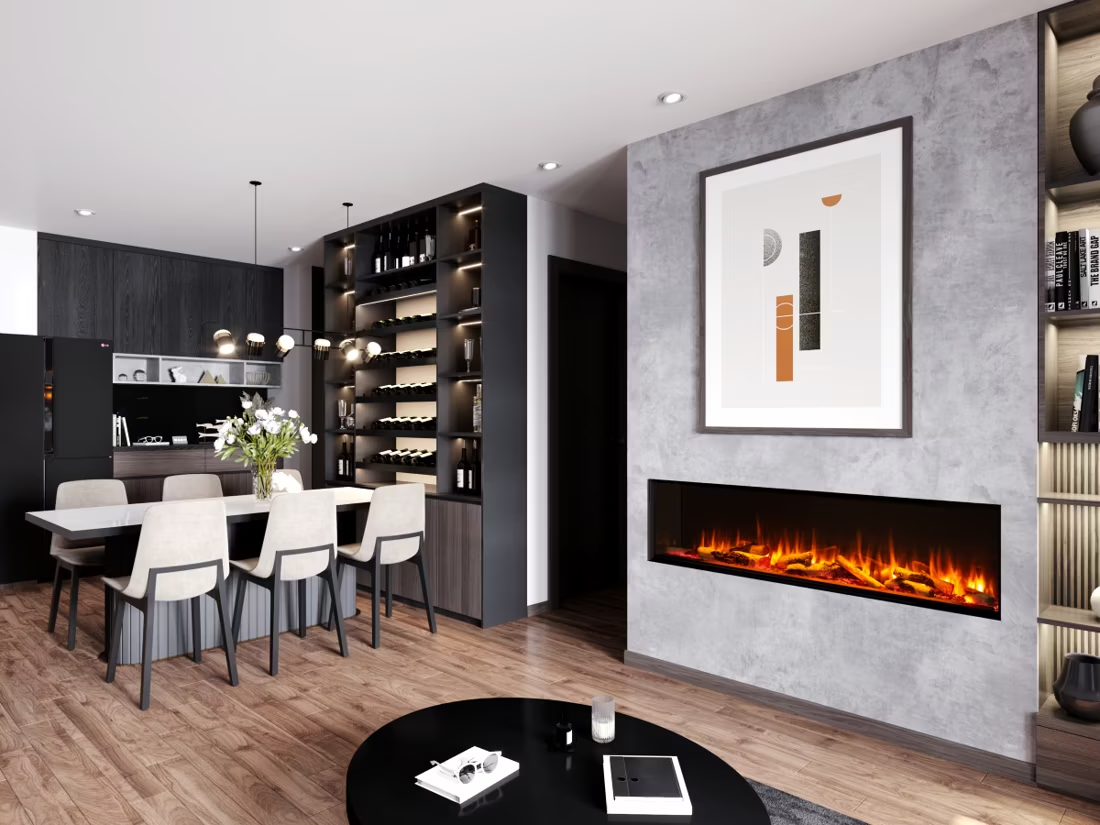
An electric insert is built to slide into an existing masonry firebox, making it the natural choice for Front Royal's older homes with unused fireplaces. A wall-mounted or built-in linear unit is designed for new construction, additions, or a feature wall where there's no existing fireplace opening. An electric stove is a freestanding cabinet styled like a wood stove, which works well in a room without a hearth at all—a finished basement or a home office over the garage, for example. All three plug in or hardwire without any venting.
Will an electric fireplace actually heat a room, or is it just for looks?
A typical 1,500-watt electric fireplace puts out around 5,000 BTU, enough to noticeably warm a room of 300–400 square feet as supplemental heat. Given Front Royal's average winter low of 24°F, that's plenty for taking the chill off a bedroom, sunroom, or home office without running the furnace harder. It won't replace a central heating system for the whole house, but as zone heating for the rooms you actually spend time in, it does real work—not just ambiance.
Electric vs. wood—which is right for my Front Royal home?
Wood remains a strong option here—the surrounding George Washington National Forest and Shenandoah Valley have plenty of oak, hickory, and maple available, and a wood stove keeps working during a power outage, which matters when winter storms knock out lines along Rappahannock Electric Cooperative's rural service area. Electric wins on convenience: no chimney, no ash, no clearances, and it's often the only realistic option for a rental, a condo, or a historic firebox you don't want to modify. Many Front Royal homeowners end up with wood for the main living space and an electric insert or stove for a secondary room.
Electric vs. gas—which makes more sense in Front Royal?
Natural gas service is limited outside town, so most gas fireplace installations in Warren County run on propane, which means a tank, deliveries, and periodic refills. Electric skips all of that—there's no fuel to schedule, store, or run out of during a cold snap. Gas still wins for higher heat output and for homeowners who want a fireplace that can double as a real backup heat source; electric is the simpler, lower-cost choice when the priority is ambiance and zone heat rather than whole-room BTU output.
Can an electric fireplace work as backup heat during a power outage?
No—an electric fireplace needs electricity to run, so it goes dark exactly when Rappahannock Electric Cooperative or Town of Front Royal service goes out, which does happen during ice storms in this part of the Blue Ridge foothills. If backup heat during outages is a priority, a wood stove or a battery-backed gas unit is the better choice. Electric fireplaces are best thought of as everyday convenience heat, not storm insurance.
Can I put a TV above my fireplace?
Yes—with an asterisk. Fireplaces are hot and TVs don't like heat. Either put a mantel between them to deflect rising warmth, or choose a fireplace with heat-management technology that creates a cool zone on the wall above—the wall stays around 125 degrees, barely warm, while the room still gets full heat. If you like clean lines and don't want a mantel, heat management is the answer.
Do electric fireplaces actually produce heat?
Yes—most put out around 4,800–5,000 BTUs from a standard outlet, which comfortably warms a bedroom, office, or den as a comfort-zone heater. What they won't do is carry a whole house the way wood, gas, or pellet can. Think of electric as ambiance-first with honest supplemental heat: flames on with no heat in July, flames plus warmth in January.
Does a fireplace add value to my home?
On average, a fireplace adds back to the home about the same amount you spent installing it. Add the monthly savings from heating the rooms you actually use instead of the whole house—often hundreds of dollars a year—and the value case is strong before you even count what a fire does for how your family uses the room.
What is an in-home preview and do I need one?
It's a visit where a hearth professional measures your space, confirms the model you picked actually works in your home, and walks the specs—framing, gas line, venting, finish work—before anything is ordered. Some details you just can't know until you see the house. Never make a down payment without one; it's the single most-skipped step that burns buyers.
Nearby Dealers
Hearth shops serving Front Royal and the surrounding area. Every listing shows whether it is a WhyFire partner, a dealer we have verified as authorized for the brands we recommend, or a local business carrying hearth products. No manufacturer pays for placement. How we verify dealers →
Area – Huntly, Va
Miller Ace Hardware
Holtzman Propane
Amazing Flame
Dmv Chimneys & Masonry Repair
Prouty's Chimney Sweep
Blossman Gas And Appliance
Costello's Hearth & Spa - Warrenton
Electric Service in Front Royal
An electric fireplace's heater draws about 1,500 watts—pennies per hour at local rates.
Rappahannock Electric Coop
Town Of Front Royal
Find your electric fireplace in Front Royal.
Tell us a bit about your home and we'll match you with the right electric insert, stove, or built-in unit—plus a free Project Guide & Parts List and an introduction to a trusted local dealer in Front Royal.
Find Your Fireplace →