
Find your electric fireplace in Franklin County.
No venting, no chimney, no gas line—just plug-in warmth and real flame ambiance, from the lake homes around Smith Mountain Lake to the neighborhoods of Rocky Mount. Get matched with a trusted local dealer.
Every Project Starts From One of These Five Situations
Zone heat and ambiance for a mild-winter county.
Franklin County sits in climate zone 4A with a winter low averaging 29°F and roughly 3,536 heating degree days a year—nowhere near the sustained cold of a place like Duluth or Burlington, but enough chill on winter nights around Smith Mountain Lake, Rocky Mount, and Ferrum to want supplemental warmth in a den, sunroom, or basement rec room. That's exactly the situation electric fireplaces are built for: rooms that need a boost of heat and ambiance without the commitment of a wood-burning chimney or a gas line run.
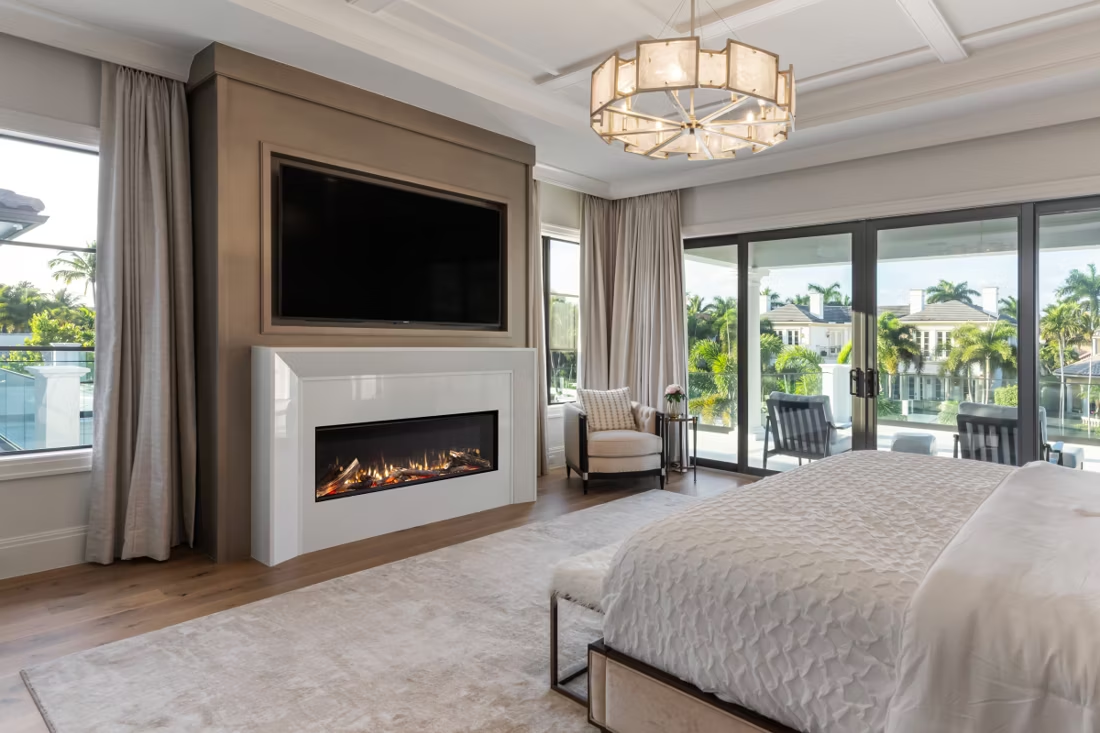
Many Franklin County homes are heat pump country, and an electric fireplace insert or wall unit pairs naturally with that setup—it takes the edge off a cool morning in a specific room without cycling the whole-house system. Lake houses around Smith Mountain Lake, where owners want a fireplace look without the maintenance of cutting oak and hickory or scheduling chimney sweeps, are a particularly common fit. Installation is typically the simplest of any fuel type in the county: a standard outlet or a dedicated 120V/240V circuit, no permit inspection tied to venting, and a unit that can go into a mantel, be recessed into a wall, or replace an existing masonry firebox with an insert.
Three steps. No salesperson until you're ready.
Tell us about your project
Your zip code, your situation, and the fuel you're leaning toward—or let the answers point you to one.
See what's actually available
The brands dealers within 100 miles genuinely carry—real options, never a catalog mirage.
Get your dealer & Project Guide
A trusted local dealer, plus the free Project Guide & Parts List that names every component of the job.
Frequently Asked Questions
How much does an electric fireplace installation cost in Franklin County?
Most electric fireplace installations in Franklin County run $400 to $1,200. A plug-in unit that drops into an existing mantel or a recessed wall box on a standard outlet is on the low end. Costs move toward the higher end when a dedicated 240V circuit needs to be run by an electrician, when the unit is a built-in linear model requiring custom framing, or when it's replacing an existing masonry fireplace with a full-surround insert. Because there's no chimney or gas line involved, electric is consistently the least expensive fuel type to install in the county.
Do I need a permit to install an electric fireplace in Franklin County?
In most cases, no—a plug-in electric fireplace on an existing outlet doesn't trigger a building permit. If your installer needs to run a new dedicated circuit or add a breaker for a larger built-in unit, that electrical work typically requires a permit and should be done by a licensed electrician pulling permits through the Franklin County building office. This is one of the simplest fuel types from a permitting standpoint, which is part of why it's popular for lake houses and rental properties around Smith Mountain Lake where owners want to avoid a lengthy inspection process.
Can an electric fireplace actually heat a room, or is it just for looks?
Both, depending on the model. Most electric fireplaces include a real heating element—typically 1,500 watts, enough to noticeably warm a 400-to-1,000-square-foot room—alongside an LED flame effect that can run independently of the heater. In Franklin County's climate, where winter lows average around 29°F rather than sustained sub-zero cold, a electric unit can comfortably serve as the primary heat source for a sunroom, finished basement, or bedroom, especially paired with a heat pump handling the rest of the house. It's not going to replace central heat for the whole home, but as zone heat for one room, it performs well.
What's the difference between an electric fireplace insert and a wall-mounted unit?
An insert is built to slide into an existing fireplace opening—masonry or zero-clearance—and is the natural choice for Franklin County homes that already have a wood-burning fireplace they want to convert without the mess of ash and chimney upkeep. A wall-mounted or built-in unit is designed for new construction or a remodel, recessed into framing like a flat-screen TV, and works well in newer homes around Rocky Mount or lakefront builds that never had a traditional fireplace to begin with. Freestanding stove-style electric units are a third option, useful when you want portability or a look that mimics a wood stove.
How does an electric fireplace compare to gas or wood for a lake house at Smith Mountain Lake?
For seasonal or part-time use at Smith Mountain Lake, electric has a real advantage: there's no fuel to stock, no chimney to inspect before a season of vacancy, and no pilot light or gas line to worry about if the house sits empty for weeks. Wood fireplaces burning local oak and hickory offer more heat output and ambiance for owners who use the house heavily in winter, and gas offers instant heat without wood handling, but both carry more upkeep for a property that isn't occupied full time. Many lake owners choose electric specifically because it's the lowest-maintenance option when nobody's checking on the house between visits.
Will an electric fireplace work during a power outage?
No—this is the one real tradeoff. Electric fireplaces require power to run both the heater and the flame effect, so during an outage they go dark along with everything else. In Franklin County, where ice storms occasionally knock out power for a day or more, homeowners who want backup heat during outages typically pair an electric fireplace in one room with a wood-burning stove or fireplace elsewhere in the house, or rely on a generator. If backup heat during outages is your primary concern, wood is the more resilient choice—electric is better suited as a convenience and ambiance upgrade layered on top of your main heating system.
What electric fireplace brands are available through local dealers?
Local hearth dealers serving Franklin County typically carry established electric fireplace lines such as Dimplex, Napoleon, and Amantii, which range from mantel-package units to full linear built-ins with realistic flame technology. A trusted local dealer can walk you through the size, mounting style, and heat output that fits your specific room rather than guessing from a big-box shelf—since electric units vary widely in flame realism and heater performance despite looking similar in photos.
Can I install an electric fireplace myself, or do I need a professional?
A basic plug-in unit on an existing standard outlet is genuinely DIY-friendly—many Franklin County homeowners handle that installation themselves. Where it makes sense to bring in a professional is anything requiring electrical work: a dedicated circuit for a larger built-in, recessing a unit into a wall with proper framing and clearances, or converting an existing masonry fireplace into an insert installation. A local dealer can also make sure the unit is properly sized for the room, which is easy to get wrong when ordering online without seeing the space.
Electric vs. pellet—which makes more sense for my Franklin County home?
Pellet stoves, fed by regional brands like Energex and Hamer Pellet Fuel, produce real radiant heat and can serve as a legitimate primary or supplemental heat source, but they require a hopper to load, periodic ash cleanout, and a dedicated vent through an exterior wall. Electric fireplaces need none of that—no fuel storage, no venting, no maintenance beyond dusting—but they can't match a pellet stove's heat output in a larger room, and they go dark in a power outage while a pellet stove (with an outage-rated battery backup) can keep running. For a supplemental-heat den or bonus room in Franklin County, electric is usually the simpler answer. For a primary heat source in a larger space, pellet is worth a look.
Can I put a TV above my fireplace?
Yes—with an asterisk. Fireplaces are hot and TVs don't like heat. Either put a mantel between them to deflect rising warmth, or choose a fireplace with heat-management technology that creates a cool zone on the wall above—the wall stays around 125 degrees, barely warm, while the room still gets full heat. If you like clean lines and don't want a mantel, heat management is the answer.
Does an electric fireplace need a vent or chimney?
No—that's its superpower. An electric fireplace needs a wall and an outlet, period. No vent pipe, no gas line, no clearances to design around, which is why it works in bedrooms, offices, apartments, and walls where venting a gas or wood unit would be impractical or impossible. Installation is typically the simplest and least expensive of any fireplace type.
Can I install a fireplace myself?
If you're putting a fire in your house on purpose, it's best to work with an expert. Unless you're genuinely experienced in framing, gas line, vent pipe, and the national code on clearances to combustibles, have a professional do it—and ideally the same company that sells you the fireplace, so warranty, service, and liability all live under one roof.
How much should I budget for a fireplace?
For an average home—covering the fireplace, the vent pipe, and basic installation—a budget between $3,900 and $5,500 gives you a lot of options across wood, gas, and pellet. By the time you add finish work, gas line, and electrical, the average complete installation lands between $5,000 and $12,000 all-in. In a remodel or new build, a good rule is to put about 2.5% of the total project cost toward the fireplace.
Stove and Fireplace Dealers in Franklin County
Listings include WhyFire partner dealers, dealers we have verified as authorized for the brands we recommend, and established local businesses that carry hearth products. Every listing shows which one it is. The ones marked Preferred run on WhyFire's software, so they can show you real pricing and book your appointment right here. No manufacturer pays for placement. How we verify dealers →
Davenport Energy
Glenwood Oil & Gas
Miller's Custom Countertops
Tates Gas Appliance
Francis Oil And Propane
Foster Fuels - Rustburg
Area – Burnt Chimney, Va
Redwood Fuel
Davenport Energy Rocky Mount
Get your Franklin County electric fireplace project matched.
Tell us about your room and we'll send a free Project Guide & Parts List—the right electric fireplace or insert for your space, plus a recommended local dealer in Franklin County to handle the install.
Find Your Fireplace →