
Keep Your Family Warm and Safe—No Matter What
Most Floris homes run on gas or electric heat, and many subdivisions restrict wood burning outright. If your lot and HOA allow it, we'll connect you with a local dealer who can size and install it correctly.
Every Project Starts From One of These Five Situations
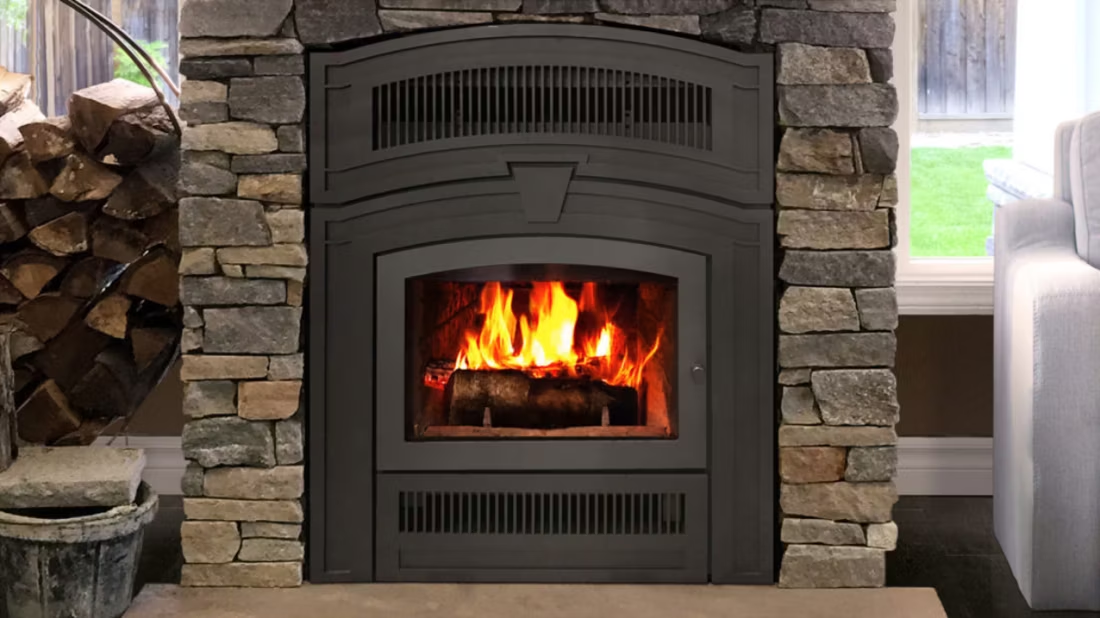
Wood heat has largely given way to gas in Floris.
Floris sits in eastern Fairfax County near Herndon and Dulles Airport, a corridor built out mostly from the 1980s onward with townhomes and planned single-family subdivisions on quarter-acre lots. At 370 feet elevation with winters averaging a mild 25°F low and a fairly short, mild heating season, this is a far gentler climate than places like Minneapolis or Burlington, VT, where wood heat is a genuine necessity. Here, it's more often a lifestyle choice than a survival strategy.
Two things push wood stoves further to the margins in Floris: extensive natural gas infrastructure throughout the corridor, and HOA covenants in many developments that prohibit or tightly restrict wood-burning appliances and outdoor wood storage. For the homeowner who does have an unrestricted lot and wants a real wood stove—supplemental heat during a Dominion Energy outage, or simply the look and feel of a live fire—oak, hickory, and maple firewood are all readily available locally, even though there's no nearby national forest for self-cut permits (the closest public cutting land is the George Washington National Forest, roughly an hour west in the Shenandoah Valley).
Three steps. No salesperson until you're ready.
Tell us about your project
Your zip code, your situation, and the fuel you're leaning toward—or let the answers point you to one.
See what's actually available
The brands dealers within 100 miles genuinely carry—real options, never a catalog mirage.
Get your dealer & Project Guide
A trusted local dealer, plus the free Project Guide & Parts List that names every component of the job.
Frequently Asked Questions
Is it even realistic to install a wood stove in Floris?
It's realistic, but it's uncommon. Wood stoves aren't a mainstream heating choice in this part of Fairfax County the way gas furnaces and heat pumps are—natural gas service reaches most of the corridor, and Virginia Electric & Power Co (Dominion Energy) serves the area reliably enough that backup wood heat isn't the priority it is in colder, more rural climates. That said, homeowners on unrestricted lots do install wood stoves for supplemental heat, ambiance, or as a hedge against winter outages. The key first step is checking your HOA documents and confirming your lot allows it before you shop for a unit.
Will my HOA let me install a wood stove?
Many Floris subdivisions have HOA covenants that restrict or prohibit wood-burning appliances, exterior venting changes, and outdoor firewood storage—this is one of the biggest reasons wood heat is rare here compared to more rural parts of Virginia. Some older or larger-lot properties near Floris fall outside HOA jurisdiction and don't have this restriction. Before you invest in a stove or insert, pull your HOA's architectural guidelines or call your management company directly. A local hearth dealer can also tell you whether they've run into HOA pushback on similar installs nearby.
What does a wood stove installation cost in the Floris area?
Because wood stoves are a minority install here, there isn't a large enough local sample to quote a Floris-specific range the way we can for gas conversions. Across the greater Fairfax and Northern Virginia market, a freestanding wood stove with Class A chimney and hearth pad typically runs $4,000 to $8,500, while a wood insert into an existing masonry fireplace runs somewhat less if the chimney is already sound. Get a firm number from a local installer after they've seen your home—clearance requirements and any masonry work will move the price more than the stove itself.
Do I need a permit to install a wood stove in Floris?
Yes. Floris falls under Fairfax County jurisdiction, and the Fairfax County Department of Land Development Services requires a building permit for any new wood-burning appliance installation, along with inspection of the venting and clearances. The stove itself must meet current EPA New Source Performance Standards. Most hearth dealers who install in this part of the county handle the permit application and inspection scheduling as part of the job, which is worth asking about upfront.
Where would I get firewood near Floris?
There's no national forest or public cutting land within Fairfax County, so self-cut permits aren't really an option the way they are further west. Local firewood comes from tree services, landscaping companies, and seasonal vendors who deliver by the cord—oak, hickory, and maple are the most common species sold in this part of Northern Virginia, and all three burn hot and long, which matters if you're only running a stove occasionally rather than around the clock. Expect to pay a regional-market rate per cord, and ask whether the wood has been seasoned at least six months before delivery.
Are there air quality or burn restrictions in Fairfax County?
Floris doesn't have the wintertime inversion or non-attainment issues that limit wood burning in some Western cities—there are no active air quality advisories tied to residential wood smoke in this part of Fairfax County. That's one less hurdle for the small number of Floris homeowners who do install a stove, though good neighbor etiquette still matters in a dense subdivision: a well-seasoned hardwood load in a modern EPA-certified stove produces far less visible smoke than an old, uncertified unit.
Would gas or electric make more sense than wood for my home?
For most Floris homes, yes. Natural gas service is standard throughout much of the corridor, and a direct-vent gas insert or fireplace delivers instant, thermostat-controlled heat without firewood storage, ash cleanup, or HOA complications. Electric fireplaces and inserts are another straightforward option—with Dominion Energy's residential rate around 14 cents per kWh, an electric insert costs more to run than gas per BTU but installs in an afternoon with no venting at all. Wood tends to make sense here only when a homeowner specifically wants the experience of a live fire, has an HOA-unrestricted lot, and is comfortable with the extra maintenance.
If I do install a wood stove, what size should I look for?
Given Floris's mild winters—a 25°F average low and roughly half the winter heating load of a place like Minneapolis—most homeowners here are looking at a wood stove for supplemental heat or a single room rather than whole-house heating. A small to mid-size EPA-certified stove (rated for up to 1,200-1,800 sq ft) is usually plenty, and oversizing is a common mistake that leads to smoldering, low-temperature fires and creosote buildup. A local installer can size it correctly based on your room layout and insulation.
How often does a wood stove need chimney service if I only use it occasionally?
Even occasional or supplemental use warrants an annual inspection—the CSIA standard applies regardless of how many cords you burn per season. In a Floris home running a stove a handful of times per month through the winter, creosote builds up more slowly than in a primary-heat household burning around the clock, but moisture and animal nesting in an unused flue during Northern Virginia's humid summers can create their own problems. Plan on a yearly sweep and inspection in early fall before the first cold snap, and skip it only if you've had the stove professionally capped and sealed for the off-season.
Why won't my new wood stove get going like my old one?
New wood stoves are 70%+ efficient, so far less heat goes up the flue—which also means less draft to get a fire established. The rule: build a genuinely hot fire for about 45 minutes before you choke it down. Skip that and you get smoke in the room, creosote in the chimney, and a fire that never takes off. Most performance complaints trace straight back to this.
What's the difference between an insert and a zero-clearance fireplace?
An insert is a fireplace that slides into a pre-existing wood-burning fireplace—if you don't have one, there's nothing to insert it into. A zero-clearance fireplace is built into a framed wall, which makes it the answer for remodels and new construction. Simple test: existing masonry fireplace means insert; blank or framed wall means zero-clearance.
Can a fireplace actually lower my heating bill?
Yes—by creating a comfort zone. A furnace heats every square foot of the house just to warm the one room you're in; a gas fireplace on low burns roughly a sixth of the gas a typical furnace does. Set the furnace around 55–60 degrees as a baseline, then heat the rooms your family actually uses. Families who heat this way commonly save $20–$60 a month.
What is an in-home preview and do I need one?
It's a visit where a hearth professional measures your space, confirms the model you picked actually works in your home, and walks the specs—framing, gas line, venting, finish work—before anything is ordered. Some details you just can't know until you see the house. Never make a down payment without one; it's the single most-skipped step that burns buyers.
Nearby Dealers
Hearth shops serving Floris and the surrounding area. Every listing shows whether it is a WhyFire partner, a dealer we have verified as authorized for the brands we recommend, or a local business carrying hearth products. No manufacturer pays for placement. How we verify dealers →
Genesis Chimney Services
Aspen Green Gasworks
Lawn & Leisure
Homeliving Fireplaces
Deckscapes Of Virginia
Fireside Hearth & Home - Manassas
Cyprus Air
Costello's Hearth & Spa - Rockville
Nova Fire Design
Holtzman Propane
The Fireplace Shop
Cyprus Air, Indoor Comfort
Nova Fireplace And Stove
Chimney.com
Capitol Chimney Service
See if a wood stove makes sense for your Floris home.
Tell us about your lot, your HOA situation, and your home, and we'll put together a free Project Guide & Parts List with the right unit, venting, and a trusted local dealer—if wood heat is genuinely the right fit.
Find Your Fireplace →