
Pellet stoves are rare in Fairfax. Let's find what actually fits your home.
Fairfax County's gas-and-electric suburb makes pellet stoves the exception, not the rule. If your home is one of the exceptions, we'll connect you with a local dealer who actually handles this equipment—and if it's not, we'll point you toward the fuel type that is.
Every Project Starts From One of These Five Situations
A gas-and-electric suburb, not a pellet market.
Fairfax sits at 378 feet in the Washington D.C. suburbs, in climate zone 4A with about 4,931 heating degree days and winter lows that average around 23°F—a real but moderate mid-Atlantic winter, not the kind of severe, extended cold that drives whole-home biomass heating the way it does in places like Duluth or Fargo. Nearly every home in the 22030, 22031, and 22037 zip codes already has natural gas or an electric heat pump, and both are considered standard, well-supported heating fuels here. Pellet fuel, by contrast, isn't something you'll find stocked at the hardware store around the corner—regional brands like Energex, Hamer Pellet Fuel, and Greene Team Pellet Fuel are more commonly sold and delivered farther out in rural Virginia, not in dense inside-the-Beltway neighborhoods.
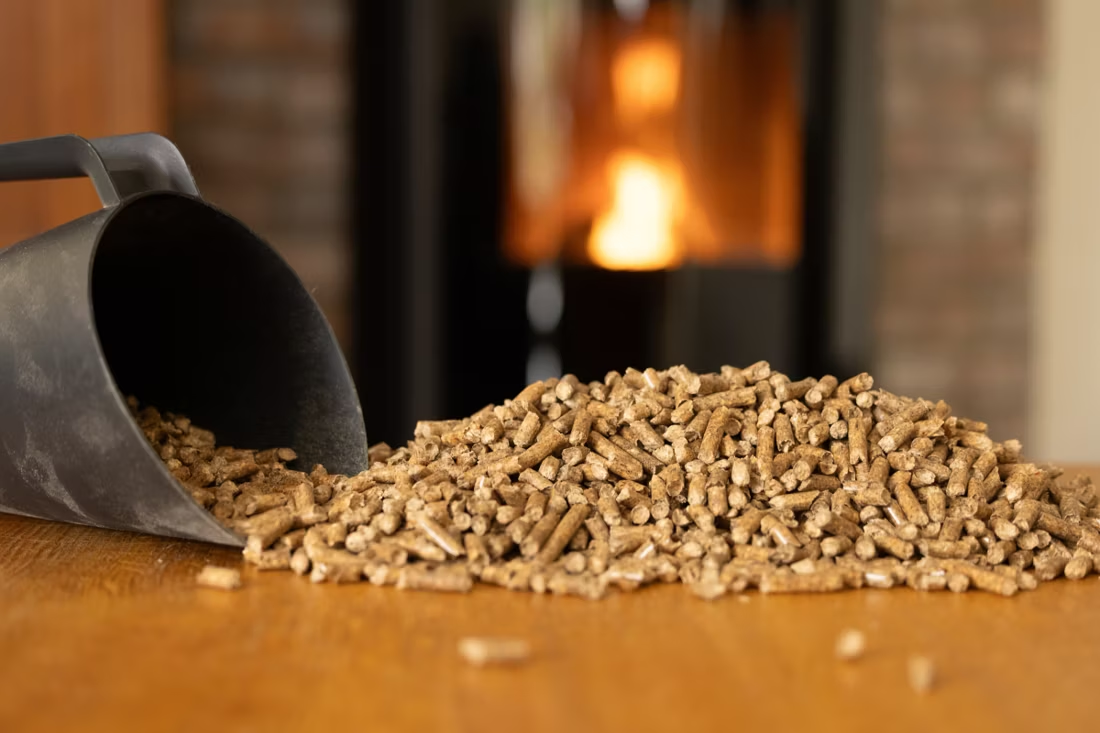
That said, a small number of Fairfax homeowners still choose pellet—usually because they want real flame without running a new gas line, they have an older home with a flue that's a poor fit for wood but fine for a pellet vent kit, or they simply prefer the look and lower maintenance of a pellet appliance over a wood stove. If that's you, we can match you with a dealer who actually stocks and installs pellet equipment in this area. For most Fairfax households, though, a gas insert or an electric fireplace is the more practical starting point—both are widely supported by local installers and existing utility infrastructure, and we can steer you to the right page for either.
Three steps. No salesperson until you're ready.
Tell us about your project
Your zip code, your situation, and the fuel you're leaning toward—or let the answers point you to one.
See what's actually available
The brands dealers within 100 miles genuinely carry—real options, never a catalog mirage.
Get your dealer & Project Guide
A trusted local dealer, plus the free Project Guide & Parts List that names every component of the job.
Frequently Asked Questions
Are pellet stoves common in Fairfax homes?
No—pellet is one of the least common heating fuels in Fairfax. Almost every home in the area already has access to natural gas service or an electric heat pump through Dominion Energy (legally Virginia Electric & Power Company), so there's little of the off-grid or rural-heating culture that drives pellet adoption elsewhere in the state. A handful of local hearth dealers carry pellet inserts as a niche product line, but you won't find the dedicated pellet specialists you'd see in more rural parts of Virginia.
Why don't more Fairfax homeowners use pellet stoves?
A few practical reasons. Fairfax is a fully built-out, gas-served suburb, so most homeowners already have a lower-hassle heating option available. Many neighborhoods—especially townhome and condo communities—are HOA-governed and restrictive about exterior venting changes or hopper-fed appliances. And pellet fuel itself isn't sold at scale locally the way it is in more rural Virginia counties; you're generally looking at ordering pallets and having them delivered rather than picking up a few bags on the way home.
If I still want a pellet stove, where do I get pellets in Fairfax?
You'll likely need to order ahead rather than walk into a local store. Regional brands like Energex, Hamer Pellet Fuel, and Greene Team Pellet Fuel are produced and distributed around Virginia, but retail availability inside Fairfax proper is thin—most homeowners who go this route arrange a seasonal pallet delivery (typically 50 forty-pound bags per ton) rather than buying bag by bag. A local dealer who installs pellet equipment can usually point you to a supplier that delivers to the 22030/22031/22037 area.
What does it cost to install a pellet stove in Fairfax?
Nationally, pellet stove and insert installations typically run in the $3,000 to $6,000 range depending on the unit, venting requirements, and whether an existing masonry fireplace is being converted. Because pellet installs are uncommon in Fairfax specifically, fewer local installers specialize in them, which can mean a smaller pool of bids or a slightly longer wait for parts and vent kits compared to the gas and electric work most local dealers handle every day.
Is a pellet stove a good backup heat source during a winter storm?
Less than you'd think. Pellet stoves rely on an electric auger and blower to feed fuel and move heat, so they shut down in a power outage unless you've got a battery backup or generator running. Dominion Energy's Fairfax service area is generally reliable, but ice storms still knock out power here in the coldest stretches of winter. A gas fireplace with an on-demand pilot (some models generate their own electricity and need no battery at all) or a wood-burning setup will outperform pellet for true outage resilience.
Do I need a permit to install a pellet stove in Fairfax County?
Yes—new venting appliances, including pellet stoves and inserts, typically require a building permit through Fairfax County's Land Development Services department. A licensed installer will usually handle the permit application and inspection as part of the job. Because pellet work is less routine here than gas or electric installs, it's worth confirming your installer has actually pulled this specific type of permit before, not just gas or electric permits.
What's the difference between a pellet stove and a gas insert for a Fairfax home?
A gas insert taps into natural gas service that already runs to most Fairfax homes, ignites at the flip of a switch, and is installed and serviced by a deep bench of local hearth dealers who do this work constantly. A pellet stove burns compressed wood pellets fed by an electric auger, needs its own hopper refilled regularly, and depends on a much smaller pool of local specialists. For a suburb built around natural gas infrastructure, gas is simply the more turnkey option—pellet is the choice for homeowners with a specific reason to avoid gas line work.
Are there HOA restrictions on pellet stoves in Fairfax neighborhoods?
Many Fairfax communities—particularly townhome developments and condo associations common throughout the 22030 and 22031 zip codes—have architectural review requirements that cover exterior venting, roof penetrations, and wall-mounted flue terminations, all of which a pellet stove install requires. Before committing to a pellet unit, check your HOA's architectural guidelines or with the association directly; a local installer can often tell you what's typically approved in your specific neighborhood.
Pellet vs. electric fireplace—which makes more sense in Fairfax?
For most Fairfax homes, electric is the easier fit. Electric fireplaces and inserts need no venting, no fuel storage, and no permit for the appliance itself, which makes them well suited to condos, townhomes, and HOA-restricted properties where a pellet vent kit would raise questions. Pellet stoves offer real flame and higher heat output, but require hopper refills, periodic ash removal, and a venting path that many Fairfax properties simply aren't set up for. If you want simplicity and broad compatibility with the area's housing stock, start with electric; if real fire matters more than convenience, talk to a dealer about whether your specific property can support pellet venting.
Why is my open fireplace making my house colder?
Open fireplaces suck—literally. As the fire burns, it consumes air your furnace already paid to heat and pulls it out through the chimney, so the house is actually colder after the fire goes out than before you lit it. An insert fixes this: it seals the chimney, puts fixed glass across the front, and turns that hole in your house into a real heat source.
What's the difference between an insert and a zero-clearance fireplace?
An insert is a fireplace that slides into a pre-existing wood-burning fireplace—if you don't have one, there's nothing to insert it into. A zero-clearance fireplace is built into a framed wall, which makes it the answer for remodels and new construction. Simple test: existing masonry fireplace means insert; blank or framed wall means zero-clearance.
How much should I budget for a fireplace?
For an average home—covering the fireplace, the vent pipe, and basic installation—a budget between $3,900 and $5,500 gives you a lot of options across wood, gas, and pellet. By the time you add finish work, gas line, and electrical, the average complete installation lands between $5,000 and $12,000 all-in. In a remodel or new build, a good rule is to put about 2.5% of the total project cost toward the fireplace.
Can I install a fireplace myself?
If you're putting a fire in your house on purpose, it's best to work with an expert. Unless you're genuinely experienced in framing, gas line, vent pipe, and the national code on clearances to combustibles, have a professional do it—and ideally the same company that sells you the fireplace, so warranty, service, and liability all live under one roof.
Preferred Dealer in Fairfax
Pellet Brands Stocked Around Fairfax
Manufacturers will point you to the nearest stocking dealer.
Find the right hearth fit for your Fairfax home.
Tell us about your home and we'll be straight with you about whether pellet actually fits—and if it does, match you with a trusted local dealer and a free Project Guide & Parts List covering the exact equipment, vent kit, and installer recommended for your Fairfax property.
Find Your Fireplace →