
Zone Heat and Ambiance, No Chimney Required.
A practical, low-hassle way to add warmth to a New River Valley home. Find the right electric unit and connect with a trusted local dealer.
Every Project Starts From One of These Five Situations
The easiest heat upgrade in the New River Valley.
Dublin sits at just over 2,100 feet in Pulaski County's New River Valley, where winters are real but not extreme—average lows hover around 24°F and the area experiences a solidly moderate winter heating season, putting it in climate zone 4A. That's colder than the Deep South but nowhere near the sustained sub-zero stretches of a place like Duluth, MN. Natural gas mains don't reach most of unincorporated Pulaski County, so homeowners retrofitting a room for heat are usually choosing between propane and electric rather than running new gas lines.
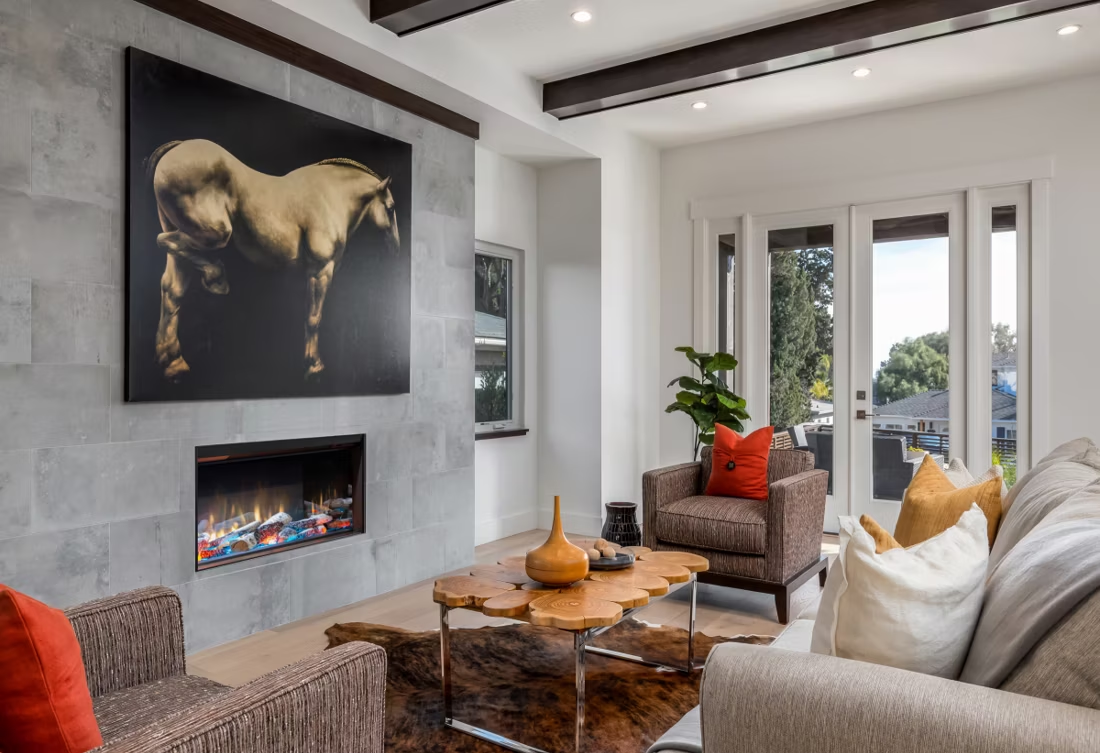
That's where electric fireplaces earn their place. A plug-in electric insert or wall unit needs no chimney, no venting, and often no permit at all, which makes it the fastest path to adding heat and ambiance to a den, bonus room, or manufactured home common throughout Pulaski County. Appalachian Power Co. serves electric accounts here at a residential rate around 17 cents per kWh—high enough that electric resistance heat isn't the cheapest way to warm a whole house through a Dublin winter, but well suited to zone heating a single room without touching your existing HVAC.
Three steps. No salesperson until you're ready.
Tell us about your project
Your zip code, your situation, and the fuel you're leaning toward—or let the answers point you to one.
See what's actually available
The brands dealers within 100 miles genuinely carry—real options, never a catalog mirage.
Get your dealer & Project Guide
A trusted local dealer, plus the free Project Guide & Parts List that names every component of the job.
Frequently Asked Questions
How much does an electric fireplace installation cost in Dublin?
A plug-in electric insert or freestanding stove that uses an existing 120V outlet typically runs $300 to $1,000 installed, since there's no venting or gas line to run. A built-in electric fireplace or wall-mounted linear unit that requires a dedicated 20-amp circuit and some carpentry or drywall work usually lands between $1,500 and $4,000, depending on the size of the unit and how much electrical work your local electrician needs to do. Because Pulaski County has no chimney or venting inspection to coordinate for electric units, most installs are quicker and cheaper than wood or gas projects in the same home.
Can an electric fireplace actually heat my whole house in Dublin's winters?
Generally, no—and any installer being straight with you will say the same. With a moderate-to-cold winter climate (zone 4A) and average winter lows in the mid-20s, a resistance-heat electric fireplace is best treated as supplemental or zone heat for the room it's in, not a replacement for your furnace or heat pump. Most units top out around 5,000-1,500 BTU of usable heat, enough to comfortably warm a bedroom, den, or finished basement room, but not a whole New River Valley farmhouse on a January night. Homeowners in Dublin typically use electric fireplaces to take the edge off a specific room while keeping the main heating system dialed back.
Do I need a permit to install an electric fireplace in Dublin?
Simple plug-in units generally don't require a permit since there's no gas line, venting, or structural chimney work involved. If you're adding a built-in electric fireplace that needs a new dedicated circuit, Pulaski County's building and electrical permitting requirements apply to that circuit work, and a licensed electrician pulling the permit is the standard approach. It's a much lighter lift than the permitting involved in a wood or gas installation, which is one of the reasons electric is a popular retrofit choice in older Dublin homes.
What's the difference between an electric fireplace, insert, and stove?
An electric fireplace is typically a built-in or wall-mounted unit designed to look like a traditional firebox, often with a linear or widescreen flame display—popular in newer construction or remodels. An electric insert is sized to slide into an existing masonry or built-in fireplace opening, giving old, unused fireplaces in older Dublin and Pulaski County homes a second life without any chimney work. An electric stove is a freestanding cabinet-style unit that mimics a wood stove's look and can go almost anywhere near an outlet. For homes here with an existing but unused wood fireplace, an insert is usually the simplest upgrade.
What will it cost to run an electric fireplace at Appalachian Power's rates?
Appalachian Power Co. bills residential customers in Dublin around 17 cents per kWh. A typical electric fireplace on its highest heat setting draws about 1,500 watts, so running it for a full evening—say 5 hours—costs roughly $1.25. Left on low flame-only mode with no heat, the draw is a fraction of that. Compared to propane, which most rural Pulaski County homes rely on for whole-house heat, electric fireplaces are cheap to run occasionally but not economical as an all-day primary heat source given APCo's rate.
What's a good electric fireplace brand for a Dublin home?
For built-in and wall-mounted units, Dimplex and Napoleon are widely available through regional hearth dealers and known for realistic flame technology and reliable heaters rated for continuous use. Touchstone's Sideline series is a common choice for DIY-friendly installs in bonus rooms or basements. For a stove-style unit meant to sit in front of an old, unused masonry fireplace, look at models with adjustable heat output so you can dial back the wattage on milder days and just run the flame effect. A local dealer can tell you which models are actually in stock and serviceable in the New River Valley rather than something you'd be on your own with if a part fails.
Will my electric fireplace still work during a power outage?
No—electric fireplaces are fully dependent on grid power, unlike a wood stove or a battery-backed gas unit. Winter storms occasionally knock out power in parts of Pulaski County served by Appalachian Power, so if backup heat during outages is a priority, an electric-only fireplace shouldn't be your sole heat source. Homeowners who want both the convenience of electric day-to-day and a real backup plan sometimes pair an electric insert with a portable generator or keep a propane heater on hand for extended outages.
Why isn't wood heat pushed harder for Dublin homes if the area has forest access?
Wood heat has deep roots in Pulaski County—oak, hickory, and maple are all common locally, and the George Washington & Jefferson National Forest issues cutting permits for around $20 per cord during the May-to-October season. But for a new installation in an existing Dublin home, wood stoves mean chimney work, clearances, and annual sweeping that many homeowners today would rather skip in favor of a plug-in or hardwired electric unit that goes in over a weekend. Older farmhouses in the area that already have a working wood stove or chimney often keep using it as backup heat, while newer installs and remodels increasingly lean electric or propane.
Electric vs. propane—which is right for my Dublin home?
Propane is the more common whole-house heating fuel in rural Pulaski County where natural gas mains don't reach, and it's generally cheaper per BTU than electric resistance heat at Appalachian Power's rates. But propane requires a tank, a delivery contract, and periodic refills. Electric fireplaces need none of that—just an outlet or a dedicated circuit—which makes them the simpler choice for supplemental heat in a single room, a converted garage, or a room addition that isn't on the propane line. Many Dublin homeowners run propane or a heat pump as primary heat and add an electric fireplace for zone heating and ambiance in the room they use most.
Does an electric fireplace need a vent or chimney?
No—that's its superpower. An electric fireplace needs a wall and an outlet, period. No vent pipe, no gas line, no clearances to design around, which is why it works in bedrooms, offices, apartments, and walls where venting a gas or wood unit would be impractical or impossible. Installation is typically the simplest and least expensive of any fireplace type.
How much does an electric fireplace cost to run?
With the heater on, a typical unit draws about 1,500 watts—at average electric rates that's roughly 20 cents an hour. Run the flame effect alone and it costs pennies; the flames are LED-driven and use about as much power as a light bulb. There's no pilot light, no fuel delivery, and essentially no maintenance.
Does a fireplace add value to my home?
On average, a fireplace adds back to the home about the same amount you spent installing it. Add the monthly savings from heating the rooms you actually use instead of the whole house—often hundreds of dollars a year—and the value case is strong before you even count what a fire does for how your family uses the room.
Can I install a fireplace myself?
If you're putting a fire in your house on purpose, it's best to work with an expert. Unless you're genuinely experienced in framing, gas line, vent pipe, and the national code on clearances to combustibles, have a professional do it—and ideally the same company that sells you the fireplace, so warranty, service, and liability all live under one roof.
Nearby Dealers
Hearth shops serving Dublin and the surrounding area. Every listing shows whether it is a WhyFire partner, a dealer we have verified as authorized for the brands we recommend, or a local business carrying hearth products. No manufacturer pays for placement. How we verify dealers →
We’ve paused dealer listings for this connection today. Enter your zip or postal code above to find dealers near you, or come back tomorrow.
Popular Electric Brands
Where each brand came from, what's inside it today, and every current model. No brand pays to be here. Not every dealer carries every brand, so enter your zip code to see what's sold near Dublin.
Fireplace Xtrordinair
Fireplace Xtrordinair, now often called FireplaceX, is the fireplace brand of Travis Industries, Inc., of Mukilteo, Washington.
5 electric models →DaVinci
DaVinci Custom Fireplaces is a brand of Travis Industries, Inc., of Mukilteo, Washington, the company behind Lopi and Fireplace Xtrordinair.
5 electric models →Kozy Heat
Kozy Heat was founded in 1976 by Dudley Hussong in Lakefield, Minnesota, and incorporated as Hussong Manufacturing Co., Inc. in 1978.
3 electric models →Forge & Flame
Forge & Flame is the stove brand Hearth & Home Technologies introduced in August 2023 to bring Vermont Castings, Harman, and Quadra-Fire under one name.
1 electric model →Electric Service in Dublin
An electric fireplace's heater draws about 1,500 watts—pennies per hour at local rates.
Appalachian Power Co
Find your electric fireplace in Dublin.
Tell us a bit about your home and we'll put together a free Project Guide & Parts List for your Dublin electric fireplace project—the right unit, the exact parts, and a trusted local dealer to install it.
Find Your Fireplace →