
Find the right heat source for a New River Valley winter.
Wood, gas, pellet, and electric fireplace resources for every town and rural stretch of Pulaski County—from the town of Pulaski to Draper and Dublin. Get matched with a trusted local hearth retailer who knows the terrain.
Every Project Starts From One of These Five Situations
Moderate mountain-valley winters in Pulaski County, Virginia.
Pulaski County sits in Virginia's New River Valley, tucked between the Blue Ridge and Allegheny ranges, with the New River cutting through the middle of it. At roughly 5,079 heating degree days and average winter lows near 24°F, this is a Climate Zone 4A county—real winter cold, but nowhere close to the sustained sub-zero stretches of a place like Duluth, MN. Heating season generally runs November through March. The county's hardwood forests—oak, hickory, maple—have long supplied local firewood, and George Washington & Jefferson National Forest land nearby means self-cut wood permits are a realistic option for rural households in Draper, Hiwassee, and the outlying hollows.
What you'll find on this hub: hearth retailers, service technicians, and fuel suppliers covering the whole county—the town of Pulaski, Dublin, Draper, Fairlawn, and the unincorporated communities strung along Route 11 and the New River. Pick your fuel below to see local dealers, typical installation costs, and recommended units for your specific project. Whether you're heating a farmhouse outside Dublin or a river cabin near Claytor Lake, this is the starting point.
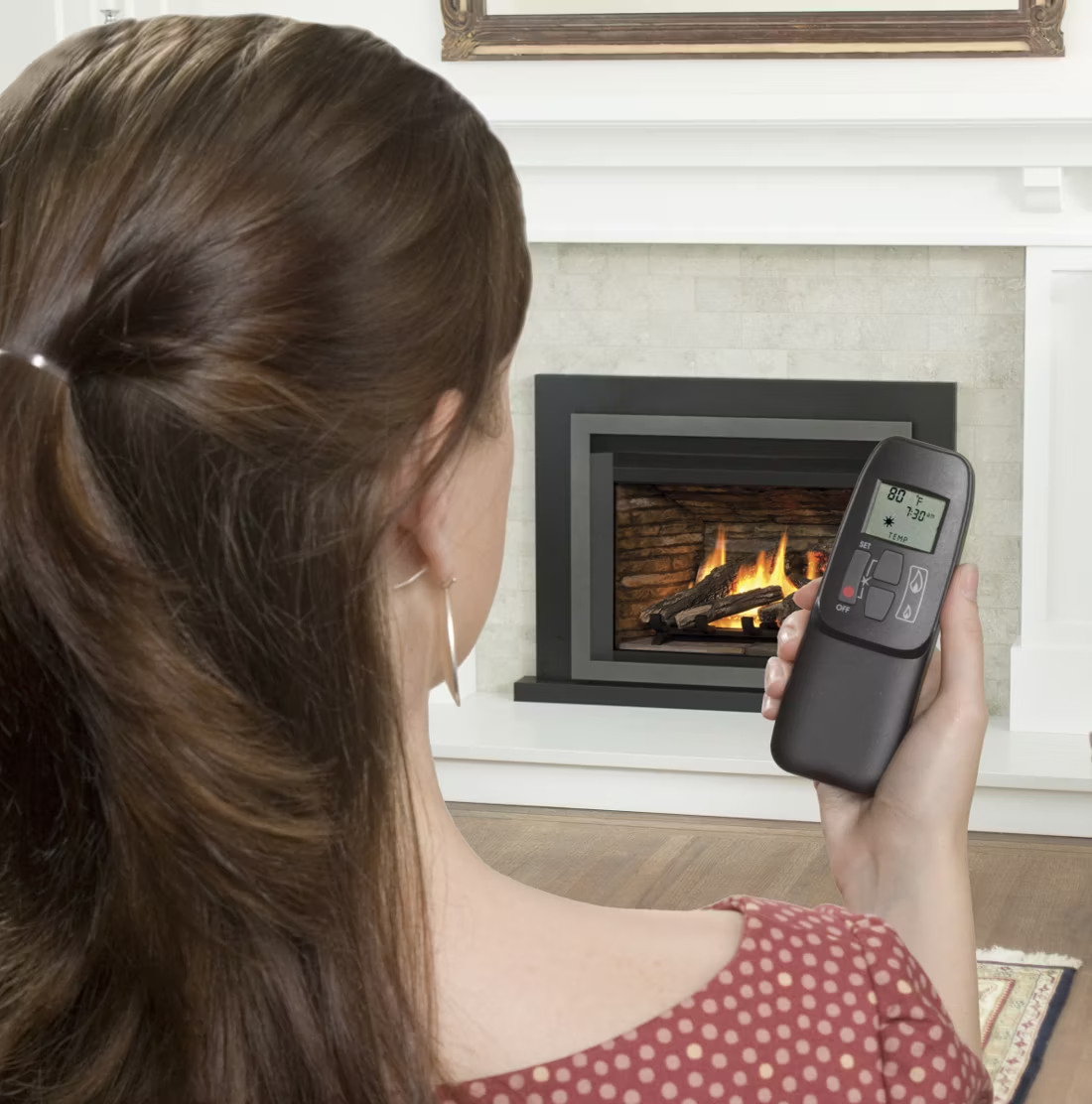
Four fuels. One honest answer for Pulaski County.
Three steps. No salesperson until you're ready.
Tell us about your project
Your zip code, your situation, and the fuel you're leaning toward—or let the answers point you to one.
See what's actually available
The brands dealers within 100 miles genuinely carry—real options, never a catalog mirage.
Get your dealer & Project Guide
A trusted local dealer, plus the free Project Guide & Parts List that names every component of the job.
Frequently Asked Questions
Which fuel works best in Pulaski County?
It depends on the home and the household. Wood is a strong fit here—oak, hickory, and maple are abundant locally, George Washington & Jefferson National Forest permits make self-cut firewood realistic for rural properties around Draper and Hiwassee, and a wood stove keeps working through the ice-storm power outages that occasionally hit the New River Valley. Gas is the low-maintenance choice for in-town homes in Pulaski or Dublin with natural gas or propane service—no wood-splitting, no ash, instant on-off. Pellet stoves are a solid middle path, with Energex and Hamer Pellet Fuel both distributed regionally, giving reliable local supply without the labor of a woodpile. Electric fireplaces work well as supplemental heat or ambiance in bedrooms and dens, but at 5,079 heating degree days they're not typically the primary heat source for a whole house. Many county homes pair wood or pellet as primary heat with gas or electric in secondary rooms.
Do I need a permit to install a fireplace in Pulaski County?
In most cases, yes. New wood stoves, wood inserts, gas fireplaces, gas inserts, gas stoves, and pellet stoves generally require a building permit through Pulaski County's building department, and gas installations need a separate gas line permit plus a licensed gas-fitter for the connection. Electric fireplaces usually skip the permit unless you're doing a hardwired built-in with new circuit work. In the town of Pulaski, permits may route through town offices rather than the county—worth confirming before you start. Most established local hearth retailers handle the permitting paperwork as part of the installation, so it's rarely something the homeowner has to manage alone.
Are there air quality restrictions on wood burning in Pulaski County?
No—Pulaski County has no air quality non-attainment designations or wood-burning curtailment programs like the winter inversion advisories you'd see in a bowl-shaped basin such as Klamath Falls, OR. That said, any new wood stove installation still needs to meet current EPA emissions standards, and a properly sized, EPA-certified stove burns cleaner and more efficiently regardless of local regulation. There's no yellow/red burn-day system to track here—just standard good practice: seasoned hardwood, a well-maintained chimney, and a certified unit.
Can one local hearth retailer handle all four fuel types?
Many hearth retailers serving Pulaski County carry three or four fuel types, which is useful if you're still deciding between wood, gas, pellet, and electric. A dealer that stocks working wood, gas, and pellet displays lets you compare heat output and daily operation side by side before committing. Retailers focused mainly on gas and electric tend to serve in-town Pulaski and Dublin customers with existing gas lines, while wood- and pellet-focused dealers see more business from the rural Draper and Fairlawn side of the county, where self-cut firewood and off-grid backup heat matter more. Ask directly about which fuels a given retailer stocks and installs—coverage varies dealer to dealer.
How does service work in rural areas of Pulaski County?
Technicians covering Pulaski County are generally based in or near the town of Pulaski and travel out to Draper, Hiwassee, and the New River corridor communities for annual service and repairs. Expect a modest trip fee for the more remote stops, and know that scheduling gets tighter once cold weather hits—booking chimney sweeps and pellet stove cleanings in September or October, ahead of the November-to-March heating season, is easier than trying to get an emergency appointment in January. For rural households relying on wood or pellet as a primary heat source, it's worth keeping a small stock of split hardwood or pellets on hand in case a winter ice storm delays a scheduled visit.
What's the typical cost range for fireplace installation across all fuel types in Pulaski County?
Costs vary by fuel and scope. Wood stove or insert installation: roughly $4,000-$8,500 for a typical retrofit, more for new chimney construction. Gas fireplace, insert, or stove: roughly $4,000-$10,000 depending on how much new gas line and venting work is required; conversions where gas service already exists run toward the lower end. Pellet stove or insert: roughly $4,000-$7,000 for most installs. Electric fireplace: $200-$3,000 for the unit itself, plus $400-$1,200 in labor for anything beyond a plug-and-play placement, which covers most inserts and built-ins. See the county + fuel pages above for cost detail tied to specific local retailer pricing.
What is an in-home preview and do I need one?
It's a visit where a hearth professional measures your space, confirms the model you picked actually works in your home, and walks the specs—framing, gas line, venting, finish work—before anything is ordered. Some details you just can't know until you see the house. Never make a down payment without one; it's the single most-skipped step that burns buyers.
Wood, gas, pellet, or electric—how do I choose?
Match the fuel to your life, not the other way around. Wood: lowest fuel cost and total power-outage independence, but you're hauling and stacking. Gas: press a button, set a thermostat, no maintenance to speak of. Pellet: wood economics with automatic feeding, in exchange for weekly cleaning and a need for electricity. Electric: plugs in anywhere with honest supplemental heat. Nobody regrets the fuel that fits how they actually live.
Does a fireplace add value to my home?
On average, a fireplace adds back to the home about the same amount you spent installing it. Add the monthly savings from heating the rooms you actually use instead of the whole house—often hundreds of dollars a year—and the value case is strong before you even count what a fire does for how your family uses the room.
How much should I budget for a fireplace?
For an average home—covering the fireplace, the vent pipe, and basic installation—a budget between $3,900 and $5,500 gives you a lot of options across wood, gas, and pellet. By the time you add finish work, gas line, and electrical, the average complete installation lands between $5,000 and $12,000 all-in. In a remodel or new build, a good rule is to put about 2.5% of the total project cost toward the fireplace.
Stove and Fireplace Dealers in Pulaski County
Listings include WhyFire partner dealers, dealers we have verified as authorized for the brands we recommend, and established local businesses that carry hearth products. Every listing shows which one it is. The ones marked Preferred run on WhyFire's software, so they can show you real pricing and book your appointment right here. No manufacturer pays for placement. How we verify dealers →
Radford Chimney Works
Blue Ridge Heating And Air
McGrady Perdue Heating & Cooling
Air Tech Home & Business
New River Building Supply
Clark Gas & Oil Company
Clark Gas & Oil Company
Hillsville Building & Landscape Supply
Find your fireplace in Pulaski County.
Pick your fuel below and we'll match you with a trusted local hearth retailer, plus a free Project Guide & Parts List with the exact parts—including the vent kit—for your project.
Find Your Fireplace →