
Warm, instant heat for Dinwiddie County's mixed-humid winters.
From Dinwiddie Courthouse to McKenney, Sutherland, and the farmland ringing Fort Gregg-Adams, propane and gas fireplaces give Piedmont Virginia homes clean, on-demand heat without tending a woodstove every night. Find the right unit and connect with a trusted local dealer.
Every Project Starts From One of These Five Situations
Clean heat that keeps up with Piedmont Virginia winters.
Dinwiddie County sits in Virginia's climate zone 4A—the mixed-humid Piedmont belt south of Richmond, where winters are milder than the mountains but still bring stretches of nights in the teens and occasional single-digit cold fronts. The county is rural and wooded, with oak, hickory, and maple stands common on farm and timber land, and communities spread thin between the county seat at Dinwiddie Courthouse, McKenney, Sutherland, and the northeast corner anchored by Fort Gregg-Adams. Wood heat has deep roots here given the timber, but a growing number of homeowners are choosing gas for the convenience of flipping a switch instead of hauling and splitting cordwood.
Natural gas mains don't reach far outside Petersburg into rural Dinwiddie County, so most homes here run on propane rather than piped natural gas—delivered and refilled by regional propane suppliers rather than a utility meter. That distinction matters for installation planning: a direct-vent propane fireplace or insert needs either an existing tank or a new tank set, while natural gas hookups are realistically limited to homes closer to Petersburg's service footprint. Either way, a properly sized direct-vent unit gives farmhouses and newer homes alike instant heat, a sealed combustion system that doesn't depend on an open flue, and backup warmth during the ice storms that occasionally knock out power across the county's rural feeders.
Three steps. No salesperson until you're ready.
Tell us about your project
Your zip code, your situation, and the fuel you're leaning toward—or let the answers point you to one.
See what's actually available
The brands dealers within 100 miles genuinely carry—real options, never a catalog mirage.
Get your dealer & Project Guide
A trusted local dealer, plus the free Project Guide & Parts List that names every component of the job.
Frequently Asked Questions
How much does a gas fireplace installation cost in Dinwiddie County?
A typical gas fireplace or insert installation in Dinwiddie County runs roughly $4,000 to $9,500, with the spread driven mostly by whether you're on propane or natural gas and how much venting or gas line work is needed. An insert going into an existing masonry fireplace with a propane tank already on the property sits toward the lower end. A new direct-vent fireplace in a remodel—with framing, venting, and a fresh propane tank set or gas line run from a meter near Petersburg—lands higher. Local dealers will walk your home before quoting a firm number, since rural lot layouts and tank placement affect the job.
Can I convert my existing wood fireplace to gas?
Yes, and it's a common project for the older farmhouses scattered around Dinwiddie Courthouse and McKenney. A gas insert typically slides into your existing masonry firebox, uses a stainless liner run through the current chimney for venting, and connects to either a new propane line from a yard tank or, in the rare cases near a natural gas main, a gas line extension. Costs generally run $4,000 to $8,500 depending on the insert model and whether propane tank work is involved. You keep the look of your existing hearth and mantel while dropping the wood handling entirely.
Do I need natural gas, or does propane work for a gas fireplace?
Propane is the standard fuel for most Dinwiddie County homes, since natural gas mains are largely confined to areas closer to Petersburg and don't extend deep into the county's rural stretches. If you already have a propane tank for a range, water heater, or furnace, adding a fireplace is straightforward—your installer sets up the right orifice for propane pressure. If you're in one of the pockets closer to the Petersburg line with natural gas service, that works too. Either fuel runs the same fireplace and insert models; the difference is just tank setup versus a gas meter hookup.
Will my gas fireplace still work if the power goes out?
Most direct-vent gas fireplaces with intermittent pilot ignition (IPI) include a battery backup—typically a few AA batteries inside the unit—that keeps the igniter working when the power drops. That matters in Dinwiddie County, where ice storms and downed lines on rural feeders can leave outages lasting a day or more. Valor's gas fireplaces take a different approach: the pilot's thermocouple generates its own electricity, so the unit never depends on batteries at all. Either way, ask your local dealer which ignition system a given model uses before you commit.
What's the difference between a gas fireplace, insert, and stove?
A gas fireplace is a built-in unit framed into a wall—the right call for new construction or a remodel without an existing chimney. A gas insert drops into an existing masonry firebox and uses your current chimney as the vent path, which fits a lot of the older homes around Sutherland and Dinwiddie Courthouse. A gas stove is a freestanding cabinet unit that sits on the floor like a woodstove but runs on gas, useful if you want supplemental zone heat in a room without a fireplace at all. Most homeowners converting an existing fireplace go with an insert.
Do I need a permit to install a gas fireplace in Dinwiddie County?
Yes—Dinwiddie County requires a building permit for the installation and a separate permit for any new gas line or propane tank connection, both handled through the Dinwiddie County Building Inspections Office. The gas or propane line work needs a licensed gas-fitter, which is one reason to go through a certified hearth dealer rather than a general handyman: they coordinate the tank or line hookup, the venting, and the inspection sign-off as one job instead of leaving you to manage separate trades.
Should I get a vented or vent-free gas fireplace?
Vented, direct-vent units draw combustion air from outside and exhaust it back outside through sealed piping—they're the safer, more universally recommended choice and produce real, sustained heat. Vent-free (ventless) units burn gas directly into the room and are legal in Virginia within strict room-size and ventilation rules, but they release some combustion byproducts indoors. For the older, often less airtight farmhouses common around Dinwiddie County, a direct-vent unit is the more sensible default—it doesn't ask you to make any tradeoffs on indoor air quality. A local dealer can walk you through both if you want to weigh it yourself.
How often does a gas fireplace need to be serviced?
Plan on an annual inspection, ideally before the first cold snap in late fall. A technician checks the burner, pilot assembly, gas connections, and any battery backup or thermocouple ignition components, and cleans the glass. It's a lighter lift than sweeping a wood chimney, but skipping it is the most common reason a fireplace won't fire reliably on the first cold night of the season—worth doing given how far some Dinwiddie County properties sit from same-day service calls.
Gas or wood—which makes more sense for a Dinwiddie County home?
Wood still makes sense here—the county's oak, hickory, and maple stands mean self-cut or locally sold firewood is cheap and plentiful, and a wood stove keeps working with zero electricity during an outage. Gas trades that off for convenience: no splitting, hauling, or ash cleanup, and instant heat at the flip of a switch or a wall control. A lot of Dinwiddie County homes end up with both—gas in the main living space for everyday use, and a wood stove or fireplace in a den or workshop for backup heat and the lower operating cost of burning what's already on the property.
Can I put a TV above my fireplace?
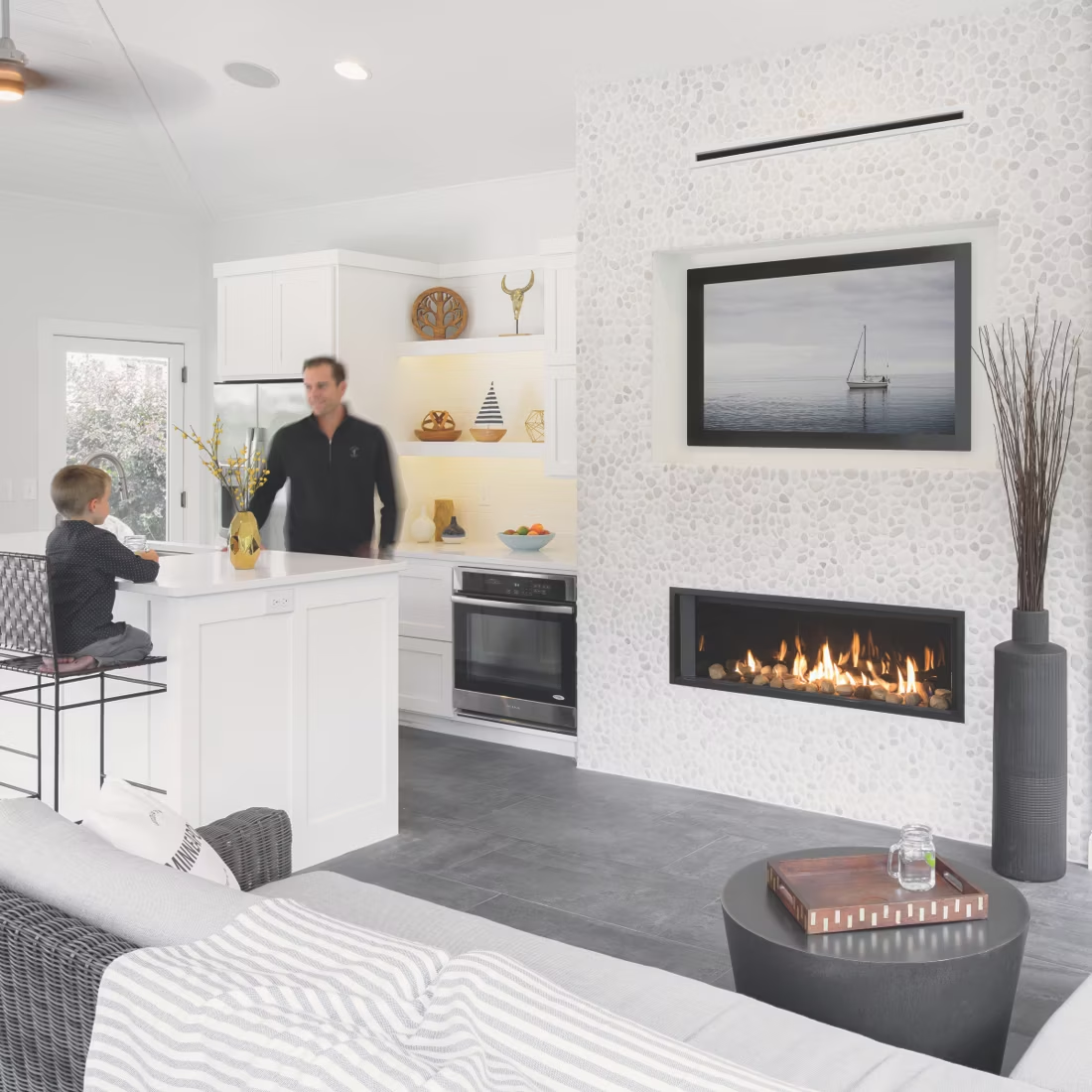
Yes—with an asterisk. Fireplaces are hot and TVs don't like heat. Either put a mantel between them to deflect rising warmth, or choose a fireplace with heat-management technology that creates a cool zone on the wall above—the wall stays around 125 degrees, barely warm, while the room still gets full heat. If you like clean lines and don't want a mantel, heat management is the answer.
Why is a fireplace insert so efficient?
An insert does two things: it seals the chimney completely, so you stop losing air you already paid to heat, and it radiates warmth into the room through the firebox and glass. Most add a heat-exchange fan that pulls cool room air underneath, wraps it around the hot firebox, and pushes it back out warm. Your home is more efficient before you've even lit the first fire.
What is an in-home preview and do I need one?
It's a visit where a hearth professional measures your space, confirms the model you picked actually works in your home, and walks the specs—framing, gas line, venting, finish work—before anything is ordered. Some details you just can't know until you see the house. Never make a down payment without one; it's the single most-skipped step that burns buyers.
Can I install a fireplace myself?
If you're putting a fire in your house on purpose, it's best to work with an expert. Unless you're genuinely experienced in framing, gas line, vent pipe, and the national code on clearances to combustibles, have a professional do it—and ideally the same company that sells you the fireplace, so warranty, service, and liability all live under one roof.
Stove and Fireplace Dealers in Dinwiddie County
Listings include WhyFire partner dealers, dealers we have verified as authorized for the brands we recommend, and established local businesses that carry hearth products. Every listing shows which one it is. The ones marked Preferred run on WhyFire's software, so they can show you real pricing and book your appointment right here. No manufacturer pays for placement. How we verify dealers →
Fireplace Innovations - Chester Location
Parker Oil Company
Hearth And Patio Shoppe
Blossman Gas And Appliance
Interior 2000
Adams Propane Company
Service Plus Propane
Find your gas fireplace in Dinwiddie County.
Tell us about your home and we'll match you with a trusted local dealer and send over a free Project Guide & Parts List—the exact fireplace or insert, vent kit, and install plan for your Dinwiddie County property.
Find Your Fireplace →