
Clean, flip-of-a-switch heat for Dinwiddie County homes.
No chimney, no gas line, no permit headaches—just plug-in or hardwired warmth for homes across Dinwiddie County, from the courthouse area near Petersburg out to McKenney and Sutherland. Find the right unit and connect with a trusted local dealer.
Every Project Starts From One of These Five Situations
The easiest heat to add to any room in the house.
Dinwiddie County sits in zone 4A—a mixed-humid climate with cold enough winter snaps to want supplemental heat, but nothing close to the extremes that demand a full wood-burning system. It's a small, rural county, and much of the housing stock is older, spread out, and often heated room by room rather than with a single whole-home system. That's exactly the situation where an electric fireplace earns its place—in a bedroom, a sunroom, a den off the back of the house near Sutherland or Ford, or a rental unit near Fort Gregg-Adams where a landlord doesn't want to deal with venting.
There are no air quality restrictions or burn bans to navigate here, so the appeal of electric isn't about avoiding smoke—it's about simplicity. Plenty of Dinwiddie County homes already burn oak, hickory, or maple in a wood stove or open fireplace for the ambiance and the backup heat, and that heritage isn't going anywhere. But for a second room, a mobile home, or anyone who just wants real-looking flame and warmth without a chimney sweep on the calendar, an electric insert or freestanding unit is the fastest, least disruptive option—plug it in or have an electrician run a dedicated circuit, and you're done.
Three steps. No salesperson until you're ready.
Tell us about your project
Your zip code, your situation, and the fuel you're leaning toward—or let the answers point you to one.
See what's actually available
The brands dealers within 100 miles genuinely carry—real options, never a catalog mirage.
Get your dealer & Project Guide
A trusted local dealer, plus the free Project Guide & Parts List that names every component of the job.
Frequently Asked Questions
How much does an electric fireplace installation cost in Dinwiddie County?
Plug-in electric fireplaces and inserts are the least expensive hearth option available—a basic freestanding or insert unit typically runs $400 to $900 including the appliance itself and setup, since most plug into a standard household outlet with no permit needed. Built-in or wall-recessed units that require an electrician to run a dedicated 20-amp circuit push the total closer to $900 to $1,500. There's no chimney, no gas line, and no venting to budget for, which is why electric consistently comes in well below wood, gas, or pellet installations for a comparable-looking unit.
How big of an electric fireplace do I need for my Dinwiddie County home?
Most electric fireplaces are rated to comfortably heat a single room in the 400 to 1,500 square foot range, depending on the unit's wattage—look for a 1,500-watt heater element if you want real supplemental warmth rather than just the visual effect. Because Dinwiddie County's zone 4A winters can still bring stretches of real cold, don't expect an electric unit to replace central heat or a wood stove in an older, less-insulated farmhouse—it's best treated as zone heat for the room you actually spend time in, not a whole-home solution.
Do I need an electrician or a permit to install an electric fireplace in Dinwiddie County?
A basic plug-in electric fireplace or insert needs neither—it runs off a standard household outlet, and there's no venting or gas work involved, so it typically falls outside what the Dinwiddie County Building Department requires a permit for. If you're installing a built-in, wall-recessed unit that needs its own dedicated circuit, a licensed electrician should run that wire, and depending on the scope of the work an electrical permit may apply. Either way, it's a far simpler process than a wood stove or gas fireplace install, which is one of the main reasons homeowners in the county choose electric for secondary rooms.
Electric vs. wood—which makes more sense for my home?
Wood is the deeper local tradition in Dinwiddie County—oak, hickory, and maple are all common regional species, and a wood stove or fireplace keeps working during a power outage, which matters in a rural county where ice storms occasionally take down lines for a day or more. Electric can't do that; if the power's out, an electric fireplace is just a dark box. Where electric wins is convenience and cost: no wood to split and stack, no chimney to sweep, no ash to clean up, and a fraction of the install cost. Many homeowners here use wood as their real cold-weather backup and add an electric unit to a bedroom or den purely for everyday zone heat and ambiance.
Electric vs. propane—which is better for a Dinwiddie County home without natural gas?
Most of rural Dinwiddie County isn't on a natural gas main, so the realistic gas alternative here is propane, which means a tank, a gas line, and periodic delivery or refills. Electric skips all of that. If you already have a propane tank for a furnace or water heater, adding a propane fireplace can make sense, but if you don't, electric is almost always the lower-friction, lower-cost path for a single room—you're not committing to a fuel delivery contract just to get flame and heat in the den.
Will my electric fireplace work during a power outage?
No—an electric fireplace is entirely dependent on grid power, and it won't run on a battery backup the way some gas units do. For a rural county like Dinwiddie, where ice and windstorms occasionally knock out power for a day or more, that's worth planning around. If backup heat during outages matters to you, keep a wood stove or a battery/IPI-equipped gas unit as your primary or secondary heat source and treat electric as the everyday convenience option, not the emergency one.
What's the difference between an electric fireplace, insert, and mantel unit?
A freestanding electric fireplace or stove sits on the floor and plugs in wherever you want it, similar to placing a space heater. An electric insert is built to slide into an existing masonry fireplace opening, giving an old, unused wood fireplace a second life without touching the chimney. A mantel or wall unit is a built-in look, often recessed into the wall with the electrical components hidden—this is the version most likely to need an electrician for a dedicated circuit. For Dinwiddie County homes with an existing but rarely-used masonry fireplace, an insert is usually the simplest upgrade.
What should I look for in an electric fireplace for Dinwiddie County's climate?
Since zone 4A still brings genuinely cold stretches, prioritize a unit with a full 1,500-watt heating element rather than a flame-effect-only model, and look for a thermostat with a remote so you can dial in heat output without getting up. Brands like Dimplex, Touchstone, and Napoleon all make units in this range with realistic flame effects. For a converted masonry fireplace, measure your firebox opening carefully before shopping—insert sizing is less forgiving than freestanding units, and a local dealer can confirm fit before you buy.
Electric vs. pellet stove—which is right for me?
Pellet stoves burn bagged wood pellets—regional brands like Energex, Hamer Pellet Fuel, and Greene Team Pellet Fuel are all available in the area—and they put out real, substantial heat, but they need venting, a hopper to load, and periodic ash cleanout, plus electricity to run the auger and blower. Electric fireplaces need none of that: no fuel to store, no venting, no maintenance beyond dusting. The tradeoff is heat output—a pellet stove can genuinely heat a home through a cold snap, while an electric unit is best suited to a single room. If you're looking for daily-use ambiance and light supplemental warmth in one part of the house, electric is simpler. If you want to meaningfully offset your heating bill through a Dinwiddie County winter, pellet is the stronger performer.
Does an electric fireplace need a vent or chimney?
No—that's its superpower. An electric fireplace needs a wall and an outlet, period. No vent pipe, no gas line, no clearances to design around, which is why it works in bedrooms, offices, apartments, and walls where venting a gas or wood unit would be impractical or impossible. Installation is typically the simplest and least expensive of any fireplace type.
Can I put a TV above my fireplace?
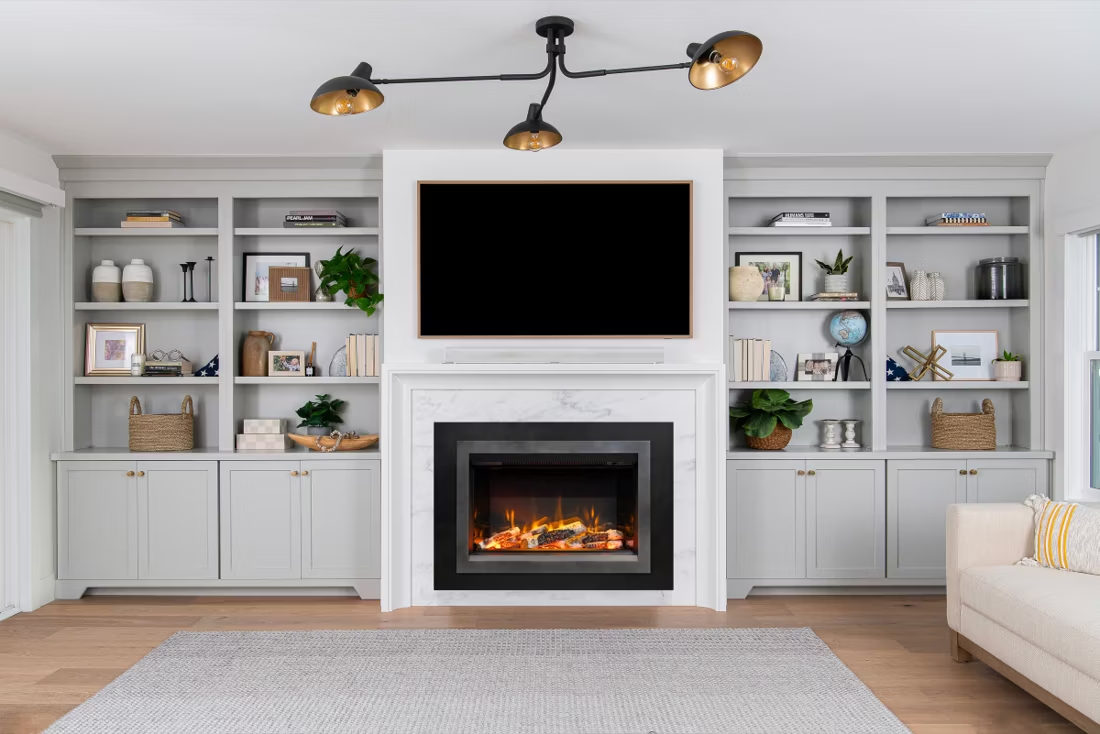
Yes—with an asterisk. Fireplaces are hot and TVs don't like heat. Either put a mantel between them to deflect rising warmth, or choose a fireplace with heat-management technology that creates a cool zone on the wall above—the wall stays around 125 degrees, barely warm, while the room still gets full heat. If you like clean lines and don't want a mantel, heat management is the answer.
How much should I budget for a fireplace?
For an average home—covering the fireplace, the vent pipe, and basic installation—a budget between $3,900 and $5,500 gives you a lot of options across wood, gas, and pellet. By the time you add finish work, gas line, and electrical, the average complete installation lands between $5,000 and $12,000 all-in. In a remodel or new build, a good rule is to put about 2.5% of the total project cost toward the fireplace.
Can I install a fireplace myself?
If you're putting a fire in your house on purpose, it's best to work with an expert. Unless you're genuinely experienced in framing, gas line, vent pipe, and the national code on clearances to combustibles, have a professional do it—and ideally the same company that sells you the fireplace, so warranty, service, and liability all live under one roof.
Stove and Fireplace Dealers in Dinwiddie County
Listings include WhyFire partner dealers, dealers we have verified as authorized for the brands we recommend, and established local businesses that carry hearth products. Every listing shows which one it is. The ones marked Preferred run on WhyFire's software, so they can show you real pricing and book your appointment right here. No manufacturer pays for placement. How we verify dealers →
Fireplace Innovations - Chester Location
Parker Oil Company
Hearth And Patio Shoppe
Blossman Gas And Appliance
Interior 2000
Adams Propane Company
Service Plus Propane
Find your electric fireplace in Dinwiddie County.
Tell us a bit about your room and your home, and we'll put together a free Project Guide & Parts List—the right electric fireplace or insert for your space, matched with a trusted local dealer who can install it.
Find Your Fireplace →