
Warm, reliable heat for Dickenson County's mountain hollows.
From Clintwood to Haysi to Clinchco, propane-fired gas heat brings steady warmth to homes tucked into Dickenson County's ridges and hollows. Find the right unit and connect with a trusted local dealer.
Every Project Starts From One of These Five Situations
Dependable heat for rugged, rural terrain.
Dickenson County sits in the far southwestern corner of Virginia, deep in the Appalachian coalfields, where the terrain runs from about 1,200 feet along the Russell Fork up past 3,000 feet on ridges near Sandy Ridge and Little Black Mountain. Winters here average lows around 22°F with routine dips into the teens, and the county logs roughly 5,174 heating degree days a year—enough cold to make consistent, dependable heat a real necessity, not a luxury. Communities like Clintwood, Haysi, Clinchco, and Nora are surrounded by dense oak, hickory, and maple hardwood forest, and wood heat has deep roots here. Increasingly, though, homeowners are pairing that heritage with the convenience of a gas fireplace or insert for daily use.
Because Dickenson County's terrain is steep and its population spread thin across hollows and ridgelines, there's no municipal natural gas distribution system reaching most homes—propane is the practical fuel here, delivered by regional suppliers and stored in above-ground tanks. That doesn't change what a gas fireplace or insert can do for you: instant heat at the flip of a switch, no ash or creosote to manage, and in many cases the ability to keep running during a winter outage—a real consideration when ice on mountain roads can delay utility crews reaching remote hollows for days.
Three steps. No salesperson until you're ready.
Tell us about your project
Your zip code, your situation, and the fuel you're leaning toward—or let the answers point you to one.
See what's actually available
The brands dealers within 100 miles genuinely carry—real options, never a catalog mirage.
Get your dealer & Project Guide
A trusted local dealer, plus the free Project Guide & Parts List that names every component of the job.
Frequently Asked Questions
How much does a gas fireplace installation cost in Dickenson County?
Most gas fireplace and insert installations in this part of southwest Virginia run from roughly $4,000 to $10,000, depending on the unit, the venting path, and whether propane tank or line work is required. A gas insert dropped into an existing masonry fireplace—common in older coal-era homes around Clintwood and Haysi—tends to land on the lower end since the chimney is already in place. New construction, or a home without an existing fireplace, costs more once framing, venting, and a fresh propane line or tank hookup are added in. Local installers will give you a firm number after seeing your home and your existing propane setup, if you have one.
Can I convert my existing wood fireplace to gas?
Yes, and it's one of the more common upgrades in this county's older housing stock, much of it built during the coal boom decades with a masonry fireplace as the centerpiece of the main room. A gas insert typically slides into that existing opening, using a stainless liner run up the original chimney for venting, and connects to a propane tank rather than a municipal gas line since there's no natural gas utility serving the county. The conversion keeps the look of the original hearth while eliminating the need to split, haul, and tend wood in a house that may already be difficult to heat evenly.
Do I need natural gas, or does propane work for a gas fireplace?
Propane is the standard fuel for gas fireplaces and inserts throughout Dickenson County—there is no natural gas utility distribution system reaching homes here, given the county's mountainous, sparsely populated terrain. If you already have a propane tank for a range, water heater, or furnace, adding a fireplace is usually a straightforward tie-in. If not, a regional propane supplier can set a new tank as part of the install. Virtually every gas fireplace model sold today can be configured to run on propane, so fuel availability isn't a limiting factor on which unit you choose.
Will my gas fireplace work during a power outage?
Most modern gas fireplaces will, which matters in a county where downed lines on steep, icy mountain roads can mean days without utility power in a hard winter storm. Units with IPI (intermittent pilot ignition) run on a small battery backup that kicks in the moment power drops, so the fireplace lights on demand just like normal—as long as the batteries are fresh. Valor fireplaces take it a step further: their pilot assembly generates its own electricity through the thermocouple, so there's no battery to remember at all. For a hollow home relying on a single heat source during an extended outage, that distinction is worth asking your local dealer about directly.
What's the difference between a gas fireplace, gas insert, and gas stove?
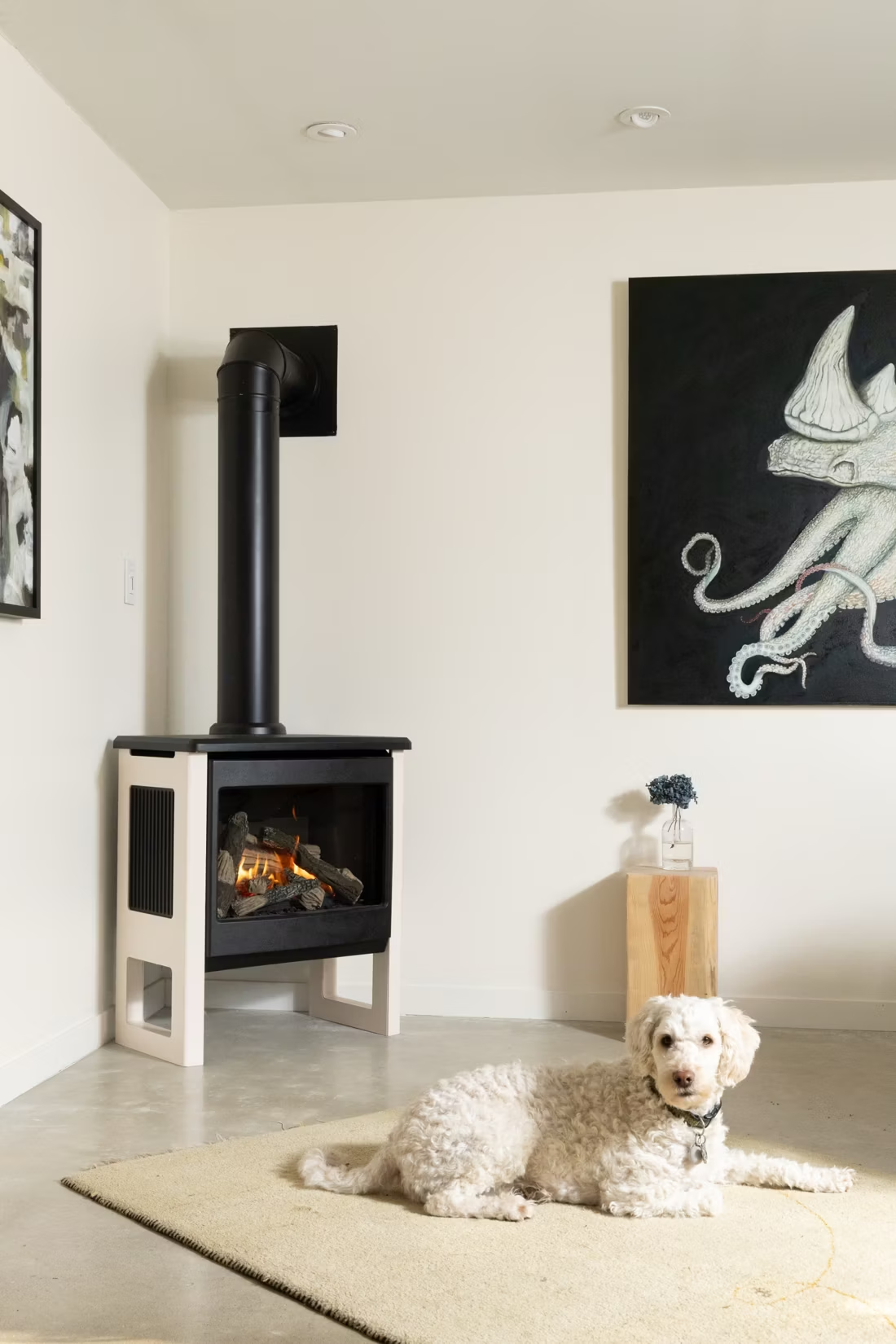
A gas fireplace is a fully built-in unit framed into a wall, typically chosen for new construction or a remodel. A gas insert is built to slide into an existing masonry fireplace opening, which fits a lot of Dickenson County's older homes that already have a hearth from an earlier wood-burning era. A gas stove is a freestanding cabinet-style unit that sits out in the room and vents through a wall or existing chimney, a good option for a home without a fireplace opening at all. Most homeowners here with an existing masonry hearth end up choosing an insert, since it reuses what's already built into the house.
Do I need a permit to install a gas fireplace in Dickenson County?
Yes—a building permit through the Dickenson County Building Department is required for a new gas fireplace or insert installation, and any propane tank placement or line work needs to meet the propane supplier's and local fire code setback requirements. Most hearth dealers serving the county coordinate the permitting and the propane tie-in as part of the installation, so you're not left managing separate trades and inspections yourself.
What's the difference between vented and vent-free gas fireplaces?
Vented (direct-vent) gas fireplaces pull combustion air from outside and exhaust it back outside through a sealed pipe—they're the cleanest and most broadly recommended option, and what most local installers will steer you toward. Vent-free units burn propane directly into the room without external venting; they're legal in Virginia but come with strict room-sizing rules and require an oxygen depletion sensor. For older, tightly built homes in the hollows around Haysi or Clinchco, a direct-vent unit is usually the safer, more comfortable choice since it doesn't add moisture or combustion byproducts to indoor air that's already hard to circulate in a house tucked against a ridge.
How often should my gas fireplace be serviced?
Plan on an annual inspection, ideally before the coldest stretch of winter sets in. A technician will check the burner, pilot assembly, venting, and propane connections, and clean the glass and interior—a quicker job than a wood chimney sweep, but just as important for safe operation. This is especially worth keeping on schedule for homes in the more remote parts of the county, where a mid-winter service call can mean a longer wait if a problem is caught late.
Gas vs. wood—which is right for my home?
Wood has deep roots in Dickenson County, and the abundant oak, hickory, and maple in the surrounding hills make self-sufficient wood heat a practical choice for a lot of households, especially as backup during outages. Gas offers something different: instant, even heat with no splitting, hauling, or ash cleanup, and a unit that runs reliably even in a home occupied only part of the year, like a cabin near Breaks Interstate Park. Many homeowners here end up with both—a wood stove or fireplace for backup and tradition, and a gas insert or fireplace for everyday convenience in the main living space.
Why is my open fireplace making my house colder?
Open fireplaces suck—literally. As the fire burns, it consumes air your furnace already paid to heat and pulls it out through the chimney, so the house is actually colder after the fire goes out than before you lit it. An insert fixes this: it seals the chimney, puts fixed glass across the front, and turns that hole in your house into a real heat source.
What do I measure to size a fireplace insert?
Four numbers tell you what fits: the front width, the front height, the back width, and the overall depth of your existing fireplace opening. Grab a tape measure, jot those down, and snap a photo of the wall—those two things do more to move your project forward than anything else you can do today.
Can I install a fireplace myself?
If you're putting a fire in your house on purpose, it's best to work with an expert. Unless you're genuinely experienced in framing, gas line, vent pipe, and the national code on clearances to combustibles, have a professional do it—and ideally the same company that sells you the fireplace, so warranty, service, and liability all live under one roof.
Does a fireplace add value to my home?
On average, a fireplace adds back to the home about the same amount you spent installing it. Add the monthly savings from heating the rooms you actually use instead of the whole house—often hundreds of dollars a year—and the value case is strong before you even count what a fire does for how your family uses the room.
Stove and Fireplace Dealers in Dickenson County
Listings include WhyFire partner dealers, dealers we have verified as authorized for the brands we recommend, and established local businesses that carry hearth products. Every listing shows which one it is. The ones marked Preferred run on WhyFire's software, so they can show you real pricing and book your appointment right here. No manufacturer pays for placement. How we verify dealers →
Clintwood Lumber & Supply
Modern Hardware
Suburban Propane
Hce Systems Inc.
American Heating And Cooling
New-Bos, Inc
Quality Parts Inc.
Find your gas fireplace in Dickenson County.
Tell us a bit about your home and we'll match you with a trusted local dealer and send over a free Project Guide & Parts List—the exact parts, including the vent kit, for your gas fireplace project in Dickenson County.
Find Your Fireplace →