
Find the right fireplace for your home in Dickenson County, Virginia.
Wood, gas, pellet, and electric fireplace resources for every hollow and ridge in Dickenson County—from Clintwood to Haysi to Clinchco. Find the right unit for your home and get matched with a trusted local hearth dealer.
Every Project Starts From One of These Five Situations
Mountain heating in the heart of Appalachian Virginia.
Dickenson County sits on Virginia's Appalachian Plateau, its terrain cut by the Pound River and Russell Fork into steep hollows and ridgelines that run from roughly 1,200 feet up past 3,200 feet. With an average winter low around 22°F and a solid winter heating load, the climate here is meaningfully colder than the mid-Atlantic lowlands but milder than places like Burlington, VT or Duluth, MN—the heating season typically runs October through April. Oak, hickory, and maple stands cover the ridges, and wood heat has deep roots in a county built on timber and coal—many households still burn wood they cut themselves or buy locally rather than trucking fuel in from outside the region.
With just over 2,300 residents spread across a rural, mountainous county, hearth dealers here often cover long driving loops rather than serving a single dense town. This hub rolls up retailers, service technicians, and fuel suppliers reaching every community—Clintwood, Haysi, Clinchco, Nora, Trammel, and the unincorporated hollows in between. Pick your fuel below for installation costs, recommended units, and the local resources that fit your specific home and elevation.
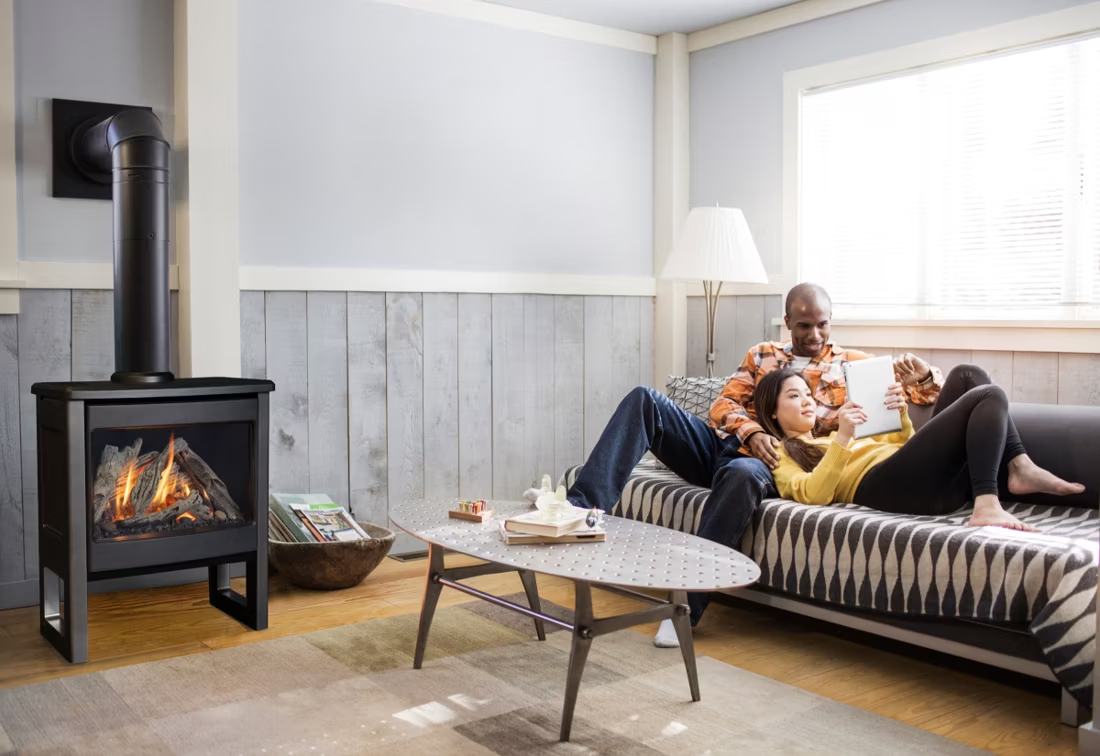
Four fuels. One honest answer for Dickenson County.
Three steps. No salesperson until you're ready.
Tell us about your project
Your zip code, your situation, and the fuel you're leaning toward—or let the answers point you to one.
See what's actually available
The brands dealers within 100 miles genuinely carry—real options, never a catalog mirage.
Get your dealer & Project Guide
A trusted local dealer, plus the free Project Guide & Parts List that names every component of the job.
Frequently Asked Questions
Which fuel works best in Dickenson County?
It depends on your property and how you like to heat. Wood is the deep local default—oak, hickory, and maple are abundant on the ridges, many households cut their own or buy it from a neighbor, and a good catalytic or non-catalytic stove holds a fire through a 22°F overnight low without much trouble. Gas is workable but almost always means propane rather than piped natural gas—mountainous, low-density terrain like this rarely has gas mains reaching individual hollows, so propane tank service is the norm for gas fireplaces and inserts. Pellet is a solid middle option, especially with regional supply from brands like Energex, Hamer Pellet Fuel, and Greene Team Pellet Fuel available through fuel dealers in the broader region. Electric works well as supplemental heat—a bedroom or den unit for shoulder-season evenings—but it's not what most Dickenson County homes lean on to get through a full winter.
Do I need a permit to install a fireplace in Dickenson County?
In most cases, yes. New wood stoves, wood inserts, gas fireplaces, gas inserts, gas stoves, and pellet stoves typically require a building permit through Dickenson County's building department before installation. Gas installations involving a propane line or new gas connection also need that line work inspected, usually handled by a licensed gas-qualified installer. Electric fireplaces generally don't require a permit unless it's a built-in unit that involves new wiring or a dedicated circuit. Most local hearth retailers and installers pull the permit as part of the job, so homeowners typically aren't filing the paperwork themselves—but it's worth confirming that's included in your installation quote.
Are there air quality restrictions on wood burning in Dickenson County?
No—Dickenson County has no non-attainment designation or winter burn advisories like the inversion-prone valleys you see in parts of the West. The county's ridge-and-hollow terrain and low population density mean wood smoke doesn't accumulate the way it can in a closed basin. That said, installing a modern EPA-certified stove still makes practical sense here regardless of any local mandate—it burns roughly a third less wood for the same heat output than an old pre-1990s stove, which matters when you're cutting or buying every cord yourself.
Can one local dealer handle all four fuel types in a county this rural?
Not always, and that's normal for a county with just over 2,300 residents spread across a wide mountainous footprint. Some hearth dealers serving Dickenson County are based in larger nearby towns like Norton, Big Stone Gap, or Grundy and drive in for installs and service calls. Rather than guessing which dealer actually stocks and installs what you need, Find My Fireplace matches you with the specific local dealer whose coverage area and fuel lineup fits your address—wood, gas, pellet, or electric—so you're not calling around the region trying to find someone who'll take the job.
How does hearth service work in a rural county like this?
Most technicians covering Dickenson County are based outside the county line—often in Norton, Big Stone Gap, or Wise County—and travel in for chimney sweeps, gas service, and pellet stove cleaning. Expect a modest trip charge for rural calls, and expect scheduling to matter more here than in a dense suburb: booking your annual chimney sweep or gas inspection in September or early October, before the first hard cold snap, gets you ahead of the backlog that builds up once temperatures drop into the 20s.
What's the typical cost range for fireplace installation across fuel types in Dickenson County?
Costs run close to regional Appalachian norms, sometimes with added labor for hauling equipment up steep or narrow driveways. Wood stove or insert installation: roughly $4,000–$8,500 for a typical retrofit, more if new chimney chase construction is involved. Gas fireplace, insert, or stove: roughly $4,000–$10,000, with propane tank and line work adding to the lower end of that range if service isn't already in place. Pellet stove or insert: roughly $4,000–$7,000 installed. Electric fireplace: $200–$2,500 for the unit itself, plus $300–$1,000 in labor for anything beyond a simple plug-in install. A local dealer can give you an exact number once they've seen your chimney, venting path, and driveway access.
What is an in-home preview and do I need one?
It's a visit where a hearth professional measures your space, confirms the model you picked actually works in your home, and walks the specs—framing, gas line, venting, finish work—before anything is ordered. Some details you just can't know until you see the house. Never make a down payment without one; it's the single most-skipped step that burns buyers.
Should the dealer who sells my fireplace also install it?
Ideally, yes. A fireplace project involves vent pipe, gas line, electrical, and often tile or stone. Hire three or four separate trades and you own the liability and the game of telephone between them. One company selling and installing means one accountable party, start to finish—ask about factory training, on-time completion records, and what happens if an inspection fails.
How much should I budget for a fireplace?
For an average home—covering the fireplace, the vent pipe, and basic installation—a budget between $3,900 and $5,500 gives you a lot of options across wood, gas, and pellet. By the time you add finish work, gas line, and electrical, the average complete installation lands between $5,000 and $12,000 all-in. In a remodel or new build, a good rule is to put about 2.5% of the total project cost toward the fireplace.
Can a fireplace actually lower my heating bill?
Yes—by creating a comfort zone. A furnace heats every square foot of the house just to warm the one room you're in; a gas fireplace on low burns roughly a sixth of the gas a typical furnace does. Set the furnace around 55–60 degrees as a baseline, then heat the rooms your family actually uses. Families who heat this way commonly save $20–$60 a month.
Stove and Fireplace Dealers in Dickenson County
Listings include WhyFire partner dealers, dealers we have verified as authorized for the brands we recommend, and established local businesses that carry hearth products. Every listing shows which one it is. The ones marked Preferred run on WhyFire's software, so they can show you real pricing and book your appointment right here. No manufacturer pays for placement. How we verify dealers →
Clintwood Lumber & Supply
Modern Hardware
Suburban Propane
Hce Systems Inc.
American Heating And Cooling
New-Bos, Inc
Quality Parts Inc.
Find your fireplace in Dickenson County.
Tell us about your home and we'll match you with a trusted local hearth dealer and send you a free Project Guide & Parts List—the exact parts, venting, and recommended dealer for your project in Dickenson County.
Find Your Fireplace →