
Steady, Efficient Warmth Without the Woodpile.
Dale City winters bring a moderate heating season and overnight lows near 24°F—enough to justify a hopper-fed pellet stove without asking for a cord of firewood in a subdivision backyard. Find the right unit and connect with a trusted local dealer.
Every Project Starts From One of These Five Situations
A suburban fit for consistent, low-maintenance heat.
Dale City sits in climate zone 4A along the I-95 corridor in Prince William County—a mixed-humid climate with a moderate winter heating season, nowhere near the deep cold of a place like Duluth MN, but cold enough for real winter heating bills from December through February. Most homes here are tract-built subdivisions on modest lots, which makes a pellet stove a practical fit: no chainsaw, no stacked cordwood taking up half the yard, just a bag of pellets stored in the garage.
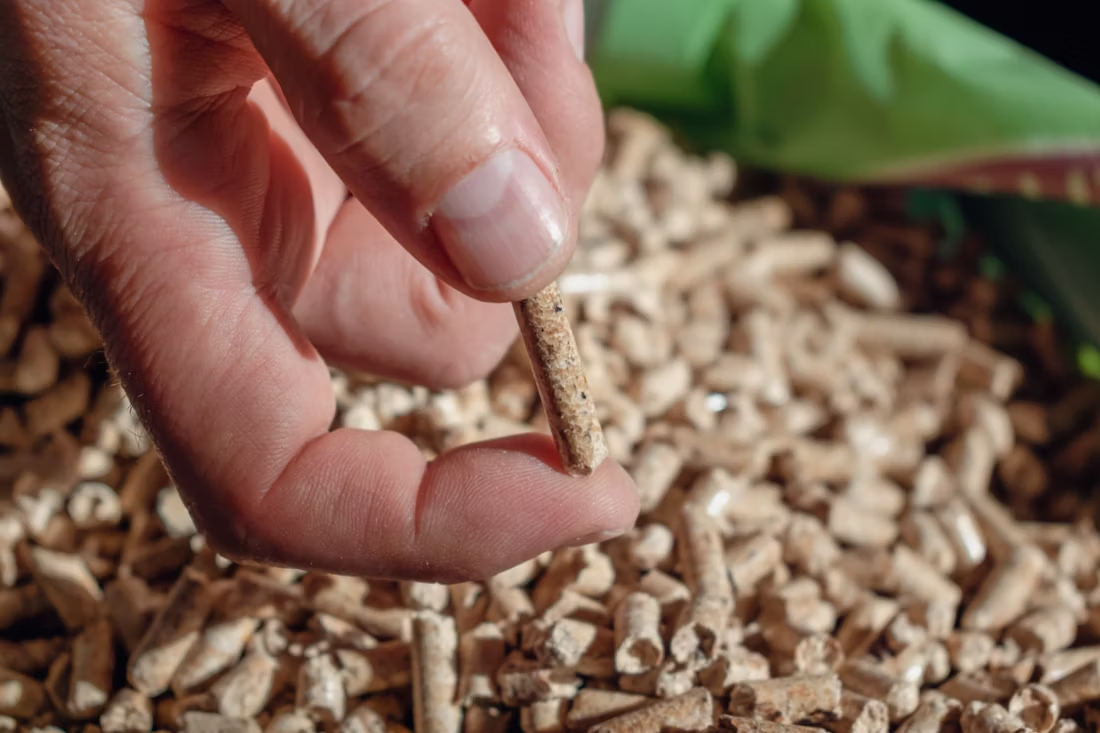
Regional pellet brands like Energex, Hamer Pellet Fuel, and Greene Team Pellet Fuel are widely stocked at hearth shops and hardware stores throughout Northern Virginia, so fuel supply isn't a concern the way it can be in more remote areas. Pellet stoves do run on electricity to power the auger and blower—worth knowing if you're on Northern Virginia Electric Cooperative (NOVEC) service and want backup heat during a storm-related outage. With no local air quality restrictions or burn bans on the books in Prince William County, a pellet insert or freestanding stove is a straightforward way to add zone heat, cut reliance on a heat pump during the coldest snaps, and get the ambiance of a real flame without the maintenance a wood stove demands.
Three steps. No salesperson until you're ready.
Tell us about your project
Your zip code, your situation, and the fuel you're leaning toward—or let the answers point you to one.
See what's actually available
The brands dealers within 100 miles genuinely carry—real options, never a catalog mirage.
Get your dealer & Project Guide
A trusted local dealer, plus the free Project Guide & Parts List that names every component of the job.
Frequently Asked Questions
How much does a pellet stove installation cost in Dale City?
Most pellet stove and insert installations in the Dale City area run roughly $3,500 to $6,500, depending on whether it's a freestanding stove venting through an exterior wall or an insert going into an existing masonry fireplace. Homes in Dale City's older subdivisions built in the 1960s through 1980s often already have a wood-burning fireplace, which usually lowers the cost of an insert conversion since the chimney chase is already in place. New construction or rooms without an existing fireplace require exterior wall penetration for direct venting, which adds to the labor cost. A local dealer will give you a firm number after seeing your specific setup.
Do I need a permit to install a pellet stove in Dale City?
Yes—Prince William County's Development Services division requires a building permit for a new pellet stove or insert installation, and most local hearth dealers handle that paperwork as part of the install. Unlike wood, pellet fuel doesn't require any cutting or land-use permits since it's purchased by the bag or ton from a retailer—there's no Forest Service permit process to navigate the way there would be for cutting your own firewood. The permit process mainly confirms proper clearances and, where relevant, venting termination distance from windows and property lines.
Pellet stove vs. wood stove—which makes more sense in Dale City?
Prince William County has plenty of oak, hickory, and maple in the surrounding woodlots, so wood heat is technically available, but most Dale City lots are small subdivision parcels without the storage space or access for a wood supply chain. Pellet stoves solve that problem: bags of hardwood pellets stack neatly in a garage corner, there's no splitting or seasoning wood for a year before burning it, and the burn is more consistent since a pellet stove auto-feeds fuel rather than needing to be tended. The tradeoff is that a pellet stove needs electricity to run, while a wood stove will keep burning through a power outage. For a suburban home focused on convenience and steady heat, pellet is usually the better match here.
Will my pellet stove work if the power goes out?
Not without a battery backup. Pellet stoves rely on an electric auger to feed fuel and a blower to circulate heat, so a standard unit stops running the moment NOVEC power drops—something worth planning for given the ice storms and remnant hurricane systems that occasionally knock out power in Prince William County. Some pellet stove models offer an optional battery backup system that can run the auger and blower for several hours on a charge, and a small home generator is another common workaround. Ask your local dealer about backup options if outage resilience matters to you.
What size pellet stove do I need for a Dale City home?
Given Dale City's moderate winter heating season and average winter lows near 24°F, most homes here don't need a stove sized for extreme cold-climate output. A small to mid-size pellet stove (rated for 1,000 to 1,800 square feet) is usually enough to serve as supplemental zone heat for a main living area, while a larger unit can handle a whole single-story home if it's being used as a primary heat source. Ceiling height, open floor plans, and insulation level all affect actual performance, so an in-home sizing consultation from a local dealer is worth doing before you buy.
Where do I buy pellet fuel in the Dale City area, and what does it cost?
Hardwood pellet brands like Energex, Hamer Pellet Fuel, and Greene Team Pellet Fuel are commonly stocked at hearth retailers and home improvement stores throughout Northern Virginia, typically sold in 40-pound bags or by the ton. Expect to pay in the neighborhood of $250 to $320 per ton for quality hardwood pellets in this region, with prices firming up in fall as heating season demand picks up. A ton of pellets generally lasts a full heating season for supplemental use, so most Dale City homeowners store their supply in a garage or shed rather than needing a dedicated pellet bin.
How much maintenance does a pellet stove require?
Pellet stoves need more routine attention than a gas unit but far less than a wood stove chimney. Plan on emptying the ash pan every few days to weekly depending on use, wiping the glass as needed, and vacuuming the burn pot and hopper periodically through the season. Most manufacturers recommend a full professional cleaning and inspection once a year, ideally before the fall heating season starts, to check the exhaust venting, gaskets, and electrical components. Local hearth dealers who sell pellet stoves in the Dale City area typically offer this annual service directly.
Are there any air quality restrictions on pellet stoves in Prince William County?
No—Prince William County has no active air quality non-attainment designations or winter burn restrictions, so there are no curtailment periods to worry about the way there are in some Western states with wood smoke inversions. Pellet stoves already burn cleaner than wood stoves due to the density and low moisture content of manufactured pellets, so they're a solid choice here regardless of any future local air quality rules. This is one area where Dale City homeowners have more flexibility than buyers in stricter air-quality regions.
Should I get a pellet insert or a freestanding pellet stove?
If your Dale City home already has a wood-burning masonry fireplace—common in the area's older subdivisions—a pellet insert is usually the more efficient choice, since it slides into the existing firebox and vents through a liner run up your current chimney. If you don't have an existing fireplace, or you're finishing a basement or adding heat to a room without one, a freestanding pellet stove vented directly through an exterior wall is typically simpler and less expensive to install. Either option can be sized and vented properly by a local dealer familiar with Prince William County permitting requirements.
How often does a pellet stove need cleaning?
A clean pellet stove is a happy pellet stove. Plan on cleaning the burn pot about once a week when you're burning regularly—ash and clinkers gum up the air holes just like a pellet barbecue. Most pellet stove problems trace back to skipped cleaning that nobody explained up front. Some designs make it easy with a trapdoor burn pot: pull a lever and the gunk drops into the ash pan.
Why is a fireplace insert so efficient?
An insert does two things: it seals the chimney completely, so you stop losing air you already paid to heat, and it radiates warmth into the room through the firebox and glass. Most add a heat-exchange fan that pulls cool room air underneath, wraps it around the hot firebox, and pushes it back out warm. Your home is more efficient before you've even lit the first fire.
What is an in-home preview and do I need one?
It's a visit where a hearth professional measures your space, confirms the model you picked actually works in your home, and walks the specs—framing, gas line, venting, finish work—before anything is ordered. Some details you just can't know until you see the house. Never make a down payment without one; it's the single most-skipped step that burns buyers.
How much should I budget for a fireplace?
For an average home—covering the fireplace, the vent pipe, and basic installation—a budget between $3,900 and $5,500 gives you a lot of options across wood, gas, and pellet. By the time you add finish work, gas line, and electrical, the average complete installation lands between $5,000 and $12,000 all-in. In a remodel or new build, a good rule is to put about 2.5% of the total project cost toward the fireplace.
Nearby Dealers
Hearth shops serving Dale City and the surrounding area.
Pellet Brands Stocked Around Dale City
Manufacturers will point you to the nearest stocking dealer.
Find your pellet fireplace in Dale City.
Tell us a bit about your home and we'll match you with the right pellet stove or insert, plus a free Project Guide & Parts List with the exact venting components and a recommended local Dale City dealer.
Find Your Fireplace →