
Keep Your Family Warm and Safe—No Matter What
Crosspointe runs on gas furnaces, heat pumps, and Dominion-supplied electricity—but some homes still want the warmth of a real wood fire. Here's what that actually looks like locally.
Every Project Starts From One of These Five Situations
A gas-and-electric suburb, with room for a real fire.
Crosspointe is a planned residential community in Fairfax County built mostly in the 1990s, with winters that are noticeably milder than the northern Midwest or Rockies—average lows around 23°F and a winter heating load comparable to a moderately cold season, placing it in climate zone 4A. That's cold enough for a furnace to run steadily from December through February, but nowhere near the deep-freeze territory of places like Duluth or Burlington, where wood heat becomes a genuine survival tool. In Crosspointe, natural gas furnaces and electric heat pumps handle the job year-round without much drama, and Virginia Electric & Power Co. keeps outages relatively rare compared to more rural parts of the state.
That's a big part of why wood fireplaces and stoves are the exception here rather than the rule. Lots in Crosspointe are close together, most homes fall under an HOA architectural review process, and many original builder fireplaces were designed as decorative, occasional-use units rather than serious heat sources. Still, a handful of homeowners—especially those with an existing masonry fireplace and a taste for oak, hickory, or maple firewood, all common in the surrounding Northern Virginia hardwood forests—do install wood inserts for ambiance, cool-weather evenings, or as a hedge against the occasional winter power outage. If that's you, a local hearth dealer who understands both the building code and the HOA process is worth more here than in almost any other market we cover.
Three steps. No salesperson until you're ready.
Tell us about your project
Your zip code, your situation, and the fuel you're leaning toward—or let the answers point you to one.
See what's actually available
The brands dealers within 100 miles genuinely carry—real options, never a catalog mirage.
Get your dealer & Project Guide
A trusted local dealer, plus the free Project Guide & Parts List that names every component of the job.
Frequently Asked Questions
Is wood heat actually common in Crosspointe?
Not really, and it's worth being upfront about that. Crosspointe homes were built with gas or electric heat as the primary system, and most original fireplaces in the neighborhood are decorative masonry units meant for occasional use rather than daily heating. Wood stoves and high-output wood inserts are installed here occasionally—usually by homeowners who want backup heat during a Dominion outage or who simply enjoy tending a real fire—but they're a minority choice compared to gas fireplace conversions, which are far more common in this part of Fairfax County. If you're set on wood, it's absolutely doable; it's just a smaller, more specialized market than gas or electric here.
What does a wood stove or insert installation cost in Crosspointe?
Because so few Crosspointe homeowners install wood-burning equipment, there isn't a deep local pricing history the way there is for gas conversions in this market. Based on regional Northern Virginia installers who do this work, expect roughly $4,000 to $9,000 for a wood insert into an existing masonry fireplace, or more if a new chimney chase or Class A pipe run is required for a freestanding stove. Get a firm, in-home quote—pricing swings more on this project type here than almost anywhere else because so few local crews specialize in it.
Do I need a permit to install a wood stove in Crosspointe?
Yes. Fairfax County Land Development Services requires a building permit for new wood-burning appliance installations, including chimney or hearth modifications, and inspections confirm proper clearances and venting. On top of the county permit, Crosspointe's HOA architectural review process typically needs to sign off on any visible exterior change, such as a new chimney chase or flue penetration through the roofline. A local installer who has worked in Crosspointe or nearby Fairfax Station communities before will know to submit both approvals up front rather than discovering the HOA step midway through the project.
Are there wood-burning restrictions or air quality bans in Crosspointe?
No—Fairfax County doesn't carry the winter wood-smoke air quality concerns you see in basins like Klamath Falls or parts of the Mountain West, and there are no seasonal burn curtailments tied to wood stoves here. The D.C. metro area does issue Ozone Action Day advisories, but those are a summer, vehicle-emissions-driven concern, not a wood-heat issue. In practice, that means a certified EPA wood stove or insert in Crosspointe can run whenever you want it to, without the curtailment periods some western cities impose.
Where can I buy firewood near Crosspointe?
Firewood in this part of Fairfax County is almost entirely purchased rather than self-cut—there's no nearby national forest land with cutting permits the way there is out West. Regional suppliers around Lorton, Springfield, and Fairfax Station deliver seasoned oak, hickory, and maple, the three hardwoods that dominate Northern Virginia's forests and burn hot and long in a stove. Expect to pay roughly $275 to $375 per cord depending on species and seasoning, with oak and hickory commanding a premium over maple for their higher heat output.
Wood vs. gas—why do most Crosspointe homeowners choose gas?
Gas wins in Crosspointe mostly because of convenience and existing infrastructure—most homes already have a gas furnace and gas line, so adding or converting to a gas fireplace is a straightforward project for a local installer. Wood requires sourcing and storing firewood, more hands-on maintenance, and in many cases a bigger construction lift if there's no existing masonry chimney. Wood's real advantage is that it works without electricity, which matters if you want a genuine backup heat source during a Dominion outage. For most Crosspointe households, gas covers daily comfort and wood—where it exists—is more of a deliberate, secondary choice.
I have an old builder-grade fireplace—insert or full stove replacement?
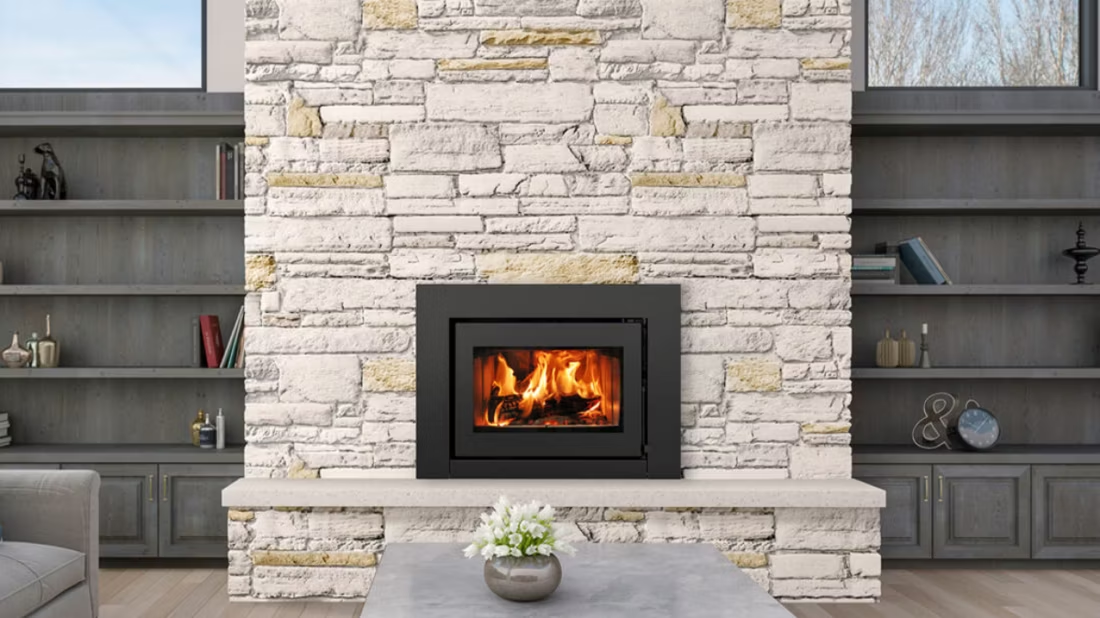
If your Crosspointe home has one of the original 1990s-era masonry fireplaces, a wood insert is almost always the better route. It fits into the existing firebox, uses the chimney you already have with a stainless liner, and converts a mostly decorative, heat-losing fireplace into a genuine heat source. A freestanding wood stove requires new hearth pad clearances and often new chimney construction, which is a bigger and more visible project—one that will also need HOA sign-off given the change to your home's exterior. For most homes in this neighborhood, the insert route is simpler and less disruptive.
How often does a wood-burning fireplace need to be inspected in Crosspointe?
An annual inspection is standard regardless of how often you burn, and the CSIA recommends it even for occasional-use fireplaces. Because many Crosspointe wood installs are used for backup heat or ambiance rather than daily winter heating, creosote buildup is often slower here than in a primary-heat household—but that's not a reason to skip the yearly sweep, since even light, infrequent use can leave a chimney vulnerable to a chimney fire if the flue is compromised. Plan on a late-summer inspection before the fireplace sees its first cool-weather use of the season.
What's the best wood stove or insert for occasional, backup-style use?
For a Crosspointe home where wood heat is meant to supplement gas or electric rather than replace it, a mid-size EPA-certified insert or stove—from a brand like Pacific Energy, Lopi, or Regency—is usually plenty. You don't need the extended 20-plus-hour catalytic burn times that matter in genuinely cold climates like Bozeman or Fargo; you need reliable heat output for a room or two during an evening or an outage. A local dealer can walk you through sizing based on your fireplace opening and whether you want a straightforward non-catalytic unit or a catalytic model for longer, steadier burns.
What's the difference between an insert and a zero-clearance fireplace?
An insert is a fireplace that slides into a pre-existing wood-burning fireplace—if you don't have one, there's nothing to insert it into. A zero-clearance fireplace is built into a framed wall, which makes it the answer for remodels and new construction. Simple test: existing masonry fireplace means insert; blank or framed wall means zero-clearance.
Why is my open fireplace making my house colder?
Open fireplaces suck—literally. As the fire burns, it consumes air your furnace already paid to heat and pulls it out through the chimney, so the house is actually colder after the fire goes out than before you lit it. An insert fixes this: it seals the chimney, puts fixed glass across the front, and turns that hole in your house into a real heat source.
What is an in-home preview and do I need one?
It's a visit where a hearth professional measures your space, confirms the model you picked actually works in your home, and walks the specs—framing, gas line, venting, finish work—before anything is ordered. Some details you just can't know until you see the house. Never make a down payment without one; it's the single most-skipped step that burns buyers.
How much should I budget for a fireplace?
For an average home—covering the fireplace, the vent pipe, and basic installation—a budget between $3,900 and $5,500 gives you a lot of options across wood, gas, and pellet. By the time you add finish work, gas line, and electrical, the average complete installation lands between $5,000 and $12,000 all-in. In a remodel or new build, a good rule is to put about 2.5% of the total project cost toward the fireplace.
Nearby Dealers
Hearth shops serving Crosspointe and the surrounding area. Every listing shows whether it is a WhyFire partner, a dealer we have verified as authorized for the brands we recommend, or a local business carrying hearth products. No manufacturer pays for placement. How we verify dealers →
Nova Fireplace And Stove
Cyprus Air, Indoor Comfort
Fireside Hearth & Home - Manassas
Homeliving Fireplaces
Aspen Green Gasworks
Deckscapes Of Virginia
Genesis Chimney Services
Superior Fireplaces - La Plata
Lawn & Leisure
Tri-County Hearth & Patio
Find your wood fireplace in Crosspointe.
Wood heat is a smaller, more specialized project in Crosspointe than gas or electric—which is exactly why matching with the right local dealer matters. Tell us about your home and we'll connect you with a trusted installer and a free Project Guide & Parts List for your project, permits, HOA considerations, and vent kit included.
Find Your Fireplace →