
Find the right electric fireplace for your Clarke County home.
No venting, no gas line, no chimney—just clean supplemental heat and ambiance for Berryville, Boyce, White Post, and the rest of Clarke County. We'll match you with a trusted local dealer.
Every Project Starts From One of These Five Situations
Simple heat for a county built on historic homes.
Clarke County sits in Virginia's climate zone 4A, with a moderately long heating season and winter lows averaging in the low 20s—real cold, but nothing like the sub-zero stretches of Bismarck, ND or Burlington, VT. That's a climate where electric fireplaces make practical sense as supplemental heat rather than a primary furnace replacement. Clarke County is also a place with a lot of older, historic housing stock—stone farmhouses and 19th-century homes around Berryville, Boyce, and White Post—where retrofitting a masonry chimney for wood or running a new gas line isn't always simple or cheap.
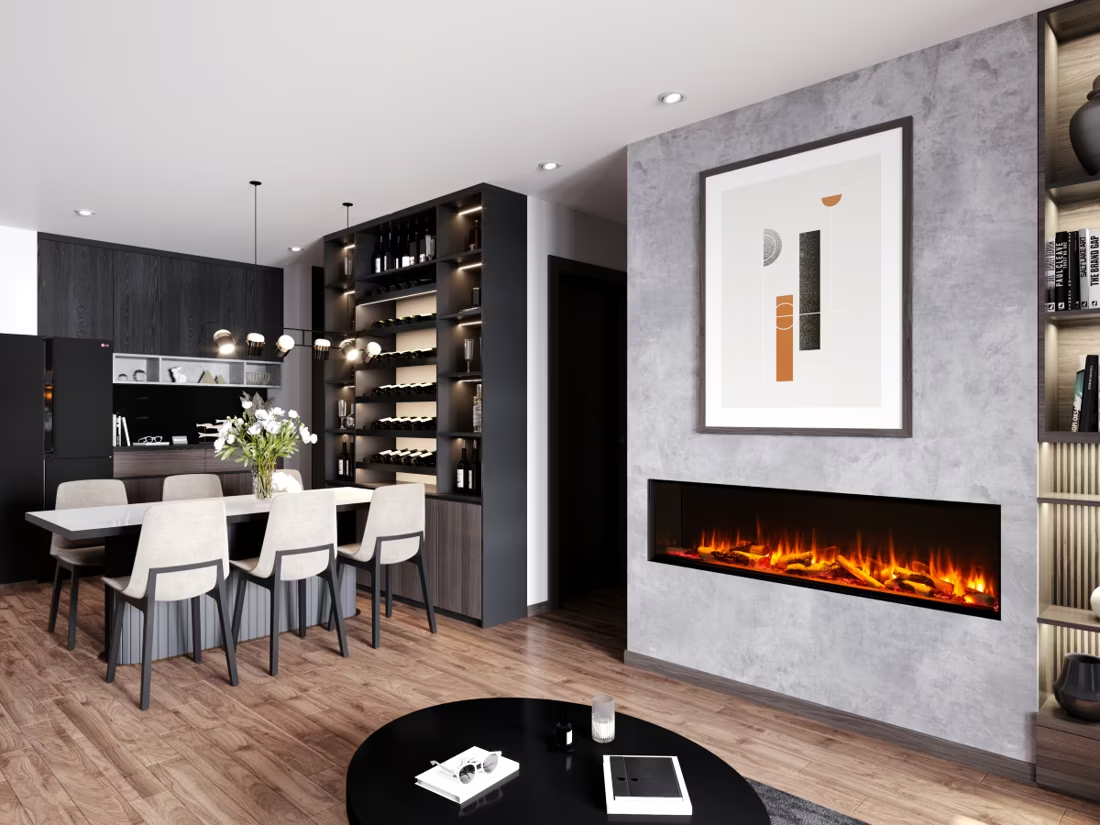
An electric insert or built-in unit sidesteps both problems. There's no venting to run, no gas line to install, no chimney to maintain, and most units plug into a standard household outlet or a simple dedicated circuit. For a converted fireplace opening in an old Clarke County farmhouse, or a new-construction great room in one of the newer developments near Berryville, electric offers a low-disruption way to add real, on-demand warmth and the look of a fire—without touching the structure of the home.
Three steps. No salesperson until you're ready.
Tell us about your project
Your zip code, your situation, and the fuel you're leaning toward—or let the answers point you to one.
See what's actually available
The brands dealers within 100 miles genuinely carry—real options, never a catalog mirage.
Get your dealer & Project Guide
A trusted local dealer, plus the free Project Guide & Parts List that names every component of the job.
Frequently Asked Questions
How much does an electric fireplace installation cost in Clarke County?
Most electric fireplace and insert installations in Clarke County run $400 to $1,200, which is far below what wood, gas, or pellet installations typically cost. The low end covers a plug-in insert dropped into an existing fireplace opening with no electrical work needed. The higher end covers units that need a dedicated 120V or 240V circuit run by a licensed electrician, or built-in wall units that require some framing and trim work. Because there's no venting or gas line involved, electric is consistently the least expensive hearth option for Clarke County homeowners, especially in older Berryville and Boyce homes where running new gas or rebuilding a flue would be far more invasive.
Do electric fireplaces actually produce real heat?
Yes, within limits. Most electric fireplace inserts use a small fan-driven resistance heater that puts out around 4,000-5,000 BTU, enough to noticeably warm a single room in the 300-400 square foot range—a den, a bedroom, or a sitting room in a Clarke County farmhouse. They won't replace a furnace or heat pump as the primary heat source for a whole home, but given the county's moderate 4A winters and 23°F average lows, an electric unit can comfortably take the edge off a chilly room or supplement central heat on the coldest nights without you touching the thermostat for the rest of the house.
Do I need a permit to install an electric fireplace in Clarke County?
In most cases, no. A plug-in electric insert or freestanding unit that uses an existing outlet doesn't typically require a permit since no gas line, venting, or structural work is involved. If your installation requires a licensed electrician to run a new dedicated circuit—common for larger built-in units or wall-mounted models—that electrical work may need a permit through Clarke County's building department, but the fireplace itself generally isn't the trigger. A local dealer can tell you upfront whether your specific unit and installation plan needs one.
Can I put an electric insert into my existing wood-burning fireplace?
Yes, and it's one of the more common projects among Clarke County's older homes. An electric insert slides into the existing masonry opening, usually with a simple surround kit that seals off the rest of the firebox, and plugs into a nearby outlet or a new dedicated circuit if the unit calls for one. This is a popular option for Berryville and Boyce homeowners who inherited a fireplace they never use because the chimney needs expensive repair—the electric insert gives back the look and some heat without touching the masonry above the firebox.
What's the difference between a plug-in electric insert and a hardwired built-in unit?
A plug-in insert uses a standard 120V household outlet and can usually be installed in an afternoon with no electrician needed—this covers most retrofit projects into an existing fireplace opening. A hardwired built-in unit, often a wider wall-mounted or linear model used in new construction or a remodel, typically needs a dedicated circuit installed by a licensed electrician, and sometimes 240V service for larger units with higher heat output. For most Clarke County retrofits, plug-in is the simpler and cheaper route; for a new-build great room or a larger linear unit, budget for the electrical work upfront.
Will an electric fireplace work if the power goes out?
No—this is the main tradeoff against wood heat in a rural county like Clarke. Electric fireplaces are entirely dependent on grid power, so during a winter outage they provide no heat at all. For homeowners who want backup heat during storms, a wood stove or an insert that can run without electricity is worth considering alongside an electric unit, especially for properties on the outer edges of the county where outage restoration can take longer. Many Clarke County homes end up with electric for everyday convenience in a main living space and a wood stove or fireplace elsewhere as a storm-heat backup.
What's the difference between an electric fireplace and an electric stove?
An electric fireplace is typically a built-in or insert-style unit designed to sit within a wall opening, mantel surround, or existing masonry firebox, mimicking the look of a traditional fireplace. An electric stove is a freestanding unit styled to look like a wood or gas stove, sitting on the floor and often placed where there's no existing fireplace at all—a converted mudroom, a sunroom addition, or a spot in an open floor plan. Both use the same basic heating technology; the choice mostly comes down to the look you want and whether you're filling an existing opening or adding heat to a new spot.
Do electric fireplaces need any ongoing maintenance?
Very little compared to wood or gas. There's no chimney sweeping, no annual gas line inspection, and no ash or soot to manage. Maintenance is mostly limited to occasionally dusting the unit, checking that the fan and heater elements are running cleanly, and replacing LED flame bulbs on older models if they dim over years of use. This low-maintenance profile is a big part of why electric appeals to Clarke County homeowners managing historic properties that already require plenty of upkeep elsewhere.
Electric vs. gas—which is right for my Clarke County home?
Gas delivers more heat output and can serve as a real supplemental or even primary heat source for a room, but it requires either a natural gas line or a propane tank, plus proper venting for most models—a bigger project and cost, especially for an older stone farmhouse near Boyce or White Post. Electric delivers modest heat, installs in a fraction of the time and cost, and works anywhere there's an outlet, but won't function during a power outage and won't heat a large space on its own. For a low-disruption ambiance upgrade to a historic home, or supplemental warmth in a room where running gas isn't practical, electric is usually the simpler answer in Clarke County. For homes wanting stronger heat output and willing to take on the gas line work, gas is worth comparing.
Can I put a TV above my fireplace?
Yes—with an asterisk. Fireplaces are hot and TVs don't like heat. Either put a mantel between them to deflect rising warmth, or choose a fireplace with heat-management technology that creates a cool zone on the wall above—the wall stays around 125 degrees, barely warm, while the room still gets full heat. If you like clean lines and don't want a mantel, heat management is the answer.
Does an electric fireplace need a vent or chimney?
No—that's its superpower. An electric fireplace needs a wall and an outlet, period. No vent pipe, no gas line, no clearances to design around, which is why it works in bedrooms, offices, apartments, and walls where venting a gas or wood unit would be impractical or impossible. Installation is typically the simplest and least expensive of any fireplace type.
Can I install a fireplace myself?
If you're putting a fire in your house on purpose, it's best to work with an expert. Unless you're genuinely experienced in framing, gas line, vent pipe, and the national code on clearances to combustibles, have a professional do it—and ideally the same company that sells you the fireplace, so warranty, service, and liability all live under one roof.
What is an in-home preview and do I need one?
It's a visit where a hearth professional measures your space, confirms the model you picked actually works in your home, and walks the specs—framing, gas line, venting, finish work—before anything is ordered. Some details you just can't know until you see the house. Never make a down payment without one; it's the single most-skipped step that burns buyers.
Stove and Fireplace Dealers in Clarke County
Listings include WhyFire partner dealers, dealers we have verified as authorized for the brands we recommend, and established local businesses that carry hearth products. Every listing shows which one it is. The ones marked Preferred run on WhyFire's software, so they can show you real pricing and book your appointment right here. No manufacturer pays for placement. How we verify dealers →
Blossman Gas And Appliance
Prouty's Chimney Sweep
Dmv Chimneys & Masonry Repair
Miller Ace Hardware
Holtzman Propane
Roach Energy
Holtzman Propane
A&A Pools
Get matched with an electric fireplace dealer in Clarke County.
Tell us about your home and we'll put together a free Project Guide & Parts List for your electric fireplace project—the right unit, the exact parts, and a trusted local dealer to install it.
Find Your Fireplace →