
Find your fireplace in Clarke County.
Wood, gas, pellet, and electric fireplace resources for the whole county—from Berryville's Route 340 corridor out to the horse farms and orchards near Boyce, White Post, and Millwood. Pick a fuel and get matched with a local dealer who actually installs it here.
Every Project Starts From One of These Five Situations
5,380 heating degree days in a county still built on oak, hickory, and maple.
Clarke County sits in the northern Shenandoah Valley between the Blue Ridge Mountains and the Shenandoah River, home to roughly 6,176 residents spread across Berryville, the county seat, along with Boyce, White Post, Millwood, and a scatter of farm and horse-country properties along the river bottoms. Winter lows average 23°F and the county logs about 5,380 heating degree days a year—a real but comparatively moderate heating load, well short of the Upper Midwest cold you'd find in Fargo or Duluth. Oak, hickory, and maple are the wood species most local households burn, much of it self-cut from the county's own farm woodlots and orchard clearings, which keeps wood heat both traditional and inexpensive here.
Clarke County carries no listed air quality concerns, which means there's no non-attainment status, no winter inversion pattern, and no curtailment-day program restricting wood burning the way some western basins do—a wood stove burning seasoned hickory here can run whenever the homeowner wants. Natural gas mains reach in and around Berryville, but much of the county's outlying land relies on propane, which shapes plenty of gas fireplace decisions. Pellet stoves have a foothold too, with regional brands like Energex, Hamer Pellet Fuel, and Greene Team Pellet Fuel stocked by area dealers, and electric units fill in as supplemental heat in guest rooms, outbuildings, and additions across the county's larger properties. This hub rolls up hearth retailers, service techs, and fuel suppliers from Berryville out to Boyce, White Post, and Millwood. Pick your fuel below for local dealers, install costs, and unit recommendations specific to your part of the county.
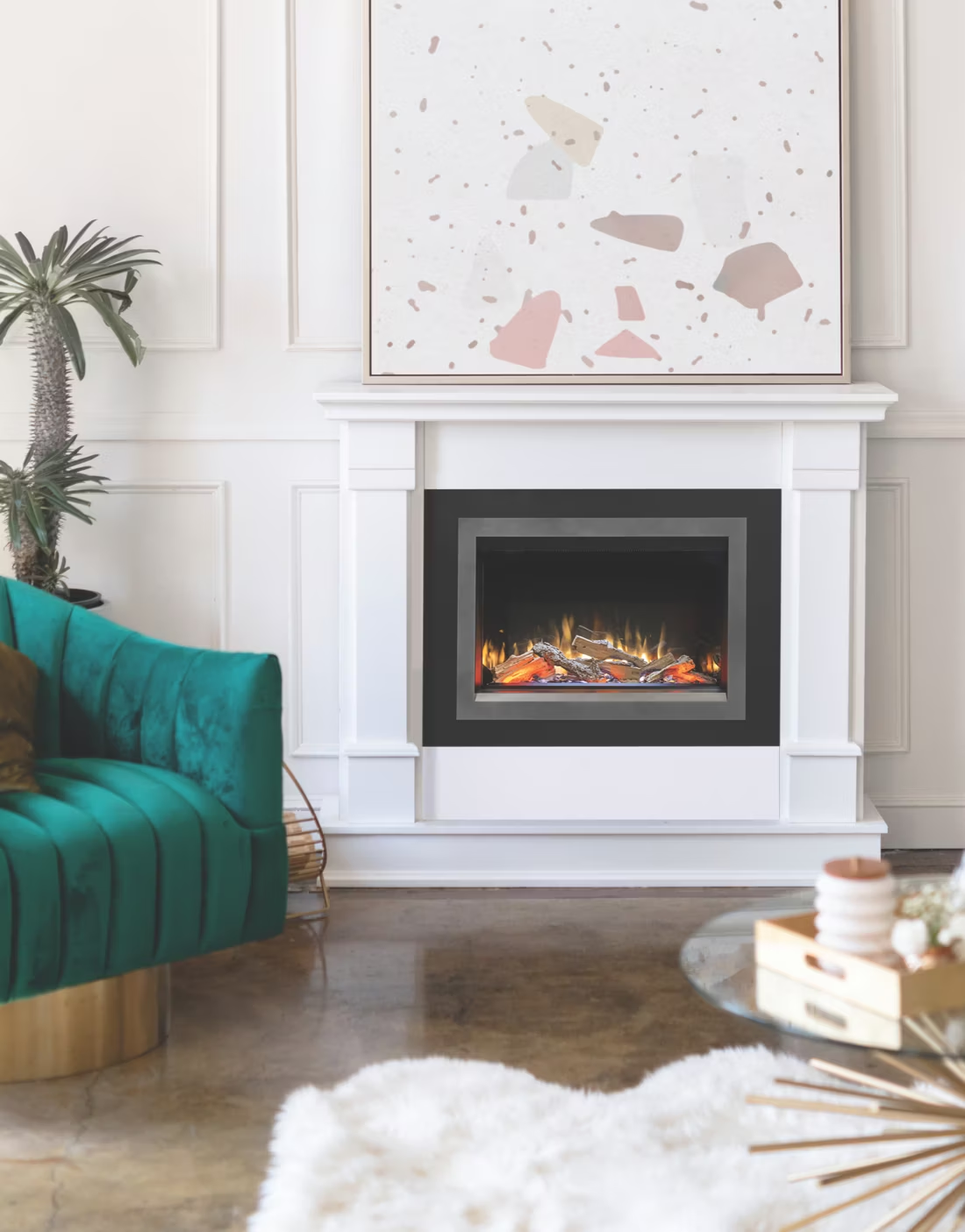
Four fuels. One honest answer for Clarke County.
Three steps. No salesperson until you're ready.
Tell us about your project
Your zip code, your situation, and the fuel you're leaning toward—or let the answers point you to one.
See what's actually available
The brands dealers within 100 miles genuinely carry—real options, never a catalog mirage.
Get your dealer & Project Guide
A trusted local dealer, plus the free Project Guide & Parts List that names every component of the job.
Frequently Asked Questions
Which fireplace fuel makes the most sense in Clarke County?
All four fuels work here, and the right pick usually comes down to your property and how much of the heating load you want the fireplace to carry. Wood is the traditional backbone in this county—oak, hickory, and maple grow abundantly on local farms and orchards, and a hardwood stove loaded with hickory will hold overnight heat comfortably through a typical 23°F low. Gas is the convenience choice: homes in and around Berryville often have natural gas access, while properties further out on rural land generally run on propane instead. Pellet stoves have real appeal too, since regional brands like Energex, Hamer Pellet Fuel, and Greene Team Pellet Fuel are all available through area dealers, and Clarke County has no curtailment restrictions to worry about the way some non-attainment areas do. Electric fireplaces work best as supplemental heat—a guest room, a converted outbuilding, or a room addition—rather than a primary source, since the county's 5,380 heating degree days call for more sustained output than most electric units are built to deliver.
Do I need a permit to install a wood stove or gas fireplace in Clarke County?
In most cases, yes. New wood stoves and inserts need to meet current EPA emissions certification, and building permits for unincorporated parts of the county run through Clarke County's building inspections office, while properties inside Berryville town limits go through the Town's own process. Gas installations typically need a separate gas-line or propane-tank permit along with a licensed gas fitter for the hookup, and that's especially true for rural properties adding a new propane tank rather than tapping an existing gas line. Electric fireplaces usually skip permitting unless you're hardwiring a built-in unit that requires a new circuit. Most hearth retailers we match homeowners with handle this paperwork as part of the installation, so it's rarely something you're chasing down on your own.
Does Clarke County have wood-burning restrictions like curtailment days?
No. Clarke County has no listed air quality concerns—no non-attainment designation, no winter inversion pattern, and no seasonal burn-ban program restricting wood stoves the way you'll find in some Western basin communities. New wood stoves still have to meet federal EPA emissions standards, since that requirement applies nationwide regardless of local air quality, but there's no local agency here calling yellow or red burn days. That said, with as much hardwood as this county burns, annual chimney sweeping still matters for safety—creosote buildup in an oak- or hickory-fed flue is a fire risk independent of any regulatory program.
What does a fireplace installation typically cost in Clarke County?
Costs track fairly closely with national ranges, with a bit of upward pressure on labor for the county's older farmhouses and their existing masonry chimneys. Wood stove or insert installs generally run $4,500–$9,000, more if a chimney needs relining or rebuilding. Gas fireplaces, inserts, and stoves run roughly $4,500–$10,000, with rural propane-tank installs sitting toward the higher end once tank placement and line work are factored in. Pellet stove or insert installs typically land at $4,500–$7,500. Electric fireplaces are the outlier—$200–$3,000 for the unit itself, plus $400–$1,200 in labor for anything beyond a simple plug-in placement. The county + fuel pages above break these numbers down further with local retailer pricing.
How does installation and service work for homes outside Berryville?
Most retailers and service crews are based in or near Berryville but regularly travel out to Boyce, White Post, Millwood, and the horse-farm and orchard properties scattered along the Shenandoah River. Expect a modest trip fee for the farthest addresses, and expect scheduling to fill up once the first cold snap hits in late fall—booking your annual chimney sweep or gas inspection in late summer, before the rush, is the easiest way to get ahead of it. For older farmhouses with original masonry chimneys, it's worth asking your installer for a liner inspection alongside the standard sweep, since many of these chimneys predate current code and haven't been relined in decades.
Where does the wood for local wood stoves actually come from?
A lot of it comes from the county itself. Clarke County's farms and orchards regularly clear oak, hickory, and maple as part of normal land management, and plenty of homeowners either cut their own firewood or buy seasoned cords directly from neighbors and local firewood dealers rather than trucking it in. All three species are dense hardwoods that burn hot and long once properly seasoned, but that density also means they need real drying time—six months to a year split and stacked under cover—to hit the roughly 20% moisture content that keeps a stove burning efficiently and a chimney clean. Buying wood that's been cut and split for at least a season, rather than green wood straight off a clearing job, makes a noticeable difference in how well a hardwood stove performs through the county's winter.
Can I install a fireplace myself?
If you're putting a fire in your house on purpose, it's best to work with an expert. Unless you're genuinely experienced in framing, gas line, vent pipe, and the national code on clearances to combustibles, have a professional do it—and ideally the same company that sells you the fireplace, so warranty, service, and liability all live under one roof.
Can a fireplace actually lower my heating bill?
Yes—by creating a comfort zone. A furnace heats every square foot of the house just to warm the one room you're in; a gas fireplace on low burns roughly a sixth of the gas a typical furnace does. Set the furnace around 55–60 degrees as a baseline, then heat the rooms your family actually uses. Families who heat this way commonly save $20–$60 a month.
Does a fireplace add value to my home?
On average, a fireplace adds back to the home about the same amount you spent installing it. Add the monthly savings from heating the rooms you actually use instead of the whole house—often hundreds of dollars a year—and the value case is strong before you even count what a fire does for how your family uses the room.
Should the dealer who sells my fireplace also install it?
Ideally, yes. A fireplace project involves vent pipe, gas line, electrical, and often tile or stone. Hire three or four separate trades and you own the liability and the game of telephone between them. One company selling and installing means one accountable party, start to finish—ask about factory training, on-time completion records, and what happens if an inspection fails.
Stove and Fireplace Dealers in Clarke County
Listings include WhyFire partner dealers, dealers we have verified as authorized for the brands we recommend, and established local businesses that carry hearth products. Every listing shows which one it is. The ones marked Preferred run on WhyFire's software, so they can show you real pricing and book your appointment right here. No manufacturer pays for placement. How we verify dealers →
Blossman Gas And Appliance
Prouty's Chimney Sweep
Dmv Chimneys & Masonry Repair
Miller Ace Hardware
Holtzman Propane
Roach Energy
Holtzman Propane
A&a Pools
Get matched with a local Clarke County dealer.
Pick your fuel below and we'll put together a free Project Guide & Parts List—the right unit, the vent kit it needs, and the local dealer we recommend for your project in Clarke County.
Find Your Fireplace →