
Reliable gas heat for Caroline County's rural homes.
From Bowling Green to Ruther Glen to the farmland along the Rappahannock, Caroline County homes are increasingly adding gas fireplaces and inserts for instant, low-maintenance heat. Find the right unit and connect with a trusted local dealer.
Every Project Starts From One of These Five Situations
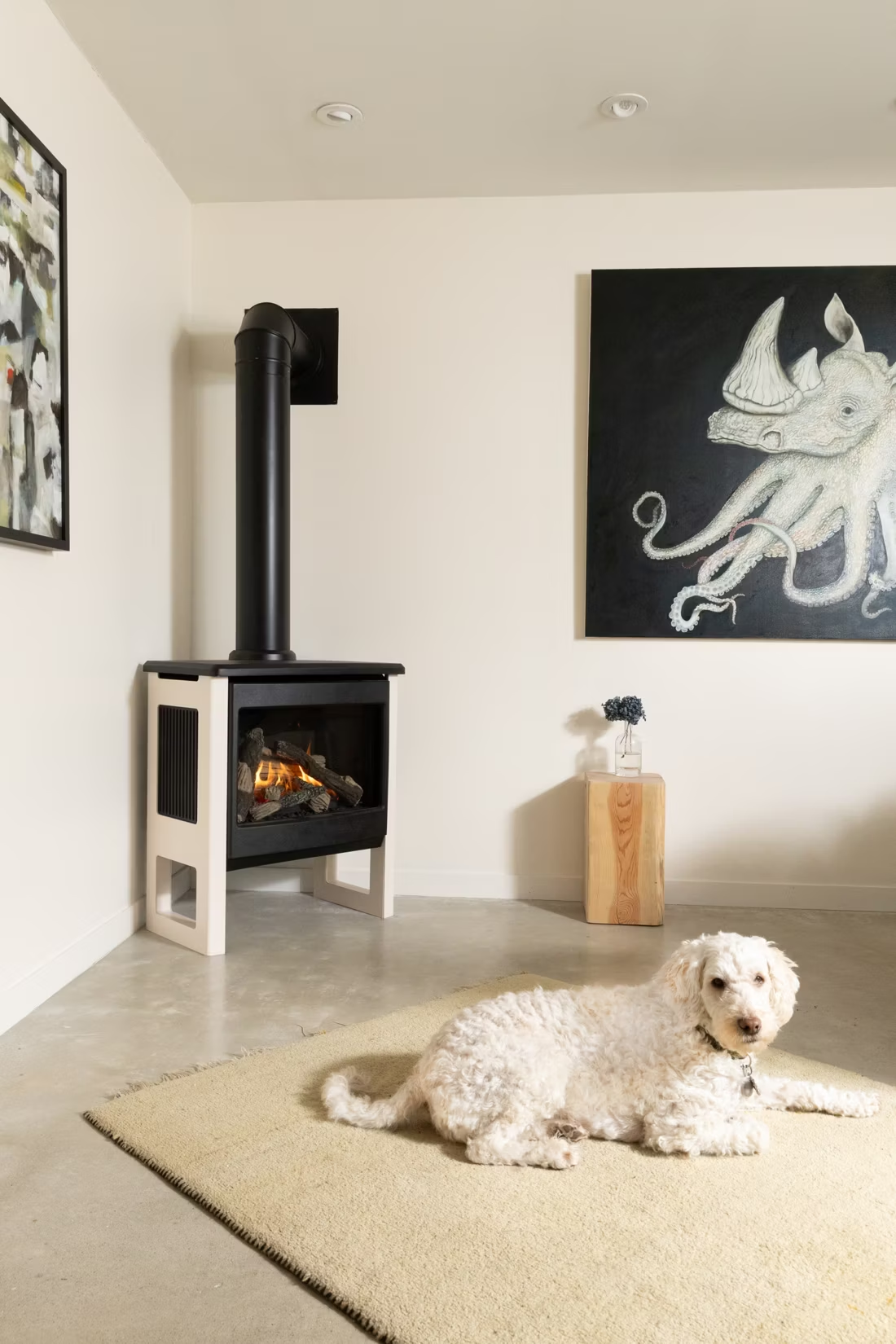
Convenient heat without the wood pile.
Caroline County is a largely rural stretch of central Virginia between Fredericksburg and Richmond, home to just over 7,500 people, the town of Bowling Green, and a landscape that includes farmland, Fort A.P. Hill, and stands of oak, hickory, and maple that have long fueled wood stoves in older farmhouses. The climate here (zone 4A, with a winter heating season on par with Louisville, KY) is moderate by national standards—nowhere near the bitter lows of Burlington, VT or Madison, WI—but winter nights still average in the mid-20s from December through February, and a gas fireplace gives Caroline County homeowners heat on demand without splitting wood or tending a fire every evening.
Caroline County has no widespread natural gas utility mains running through most of its rural expanse, so propane is the practical fuel choice for the majority of homes here, with tanks installed and serviced by regional propane suppliers. Pockets of commercial development along the I-95 corridor near Ruther Glen and Doswell may have better access to piped gas, but for most residents outside town limits, a propane-fed direct-vent fireplace or insert is the standard setup. Either way, gas delivers the same result: flip-a-switch warmth that pairs well with a home that already burns wood for backup heat during winter storms.
Three steps. No salesperson until you're ready.
Tell us about your project
Your zip code, your situation, and the fuel you're leaning toward—or let the answers point you to one.
See what's actually available
The brands dealers within 100 miles genuinely carry—real options, never a catalog mirage.
Get your dealer & Project Guide
A trusted local dealer, plus the free Project Guide & Parts List that names every component of the job.
Frequently Asked Questions
How much does a gas fireplace installation cost in Caroline County?
Most gas fireplace and insert installations in Caroline County run in the $3,500 to $9,000 range, depending on the unit, whether a new propane tank needs to be set, and how much venting or gas line work is involved. Because most of the county relies on propane rather than piped natural gas, expect the cost of a tank installation or hookup to an existing tank to be part of the estimate if you don't already have propane service at your home. A gas insert going into an existing masonry fireplace with venting already in place tends to land on the lower end; a new build-out with fresh gas lines and framing runs higher. A local dealer will give you a firm number after seeing your home.
Can I convert my existing wood fireplace to gas?
Yes, and it's a common upgrade in Caroline County's older farmhouses, many of which still have a masonry fireplace originally built for oak or hickory cordwood. A gas insert typically slides into that existing opening, using a stainless liner run through the same chimney for venting, and connects to either a new propane line or an existing tank. The conversion keeps the look of your original fireplace while giving you instant heat without the wood handling—a popular choice for homeowners who still keep a wood stove elsewhere in the house for backup heat during outages.
Should I plan for natural gas or propane in Caroline County?
For the great majority of Caroline County, plan on propane. Natural gas mains are limited to small pockets of commercial development along the I-95 corridor near Ruther Glen and Doswell, and most residential areas—including Bowling Green, Milford, and Port Royal—are outside any natural gas service territory. Propane fireplaces and inserts perform identically to natural gas units; your installer simply sets the correct orifice and regulator for propane and coordinates either a new tank installation or a tie-in to your existing tank if you already have one for a water heater, range, or furnace.
Will my gas fireplace still work if the power goes out?
Most modern gas fireplaces will, which matters in a rural county like Caroline where downed lines during winter storms can mean outages lasting hours or longer. Units with intermittent pilot ignition (IPI) run on a battery backup that kicks in automatically when power drops, so the fireplace lights and operates normally as long as the batteries are fresh. Valor fireplaces take a different approach—their pilot generates its own electricity through a thermocouple, so there's no battery to remember at all. Ask your local dealer about the ignition system on any model you're considering if outage performance matters to you.
What's the difference between a gas fireplace, gas insert, and gas stove?
A gas fireplace is a fully built-in unit framed into a wall, typically chosen for new construction or a full remodel. A gas insert is built to slide into an existing masonry fireplace opening, using your existing chimney as the vent path—the common choice for Caroline County's older homes with a working wood fireplace already in place. A gas stove is a freestanding cast-iron or steel unit that sits on the floor like a traditional wood stove but burns gas instead. If you already have a fireplace opening you want to upgrade, an insert is usually the right call; if you're building new or adding heat to a room without one, a built-in fireplace or freestanding stove makes more sense.
Do I need a permit to install a gas fireplace in Caroline County?
Generally yes—a building permit is required for new gas fireplace or insert installations through the Caroline County building department, and any propane line or gas fitting work should be done by a licensed gas-fitter as part of the job. Most established local hearth dealers fold this into the installation, coordinating the permit, the venting, and the gas connection together rather than leaving you to manage separate trades. Ask your dealer to confirm permit handling before work begins.
Vented or vent-free—which makes sense for a Caroline County home?
Vented gas fireplaces (direct-vent or B-vent) pull combustion air from outside and exhaust it back outside through sealed venting, and they're code-compliant everywhere including rural Virginia. Vent-free units burn fuel directly into the room and are legal in Virginia with proper room-sizing and oxygen-depletion safety sensors, but they release some combustion byproducts indoors. Caroline County doesn't have any air quality non-attainment issues to factor in, so the decision mostly comes down to venting logistics—a direct-vent unit is simple to run through an exterior wall in most farmhouse and ranch layouts, and it's the option most local dealers recommend by default for the cleanest indoor air.
How often should a gas fireplace be serviced?
Plan on an annual inspection, ideally in early fall before regular winter use begins. A technician will check the burner, pilot assembly, gas connections, venting, and clean the glass and interior—a much quicker visit than a wood chimney sweep, but just as important for safe operation. Expect to pay somewhere in the $150 to $250 range for a standard annual service call from a local hearth or propane technician.
Gas vs. wood—which makes more sense for a Caroline County home?
Wood has deep roots here—oak, hickory, and maple are all abundant locally, and plenty of Caroline County homes still rely on a wood stove for primary or backup heat, especially useful given how storm-related outages can knock out power in the more rural parts of the county. Gas trades that self-sufficiency for convenience: instant on-off operation, no wood splitting or ash cleanup, and steady heat output without tending a fire. A lot of homeowners here end up with both—a gas fireplace or insert in the main living space for everyday use, and a wood stove somewhere in the house as backup heat when the power goes out.
Can I put a TV above my fireplace?
Yes—with an asterisk. Fireplaces are hot and TVs don't like heat. Either put a mantel between them to deflect rising warmth, or choose a fireplace with heat-management technology that creates a cool zone on the wall above—the wall stays around 125 degrees, barely warm, while the room still gets full heat. If you like clean lines and don't want a mantel, heat management is the answer.
Is my gas fireplace wasting gas?
If it was installed more than 15 years ago, probably. Older gas fireplaces keep a standing pilot light burning all the time, and that little flame can cost a couple hundred dollars a year. Newer models use pilot-on-demand ignition—the pilot lights only when you use the fireplace and goes out when you turn it off.
Does a fireplace add value to my home?
On average, a fireplace adds back to the home about the same amount you spent installing it. Add the monthly savings from heating the rooms you actually use instead of the whole house—often hundreds of dollars a year—and the value case is strong before you even count what a fire does for how your family uses the room.
Can a fireplace actually lower my heating bill?
Yes—by creating a comfort zone. A furnace heats every square foot of the house just to warm the one room you're in; a gas fireplace on low burns roughly a sixth of the gas a typical furnace does. Set the furnace around 55–60 degrees as a baseline, then heat the rooms your family actually uses. Families who heat this way commonly save $20–$60 a month.
Stove and Fireplace Dealers in Caroline County
Listings include WhyFire partner dealers, dealers we have verified as authorized for the brands we recommend, and established local businesses that carry hearth products. Every listing shows which one it is. The ones marked Preferred run on WhyFire's software, so they can show you real pricing and book your appointment right here. No manufacturer pays for placement. How we verify dealers →
Southern States Cooperative
Glover Enterprises
Studley Stove And Hearth
Find your gas fireplace in Caroline County.
Tell us about your home and we'll match you with a trusted local dealer and put together a free Project Guide & Parts List—the exact parts, including the vent kit, and the dealer we recommend for your gas fireplace project in Caroline County.
Find Your Fireplace →