
The right fireplace for Caroline County homes—wood, gas, pellet, or electric.
From Bowling Green to Port Royal to Ruther Glen, Caroline County homeowners heat with everything from oak cordwood to propane inserts. Find the right fuel for your house and get matched with a local hearth pro who can actually install it.
Every Project Starts From One of These Five Situations
Moderate winters and hardwood heating traditions in Caroline County, Virginia.
Caroline County sits in the rural stretch between Fredericksburg and Richmond, its farms and woodlots bisected by the I-95 corridor and the Mattaponi and Rappahannock river systems. At climate zone 4A with roughly 4,295 heating degree days and average winter lows near 26°F, this is a moderate heating climate—nowhere near the sustained deep-freeze of a place like Burlington, Vermont, where HDD counts run closer to 7,000. Winters here are real but shorter, and the county's mature oak, hickory, and maple stands have long supplied the cordwood that heats farmhouses and hunting cabins alike.
What you'll find on this hub: hearth retailers, service technicians, and fuel suppliers serving every corner of the county—from the county seat in Bowling Green out to Port Royal, Milford, and Ruther Glen along Route 301 and I-95. Pick your fuel below to see local dealers, typical installation costs, and the units that make sense for a Caroline County home, whether that's a farmhouse heated with a wood insert or a newer build running a propane fireplace.
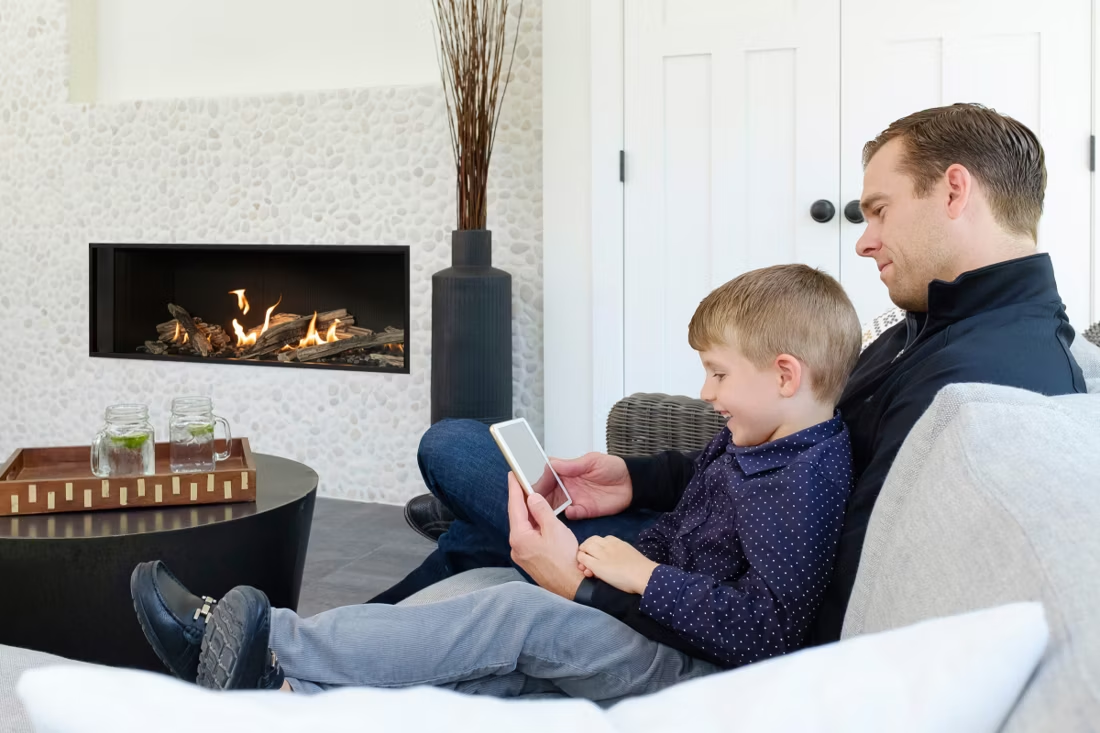
Four fuels. One honest answer for Caroline County.
Three steps. No salesperson until you're ready.
Tell us about your project
Your zip code, your situation, and the fuel you're leaning toward—or let the answers point you to one.
See what's actually available
The brands dealers within 100 miles genuinely carry—real options, never a catalog mirage.
Get your dealer & Project Guide
A trusted local dealer, plus the free Project Guide & Parts List that names every component of the job.
Frequently Asked Questions
Which fuel works best in Caroline County?
It depends on the home. Wood is a strong fit given the county's oak, hickory, and maple woodlots—dense hardwoods that burn hot and long, and many rural properties already have a source of cordwood on hand. Gas, in Caroline County, generally means propane rather than piped natural gas—the county's low density means natural gas mains don't reach most properties, so propane fireplaces and inserts are the standard gas option for instant heat without a woodpile. Pellet stoves are a solid middle ground, with regional pellet brands like Energex and Hamer Pellet Fuel stocked at farm and hearth suppliers in the wider Fredericksburg-Richmond corridor. Electric fireplaces work well as supplemental heat for bedrooms or additions, but with average winter lows around 26°F, they're not typically anyone's primary heat source here. Many Caroline County homes end up running two fuels—wood or pellet for the main living space, propane or electric for secondary rooms.
Do I need a permit to install a fireplace in Caroline County?
In most cases, yes. New wood stoves, wood inserts, gas fireplaces, gas inserts, and pellet stoves typically require a building permit through Caroline County's building department, and any propane line work should be handled by a licensed gas-fitter as part of that permit. New wood-burning appliances need to meet current EPA 2020 NSPS emissions certification. Electric fireplaces are usually permit-exempt for plug-in units, though a built-in electric fireplace that requires new wiring or a dedicated circuit will need an electrical permit. Most local hearth retailers who install regularly in the county handle the permitting paperwork as part of the job, so you're not typically filing it yourself.
Are there air quality restrictions on wood burning in Caroline County?
No—Caroline County doesn't carry an air quality nonattainment designation or a wood-burning curtailment program like some western counties do during winter inversions. That means there's no local advisory system telling you not to burn on a given day. The one requirement that still applies statewide: any new wood stove or insert installed needs to be EPA 2020 NSPS-certified. If you're replacing an old pre-EPA stove, that's the standard to check against, even without a local air-quality mandate driving it.
Can one local hearth retailer handle all four fuel types?
Given Caroline County's population of roughly 7,500 spread across a rural footprint, most of the retailers who actually service the county are based in the Fredericksburg or Richmond metro area and cover Caroline as part of a wider service radius. Some of those dealers carry all four fuel types—wood, gas, pellet, and electric—under one roof, which is useful if you want to compare options side by side. Others specialize, particularly in wood stoves and inserts given the local hardwood supply, or in propane fireplaces for newer construction off Route 301. The retailer listings on this hub note each dealer's fuel coverage so you can match your project to the right one.
How does service work in rural areas of Caroline County?
Most chimney sweeps, gas technicians, and pellet service techs covering Caroline County are based out of Fredericksburg or Richmond and drive out to towns like Port Royal, Milford, and Ruther Glen as part of their regular route. Expect a modest travel fee for calls further from Bowling Green, and know that scheduling gets tighter once cold weather hits—booking your annual sweep or gas inspection in late summer or early fall, before the heating season backlog starts, is the easiest way to avoid a multi-week wait in December.
What's the typical cost range for fireplace installation across all fuel types in Caroline County?
Ranges vary by fuel and by how much venting or gas-line work is involved. Wood stove or insert installs typically run $4,000–$8,500, more if a new chimney chase is needed. Propane fireplaces, inserts, or stoves generally run $4,000–$10,000 depending on tank setup and line work—lower if propane service already exists on the property. Pellet stoves or inserts typically fall in the $4,000–$7,000 range. Electric fireplaces are the most affordable entry point—often $200–$3,000 for the unit itself, plus $300–$1,000 in labor unless it's a simple plug-in install. County-plus-fuel pages on this hub break out more specific pricing tied to local retailers.
Can I install a fireplace myself?
If you're putting a fire in your house on purpose, it's best to work with an expert. Unless you're genuinely experienced in framing, gas line, vent pipe, and the national code on clearances to combustibles, have a professional do it—and ideally the same company that sells you the fireplace, so warranty, service, and liability all live under one roof.
Can a fireplace actually lower my heating bill?
Yes—by creating a comfort zone. A furnace heats every square foot of the house just to warm the one room you're in; a gas fireplace on low burns roughly a sixth of the gas a typical furnace does. Set the furnace around 55–60 degrees as a baseline, then heat the rooms your family actually uses. Families who heat this way commonly save $20–$60 a month.
How much should I budget for a fireplace?
For an average home—covering the fireplace, the vent pipe, and basic installation—a budget between $3,900 and $5,500 gives you a lot of options across wood, gas, and pellet. By the time you add finish work, gas line, and electrical, the average complete installation lands between $5,000 and $12,000 all-in. In a remodel or new build, a good rule is to put about 2.5% of the total project cost toward the fireplace.
Does a fireplace add value to my home?
On average, a fireplace adds back to the home about the same amount you spent installing it. Add the monthly savings from heating the rooms you actually use instead of the whole house—often hundreds of dollars a year—and the value case is strong before you even count what a fire does for how your family uses the room.
Stove and Fireplace Dealers in Caroline County
Listings include WhyFire partner dealers, dealers we have verified as authorized for the brands we recommend, and established local businesses that carry hearth products. Every listing shows which one it is. The ones marked Preferred run on WhyFire's software, so they can show you real pricing and book your appointment right here. No manufacturer pays for placement. How we verify dealers →
Southern States Cooperative
Glover Enterprises
Studley Stove And Hearth
Find your fireplace project in Caroline County.
Tell us your fuel and your Caroline County town, and we'll match you with a trusted local dealer and send a free Project Guide & Parts List—the exact parts, vent kit included, and the dealer we'd recommend for your home.# ————— end —————
Find Your Fireplace →