
Zone heat and ambiance for Bland County—without a chimney.
From farmhouses along Wolf Creek to cabins near Big Walker Mountain and the Appalachian Trail, electric fireplaces give Bland County's 819 residents a no-venting way to add warmth to a room. Find the right unit and get matched with a trusted local installer.
Every Project Starts From One of These Five Situations
A simple heat option for the county's small, spread-out housing stock.
Bland County sits in Zone 4A, wedged between Walker Mountain, Garden Mountain, and the ridges of the Jefferson National Forest at elevations that push past 2,500 to 3,000 feet in spots. Winters are colder here than the mixed-humid label suggests once you account for elevation—a few nights each season drop into the single digits on the higher ground. For generations, heat in this county has meant a wood stove burning oak, hickory, or maple cut from surrounding national forest land, sometimes backed up by propane. Electric fireplaces don't replace that heritage, but they've become a standard, practical add for a single room, an addition, or a cabin along the tourist corridor near Big Walker Lookout.
With no chimney, no gas line, and in many cases no permit beyond a dedicated circuit, an electric fireplace is one of the few heating upgrades that works in almost any structure in the county—a mobile home outside Bastian, a rental cabin near Wolf Creek Indian Village, or a bonus room addition where running a flue isn't practical. Appalachian Power serves electric accounts throughout the county, and because Bland has no air quality restrictions or burn-day concerns, electric heat pairs cleanly alongside wood without any added smoke considerations. Given how few hearth retailers sit inside the county itself, most homeowners here end up working with an installer based in Wytheville or Bluefield—which is exactly the kind of match Find My Fireplace exists to make.
Three steps. No salesperson until you're ready.
Tell us about your project
Your zip code, your situation, and the fuel you're leaning toward—or let the answers point you to one.
See what's actually available
The brands dealers within 100 miles genuinely carry—real options, never a catalog mirage.
Get your dealer & Project Guide
A trusted local dealer, plus the free Project Guide & Parts List that names every component of the job.
Frequently Asked Questions
How much does an electric fireplace installation cost in Bland County?
A plug-in electric insert or mantel unit that uses a standard household outlet typically runs $300 to $1,200 installed, since there's no venting or gas line to run. A built-in wall unit or larger insert that needs a dedicated 240-volt circuit run by an electrician typically lands between $1,200 and $2,800, depending on how far the panel is from the install location—a real factor in some of the county's older farmhouses where the electrical panel sits in a detached outbuilding or basement far from the living space.
Do I need a permit to install an electric fireplace in Bland County?
A simple plug-in unit that draws from an existing outlet generally doesn't require a permit. If your installer needs to run a new dedicated circuit or upgrade your panel to support a larger built-in unit, that electrical work needs to be pulled through the Bland County Building Department, and it should be done by a licensed electrician regardless of permit requirements. Most local installers handle this step for you as part of the project.
Will an electric fireplace heat my whole house?
No—electric fireplaces are zone heaters, not whole-home systems. Most units are rated to comfortably heat a single room up to around 400 square feet, which makes them a good fit for a living room, bonus room, or cabin great room, but not a replacement for a wood stove or central heat in a larger farmhouse. In Bland County, where wood stoves burning local oak and hickory still do the heavy lifting in a lot of homes, electric units are typically added as supplemental warmth or for rooms that don't have a chimney and aren't worth running one to.
What type of electric fireplace works best for a Bland County home?
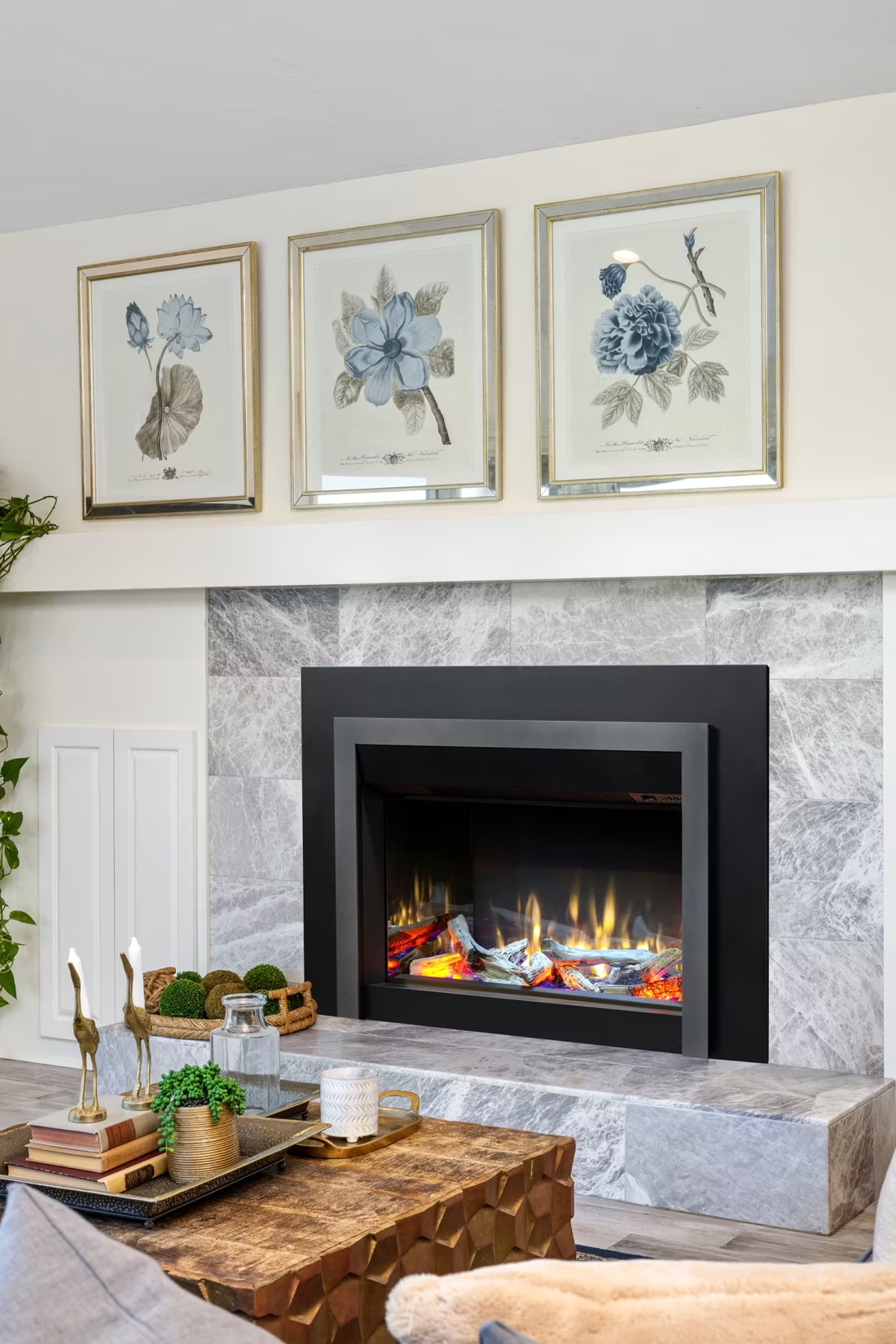
For an older farmhouse or an existing masonry fireplace opening, an electric insert that slides into the firebox is usually the cleanest option—it keeps the mantel and surround intact while adding real heat output. For additions, cabins, or rooms with no existing fireplace, a built-in wall unit or a freestanding electric stove works well and can be placed almost anywhere power reaches. Given the number of vacation cabins and rental properties near the Appalachian Trail corridor and Big Walker Lookout, simple, low-maintenance wall units are a common choice for owners who aren't on-site full time.
Electric vs. wood—which makes more sense for my home?
Wood remains the backbone of heating for a lot of Bland County households, especially with oak, hickory, and maple available from the surrounding Jefferson National Forest and a long-standing culture of self-cut firewood. Wood also keeps working during a power outage, which matters in a county where mountain terrain can knock out electric service for days after an ice storm. Electric fireplaces can't provide backup heat during an outage, but they're far simpler to install, require no chimney maintenance, and are a practical fit for rooms, additions, or rental cabins where running a wood-burning flue isn't realistic. Many homeowners here run both—wood as the primary or backup heat source, electric for convenience in a specific room.
Where can I buy and install an electric fireplace near Bland County?
Because Bland County's population is small and spread across a rural stretch of southwest Virginia, there isn't a hearth showroom inside the county itself. Most residents end up working with a dealer based in Wytheville or the Bluefield, VA/WV area, both within a reasonable drive of the county's communities—Bland, Rocky Gap, Bastian, and Ceres. Find My Fireplace matches you with a trusted installer who actually covers your address rather than leaving you to guess which regional dealer will make the drive.
Will my electric fireplace work if the power goes out?
No—electric fireplaces require power to run their heating element, blower, and flame-effect display, so they go dark along with everything else in an outage. In a mountainous county like Bland, where ice and wind can knock out lines for extended stretches, that's an important reason many homes keep a wood stove as their primary or backup heat source rather than relying on electric alone.
How much does it cost to run an electric fireplace in Bland County?
Running costs depend on the unit's wattage and how often the heater (not just the flame effect) is in use. Most electric fireplaces draw around 1,500 watts on the heat setting, which at typical Appalachian Power residential rates works out to roughly 15 to 20 cents per hour of active heating. Running the flame effect alone without the heater draws very little power, which is why a lot of owners use these units for ambiance on mild evenings and only switch on the heat function during a cold snap.
Electric vs. pellet stove—which is the better fit?
Pellet stoves burn compressed wood pellets—regionally available from brands like Energex, Hamer Pellet Fuel, and Greene Team Pellet Fuel—and can put out serious heat for a whole living area, but they still need electricity to run the auger and blower and require venting through an exterior wall. Electric fireplaces need no venting at all and are simpler to install, but they can't match a pellet stove's heat output for a larger room. For a small addition or a single room in a Bland County home, electric is usually the lower-hassle choice; for a primary heat source in a larger space, pellet is worth a look if you already have wood-burning infrastructure in place.
What fireplace styles should I know before shopping?
Four cover most of the market: screen-front traditional (mesh front, open feel, fits craftsman homes), traditional door set (the classic look you grew up with), modern linear (wide, low, the statement piece for entertaining), and clean face contemporary (no trim—your tile or stone runs right to the fire's edge). Walk in knowing those four terms and you're ahead of most buyers.
Do electric fireplaces actually produce heat?
Yes—most put out around 4,800–5,000 BTUs from a standard outlet, which comfortably warms a bedroom, office, or den as a comfort-zone heater. What they won't do is carry a whole house the way wood, gas, or pellet can. Think of electric as ambiance-first with honest supplemental heat: flames on with no heat in July, flames plus warmth in January.
Can a fireplace actually lower my heating bill?
Yes—by creating a comfort zone. A furnace heats every square foot of the house just to warm the one room you're in; a gas fireplace on low burns roughly a sixth of the gas a typical furnace does. Set the furnace around 55–60 degrees as a baseline, then heat the rooms your family actually uses. Families who heat this way commonly save $20–$60 a month.
Can I install a fireplace myself?
If you're putting a fire in your house on purpose, it's best to work with an expert. Unless you're genuinely experienced in framing, gas line, vent pipe, and the national code on clearances to combustibles, have a professional do it—and ideally the same company that sells you the fireplace, so warranty, service, and liability all live under one roof.
Stove and Fireplace Dealers in Bland County
Listings include WhyFire partner dealers, dealers we have verified as authorized for the brands we recommend, and established local businesses that carry hearth products. Every listing shows which one it is. The ones marked Preferred run on WhyFire's software, so they can show you real pricing and book your appointment right here. No manufacturer pays for placement. How we verify dealers →
Marsh Lp Gas Company
Country Power Equipment
Radford Chimney Works
Clark Gas & Oil Company
Hillsville Building & Landscape Supply
Blue Ridge Heating And Air
McGrady Perdue Heating & Cooling
Find your electric fireplace in Bland County.
Tell us a bit about your home and we'll put together a free Project Guide & Parts List—the right electric fireplace or insert for your space, the exact parts you'll need, and a trusted local dealer to install it. ,copy_cta_eyebrow:Ready to Start?
Find Your Fireplace →