
Find the Right Hearth for Your Bland County Home.
Wood, gas, pellet, and electric fireplace resources for every community along the Big Walker Mountain corridor—from the town of Bland to Bastian and Rocky Gap. Get matched with a trusted local dealer who actually installs in this county.
Every Project Starts From One of These Five Situations
Mountain winters and hardwood heat in Bland County, Virginia.
Bland County sits in Virginia's Ridge-and-Valley Appalachians, straddling I-77 where it climbs through the Big Walker Mountain Tunnel. Elevations run from around 2,100 feet in the valley bottoms to well over 4,000 feet along ridges like Big Walker and Brushy Mountain. The county falls in climate zone 4A—mixed-humid—but cold air pools heavily in the hollows on winter nights, and homes up on the ridgelines see noticeably colder, windier conditions than the valley floor. It's not International Falls or Duluth-cold, but a several-month heating season is standard, and a lot of households still lean on wood. Oak, hickory, and maple are the backbone species here, much of it self-cut or sourced through Jefferson National Forest firewood permits, which cover parts of the county's western edge.
This hub covers every fuel type and every town in the county—the county seat of Bland, plus Bastian, Rocky Gap, Mechanicsburg, Ceres, Grapefield, and Hollybrook. Because Bland County is one of Virginia's smallest counties by population, most hearth retailers and service techs are based in nearby hubs like Wytheville or Bluefield and travel in for installs and service calls. Pick your fuel below for local dealers, realistic cost ranges, and the specifics that apply to a Bland County install.
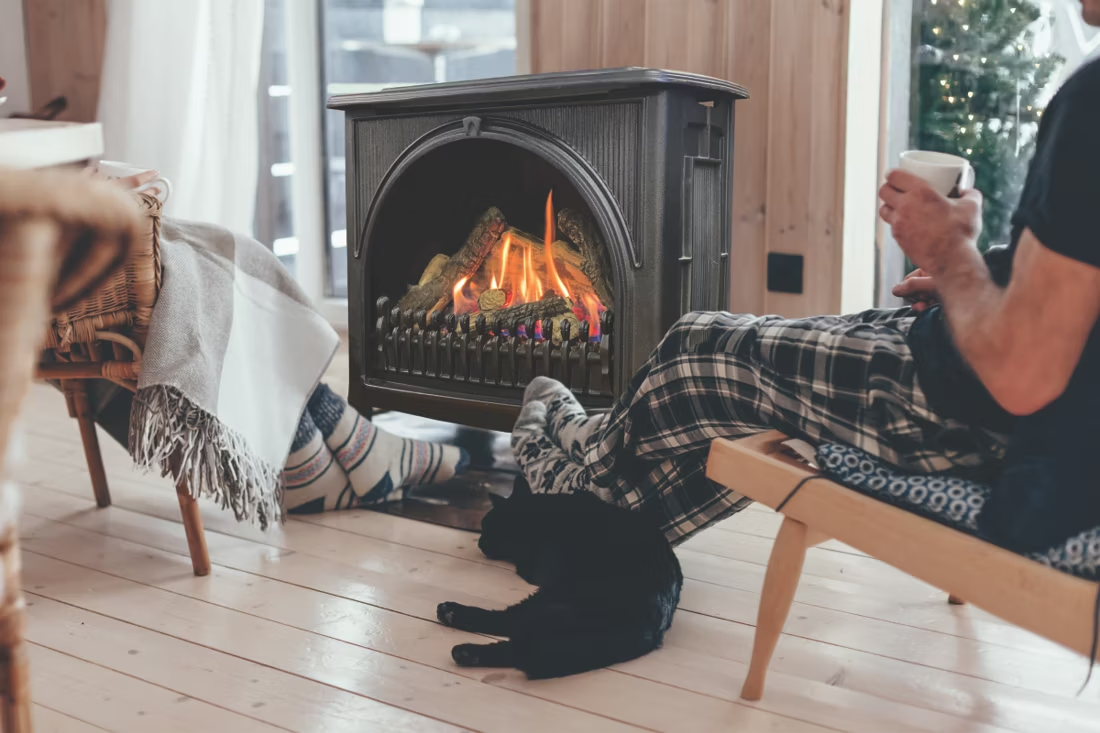
Four fuels. One honest answer for Bland County.
Three steps. No salesperson until you're ready.
Tell us about your project
Your zip code, your situation, and the fuel you're leaning toward—or let the answers point you to one.
See what's actually available
The brands dealers within 100 miles genuinely carry—real options, never a catalog mirage.
Get your dealer & Project Guide
A trusted local dealer, plus the free Project Guide & Parts List that names every component of the job.
Frequently Asked Questions
Which fuel works best in Bland County?
Wood is the traditional workhorse here, and for good reason—oak, hickory, and maple grow throughout the county, and Jefferson National Forest firewood permits cover the western edge for anyone who wants to cut their own. A wood stove or insert also keeps a home warm through a winter power outage, which matters on the ridges above Rocky Kentuckyap and Bastian where lines can be exposed to ice. Propane is the practical stand-in for 'gas' in most of the county, since there's no natural gas main running through rural Bland County—it's the choice for instant heat with none of the wood-hauling labor. Pellet stoves are a solid middle ground, and regional supply through brands like Energex and Hamer Pellet Fuel keeps fuel reasonably accessible. Electric fireplaces work well as supplemental heat in a bedroom or den but aren't a realistic primary heat source through a full mountain winter.
Do I need a permit to install a fireplace in Bland County?
Yes, in most cases. New wood stoves, wood inserts, gas or propane appliances, and pellet stoves typically require a building permit through the Bland County Building Department, and any new wood-burning appliance needs to meet current EPA 2020 NSPS emissions standards. Propane installations also need the gas line and connection work done by a licensed gas-fitter, which is usually handled as part of the install if you go through a local dealer rather than a big-box purchase. Electric units generally skip the permit process unless you're doing a hardwired built-in that involves new wiring. Most retailers serving Bland County—even the ones based out of Wytheville or Bluefield—handle the permit paperwork for you as part of a standard installation.
Are there air quality restrictions on wood burning in Bland County?
No, not in the way some western valleys deal with winter inversions. Bland County doesn't have the geographic bowl-and-inversion setup that triggers voluntary burn advisories elsewhere, and there are no local non-attainment designations tied to wood smoke here. That said, an EPA 2020 NSPS-certified stove is still worth the investment—it burns cleaner and uses less of your firewood supply per BTU, which matters if you're cutting your own oak and hickory off a woodlot rather than buying it by the cord.
Can one local hearth retailer handle all four fuel types?
Some can, but because Bland County's population is so small, the retailers covering it are based in nearby towns like Wytheville and Bluefield rather than inside the county itself. The multi-fuel dealers in those hubs typically carry wood, gas (propane-configured), and pellet units with working showroom displays, and add electric as a smaller side line. If you're trying to compare fuels side by side before deciding, it's worth checking which of the retailers on this page explicitly lists all four—smaller specialty shops may only carry two or three.
How does service work in a rural county like this?
Most technicians covering Bland County are routing in from Wytheville or Bluefield, and travel time matters more than distance on a map once you're up a hollow road or above the switchbacks near Big Walker Mountain. Expect a modest travel fee for service calls outside the I-77 corridor, and book your annual chimney sweep or gas inspection before the first cold snap—winter road conditions on the ridges can turn a same-week appointment into a multi-week wait. If you're heating with wood as your primary source, keeping a backup propane or electric option on hand isn't a bad idea for the handful of days each winter when a ridge road is iced over and a tech genuinely can't get up to you.
What's the typical cost range for fireplace installation across all fuel types in Bland County?
Costs here tend to run somewhat lower than in denser Virginia markets, since labor rates reflect the rural southwest Virginia market. Wood stove or insert installation typically runs $3,500–$7,500, more if new chimney work is involved. Propane fireplace, insert, or stove installation runs roughly $4,000–$9,000 depending on tank setup and venting. Pellet stove or insert installation is usually $3,500–$6,000. Electric fireplaces range from $200–$2,500 for the unit, plus $300–$900 in labor for anything beyond a simple plug-in placement. Ask any retailer on this page for a written estimate specific to your home before committing.
What is an in-home preview and do I need one?
It's a visit where a hearth professional measures your space, confirms the model you picked actually works in your home, and walks the specs—framing, gas line, venting, finish work—before anything is ordered. Some details you just can't know until you see the house. Never make a down payment without one; it's the single most-skipped step that burns buyers.
How much should I budget for a fireplace?
For an average home—covering the fireplace, the vent pipe, and basic installation—a budget between $3,900 and $5,500 gives you a lot of options across wood, gas, and pellet. By the time you add finish work, gas line, and electrical, the average complete installation lands between $5,000 and $12,000 all-in. In a remodel or new build, a good rule is to put about 2.5% of the total project cost toward the fireplace.
Does a fireplace add value to my home?
On average, a fireplace adds back to the home about the same amount you spent installing it. Add the monthly savings from heating the rooms you actually use instead of the whole house—often hundreds of dollars a year—and the value case is strong before you even count what a fire does for how your family uses the room.
Can a fireplace actually lower my heating bill?
Yes—by creating a comfort zone. A furnace heats every square foot of the house just to warm the one room you're in; a gas fireplace on low burns roughly a sixth of the gas a typical furnace does. Set the furnace around 55–60 degrees as a baseline, then heat the rooms your family actually uses. Families who heat this way commonly save $20–$60 a month.
Stove and Fireplace Dealers in Bland County
Listings include WhyFire partner dealers, dealers we have verified as authorized for the brands we recommend, and established local businesses that carry hearth products. Every listing shows which one it is. The ones marked Preferred run on WhyFire's software, so they can show you real pricing and book your appointment right here. No manufacturer pays for placement. How we verify dealers →
Marsh Lp Gas Company
Country Power Equipment
Radford Chimney Works
Clark Gas & Oil Company
Hillsville Building & Landscape Supply
Blue Ridge Heating And Air
McGrady Perdue Heating & Cooling
Get matched with a Bland County hearth dealer.
Tell us your fuel, your home, and your community, and we'll match you with a trusted local dealer and send over a free Project Guide & Parts List—the exact parts, vent kit included, and the dealer we'd recommend for your Bland County install.
Find Your Fireplace →