
The easiest fireplace to add to a Windham County home.
With 7,259 heating degree days and winter lows averaging 12°F—similar territory to Burlington, VT or Duluth, MN—electric fireplaces here play a supporting role: ambiance and zone heat, not primary warmth. Find the right unit and connect with a trusted local dealer.
Every Project Starts From One of These Five Situations
Electric heat fills the gaps wood and gas can't.
Windham County sits in Vermont's southern Green Mountains, from Brattleboro along the Connecticut River up through Newfane, Townshend, and the ski country around Mount Snow and Stratton. Climate zone 6A, a 12°F average winter low, and 7,259 heating degree days put this county firmly in serious cold-climate territory—not far off from Burlington to the north. For generations, wood has been the backbone of home heating here, drawing on sugar maple, yellow birch, beech, white ash, and red oak from the surrounding hills, with $20-per-cord cutting permits available through the Green Mountain & Finger Lakes National Forest and White Mountain National Forest. Propane fills in where wood doesn't. Electric fireplaces don't compete with either as a primary heat source in this climate—a 5,000 to 10,000 BTU electric insert simply can't carry a Windham County home through a January cold snap the way a catalytic wood stove or propane furnace can.
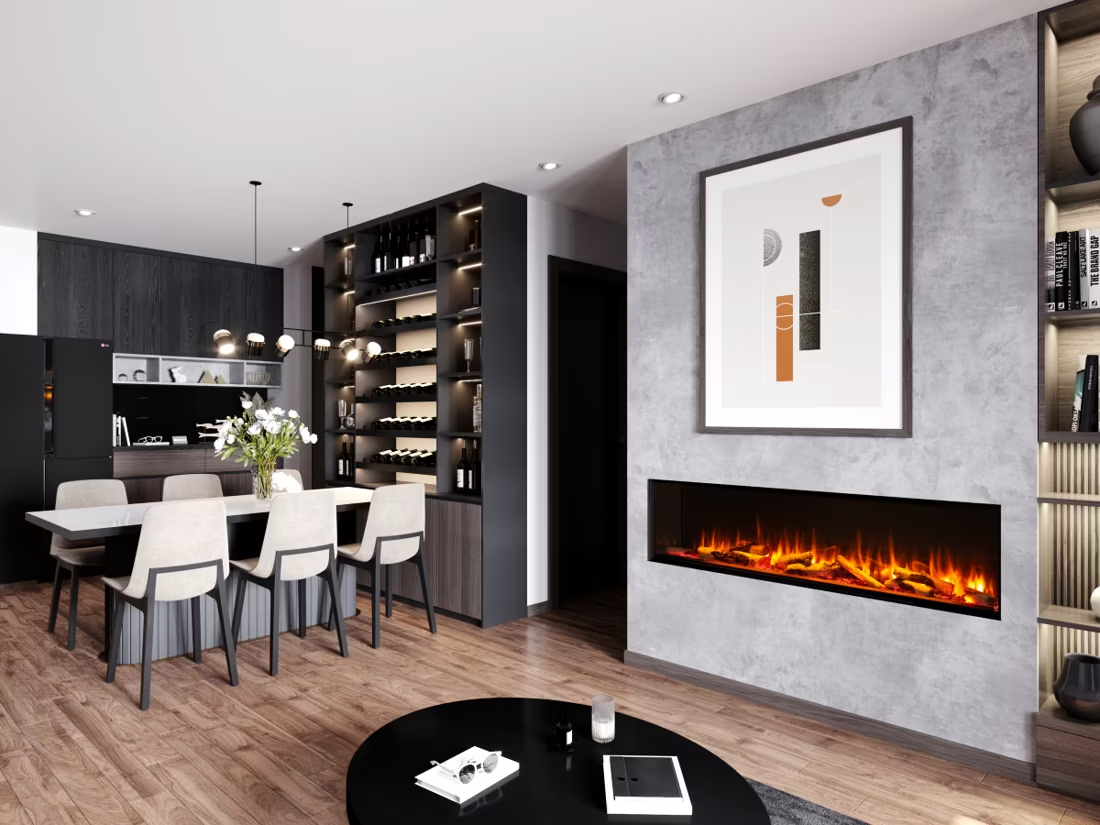
Where electric earns its place is everywhere a wet-stack chimney or a gas line isn't practical. Condos and vacation rentals near Mount Snow and Stratton use electric fireplaces to add instant ambiance without the liability of an open flame in a rental unit. Older apartments and multi-family buildings in downtown Brattleboro, where there's no existing chimney and no appetite for venting work, are natural fits. Finished basements, additions, and bedrooms across the county use electric inserts for supplemental zone heat that doesn't touch the home's existing wood or propane system. Because there's no combustion, no venting, and usually just a dedicated circuit involved, electric is also the fastest project on this list to plan and install—which matters if you're trying to get a rental unit or vacation property ready before ski season.
Three steps. No salesperson until you're ready.
Tell us about your project
Your zip code, your situation, and the fuel you're leaning toward—or let the answers point you to one.
See what's actually available
The brands dealers within 100 miles genuinely carry—real options, never a catalog mirage.
Get your dealer & Project Guide
A trusted local dealer, plus the free Project Guide & Parts List that names every component of the job.
Frequently Asked Questions
How much does an electric fireplace installation cost in Windham County?
Plug-in electric fireplace inserts that use a standard 120V outlet run on the low end, often $300 to $800 installed, since there's no dedicated wiring required beyond mounting the unit. Built-in electric fireplaces or larger inserts that need a dedicated 20-amp or 240V circuit run higher, typically $800 to $1,500, once a licensed electrician runs new wiring from the panel. Framing or mantel work for a built-in look adds to that. Compare that to a wood stove install in this county, which commonly runs several thousand dollars once chimney work is factored in—electric is the low-cost, low-disruption option on this list.
Will an electric fireplace actually heat my home through a Windham County winter?
Not on its own. Most electric fireplace inserts top out around 5,000 to 10,000 BTU, enough to take the chill off a single room but not enough to carry a house through a stretch of single-digit nights, which are common here given the county's 12°F average winter low and 7,259 heating degree days. Homeowners in Windham County generally pair electric fireplaces with an existing wood stove, propane furnace, or heat pump system and use the electric unit for supplemental warmth in a specific room, or for ambiance when the main heat source is already running. If you're looking for a real primary heat source, a wood or propane appliance is the better fit for this climate.
Do I need a permit to install an electric fireplace in Windham County?
Usually less paperwork than wood or gas. A simple plug-in unit that uses an existing outlet typically doesn't require a permit at all. If your installer needs to run a new dedicated circuit—common for larger built-in units—that electrical work falls under Vermont's adopted electrical code and generally requires a permit and inspection, either through your town's electrical inspector or the Vermont Division of Fire Safety depending on where you are in the county. There's no combustion, so you skip the building permit, venting inspection, and clearance requirements that come with a wood stove or gas fireplace install.
Electric vs. wood—which is right for my Windham County home?
For a primary or year-round heat source in this county, wood is usually the better call. Windham County's forests supply sugar maple, yellow birch, beech, ash, and red oak, and Forest Service cutting permits through the Green Mountain & Finger Lakes National Forest run about $20 per cord during the May-to-October season—a real cost advantage if you're willing to cut and season your own wood. Wood also keeps working during a power outage, which matters here given the ice storms that periodically knock out lines in the hill towns. Electric wins on convenience and simplicity: no chimney, no ash, no wood storage, and it's the practical choice for a condo near Mount Snow, an apartment in Brattleboro, or a room where running a flue just isn't an option. Many homeowners in the county end up with both—wood for real heat, electric for a second room or a low-maintenance backup for ambiance.
What happens to my electric fireplace during a power outage?
It stops working entirely—electric fireplaces have no battery backup and won't produce heat or flame effect without grid power. This is worth planning around in Windham County, where winter storms in the hill towns around Wilmington, Dover, and Newfane can knock out power for hours or occasionally days. If you're relying on an electric fireplace as your only supplemental heat in a room, it's worth having a wood stove, propane heater, or generator as a backup plan for outages. This is one of the clearest tradeoffs between electric and wood heat in a climate with 7,259 heating degree days and regular winter storm activity.
Are electric fireplaces a good fit for a Mount Snow or Stratton vacation rental?
Yes—this is one of the strongest use cases in the county. Vacation condos and rental units near Mount Snow and Stratton often can't accommodate a wood-burning appliance because of liability, insurance requirements, or simply no chimney access, and owners still want the visual and ambiance of a fireplace for guests. A built-in electric fireplace or insert delivers that look with none of the combustion risk, no fuel storage, and minimal maintenance between renter turnovers. Local installers can also add a remote or app control, which is a popular feature for self-check-in rental properties.
What's the difference between an electric insert, a built-in unit, and a freestanding electric stove?
An electric insert is sized to slide into an existing masonry fireplace opening, giving a wood-burning fireplace a heat-producing, low-maintenance upgrade without touching the chimney. A built-in electric fireplace is designed to be framed into a wall or mantel surround, common in new construction or remodels around Brattleboro and the surrounding towns. A freestanding electric stove looks like a traditional wood stove but plugs in or wires into a circuit, and works well in a room with no fireplace opening at all. For Windham County homes with an existing but unused masonry fireplace, an insert is usually the simplest and most cost-effective option.
How much does it cost to run an electric fireplace in Windham County?
Most electric fireplace inserts draw around 1,500 watts on the heat setting, which works out to roughly 15 to 20 cents per hour of heated operation at typical Vermont residential electric rates through Green Mountain Power, the utility serving most of the county. Running one for a few hours an evening during the winter adds a modest amount to a monthly bill—nowhere near the cost of heating a whole home electrically, but reasonable for supplemental use in one room. The flame-only setting with no heat draws only a few watts, so leaving it on for ambiance without heat costs very little.
How much maintenance does an electric fireplace need?
Very little compared to wood or gas. There's no chimney to sweep, no annual gas line inspection, and no ash to clean out. Periodic dusting of the heater vents and an occasional check that the fan isn't clogged with debris is generally all that's needed. LED units may eventually need bulb or light strip replacement after years of use, which most manufacturers cover under warranty for a set period. For Windham County homeowners juggling wood stove chimney sweeps and firewood seasoning every fall, the low-maintenance nature of electric is a real part of the appeal.
Can I put a TV above my fireplace?
Yes—with an asterisk. Fireplaces are hot and TVs don't like heat. Either put a mantel between them to deflect rising warmth, or choose a fireplace with heat-management technology that creates a cool zone on the wall above—the wall stays around 125 degrees, barely warm, while the room still gets full heat. If you like clean lines and don't want a mantel, heat management is the answer.
Do electric fireplaces actually produce heat?
Yes—most put out around 4,800–5,000 BTUs from a standard outlet, which comfortably warms a bedroom, office, or den as a comfort-zone heater. What they won't do is carry a whole house the way wood, gas, or pellet can. Think of electric as ambiance-first with honest supplemental heat: flames on with no heat in July, flames plus warmth in January.
Can I install a fireplace myself?
If you're putting a fire in your house on purpose, it's best to work with an expert. Unless you're genuinely experienced in framing, gas line, vent pipe, and the national code on clearances to combustibles, have a professional do it—and ideally the same company that sells you the fireplace, so warranty, service, and liability all live under one roof.
How much should I budget for a fireplace?
For an average home—covering the fireplace, the vent pipe, and basic installation—a budget between $3,900 and $5,500 gives you a lot of options across wood, gas, and pellet. By the time you add finish work, gas line, and electrical, the average complete installation lands between $5,000 and $12,000 all-in. In a remodel or new build, a good rule is to put about 2.5% of the total project cost toward the fireplace.
Stove and Fireplace Dealers in Windham County
Listings include WhyFire partner dealers, dealers we have verified as authorized for the brands we recommend, and established local businesses that carry hearth products. Every listing shows which one it is. The ones marked Preferred run on WhyFire's software, so they can show you real pricing and book your appointment right here. No manufacturer pays for placement. How we verify dealers →
Treehugger Farms
PoshHaus ( Rk Parisi Enterprises, Inc. )
Tri-State Chimney Sweep
Hb Energy
Bernardston Farmer's Supply
Find your electric fireplace in Windham County.
Tell us about your home or rental property and we'll match you with the right electric fireplace or insert, plus a free Project Guide & Parts List with the exact components and a trusted local Windham County dealer to install it.
Find Your Fireplace →