
Zone Heat and Ambiance for Wilder Homes—No Chimney Required.
A no-vent, no-permit way to add warmth and glow to a Windsor County home—find the right unit and a local pro who can wire it in correctly.
Every Project Starts From One of These Five Situations
Electric heat earns its place in Wilder's coldest months.
Wilder sits low along the Connecticut River in the Town of Hartford, at about 488 feet—but that river-valley elevation doesn't spare it from a real Vermont winter. With 6,827 heating degree days and average lows around 13°F, most homes here lean on wood, propane, or a cold-climate heat pump for whole-house heat. Electric fireplaces rarely try to replace that system; instead they fill a specific role—supplemental warmth in a converted den, a finished basement, a bonus room over the garage, or simply the ambiance of a fire without hauling wood or tending a flue.
Green Mountain Power serves Wilder at a residential rate of roughly $0.22 per kWh—one of the higher rates in New England—which matters if you're weighing an electric fireplace as more than occasional supplemental heat. Most units draw around 1,500 watts on high, so running one for a few hours on a cold evening costs real money, but nowhere near what running it as a 24/7 primary heat source would. Most installations here are simple: a plug-in freestanding unit needs no permit at all, while a built-in wall unit or mantel package with a dedicated circuit typically involves a licensed electrician and a quick sign-off from the Town of Hartford's building and electrical inspection office.
Three steps. No salesperson until you're ready.
Tell us about your project
Your zip code, your situation, and the fuel you're leaning toward—or let the answers point you to one.
See what's actually available
The brands dealers within 100 miles genuinely carry—real options, never a catalog mirage.
Get your dealer & Project Guide
A trusted local dealer, plus the free Project Guide & Parts List that names every component of the job.
Frequently Asked Questions
How much does an electric fireplace installation cost in Wilder?
A plug-in freestanding or insert-style electric fireplace runs about $300 to $900 for the unit, with no real installation cost beyond finding an outlet—most homeowners handle this themselves. A built-in wall-mount or mantel-package unit that needs a dedicated 120V or 240V circuit typically runs $1,500 to $3,500 installed, once you factor in the electrician's time and the Town of Hartford's electrical permit and inspection. The bigger cost driver isn't the unit—it's whether your wall already has adequate wiring nearby or needs a new circuit run from the panel.
Will an electric fireplace lower my heating bill in Wilder?
Probably not by much, and it's worth being honest about that going in. At Green Mountain Power's residential rate of about $0.22/kWh, a 1,500-watt unit running on high costs roughly $0.33 an hour—about $2.65 for an 8-hour evening. That's fine for zone heating a single room you're actually using, letting you turn down a wood stove or heat pump elsewhere in the house. But given Wilder's 6,827 heating degree days, an electric fireplace won't meaningfully offset the cost of heating the whole home the way a woodstove or a cold-climate heat pump would.
Do I need a permit for an electric fireplace in Wilder?
A plug-in freestanding electric fireplace or stove needs no permit—it's an appliance, not a fixed installation. A built-in unit that requires a new circuit or panel work needs an electrical permit through the Town of Hartford's building and electrical inspection department, and the wiring should be done by a licensed electrician. Because there's no venting, gas line, or chimney involved, electric is the least permit-intensive fireplace option available in Windsor County by a wide margin.
What type of electric fireplace makes sense for a Wilder home?
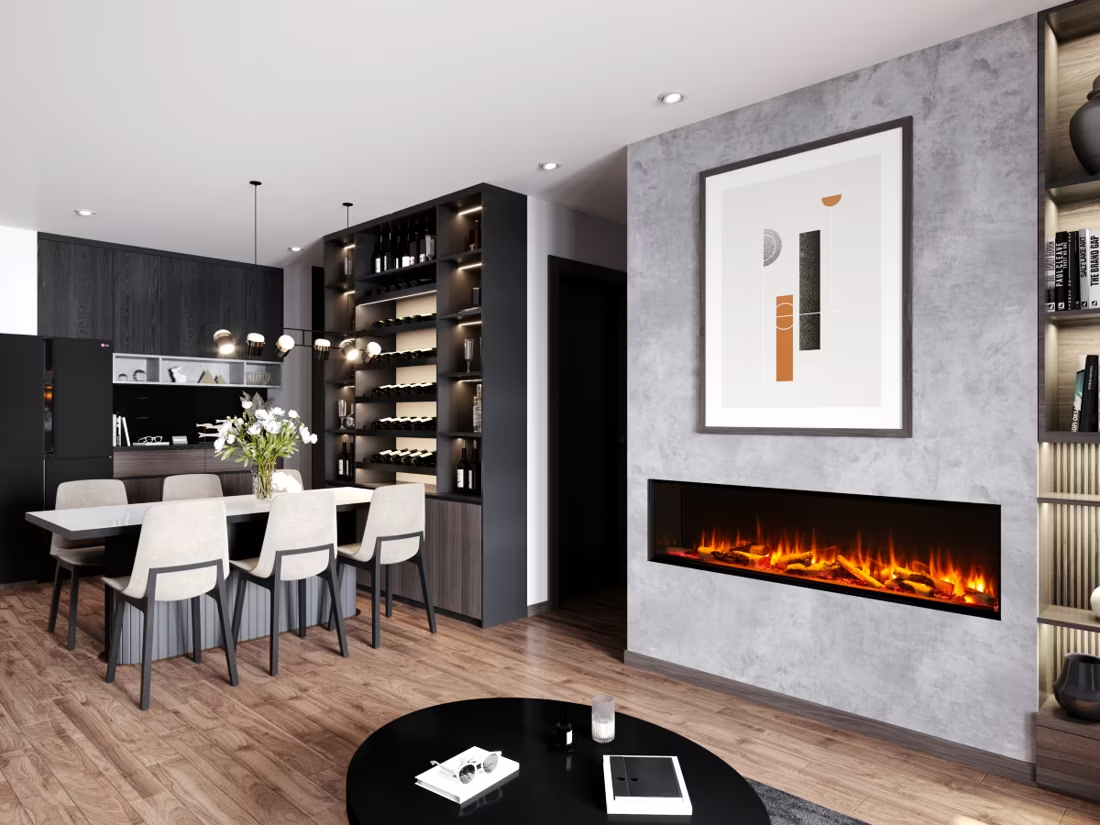
For an existing masonry fireplace that's no longer used for wood, an electric insert is the simplest upgrade—it slides into the opening and plugs into a nearby outlet with no chimney modification. For new construction, a finished basement, or a bonus room, a built-in wall unit or mantel package looks more like a true fireplace and can be framed into the wall during a remodel. Wall-mounted linear units are popular in newer, more modern-styled homes around the White River Junction area. A local dealer can walk through your framing and wall access before you commit to a model.
Will my electric fireplace work during a power outage?
No—and this matters in Windsor County, where ice storms and nor'easters routinely knock out power for hours or days each winter. Unlike a wood stove, which keeps working regardless of the grid, an electric fireplace goes dark the instant Green Mountain Power's lines do. If backup heat during outages is a real concern for your Wilder home, most local dealers will point you toward a wood or gas unit as the primary system, with electric reserved for supplemental warmth and ambiance when the power is on.
Electric vs. wood—which makes more sense for my home?
Wood remains the backbone heat source for a lot of homes around Wilder—sugar maple, yellow birch, and red oak are common local species, and Forest Service cutting permits through the Green Mountain & Finger Lakes National Forest or White Mountain National Forest run about $20 per cord during the May-to-October season. Wood keeps producing heat with no power required, which matters given how often Windsor County loses electricity in winter storms. Electric wins on convenience and cleanliness—no cutting, stacking, ash, or chimney maintenance, and it can go anywhere there's an outlet. Many Wilder homeowners run both: wood or a heat pump for real heat, electric for a low-maintenance secondary room or an unused fireplace opening.
How much heat can I actually expect from an electric fireplace?
Most units top out around 5,000-6,000 BTU, roughly equivalent to a 1,500-watt space heater, and are rated to comfortably heat 400-1,000 square feet depending on the model and how open the room is to the rest of the house. That's enough to take the chill off a single room on a 13°F Wilder evening, but it's not going to carry a whole floor plan through a Vermont winter. Think of it as a supplement to your main heat source, not a replacement for it.
Are electric fireplaces efficient given Green Mountain Power's rates?
Electric fireplaces convert essentially 100% of the electricity they draw into heat right in the room—there's no combustion loss or flue heat escaping up a chimney the way there is with wood or gas. The catch in Wilder is the input cost: at roughly $0.22/kWh, that heat costs more per BTU than a cord of sugar maple or a well-tuned propane insert. For occasional, zone-specific use, the efficiency is genuinely good. For anyone trying to heat a large or poorly insulated space around the clock, the electric bill will make the case for a different fuel pretty quickly.
Electric vs. pellet stove—which is the better fit?
A pellet stove burning bags from a brand like Lignetics or New England Wood Pellet produces far more heat per dollar than resistance electric heat at Green Mountain Power's rates, and can realistically serve as a primary or near-primary heat source in a Wilder home. The tradeoff is that pellet stoves need pellet storage, periodic hopper loading, and—like electric—they require power to run the auger and blower, so neither is a true outage backup. If your priority is genuine heating capacity, pellet usually wins; if your priority is zero maintenance and instant ambiance in a room you don't need to heat hard, electric is simpler.
Can I put a TV above my fireplace?
Yes—with an asterisk. Fireplaces are hot and TVs don't like heat. Either put a mantel between them to deflect rising warmth, or choose a fireplace with heat-management technology that creates a cool zone on the wall above—the wall stays around 125 degrees, barely warm, while the room still gets full heat. If you like clean lines and don't want a mantel, heat management is the answer.
Does an electric fireplace need a vent or chimney?
No—that's its superpower. An electric fireplace needs a wall and an outlet, period. No vent pipe, no gas line, no clearances to design around, which is why it works in bedrooms, offices, apartments, and walls where venting a gas or wood unit would be impractical or impossible. Installation is typically the simplest and least expensive of any fireplace type.
How much should I budget for a fireplace?
For an average home—covering the fireplace, the vent pipe, and basic installation—a budget between $3,900 and $5,500 gives you a lot of options across wood, gas, and pellet. By the time you add finish work, gas line, and electrical, the average complete installation lands between $5,000 and $12,000 all-in. In a remodel or new build, a good rule is to put about 2.5% of the total project cost toward the fireplace.
Does a fireplace add value to my home?
On average, a fireplace adds back to the home about the same amount you spent installing it. Add the monthly savings from heating the rooms you actually use instead of the whole house—often hundreds of dollars a year—and the value case is strong before you even count what a fire does for how your family uses the room.
Nearby Dealers
Hearth shops serving Wilder and the surrounding area. Every listing shows whether it is a WhyFire partner, a dealer we have verified as authorized for the brands we recommend, or a local business carrying hearth products. No manufacturer pays for placement. How we verify dealers →
Mills Hardware Inc.
New England Outdoor Furnaces
Chimney Savers
Electric Service in Wilder
An electric fireplace's heater draws about 1,500 watts—pennies per hour at local rates.
Green Mountain Power Corp
Find your electric fireplace in Wilder.
Tell us about your space and we'll put together a free Project Guide & Parts List—the right electric fireplace or insert for your room, plus a trusted local dealer near Wilder who can wire it in correctly.
Find Your Fireplace →