
Flip-a-Switch Warmth for Proctor's Long Winters.
No venting, no chimney, no permit hassle—just zone heat and ambiance for the marble village's historic homes. Find the right unit and connect with a trusted local dealer.
Every Project Starts From One of These Five Situations
A supplement that pulls its weight, not a whole-home replacement.
Proctor sits along Otter Creek in Rutland County at 454 feet, a small marble-quarrying village of about 1,650 people where many homes date back to the town's Vernon Proctor era of stone cutters' cottages and company housing. Winters here are serious business—the town faces a winter heating season in the same range as Duluth, Minnesota, with average winter lows around 8°F. That's a climate where heating decisions matter, and where a lot of these older marble-village homes still lean on wood stoves, oil furnaces, or newer heat pumps for the bulk of the load.
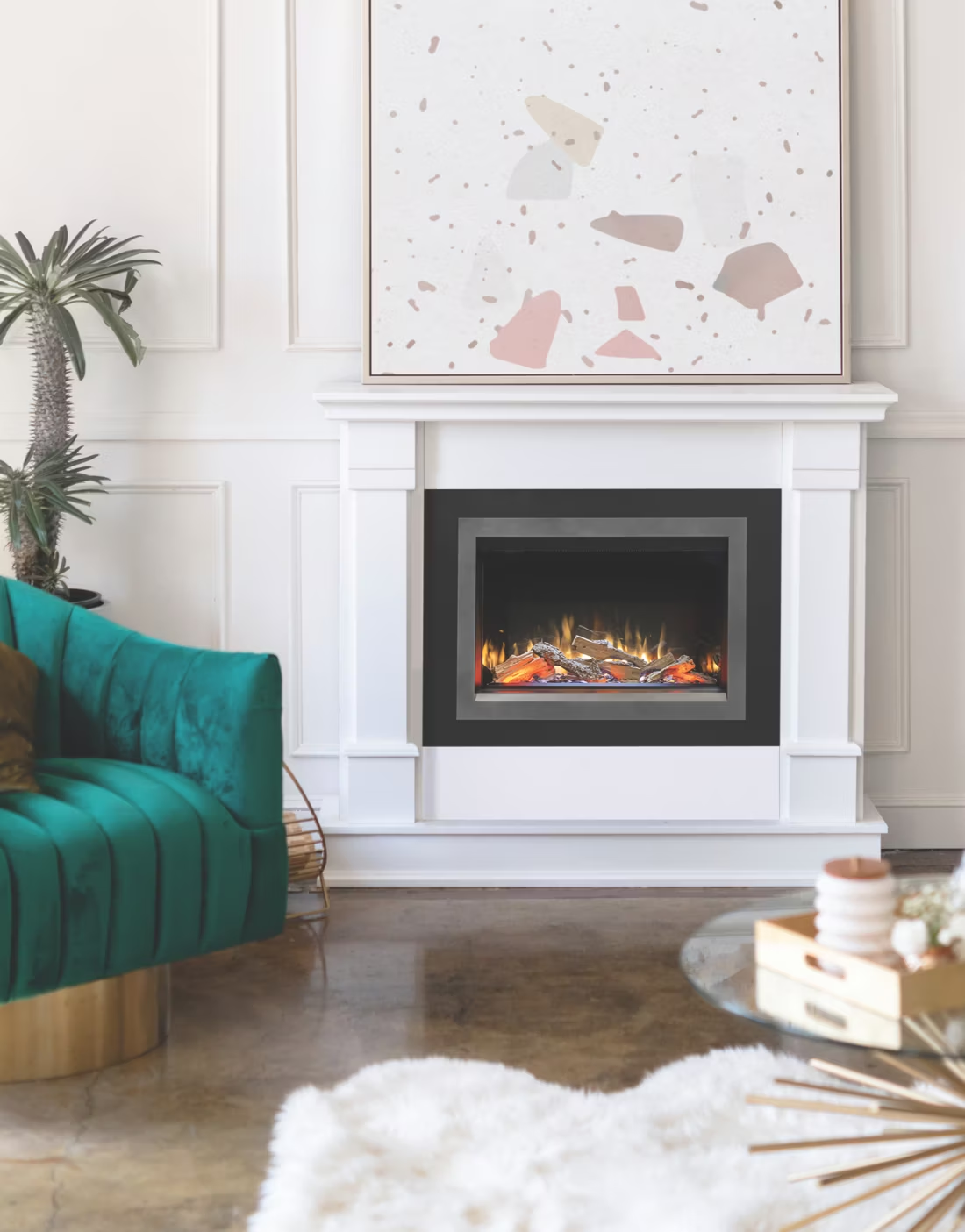
Electric fireplaces fit into that picture as a clean, no-installation-hassle supplement rather than a primary furnace replacement. Green Mountain Power serves the area at a residential rate of about 22.1 cents per kWh—one of the higher rates in the country—so running resistance heat as your main source gets expensive fast. Where electric units genuinely shine in Proctor is zone heating a den or added room, providing instant ambiance without smoke or a chimney, and giving households with an existing masonry fireplace but no interest in wood a clean, plug-in alternative that still looks like a real fire.
Three steps. No salesperson until you're ready.
Tell us about your project
Your zip code, your situation, and the fuel you're leaning toward—or let the answers point you to one.
See what's actually available
The brands dealers within 100 miles genuinely carry—real options, never a catalog mirage.
Get your dealer & Project Guide
A trusted local dealer, plus the free Project Guide & Parts List that names every component of the job.
Frequently Asked Questions
How much does an electric fireplace cost to install in Proctor?
A plug-in electric insert or freestanding stove that uses a standard 120-volt outlet typically runs $200 to $1,200 for the unit itself, with little to no installation cost beyond setting it in place. A built-in wall unit or a larger insert that needs a dedicated 20-amp circuit is a different project—expect $1,500 to $3,500 once you factor in an electrician running new wiring, which is common in Proctor's older marble-worker cottages that weren't built with modern circuit capacity in mind. A local dealer can tell you within minutes which category your home falls into.
Will an electric fireplace actually heat my home through a Proctor winter?
Not on its own. Most electric fireplaces top out around 5,000 to 9,000 BTU, which is enough to noticeably warm a single room but not enough to carry a house through a stretch of 8°F nights across a long Proctor winter on par with Duluth, Minnesota's. In Proctor, electric units work best as targeted heat for a den, sunroom, or finished basement—supplementing a wood stove, oil furnace, or heat pump that carries the rest of the load, not replacing it.
What will it actually cost to run on Green Mountain Power's rates?
Green Mountain Power's residential rate runs about 22.1 cents per kWh, noticeably higher than the national average. A typical 1,500-watt electric fireplace running on high for 8 hours a day uses about 12 kWh, which works out to roughly $2.65 a day, or around $80 a month if run daily through a cold stretch. Most owners don't run them that constantly—they're used for evenings and weekends—which keeps the real-world cost more modest. Still, it's worth budgeting for if you're planning to lean on one heavily during a January cold snap.
Do I need a permit to install an electric fireplace in Proctor?
A plug-in unit that uses an existing outlet generally doesn't require a permit. If your installation involves new wiring or a dedicated circuit—common for built-in wall units—an electrical permit through the Town of Proctor or Rutland County's electrical inspection process is typically required, and the work needs to be done by a licensed Vermont electrician. Local dealers who install built-in units usually coordinate this as part of the job, so you're not left tracking down the paperwork yourself.
Electric vs. wood—which makes more sense for a Proctor home?
Proctor sits close to the Green Mountain & Finger Lakes National Forest and White Mountain National Forest, both of which issue cutting permits for about $20 a cord during the May-through-October season, and the region's forests are thick with sugar maple, yellow birch, American beech, white ash, and red oak—all excellent firewood. That access, combined with the area's ice-storm-prone winters where power outages happen, is why wood heat still has real staying power here: it works with the grid down, and self-cut firewood is inexpensive. Electric offers convenience, zero mess, and instant on-off operation—but it goes dark exactly when an outage makes heat matter most. Many Proctor households use both: wood or a heat pump for the bulk of winter, electric for ambiance and easy supplemental warmth on ordinary nights.
What's the difference between an electric insert, a built-in unit, and a freestanding stove?
An electric insert is designed to slide into an existing masonry firebox—a good option for Proctor's older homes with a fireplace that's no longer used for wood—and typically plugs into a standard outlet or nearby switch. A built-in unit is designed to be framed into a wall for a modern, flush look in new construction or a remodel, and usually needs its own circuit. A freestanding electric stove sits on the floor like a traditional wood stove and can be moved from room to room. For most Proctor homes with an existing fireplace opening, an insert is the simplest and least invasive upgrade.
Can I put an electric fireplace into my home's existing masonry fireplace?
Yes—this is one of the most common projects for Proctor's older marble-village homes, many of which have a masonry firebox that hasn't been used for wood in years. An electric log insert or panel unit slides into the existing opening with no venting, no chimney liner, and no gas line required. It's largely a cosmetic and electrical project rather than a structural one, which keeps costs and timelines down compared to a gas or wood conversion.
How does an electric fireplace compare to a heat pump for actual heating?
An electric fireplace is essentially a resistance heater—it converts electricity to heat at roughly 100% efficiency, but it's still straight resistance heat, which is the most expensive way to generate warmth per kWh. A cold-climate heat pump, by contrast, moves 2 to 3 times more heat energy than the electricity it consumes, which is why Efficiency Vermont offers rebates for heat pump installations and why many Proctor homeowners are shifting primary heating load to heat pumps while keeping an electric fireplace purely for ambiance and spot heat in a specific room.
What should I look for in an electric fireplace for a Proctor home?
Look for a realistic flame technology—brands like Dimplex and Napoleon build electric fireboxes with LED flame effects that hold up well next to an actual view, not just a gimmick behind glass—and a model with a built-in thermostat so you're not running the heating element on high around the clock. If you're installing into an existing masonry opening, check the insert's dimensions against your firebox before ordering; older Proctor fireplaces built during the marble-quarrying era sometimes have nonstandard openings. A local dealer can measure and help you find the right model rather than guessing from a box-store display.
Does an electric fireplace need a vent or chimney?
No—that's its superpower. An electric fireplace needs a wall and an outlet, period. No vent pipe, no gas line, no clearances to design around, which is why it works in bedrooms, offices, apartments, and walls where venting a gas or wood unit would be impractical or impossible. Installation is typically the simplest and least expensive of any fireplace type.
Can I put a TV above my fireplace?
Yes—with an asterisk. Fireplaces are hot and TVs don't like heat. Either put a mantel between them to deflect rising warmth, or choose a fireplace with heat-management technology that creates a cool zone on the wall above—the wall stays around 125 degrees, barely warm, while the room still gets full heat. If you like clean lines and don't want a mantel, heat management is the answer.
How much should I budget for a fireplace?
For an average home—covering the fireplace, the vent pipe, and basic installation—a budget between $3,900 and $5,500 gives you a lot of options across wood, gas, and pellet. By the time you add finish work, gas line, and electrical, the average complete installation lands between $5,000 and $12,000 all-in. In a remodel or new build, a good rule is to put about 2.5% of the total project cost toward the fireplace.
Can I install a fireplace myself?
If you're putting a fire in your house on purpose, it's best to work with an expert. Unless you're genuinely experienced in framing, gas line, vent pipe, and the national code on clearances to combustibles, have a professional do it—and ideally the same company that sells you the fireplace, so warranty, service, and liability all live under one roof.
Nearby Dealers
Hearth shops serving Proctor and the surrounding area. Every listing shows whether it is a WhyFire partner, a dealer we have verified as authorized for the brands we recommend, or a local business carrying hearth products. No manufacturer pays for placement. How we verify dealers →
We’ve paused dealer listings for this connection today. Enter your zip or postal code above to find dealers near you, or come back tomorrow.
Popular Electric Brands
Where each brand came from, what's inside it today, and every current model. No brand pays to be here. Not every dealer carries every brand, so enter your zip code to see what's sold near Proctor.
Fireplace Xtrordinair
Fireplace Xtrordinair, now often called FireplaceX, is the fireplace brand of Travis Industries, Inc., of Mukilteo, Washington.
5 electric models →DaVinci
DaVinci Custom Fireplaces is a brand of Travis Industries, Inc., of Mukilteo, Washington, the company behind Lopi and Fireplace Xtrordinair.
5 electric models →Kozy Heat
Kozy Heat was founded in 1976 by Dudley Hussong in Lakefield, Minnesota, and incorporated as Hussong Manufacturing Co., Inc. in 1978.
3 electric models →Forge & Flame
Forge & Flame is the stove brand Hearth & Home Technologies introduced in August 2023 to bring Vermont Castings, Harman, and Quadra-Fire under one name.
1 electric model →Electric Service in Proctor
An electric fireplace's heater draws about 1,500 watts—pennies per hour at local rates.
Green Mountain Power Corp
Find your electric fireplace in Proctor.
Tell us a bit about your home and we'll put together a free Project Guide & Parts List for your Proctor electric fireplace project—the right unit, the wiring it needs, and a trusted local dealer to install it.
Find Your Fireplace →